
Quick answer: Compartment dust debris control requires preventing contamination during cutting, assembly, and handling, then verifying open compartments before packing. Manufacturers typically define cleanliness requirements, inspect cavities using visual checks and sampling methods, record defects by production batch, and apply corrective actions when debris sources are identified. The exact inspection method depends on compartment structure, materials, product loading requirements, and the level of cleanliness required for the finished packaging.
Why Is Dust and Debris Control Important Inside Open Compartments?
Dust and debris control is important because open compartments can collect loose paper fibers, board particles, adhesive residue, trimming waste, and handling contamination during manufacturing. These particles may affect product presentation, product fit, or the perceived quality of the finished advent calendar packaging.
For rigid paper boxes and compartment-style calendars, contamination risks are usually created during:
- Paperboard cutting and die-cutting operations.
- Edge trimming and folding processes.
- Manual assembly of drawers, cavities, and internal supports.
- Adhesive application and bonding operations.
- Movement between assembly, inspection, and packing areas.
A practical quality system focuses on controlling the source of debris rather than relying only on final cleaning. Prevention, inspection, evidence collection, and corrective action should work together.
How Is Compartment Dust Debris Control Managed During Production?
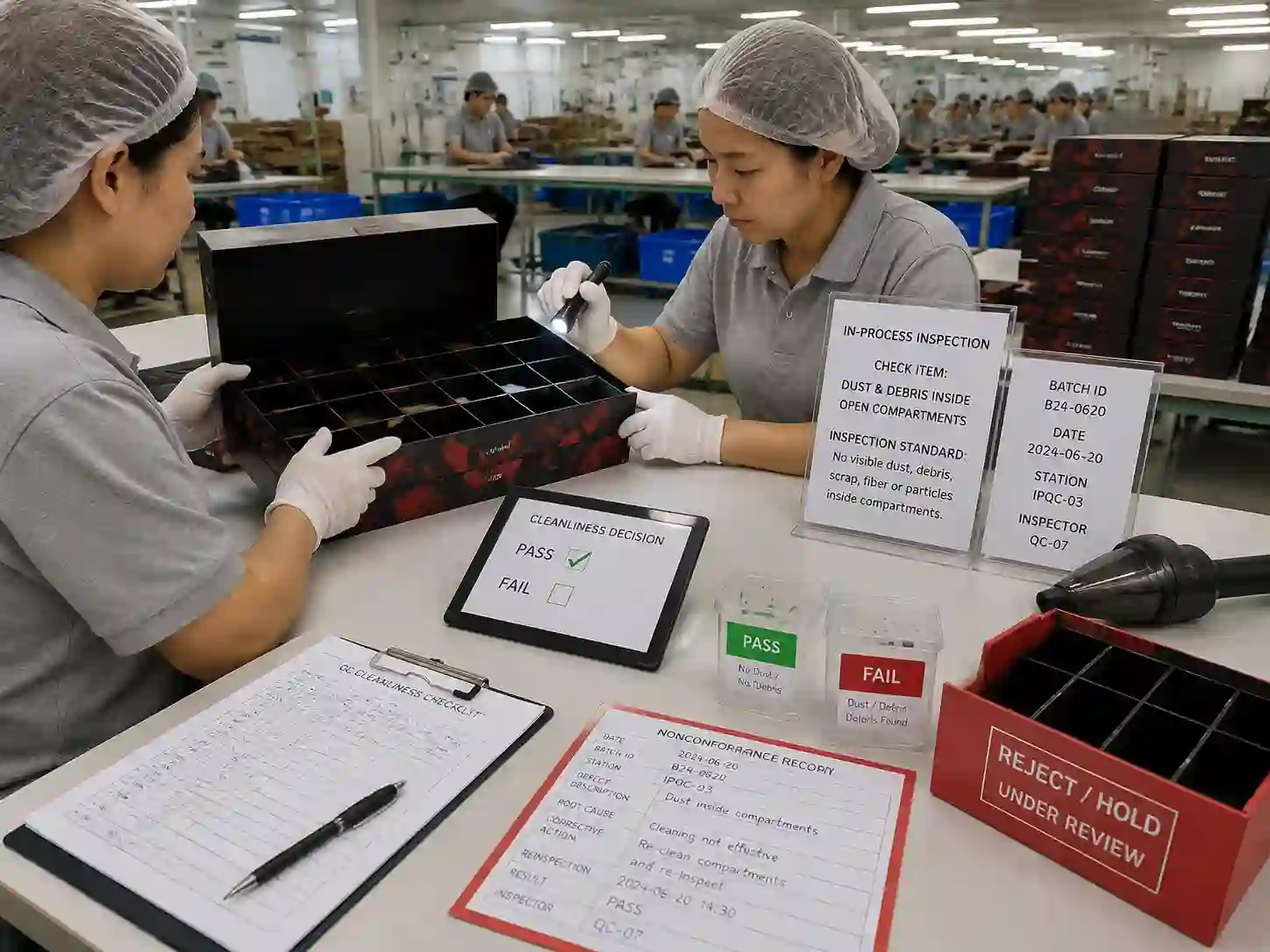
Compartment dust debris control is managed through defined production practices, controlled handling methods, and in-process inspection points. The goal is to reduce contamination before products reach final inspection.
1. Define Cleanliness Requirements Before Production
Quality teams should first define what types of contamination are unacceptable for the project. This may include visible dust, loose paper particles, adhesive marks, foreign materials, or debris that affects product loading.
Useful references include:
- Approved packaging samples showing acceptable internal cleanliness.
- Inspection drawings identifying critical open compartments.
- Quality checklists defining visible defect criteria.
- Product loading requirements that identify sensitive areas.
Some requirements are measurable, while others depend on buyer approval. For example, a visible particle inside a premium presentation compartment may require stricter acceptance than a hidden internal area.
2. Control Debris Sources During Assembly
Most debris control improvements come from controlling where contamination is generated. Production teams may review cutting, trimming, gluing, and assembly activities to identify high-risk points.
| Process Stage | Possible Contamination | Control Method |
|---|---|---|
| Die cutting | Paper dust and loose fibers | Remove cutting waste and check components before assembly |
| Manual assembly | Handling debris and foreign particles | Use controlled work areas and routine visual checks |
| Adhesive application | Glue residue and excess adhesive | Check bonding areas and prevent overflow into compartments |
| Final handling | Dust introduced during movement | Inspect open cavities before packing |
How Do Inspectors Check Open Compartments for Dust and Debris?
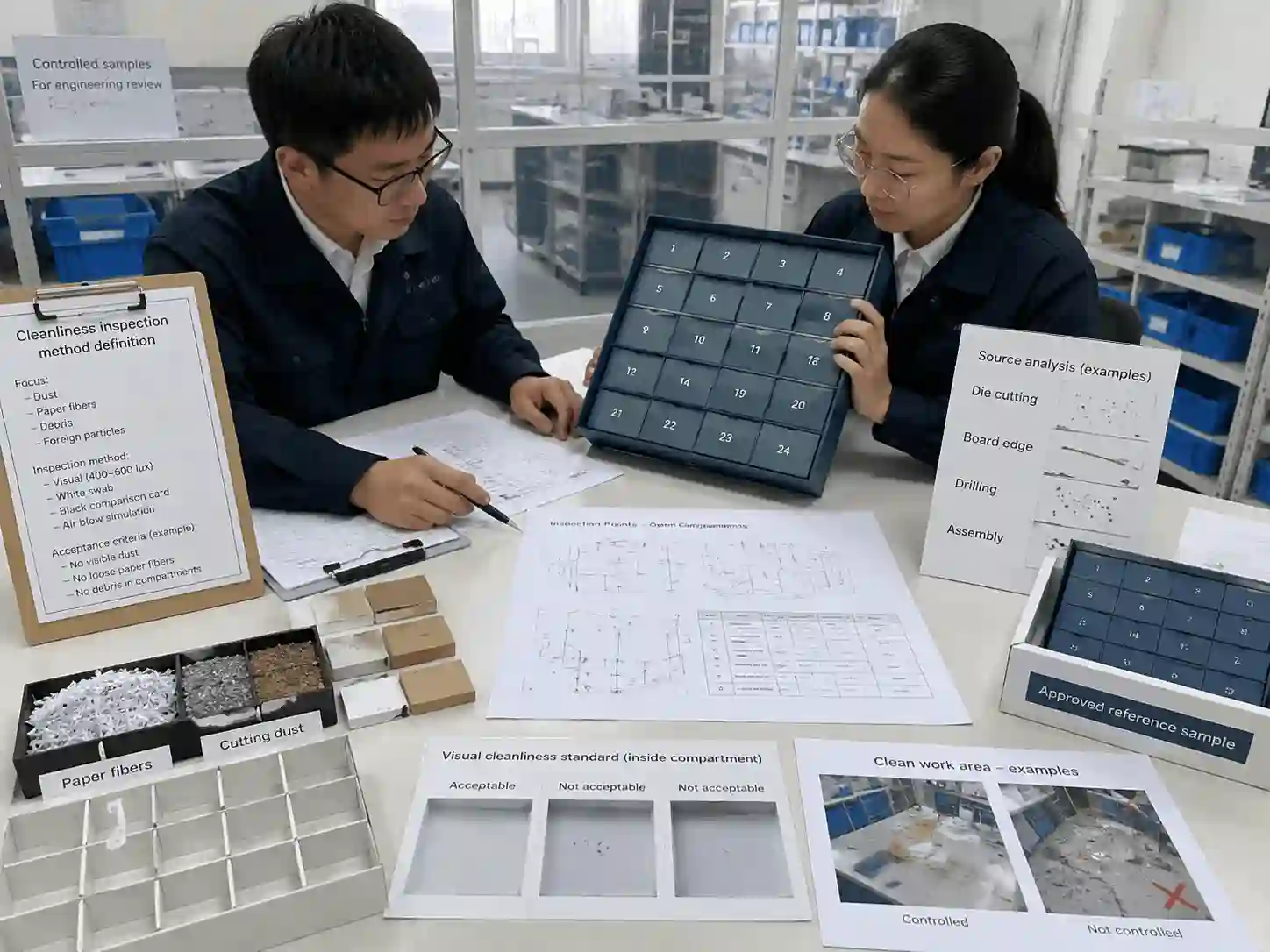
Inspectors usually check open compartments through visual inspection, sampling, and documented acceptance decisions. The inspection method should match the packaging structure and contamination risk.
Typical inspection steps include:
- Open each selected compartment or cavity according to the inspection plan.
- Check visible surfaces, corners, folds, and recessed areas where particles collect.
- Identify the contamination type and location.
- Record pass, rework, or reject decisions.
- Link defects to the production batch or assembly stage.
Inspection evidence may include:
- QC checklists with compartment inspection results.
- Defect photographs showing contamination location.
- Sample records identifying inspected units.
- Corrective-action documents for repeated issues.
What Defects Should Be Included in a Dust and Debris Inspection Checklist?
A useful defect checklist helps inspectors apply consistent decisions instead of relying on individual judgment.
| Defect Type | Inspection Concern | Typical Action |
|---|---|---|
| Loose paper particles | Visible debris inside compartments | Remove debris and investigate source if repeated |
| Paper dust accumulation | Particles collected in corners or cavities | Improve cleaning or process control |
| Adhesive residue | Sticky areas affecting product placement | Repair process settings or assembly method |
| Foreign material | Unexpected objects inside compartments | Segregate affected units and investigate cause |
How Is Dust and Debris Traceability Recorded?
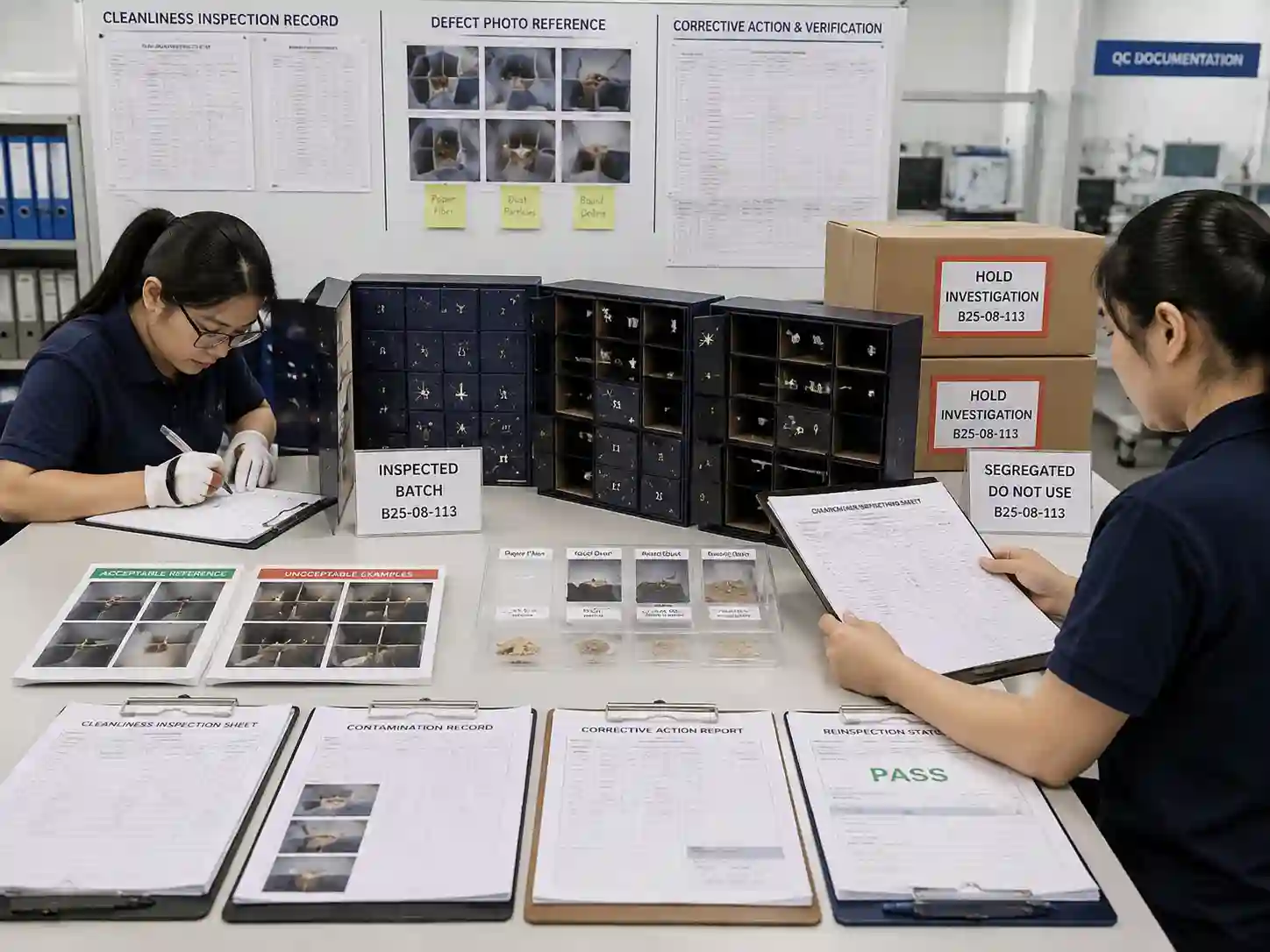
Traceability connects a contamination defect to the production information needed for investigation and correction. A documented record should show where the issue was found, what action was taken, and how the result was verified.
A typical traceability example may include:
- Inspection date and production identification.
- Compartment location or affected assembly area.
- Defect description and supporting photographs.
- Quantity of affected units identified.
- Containment action, such as segregation or reinspection.
- Corrective action and verification result.
This information allows production teams and buyers to distinguish isolated handling issues from recurring process problems.
What Corrective Actions Are Used When Debris Is Found?
Corrective actions depend on the source of contamination. The purpose is not only to remove visible debris but also to prevent recurrence.
- Adjust cutting or trimming processes if excessive paper dust is generated.
- Improve work-area cleaning frequency where required.
- Review handling methods during manual assembly.
- Separate affected production batches for additional inspection.
- Update inspection instructions when new defect patterns are identified.
Important corrective actions should be verified through documented reinspection rather than assumed complete after cleaning.
What Should Buyers Confirm Before Approving Dust Control Requirements?
Buyers should confirm cleanliness expectations before mass production approval because different products and compartment designs may require different inspection standards.
Useful approval points include:
- Reference samples showing acceptable internal appearance.
- Defined defect examples and rejection criteria.
- Inspection records from production checks.
- Agreed handling of contamination-related rework.
These requirements can be reviewed alongside overall custom advent calendar box services and product specifications before production begins.
FAQ: How Often Should Open Compartments Be Inspected?
Inspection frequency depends on the production process, product risk, and agreed quality plan. Higher-risk structures or designs with deep compartments may require more frequent checks.
FAQ: Can Dust Inside Compartments Be Removed After Assembly?
Some visible debris can be removed during inspection, but repeated contamination usually indicates a process issue that should be investigated and corrected.
FAQ: What Evidence Should Suppliers Provide for Cleanliness Issues?
Useful evidence includes inspection records, defect photos, affected batch information, corrective-action records, and reinspection results.
For custom compartment packaging projects, clear inspection requirements help reduce avoidable quality issues. Contact Giftpackpro through request a custom quote to discuss packaging structures, inspection expectations, and production quality requirements.


