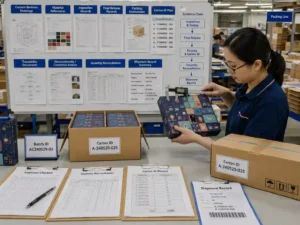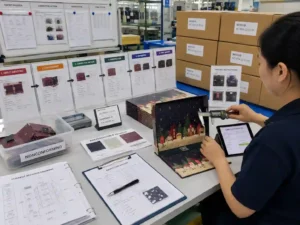
Quick answer: Magnet ribbon pull tab inspection verifies that opening and closing functions work consistently before bulk production approval. Quality teams typically check magnetic holding force, alignment, ribbon attachment strength, pull tab placement, appearance, and repeated operation performance using defined inspection methods. The inspection results should connect each finding to production identification, defect evidence, corrective action, and reinspection records.
Why Are Magnets, Ribbons, and Pull Tabs Inspected Separately?
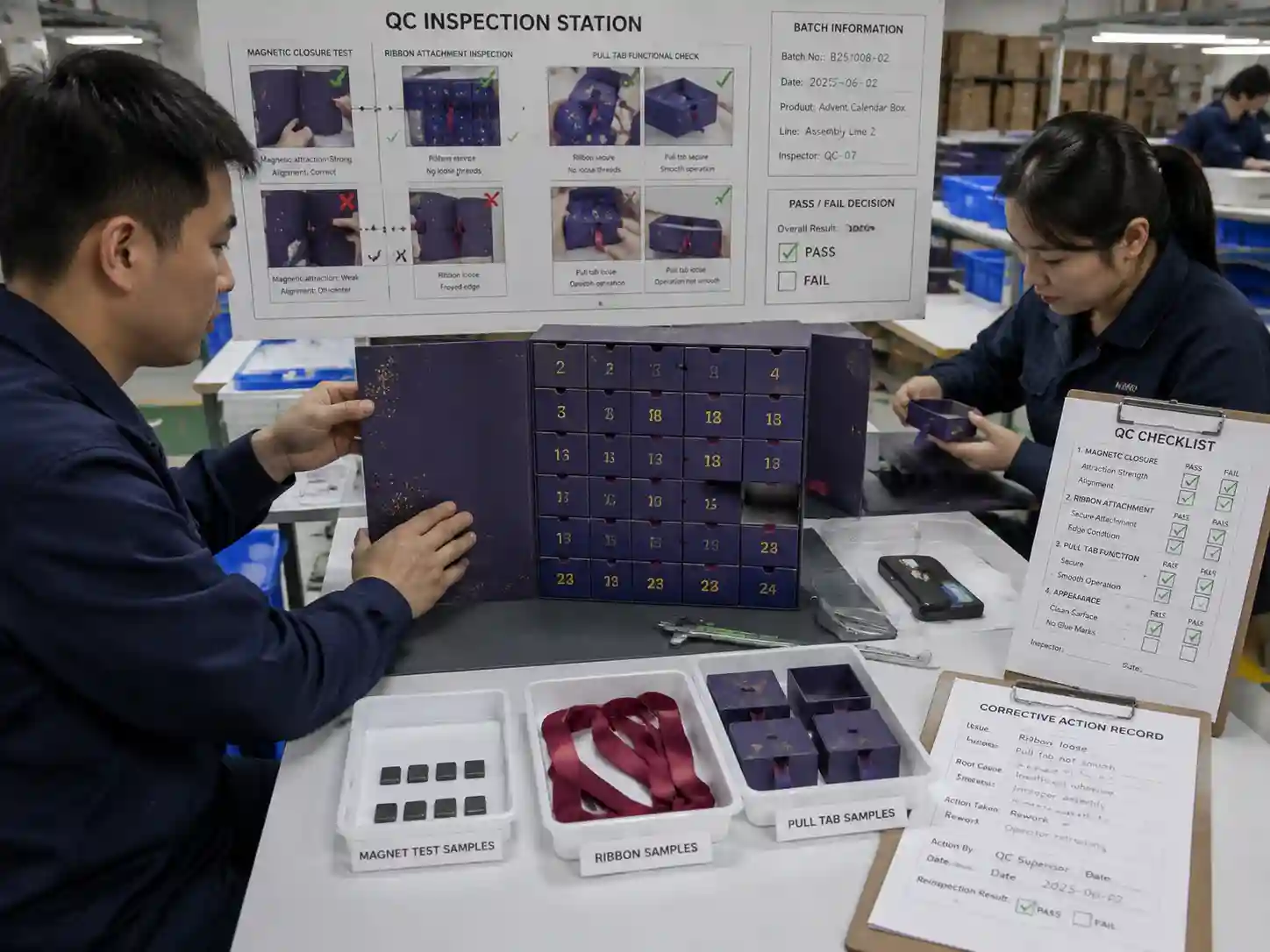
Magnets, ribbons, and pull tabs each create a different functional risk, so they require separate inspection criteria rather than only a visual review of the finished advent calendar box. A calendar may look acceptable while still having weak closure, loose ribbon attachment, or difficult opening performance.
Magnetic closures affect how securely a lid or door remains closed. Ribbons and pull tabs affect user interaction, including lifting, pulling, and repeated opening cycles. Quality inspection should confirm that each component performs its intended function within the approved design requirements.
What Should Be Checked During Magnet Ribbon Pull Tab Inspection?
Magnet ribbon pull tab inspection normally combines visual, dimensional, and functional checks. The exact limits depend on the packaging structure, magnet specification, material combination, and approved sample requirements.
| Component | Inspection Item | Typical Evidence | Common Defects |
|---|---|---|---|
| Magnet | Position, polarity, holding performance, attachment security | Inspection sheet, sample comparison, functional test record | Weak closure, incorrect position, missing magnet, detached magnet |
| Ribbon | Length, alignment, bonding or stitching condition, pull strength | Measurement record, attachment check, defect photos | Loose ribbon, uneven placement, fraying, incorrect length |
| Pull tab | Location, accessibility, attachment strength, appearance | Visual approval record, functional opening check | Torn tab, poor alignment, difficult operation |
How Do You Inspect Magnetic Closure Performance?
Magnetic closure inspection should confirm that the magnet location and strength allow reliable opening and closing without damaging the paper structure. Inspectors normally compare assembled units against an approved reference sample and verify that the closure operates as intended.
Key checks include:
- Confirming magnet placement against the approved structural drawing or sample.
- Checking that the two magnetic parts align correctly when the box is closed.
- Verifying that the closure holds during normal handling but can still be opened without excessive force.
- Inspecting adhesive or mounting areas for lifting, shifting, or incomplete bonding.
- Recording defective units with production batch identification.
For projects requiring defined performance limits, buyers and suppliers should agree on the inspection method before production. Acceptance criteria may vary depending on box size, opening design, paperboard thickness, and customer requirements.

How Are Ribbons and Pull Tabs Functionally Tested?
Ribbons and pull tabs are inspected through attachment, positioning, and usability checks. The purpose is to confirm that the component can support normal operation without separating from the calendar structure.
What Ribbon Checks Are Important?
Ribbon inspection should verify both appearance and attachment reliability. Inspectors check whether the ribbon is correctly positioned, securely fixed, and free from visible damage.
- Measure ribbon length and compare it with approved specifications.
- Check attachment points for loose bonding, uneven stitching, or weak fixation.
- Confirm that ribbon placement does not interfere with closing or packaging assembly.
- Review cut edges and surface condition for fraying or contamination.
What Pull Tab Checks Are Important?
Pull tabs should be checked for correct location, easy access, and resistance to normal pulling force. A pull tab that separates too easily or requires excessive force can create customer complaints or assembly issues.
- Verify pull tab location against the approved design.
- Check attachment strength through controlled functional operation.
- Inspect surrounding paper areas for tearing, delamination, or deformation.
- Record failures with photographs and defect descriptions.
How Do You Define Defect Criteria for These Components?
Defect criteria should describe what is unacceptable, how it is measured, and what action follows. Clear criteria reduce disagreement between inspectors, suppliers, and buyers.
Example defect categories include:
- Critical functional defects: missing magnets, failed closure, detached pull tabs, or components preventing normal operation.
- Major defects: incorrect positioning, weak attachment, visible damage, or inconsistent operation.
- Minor defects: small appearance issues that do not affect function but may require review.
The final acceptance level should be confirmed through approved samples, inspection standards, and buyer requirements rather than assumed from general packaging practice.
How Should Inspection Results Be Traced Back to Production?
Traceability connects a failed component check to the specific production information needed for investigation and correction. A useful inspection record should show what was checked, what failed, and how the issue was resolved.
Example Traceability Flow
- Inspector identifies a pull tab separation issue during in-process inspection.
- The defect is recorded with production date, batch reference, component type, and inspection result.
- Defective samples are separated and photographed as evidence.
- The production team investigates causes such as adhesive application, positioning, or assembly handling.
- Corrective action is implemented and affected units are reinspected.
This approach helps purchasing teams and quality managers verify that corrective actions address the actual cause instead of only replacing defective samples.
What Records Should Be Maintained After Inspection?
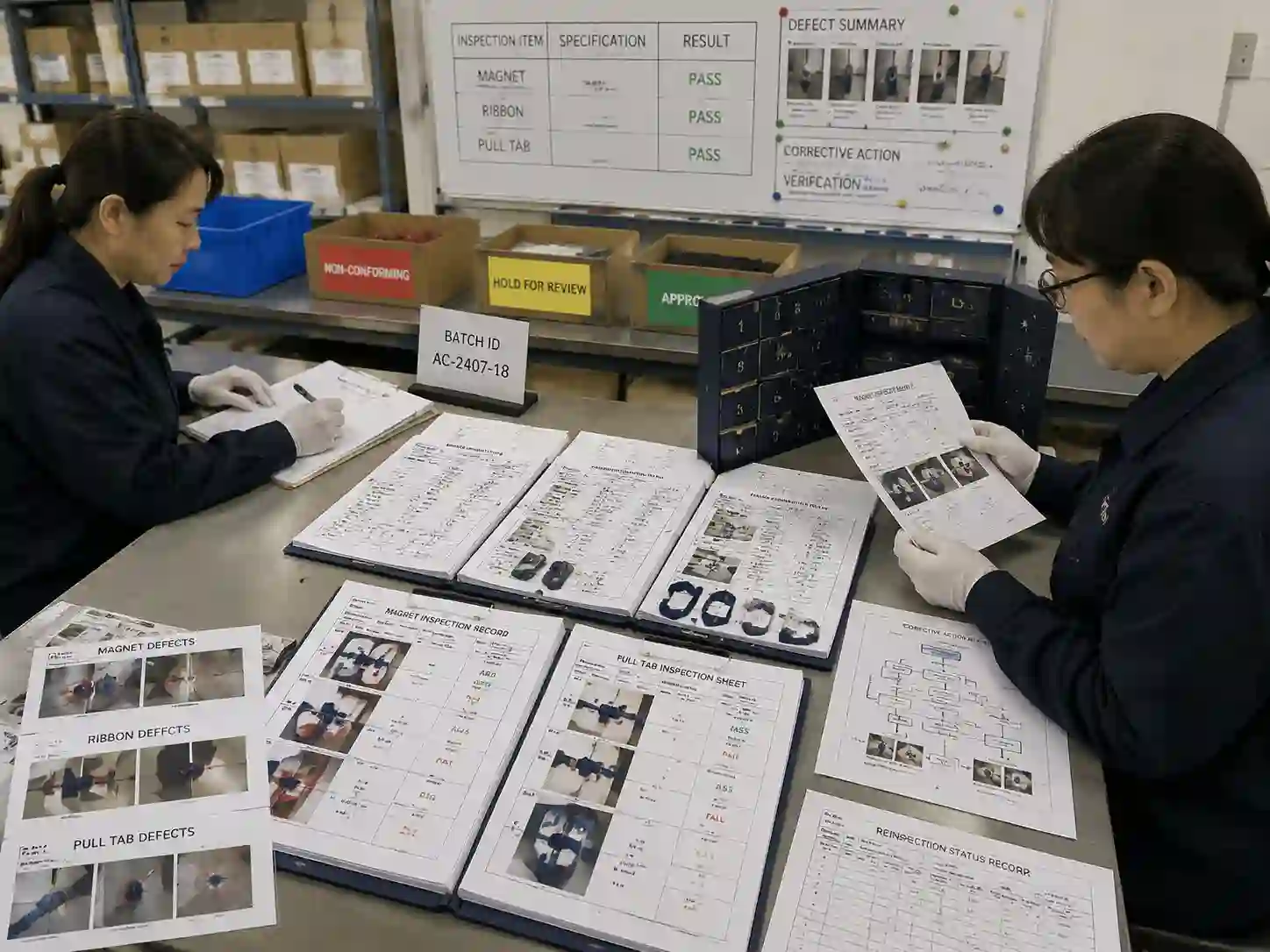
Inspection documentation should provide enough evidence for internal review, supplier communication, and future reference. Records commonly include:
- Inspection checklist with acceptance criteria.
- Measured results or functional test observations.
- Defect photographs and sample identification.
- Batch or production reference information.
- Corrective action and reinspection status.
- Approved reference samples or drawings when applicable.
Giftpackpro applies practical quality-control thinking to custom advent calendar packaging projects, helping buyers connect functional checks with production records and improvement actions. Learn more about custom advent calendar box services or explore custom advent calendar box products.
Frequently Asked Questions
Can visual inspection alone confirm magnet performance?
No. Visual inspection can identify missing or misplaced magnets, but functional checking is needed to confirm closure performance.
Should ribbon and pull tab strength limits be identical for every calendar design?
No. Required performance depends on the structure, material thickness, attachment method, and intended opening method of each project.
When should buyers approve magnet and pull tab inspection methods?
Inspection methods should be agreed during engineering review or sample approval so production teams have clear acceptance criteria before bulk manufacturing.
For a packaging project requiring functional component inspection, contact Giftpackpro through request a custom quote to discuss structural requirements and quality-control needs.