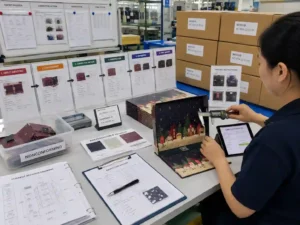
White ink colored paper printing requires different preparation from standard CMYK printing because the paper surface affects color appearance, contrast, and opacity. The artwork must define white ink as a separate layer, production teams must confirm coverage requirements, and approvals should be based on physical proofs or validated samples. For custom advent calendar boxes and seasonal paper packaging, white ink preparation helps control how graphics appear on kraft, dark, textured, or specialty papers.
Why Does White Ink Need Special Preparation on Colored or Kraft Paper?
White ink is used as a visual foundation when printing on non-white substrates because colored paper changes the way other inks appear. Unlike white coated board, kraft and colored papers can absorb or influence printed colors, causing reduced brightness, lower contrast, or unexpected color shifts.
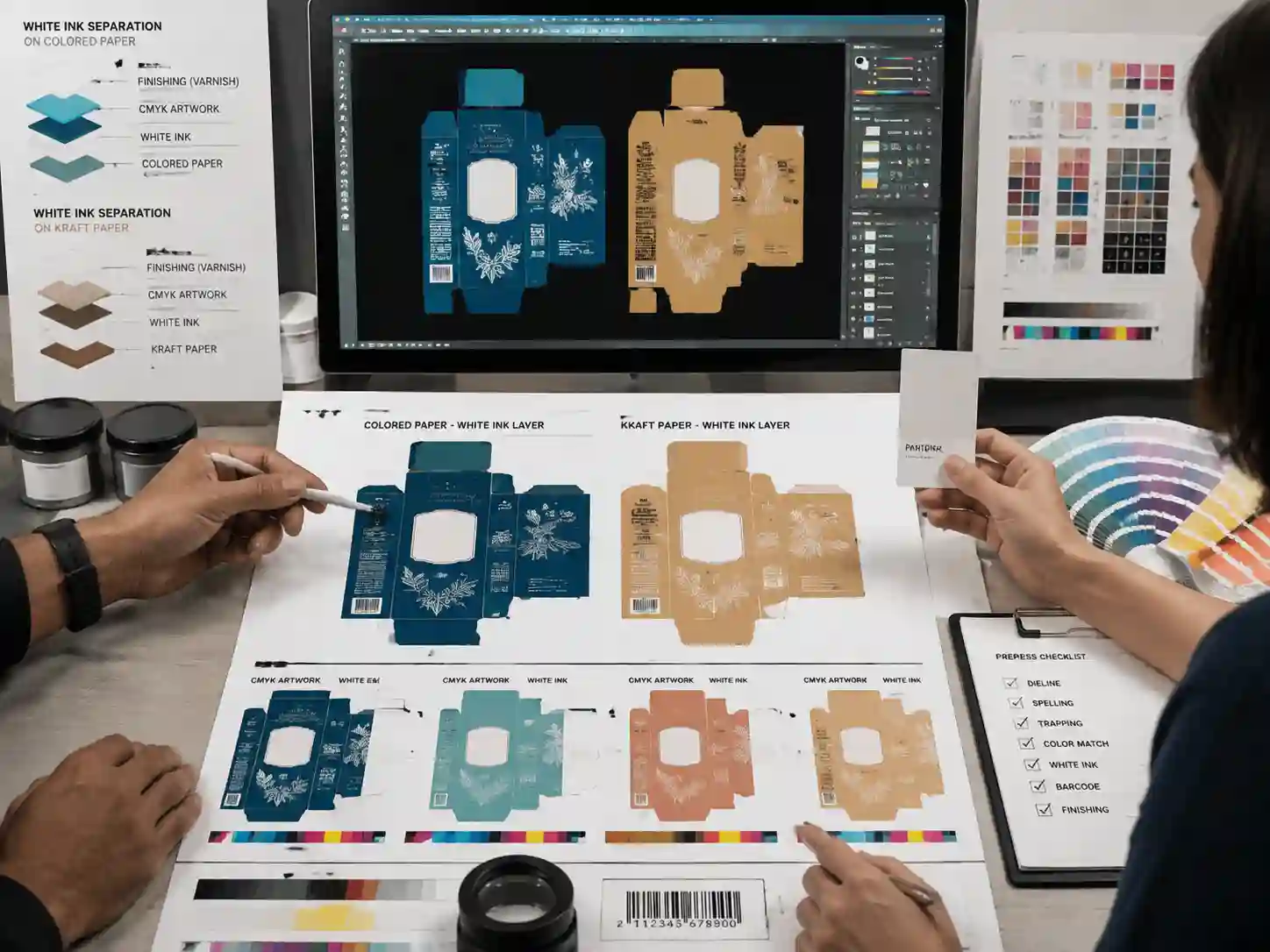
In prepress, white ink should be treated as a dedicated production element rather than an automatic adjustment. The artwork file normally requires separate layers showing where white ink is needed and where the paper color should remain visible.
How Is White Ink Defined in Artwork Files?
The first step is creating a clear white ink layer that production teams can identify separately from CMYK artwork. This layer communicates the intended printing method and prevents confusion during plate preparation or digital file processing.
- Separate layer: White ink areas should be placed on their own named artwork layer.
- Clear coverage intent: The file should show whether white ink is a full backing layer, partial highlight, or selective detail.
- Knockout control: Artwork should define whether CMYK prints directly over white ink or sits beside it.
- Safe areas: Small text, barcodes, and critical graphics should be checked for readability after white ink application.
For packaging artwork, dielines and finishing layers should remain organized so white ink does not accidentally overlap cutting lines, folds, or special finishes.
How Does White Ink Colored Paper Printing Affect Color Results?
White ink changes the visual base under CMYK colors. A solid white layer can make printed colors appear closer to their intended appearance, while transparent printing directly onto kraft paper usually creates a warmer and more natural result.
| Printing approach | Expected appearance | Project consideration |
|---|---|---|
| CMYK directly on kraft paper | Muted colors with visible paper influence | Suitable when a natural kraft effect is required |
| White ink under CMYK | Higher brightness and stronger contrast | Requires accurate white layer setup and approval |
| Selective white ink | Combination of opaque and natural paper areas | Needs clear artwork separation and inspection |
These results are project-dependent because paper color, paper coating, ink system, printing method, and finishing treatments can change the final appearance.

What Checks Should Be Completed Before Production?
A preflight review should confirm that the white ink layer matches the intended packaging design before printing begins. The goal is to identify file preparation problems before they become production issues.
What Should Be Included in a White Ink Preflight Checklist?
- Confirm the white ink layer is present and correctly named.
- Verify white ink coverage areas against approved artwork drawings.
- Check small text, barcodes, and multilingual copy after white ink application.
- Review overprint settings to avoid unwanted transparency or missing white areas.
- Confirm finishing layers do not conflict with white ink placement.
- Compare digital artwork with approved proof samples when required.
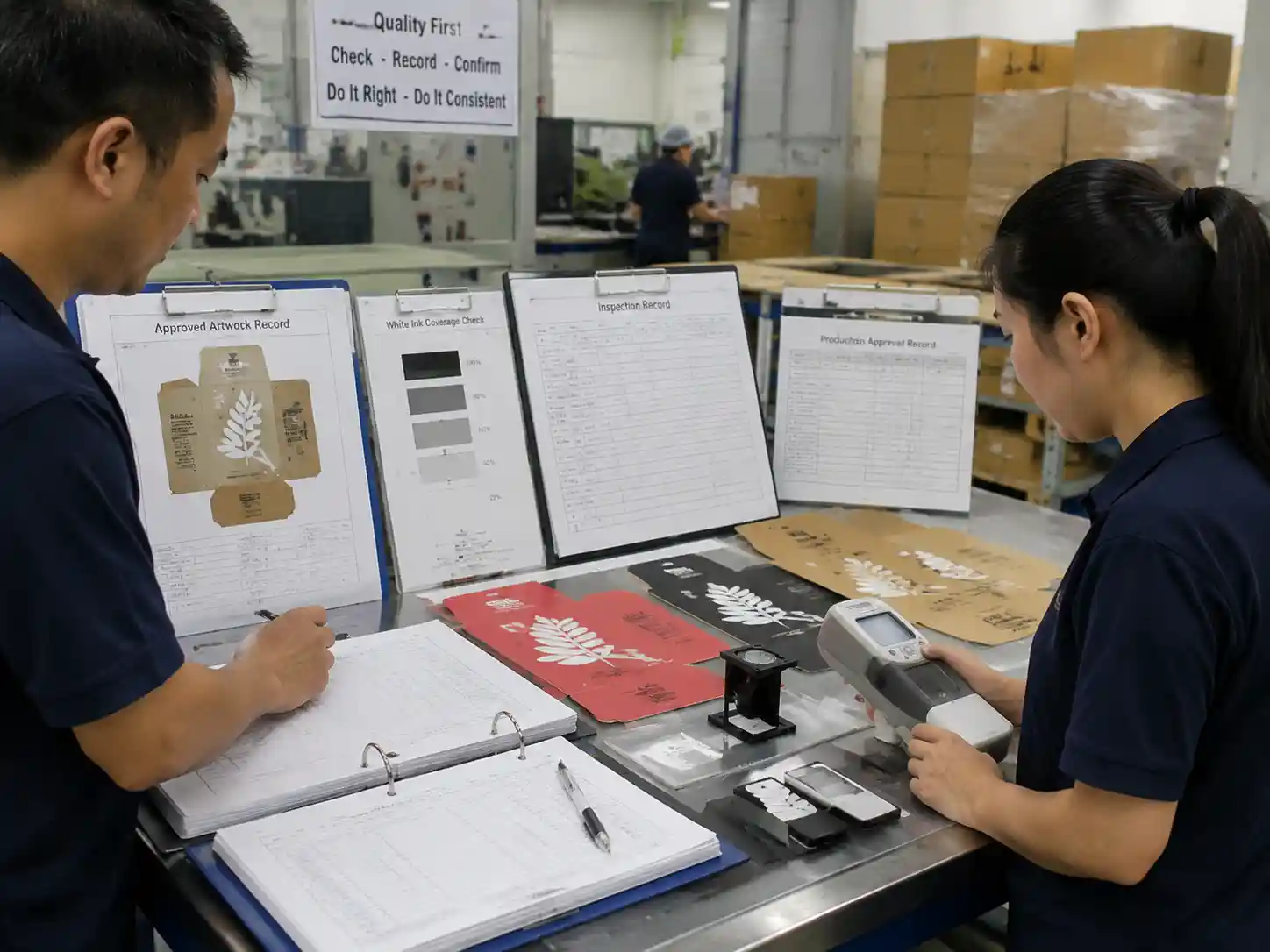
Verifiable evidence may include artwork files, preflight reports, proof sheets, color approval records, and production samples showing the white ink result on the selected paper stock.
How Should Buyers Approve White Ink on Kraft or Colored Paper?
Buyers should approve the actual printed appearance rather than relying only on a screen preview. Digital monitors cannot accurately represent how kraft fibers, colored substrates, and ink opacity interact.
An approval example may include:
- The approved artwork file with the white ink layer identified.
- A physical proof or production sample using the intended paper type.
- Notes showing whether white ink is full coverage, selective coverage, or used only for highlights.
- QC records confirming the printed result matches the approved reference.
Approval requirements vary by project. Packaging with large color panels, detailed illustrations, or strict brand color expectations usually requires more detailed validation than simple decorative printing.
What Risks Occur If White Ink Preparation Is Incorrect?
Incorrect white ink setup can create visible and functional packaging problems. Common risks include:
- Color inconsistency: CMYK colors may appear darker or less accurate without the correct white base.
- Unreadable details: Small text or barcodes may lose contrast against the substrate.
- Unexpected transparency: Missing white ink areas can expose the paper tone.
- Registration issues: Poor layer alignment can affect fine graphics and finishing details.
These risks can usually be reduced through organized artwork layers, supplier review, physical validation, and documented approval before production.
How Does White Ink Preparation Connect With Other Packaging Controls?
White ink preparation is part of broader artwork and prepress control. It works together with dieline accuracy, barcode placement, finishing layers, and final file inspection to ensure packaging graphics perform correctly after manufacturing.
Giftpackpro supports commercial packaging projects through structured artwork review and production coordination for custom advent calendar box services. Buyers planning printed seasonal packaging can also review advent calendar box buying guides for related artwork and production considerations.
FAQs About White Ink Preparation for Colored Paper
Can white ink replace a white paper surface?
White ink can improve opacity and brightness, but the final result depends on paper type, ink coverage, printing process, and finishing. Physical approval is recommended when appearance is critical.
Should every kraft paper package use white ink?
No. Some designs intentionally use kraft paper color as part of the visual effect. The decision depends on the required contrast, color accuracy, and design intent.
Why does printed color look different on kraft paper?
Kraft paper has its own base color and surface characteristics, which influence how inks appear. White ink can create a more neutral base when consistent color reproduction is required.
For packaging projects requiring controlled printing on colored or kraft substrates, request a review through request a custom quote and confirm the required white ink approach before production.