
Metallic color approval requires separating printed metallic ink effects from foil stamping results before production begins. The key is to approve the intended process, not only the appearance on a screen or sample. For custom advent calendar boxes and paper gift packaging, teams should compare artwork layers, material samples, finishing methods, and supplier approval records to confirm whether the metallic effect comes from ink, foil, or a combination.
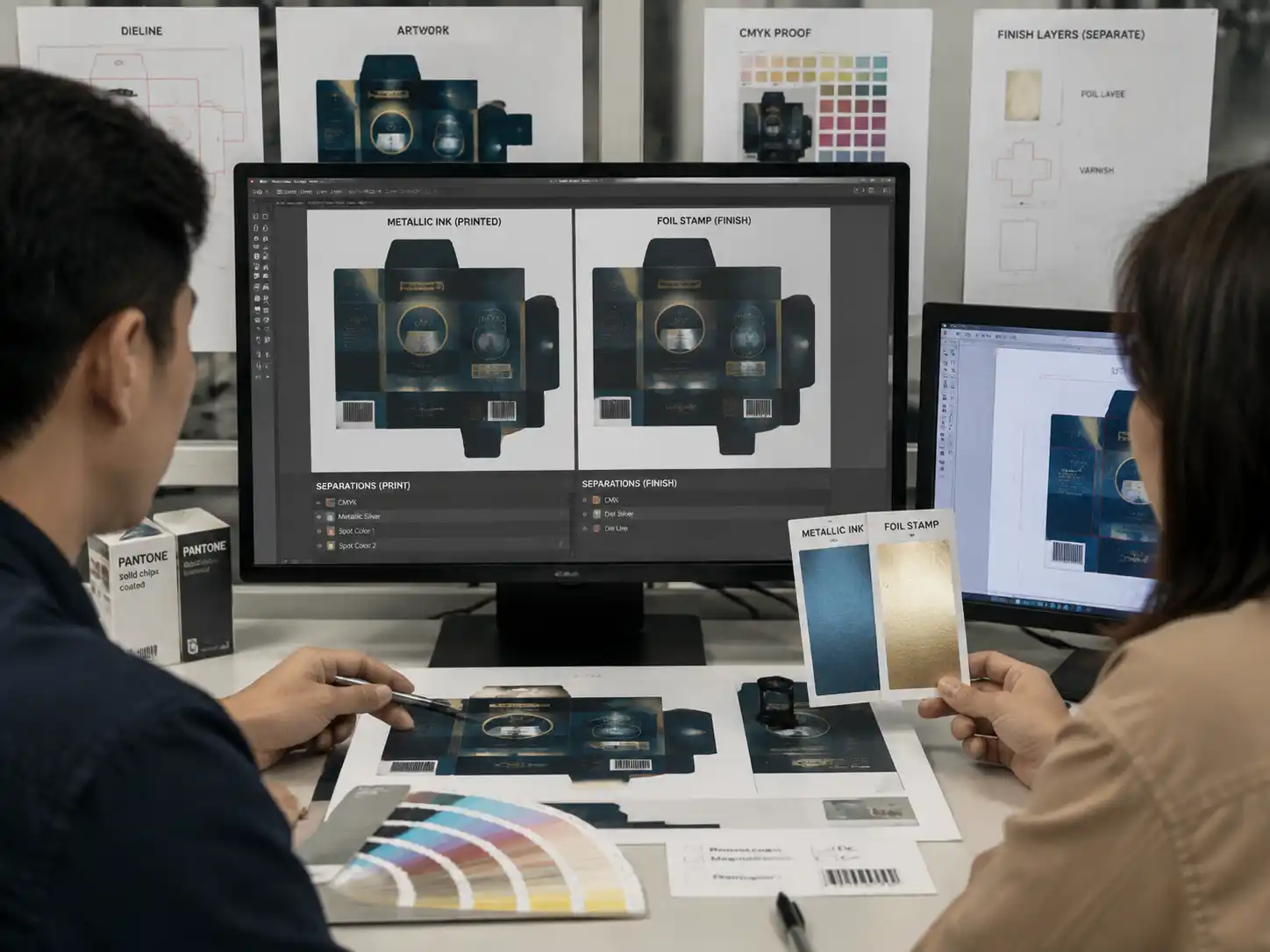
What Is the Difference Between Metallic Ink and Foil Approval?
Metallic ink approval confirms a printed color effect created through ink application, while foil approval confirms a transferred metallic layer applied through a finishing process. These methods can look similar under certain lighting but behave differently during production.
Metallic inks are evaluated as part of the printing process. Their appearance depends on ink formulation, paper surface, print coverage, and color management. Foil is evaluated as a separate finishing layer that depends on foil type, stamping pressure, temperature, registration, and the receiving material.
For packaging artwork, the approval record should clearly identify the production method. A reference image showing a gold appearance is not enough because a printed gold ink effect and a gold foil effect may require different artwork layers and manufacturing steps.
How Should Packaging Teams Handle Metallic Ink vs Foil Approval?
The approval process should begin by confirming the intended layer structure in the artwork file. The prepress team should verify whether metallic areas are assigned as printing colors, finishing layers, or separate production instructions.
- Review artwork separation: Check dielines, safe areas, and layer naming to confirm metallic elements are placed correctly and will not interfere with cutting, folding, or other finishing areas.
- Confirm production method: Identify whether the metallic effect uses metallic ink, foil stamping, or another finishing treatment before creating final approval samples.
- Compare physical references: Review printed proofs or finishing samples under consistent lighting instead of approving only from digital artwork screens.
- Record the decision: Keep approved samples, artwork revisions, and supplier notes together so production teams follow the same reference.
What Artwork Checks Prevent Metallic Color Approval Errors?
Artwork preparation is one of the most important controls because metallic effects often require different file structures from standard CMYK printing.
- Separate metallic ink areas from standard CMYK artwork layers.
- Define foil areas as finishing instructions rather than normal printed colors.
- Check that metallic elements stay within safe areas and do not cross critical folding or cutting lines.
- Review barcode zones and multilingual text areas to ensure metallic effects do not reduce readability.
- Confirm whether fine details require special treatment because very small foil or metallic ink elements may reproduce differently.
| Approval Item | Metallic Ink | Foil |
|---|---|---|
| Production method | Printed ink layer | Applied finishing layer |
| Artwork requirement | Separate print color setup | Separate foil layer or finishing instruction |
| Main inspection point | Color consistency and print coverage | Registration, adhesion, and surface appearance |
| Approval evidence | Printed color sample and artwork record | Foil sample and finishing approval record |
How Do You Verify Metallic Color During Sampling?
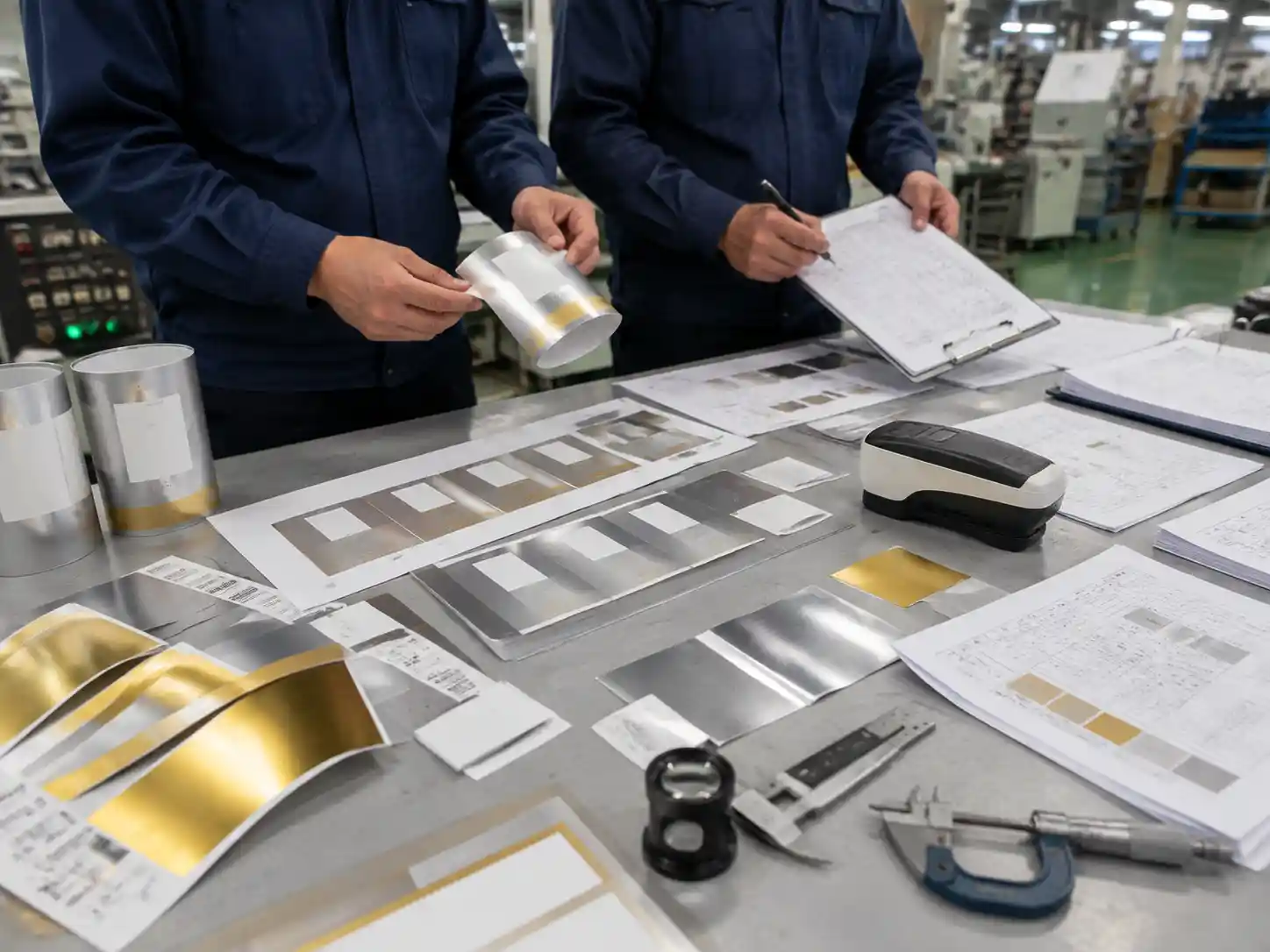
Physical sampling helps confirm whether the approved appearance can be achieved on the selected paper stock. The sample should represent the actual combination of printing, coating, lamination, and finishing conditions whenever possible.
During review, packaging teams should check:
- Whether the metallic tone matches the approved reference under normal inspection lighting.
- Whether the paper surface changes the visual effect.
- Whether coated and uncoated materials create different levels of reflection.
- Whether foil edges, fine lines, and registration align with the artwork.
- Whether the metallic area affects nearby graphics, text, or barcodes.
For projects involving custom advent calendar packaging, the approval sample should be linked to the final artwork revision. This prevents production teams from using an earlier metallic reference after artwork changes.
What Records Should Be Kept Before Final Metallic Approval?
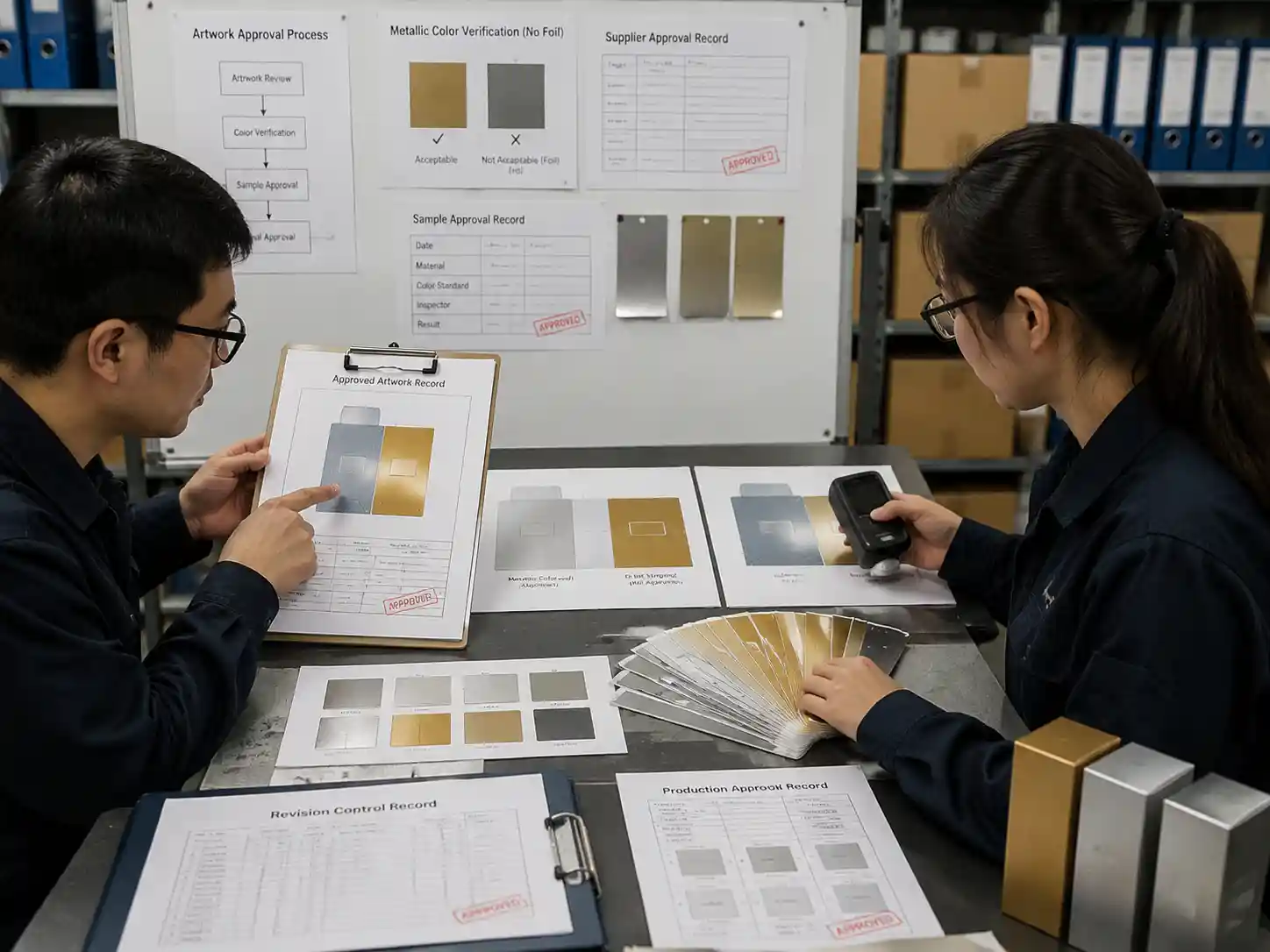
A clear approval record reduces confusion between design intent and manufacturing instructions. The record should show what was approved and how the effect will be produced.
Useful approval evidence includes:
- Approved artwork files with identified metallic layers.
- Physical print or finishing samples.
- Notes describing metallic ink, foil type, or finishing method.
- Inspection comments from design, prepress, and quality teams.
- Revision history showing the approved artwork version.
These records allow sourcing teams and suppliers to verify that production follows the approved specification rather than relying on visual assumptions.
Which Factors Can Change Metallic Color Results?
Metallic appearance can vary depending on project conditions, so final expectations should be confirmed through the selected production method and materials.
- Paper stock: Texture, coating, and base color can influence metallic brightness and reflection.
- Coverage: Ink density and print conditions can affect metallic consistency across larger areas.
- Finishing alignment: Foil placement may vary depending on registration requirements and production tolerances.
- Viewing conditions: Metallic effects change with lighting angle because reflection is part of the visual result.
These factors are project-dependent and should be confirmed through supplier samples, drawings, and documented approvals rather than assumed from digital previews.
What Is a Practical Metallic Color Approval Checklist?
Before approving metallic effects, teams can use this short preflight checklist:
- ☐ Metallic areas are identified as ink or foil.
- ☐ Artwork layers and finishing instructions are separated correctly.
- ☐ Dielines and safe areas have been checked.
- ☐ Barcodes and small text remain readable.
- ☐ Physical samples have been reviewed.
- ☐ Approved references and revision records are stored.
FAQs About Metallic Ink and Foil Approval
Can metallic ink look the same as foil?
No. Metallic ink can create a reflective appearance, but foil usually provides a different level of shine and surface reflection. The final result depends on materials and production methods.
Should metallic colors be approved from a digital proof?
No. Digital proofs are useful for artwork review but cannot fully represent metallic reflection. Physical samples are needed for final appearance approval.
Can metallic ink and foil be used together?
Yes, some packaging designs combine printed metallic effects with foil finishing. The artwork layers and production instructions must clearly separate each process.
Giftpackpro helps commercial packaging teams manage artwork preparation, color control, and production approval for custom advent calendar boxes. For projects requiring metallic printing or finishing decisions, custom advent calendar box services can support the transition from approved artwork to production-ready packaging. Teams can also request a custom quote with their packaging requirements.


