
Quick answer: Avoiding misleading “plastic-free” claims requires more than selecting paper-based packaging. A compliant claim should be supported by clear material definitions, supplier documentation, construction reviews, and evidence showing that coatings, laminations, adhesives, windows, closures, and accessories match the stated claim. For advent calendar packaging, every component should be reviewed before approval because small material changes can affect recyclability, disposal guidance, and claim accuracy.
What does plastic free packaging claim compliance require?
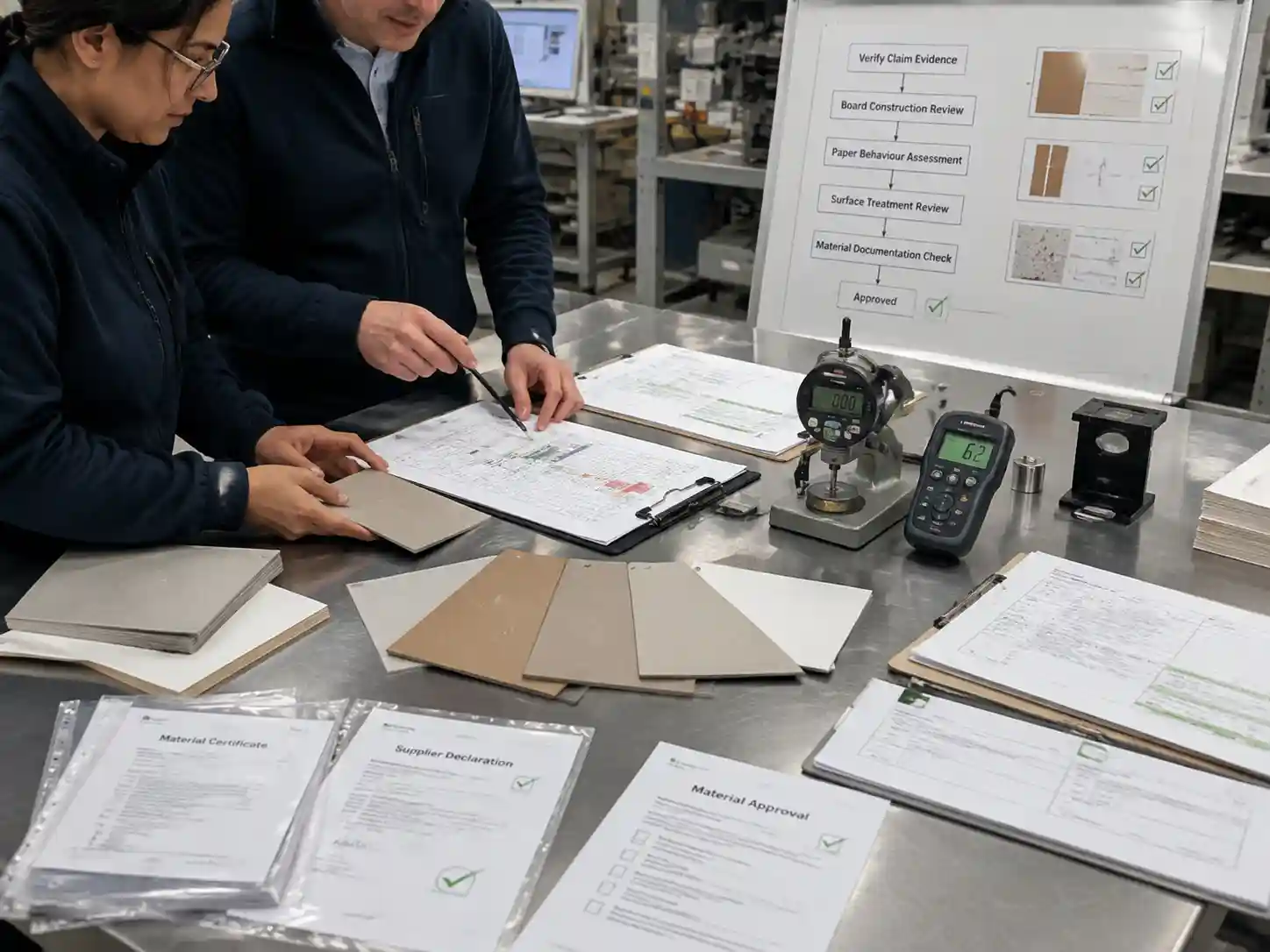
Plastic free packaging claim compliance requires a clear understanding of what materials are included in the complete packaging structure, not only the main visible paperboard components. A paper outer shell does not automatically make the entire package plastic-free if other components contain plastic materials.
Packaging teams should define the claim scope before production review. This includes identifying whether the claim applies to:
- The main box structure only
- The complete finished packaging system
- All components supplied with the package, including inserts and accessories
For advent calendar packaging, common review points include paperboard, greyboard, surface finishes, adhesive systems, windows, magnets, ribbons, trays, and protective components. The correct claim depends on the actual material construction.
Which packaging components should be checked before making a plastic-free claim?
Every functional component that becomes part of the final packaging should be checked because hidden materials can create claim risks. A material review should follow the complete packaging structure from outside surface to internal retention parts.
| Component | Verification focus | Potential claim risk |
|---|---|---|
| Paperboard and greyboard | Confirm board composition and supplier material information | Incorrect assumption based only on paper appearance |
| Surface coatings and finishes | Review coating type and application method | Film-like layers may affect claim wording |
| Windows or transparent sections | Confirm whether clear panels contain plastic materials | Small transparent areas may conflict with broad claims |
| Inserts and retention parts | Review trays, foams, or molded components | Internal components may not match external appearance |
| Accessories | Check ribbons, closures, magnets, and packaging additions | Claim may become inaccurate if accessories are excluded |
How can buyers verify whether a plastic-free claim is accurate?
Buyers can verify claims by creating a documented material review process before production approval. The goal is to connect the claim statement with measurable packaging evidence.
Useful verification records include:
- Material specification sheets from suppliers
- Packaging structure drawings identifying each component
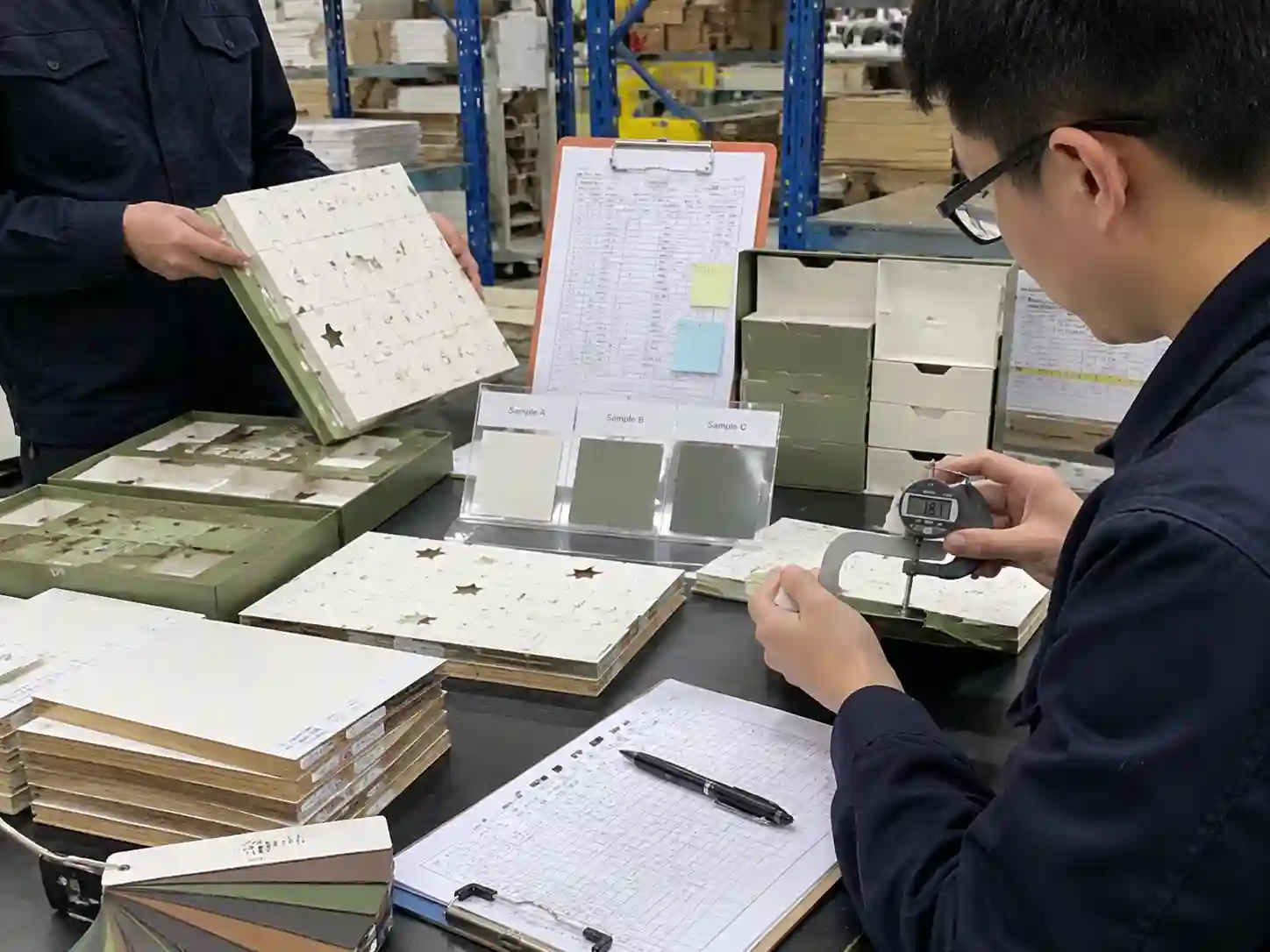
- Sample inspection notes showing actual construction
- Material approval records from engineering or sourcing teams
- Change-control records when materials are replaced
Visual inspection alone is not enough. Paper-based materials can include coatings, treatments, or attached components that are not obvious from appearance. Documentation should support the exact claim language being used.
How should paper-based advent calendar structures be reviewed?
Paper packaging should be evaluated as an engineered structure rather than a single material. Board construction, surface treatment, and manufacturing processes can influence whether a claim remains accurate.
For example, a rigid advent calendar may use greyboard wrapped with printed paper. The paper exterior may appear fully natural, but the final assessment should consider the complete construction, including any applied layers or additional components.
Project teams should review:
- Board construction: confirm the selected paperboard and supporting board materials.
- Surface behaviour: check coatings or finishes used for appearance and protection.
- Assembly materials: identify adhesives or attachments included in the finished product.
- Material changes: ensure replacements during production do not change the claim basis.
What evidence should suppliers provide for sustainability claim review?
Suppliers should provide practical evidence that allows buyers to evaluate the claim rather than relying on general marketing descriptions. The required documents depend on the claim scope and project requirements.
| Evidence type | Purpose | Used for approval |
|---|---|---|
| Material specifications | Identify board, paper, coating, and component information | Engineering and sourcing review |
| Packaging drawings | Show the complete structure and component locations | Construction verification |
| Approved samples | Confirm the physical package matches documentation | Final design confirmation |
| Supplier declarations | Support material-related statements | Claim evaluation records |
Which parts of a plastic-free claim depend on project decisions?
Some claim decisions cannot be determined from packaging appearance alone. They depend on the intended market wording, applicable regulations, disposal systems, and the exact packaging specification.
Verifiable facts:
- The physical materials used in the packaging structure
- The presence of coatings, films, or non-paper components
- The documented specifications provided for materials
Project-dependent recommendations:
- Whether a broad “plastic-free” statement is suitable
- Whether a narrower material description is clearer
- Which evidence level is required for customer or market approval
Buyer approvals:
- Final claim wording
- Acceptable evidence documents
- Required supplier declarations or internal review steps
How do material changes create claim risks after approval?
Material substitutions can create compliance problems if the original claim was approved using a different structure. A change to coatings, inserts, closures, or protective materials may affect the accuracy of the claim.
Production teams should use change-control checks when replacing materials. Reviewing updated samples, supplier information, and packaging drawings helps ensure that approved claims remain aligned with the finished product.

FAQ: Is paper packaging automatically plastic-free?
No. Paper-based packaging may still contain non-paper components such as coatings, films, windows, or accessories. The complete packaging structure should be reviewed before making a broad claim.
FAQ: Can a recyclable package also be called plastic-free?
Not necessarily. Recyclability and plastic-free status are different evaluations. A package should be reviewed according to the specific claim being made and the materials included.
FAQ: What is the best way to document a plastic-free packaging decision?
A practical approach is to maintain a record containing material specifications, structure drawings, approved samples, supplier information, and internal approval notes.
Giftpackpro supports commercial packaging projects with structured material reviews and custom advent calendar box solutions. For projects requiring claim verification, teams can review construction details, material evidence, and production requirements through custom advent calendar box services or request a custom quote.


