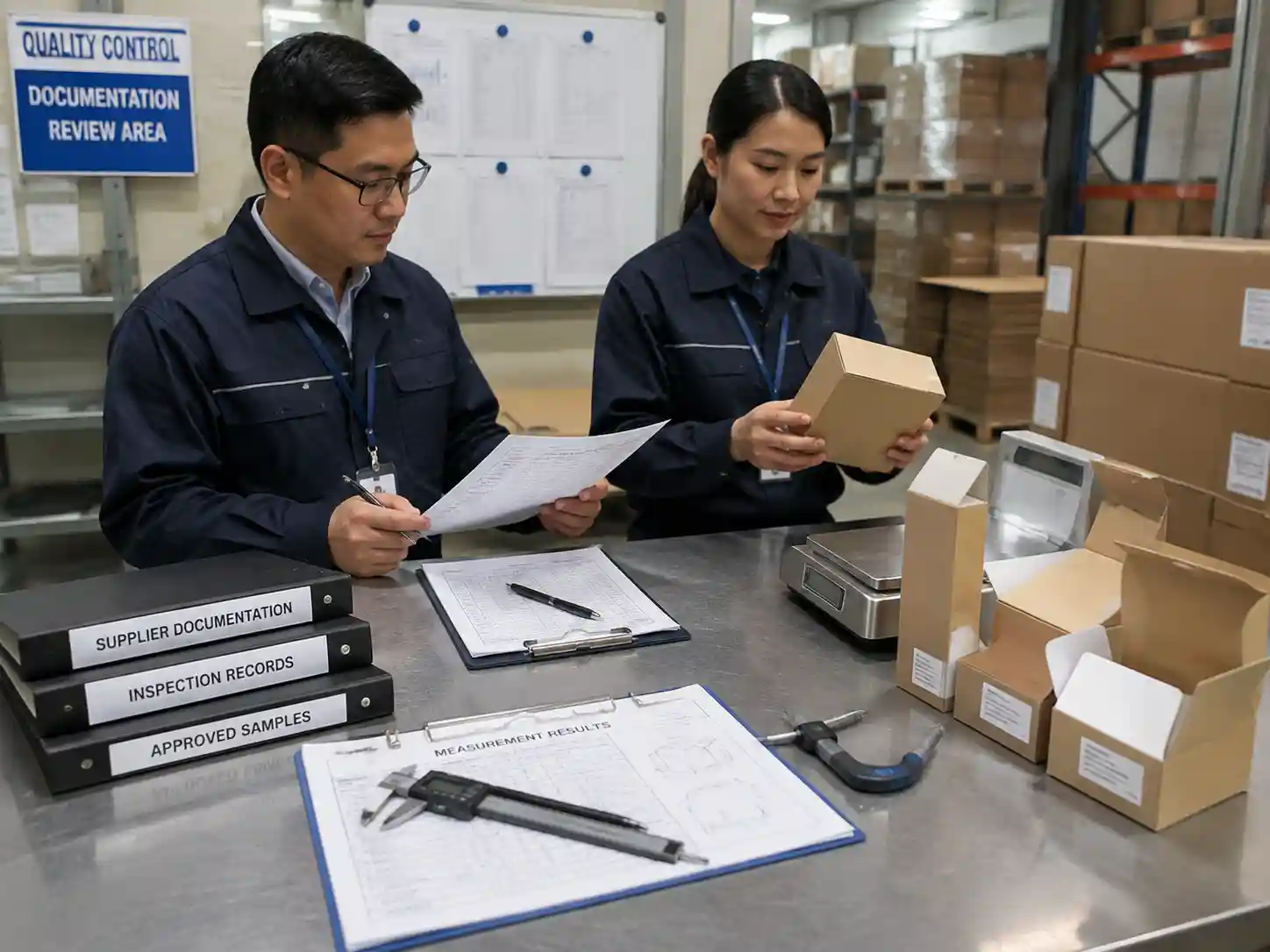
Recyclable packaging claims should be supported by clear material information, construction details, supplier documentation, and verification records rather than a sustainability statement alone. For custom paper gift packaging, evidence usually starts with knowing the board structure, paper composition, coatings, adhesives, and finishing processes. The goal is to confirm that the selected packaging design can meet the intended recyclability requirements under the applicable recycling system.
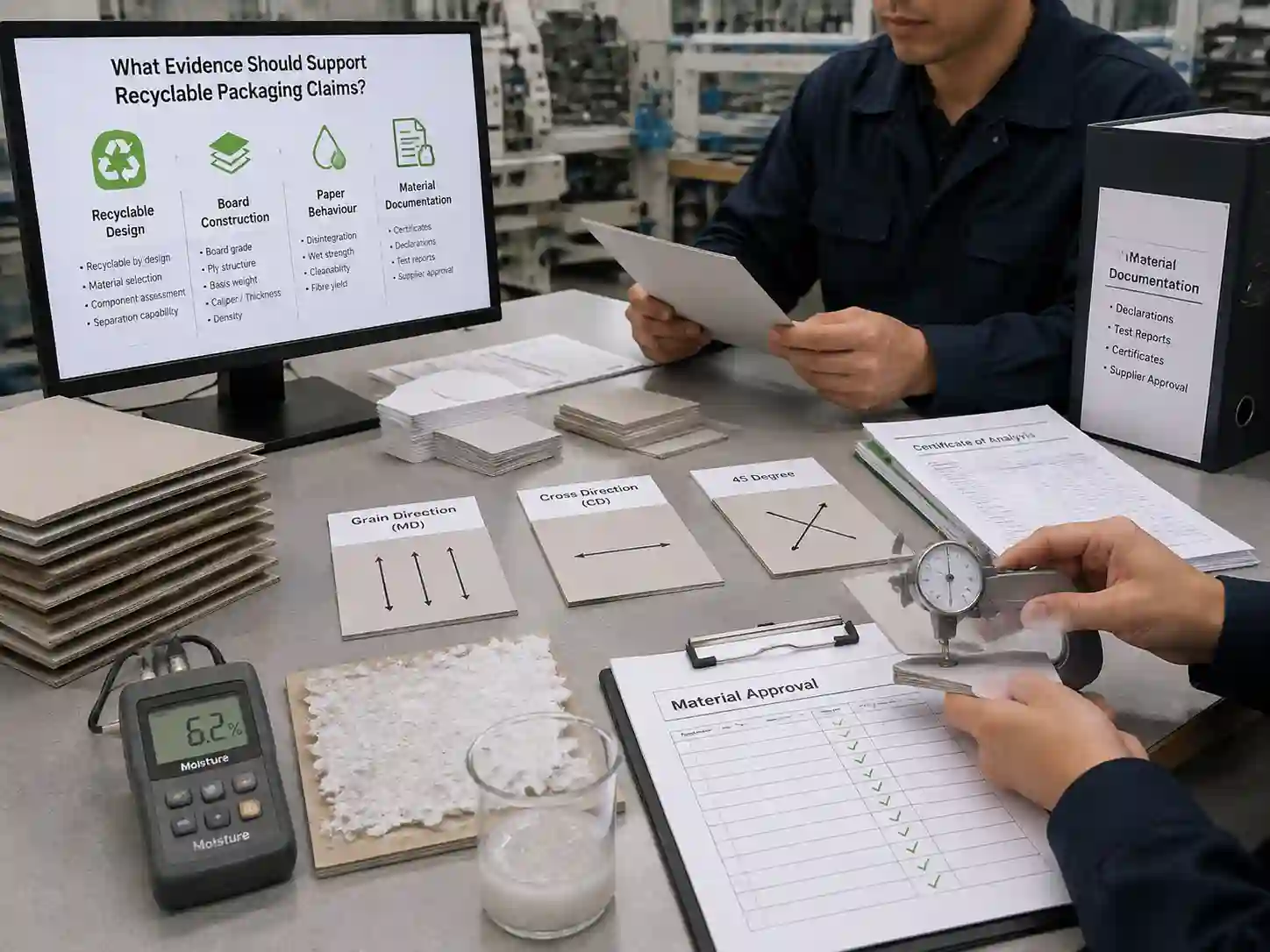
What evidence should support recyclable packaging claims?
The strongest recyclable packaging claim evidence combines material specifications, supplier records, and project-level verification. A claim should be supported by documents and checks that show what the packaging is made from and whether additional components may affect recyclability.
For advent calendar boxes and seasonal paper packaging, important evidence usually includes:
- Paperboard or greyboard material specifications.
- Information about paper fibres, recycled content, or virgin fibre content where applicable.
- Details of coatings, laminations, adhesives, foils, and other finishing layers.
- Supplier declarations or technical documents describing material properties.
- Samples or production checks confirming the final construction matches the approved design.
Why does board construction matter when making recyclability claims?
Board construction is one of the first areas to review because packaging is recycled as a complete structure, not only as a single paper sheet. Different layers, coatings, and attachments can influence how the package behaves during recycling processes.
A paperboard box made with a compatible structure may have different recyclability considerations from a package combining multiple non-paper layers. The evidence should therefore identify the complete material build, including:
| Packaging element | Evidence to review | Why it matters |
|---|---|---|
| Greyboard or paperboard | Material specification and supplier documentation | Confirms the main structural substrate used in production. |
| Printed surface | Ink and finishing information | Shows whether decoration methods introduce additional material considerations. |
| Lamination or coating | Technical details of surface layers | Helps evaluate whether added layers affect recycling compatibility. |
| Adhesive system | Adhesive type and application information | Supports review of non-paper components in the finished package. |
How can suppliers verify recyclable packaging information?
Suppliers can verify recyclable packaging information through controlled records, material samples, and production checks. The verification process should connect the approved material to the final manufactured packaging.
Useful verification steps include:
- Review material documents: Confirm the board type, supplier specifications, and declared material characteristics.
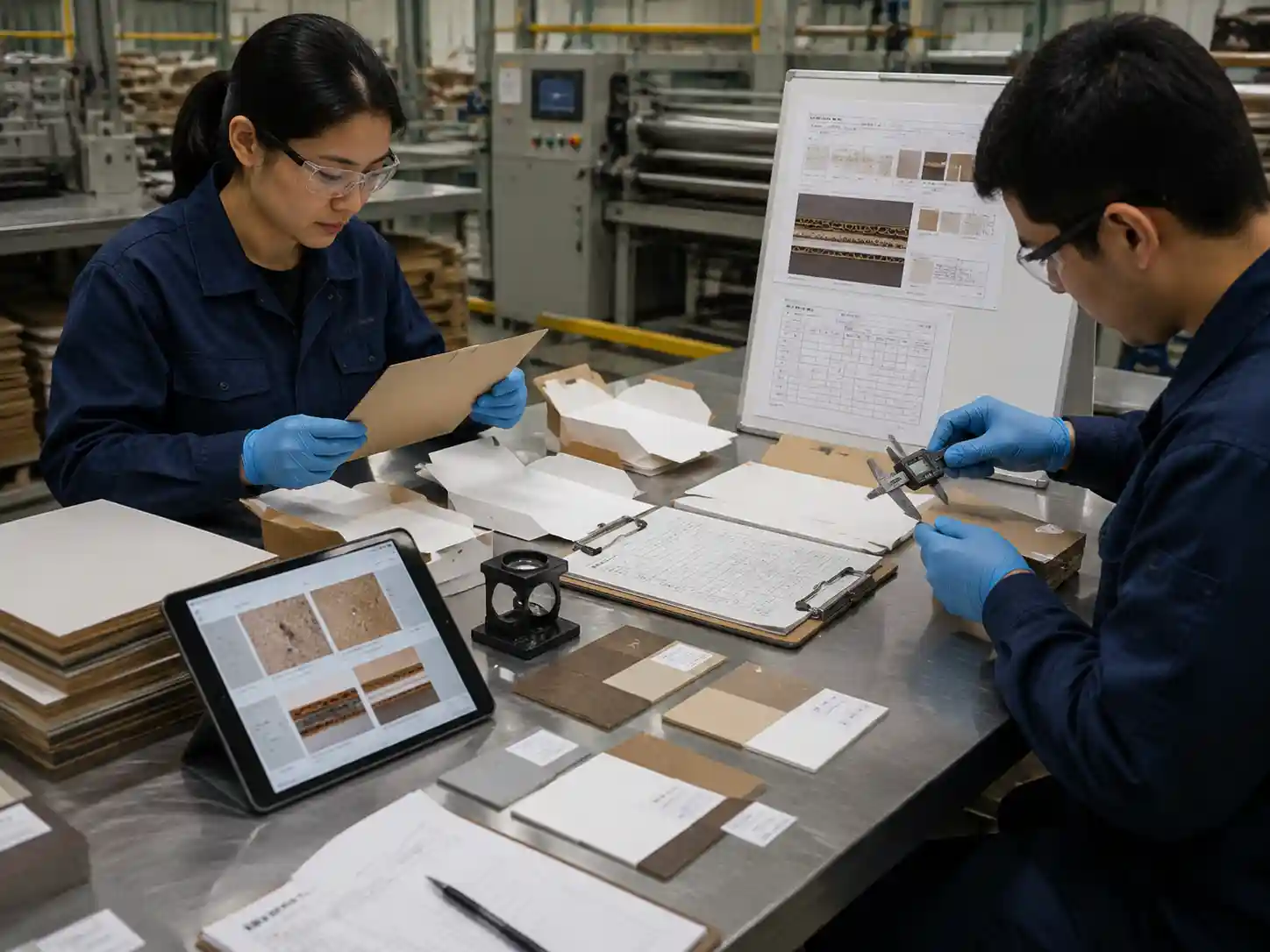
- Check physical samples: Compare approved paperboard samples with production materials to identify unexpected changes.
- Review construction drawings: Confirm that the final structure, coatings, and attached components match the intended design.
- Record approval decisions: Maintain inspection notes and approval records showing why the material selection was accepted.
What documents are useful for recyclable packaging claim evidence?
The required documents vary by project, market, and claim requirements, but buyers commonly review a combination of technical and quality records.
- Material specification sheets.
- Supplier declarations or technical data documents.
- Approved material samples.
- Packaging structure drawings.
- Production inspection records.
- Change-control records when materials are updated.
These documents help separate verified information from assumptions. A packaging supplier should be able to explain which details are confirmed by suppliers, which are measured during production, and which require buyer approval.
How do humidity and material changes affect recyclable packaging evidence?
Recyclability evidence should also consider material consistency because paper packaging performance can change when production conditions or material sources change. Humidity, storage conditions, and paper behaviour may affect physical performance even when the basic material remains similar.
For example, a change in board supplier, coating method, or surface treatment may require a new review of the packaging specification. Buyers should avoid treating recyclability claims as permanent if the approved material structure changes.
What checks should buyers complete before approving recyclable packaging claims?
Buyers should confirm that the sustainability claim matches the actual packaging specification before approving production. The approval process should include both documentation review and physical confirmation.
| Check area | Buyer approval question |
|---|---|
| Material identity | Does the production material match the approved board specification? |
| Surface treatment | Are coatings, laminations, and finishes included in the recyclability review? |
| Supplier evidence | Are supporting documents available and linked to the selected material? |
| Production consistency | Are inspection records available for the final packaging structure? |
What is the difference between verified facts and project-dependent recommendations?
Verified facts are information directly supported by material documents, supplier records, measurements, or inspection results. Project-dependent recommendations require review because recyclability can vary according to local recycling systems, packaging construction, and claim standards.
For example, confirming that a box uses a specific paperboard type is a factual material record. Deciding whether that complete package can be marketed with a recyclability claim may require additional assessment based on the final construction and intended market.
How should packaging teams manage recyclable claim risks?
The main risk is making a sustainability claim based only on the main material while ignoring secondary components. A paper-based package may still require review of coatings, adhesives, windows, magnets, or other additions.
A practical risk-control approach is to keep a material approval file that connects:
- Packaging drawings.
- Material specifications.
- Supplier information.
- Approved samples.
- Inspection and change records.
Giftpackpro supports commercial packaging projects by helping buyers review packaging structures, materials, and production evidence through the development process. Learn more about our custom advent calendar box services, explore custom advent calendar box products, or contact our team to request a custom quote.
FAQ: What is the most important evidence for a recyclable packaging claim?
The most important evidence is usually a complete understanding of the packaging material structure, supported by supplier documents, approved samples, and production verification records.
FAQ: Does using paper automatically make packaging recyclable?
No. Paper is an important packaging material, but the complete construction must be reviewed. Coatings, laminations, adhesives, and added components may affect recyclability considerations.
FAQ: Should recyclable packaging evidence be reviewed after material changes?
Yes. Any significant material or construction change should trigger a review because the original evidence may no longer represent the final packaging.