Quick answer: Paper grain direction affects how a board bends, folds, and resists repeated stress. For advent calendar boxes and other folded paper packaging, aligning folds and hinges with the correct grain direction usually improves crease stability, reduces cracking risk, and helps maintain structural accuracy. The final choice depends on board construction, coating, humidity exposure, folding method, and the required opening cycle of the finished package.
Why does paper grain direction affect folding and hinge durability?
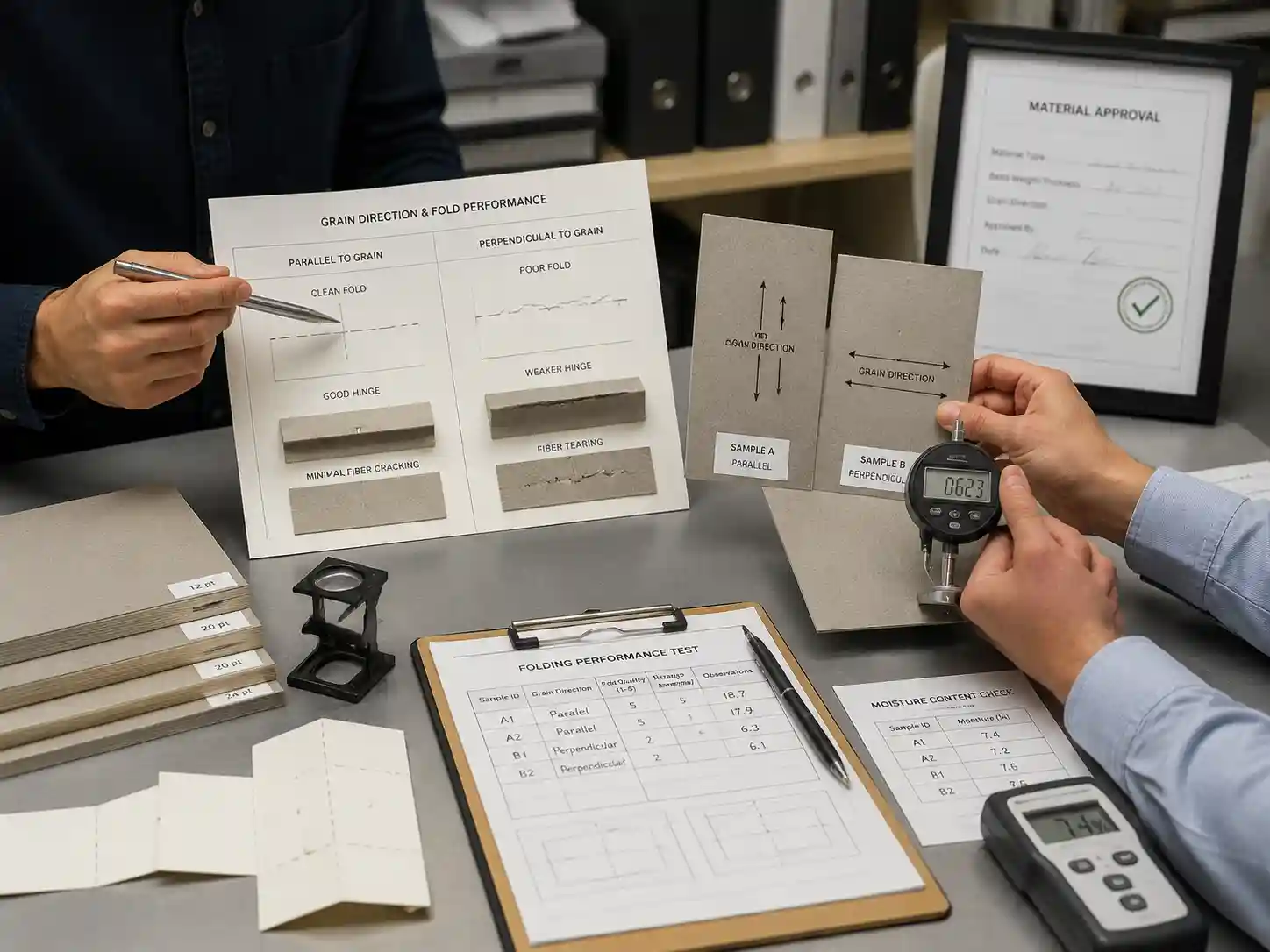
Paper grain direction hinge durability is closely connected because paper fibers naturally align during manufacturing. The grain direction describes the dominant fiber orientation in the paper or board sheet, which influences flexibility, stiffness, and how the material reacts when folded.
When a fold or hinge is designed parallel to the grain direction, the board generally bends more smoothly because the fibers can move with the fold. Folding against the grain can create higher resistance, sharper fiber stress, and a greater chance of cracking, especially on coated surfaces or thicker boards.
How should grain direction be considered when designing folding packaging?
The grain direction should be reviewed during structural design before production drawings are finalized. Packaging engineers normally check how the board sheet layout affects:
- Door or lid opening movement
- Book-style hinge flexibility
- Drawer front alignment
- Large panel flatness
- Repeated folding stress
- Surface cracking after creasing
For example, a large advent calendar cover with a hinged opening panel may require a different grain orientation from a flat tray or rigid sleeve. The correct direction depends on where the board must flex and where it must maintain stiffness.
What happens when grain direction is incorrect?
Incorrect grain orientation does not always cause immediate failure, but it can increase material-change risk during manufacturing, handling, and use.
| Grain direction issue | Possible packaging impact | Verification method |
|---|---|---|
| Fold placed across difficult bending direction | Higher folding resistance and uneven movement | Crease and folding sample inspection |
| Hinge area stressed against fiber direction | Reduced opening durability and possible cracking | Repeated opening evaluation |
| Large panel grain mismatch | Warping or reduced flatness control | Flatness measurement and visual inspection |
| Coated board folded under high stress | Surface cracking or coating separation | Surface inspection after creasing |
How do packaging engineers check grain direction before production?
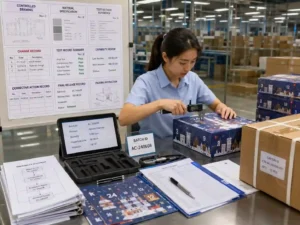
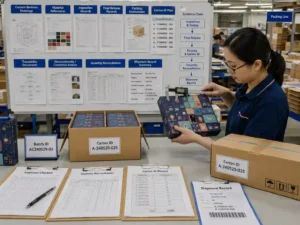
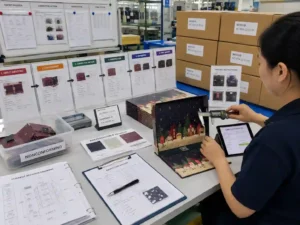
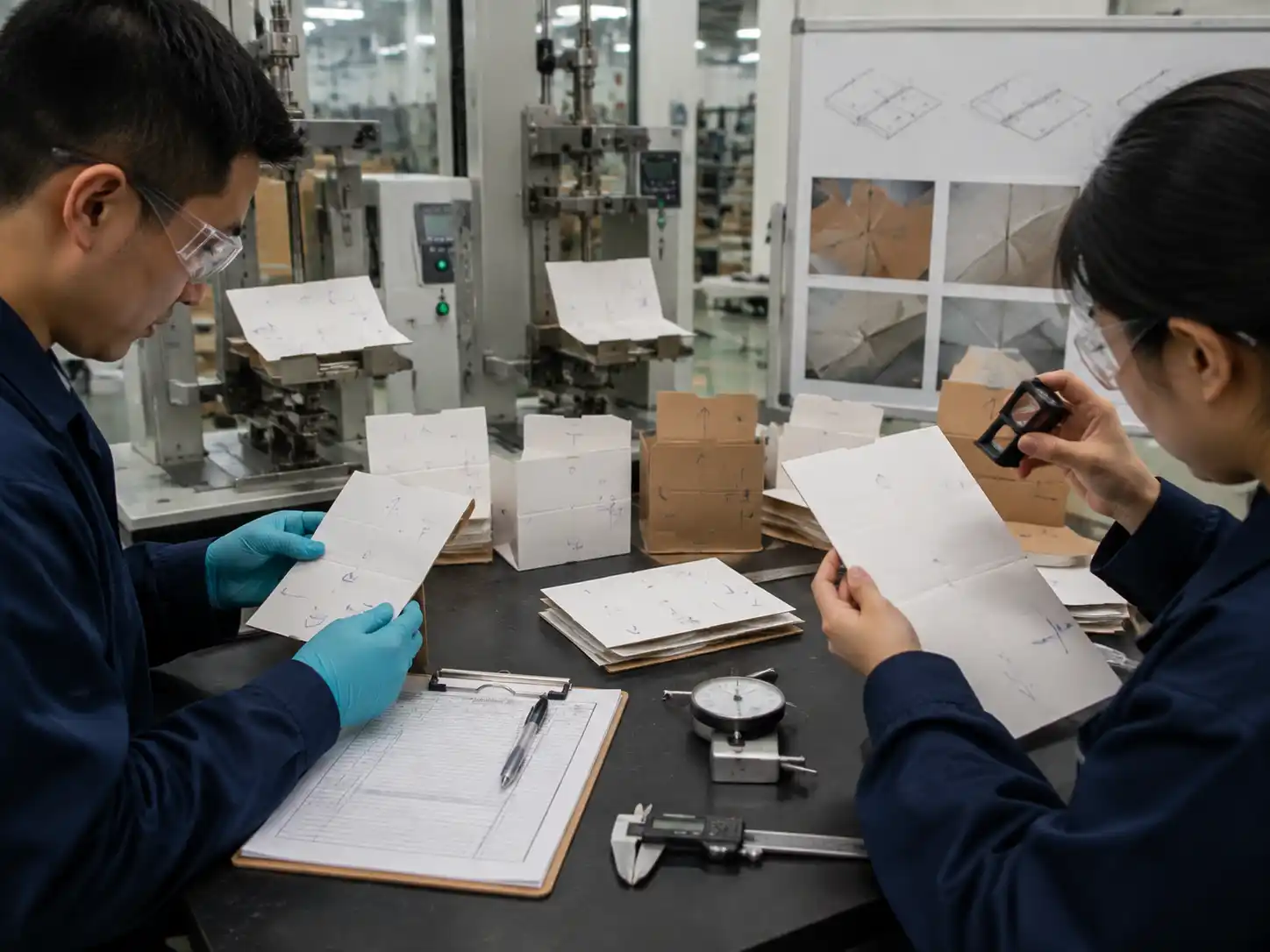
Grain direction should be confirmed through physical samples and supplier documentation rather than relying only on drawings. Common checks include:
- Board sample review: Inspect paperboard or greyboard sheets to identify fiber direction and sheet orientation.
- Technical drawing review: Confirm that creases, folds, and hinge lines match the planned board layout.
- Prototype folding checks: Evaluate whether panels open smoothly and whether corners remain stable.
- Surface inspection: Check for cracking, whitening, or coating stress after folding.
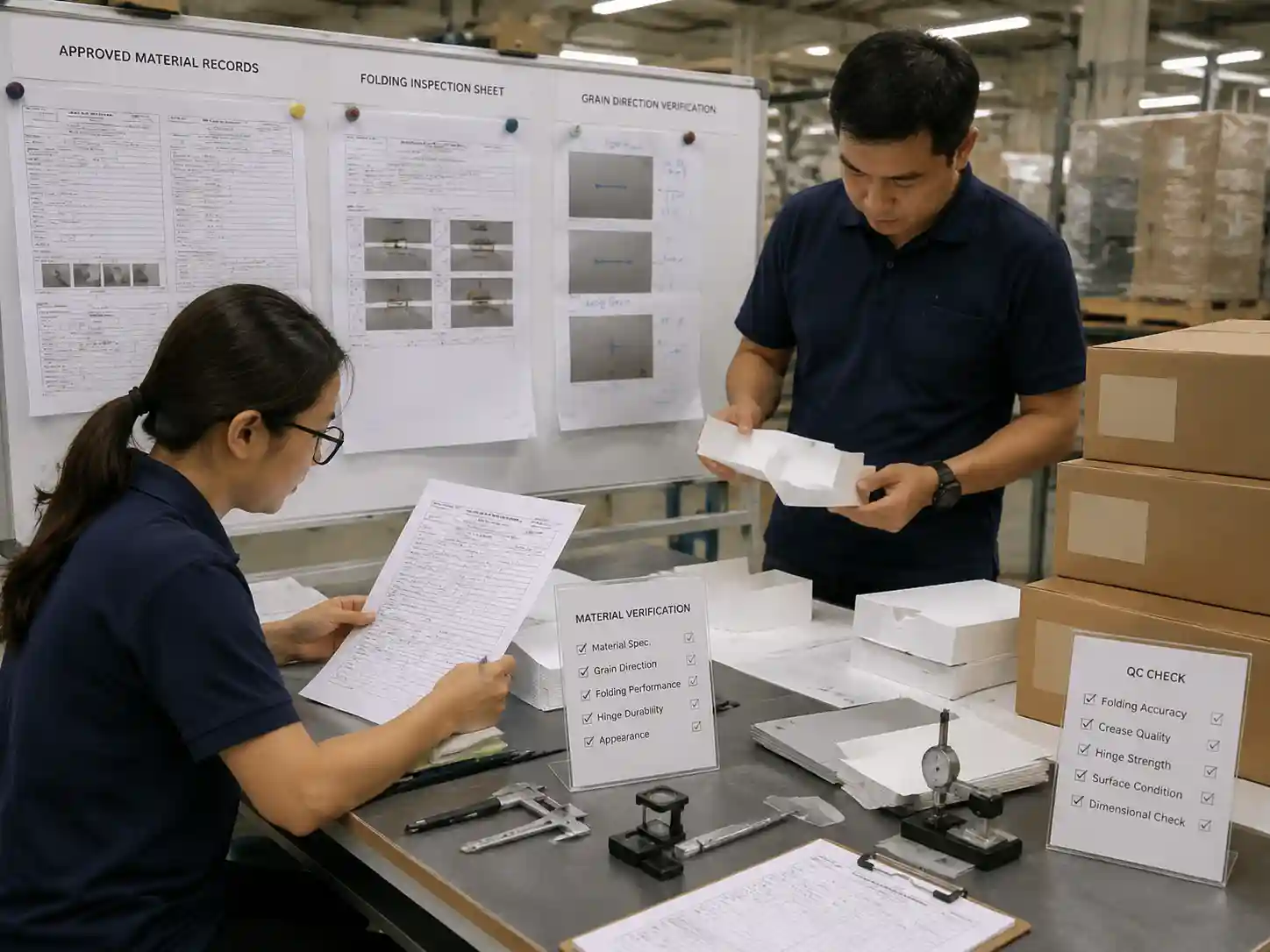
- Production approval records: Keep approved samples, material specifications, and inspection notes for reference.
For commercial packaging projects, these records help buyers compare approved materials against later production batches and reduce unexpected changes.
How does grain direction influence different packaging materials?
The effect of grain direction varies depending on board construction. A thin coated paperboard sheet may show surface cracking more easily, while a thicker greyboard structure may show differences in stiffness and bending behavior.
| Material type | Grain direction consideration | Typical project concern |
|---|---|---|
| Coated paperboard | Important for fold quality and surface appearance | Preventing crease cracks and coating damage |
| Solid board structures | Important for stiffness and hinge behavior | Maintaining panel stability during opening |
| Greyboard-based rigid packaging | Important for bending resistance and construction accuracy | Controlling panel movement and structural consistency |
What evidence should buyers request for grain direction approval?
Buyers should separate verified material facts from project-dependent recommendations. Grain direction is a material characteristic, but the best orientation depends on the final structure and intended performance.
Verifiable evidence
- Material specification sheets
- Approved board samples
- Structural drawings showing fold and hinge locations
- Prototype inspection records
- Surface quality checks after folding
Project-dependent decisions
- Whether the hinge should follow or cross the grain
- The required opening frequency
- The acceptable level of surface stress
- The balance between stiffness and flexibility
These decisions should be approved through sample evaluation because the same board can perform differently depending on thickness, coating, construction method, and environmental conditions.
How do humidity and storage conditions affect grain direction performance?
Paper-based materials respond to moisture changes because fibers expand and contract with humidity variation. Grain direction can influence how this movement appears across a folded structure.
In projects exposed to changing storage or transport environments, engineers may review moisture conditions together with grain direction, board thickness, and finishing methods. This helps identify potential risks such as panel distortion, hinge stress, or reduced folding accuracy.
What is a practical example of grain direction selection?
A book-style advent calendar with a large opening cover requires controlled hinge movement and a stable outer panel. During material approval, engineers may compare different board orientations by folding prototype samples, checking hinge movement, and inspecting the crease area after repeated handling.
The selected orientation is not based on grain direction alone. It is based on the combination of board construction, hinge location, surface finish, and the required packaging performance.
FAQ: Does paper grain direction always need to follow the fold line?
Not always. Following the grain is often preferred for flexible folds, but some structures require a different orientation to balance stiffness, panel support, or manufacturing requirements.
FAQ: Can grain direction problems be corrected after production?
Major grain orientation issues are difficult to correct after production because they are related to the original sheet layout. Early sample review is the most effective way to identify problems.
FAQ: Is grain direction important for all advent calendar box structures?
It is especially important for structures with hinges, doors, fold-out panels, or repeated movement. Simpler rigid constructions may have fewer folding-related concerns.
Giftpackpro supports custom paper packaging development with material review, structural evaluation, and production-focused approval processes. Learn more about custom advent calendar box products or explore custom advent calendar box services for project-specific packaging requirements. You can also request a custom quote for your next packaging project.