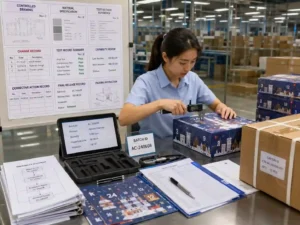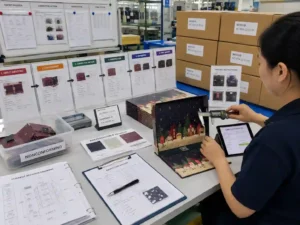
Humidity can change the fit of drawers and sleeves because paper-based packaging materials absorb and release moisture, affecting dimensions, stiffness, friction, and surface behavior. The humidity drawer sleeve fit issue is mainly controlled through board selection, paper grain direction, coating choices, storage conditions, and production verification. Buyers should evaluate material movement through samples, measurements, and inspection records before approving large production runs.
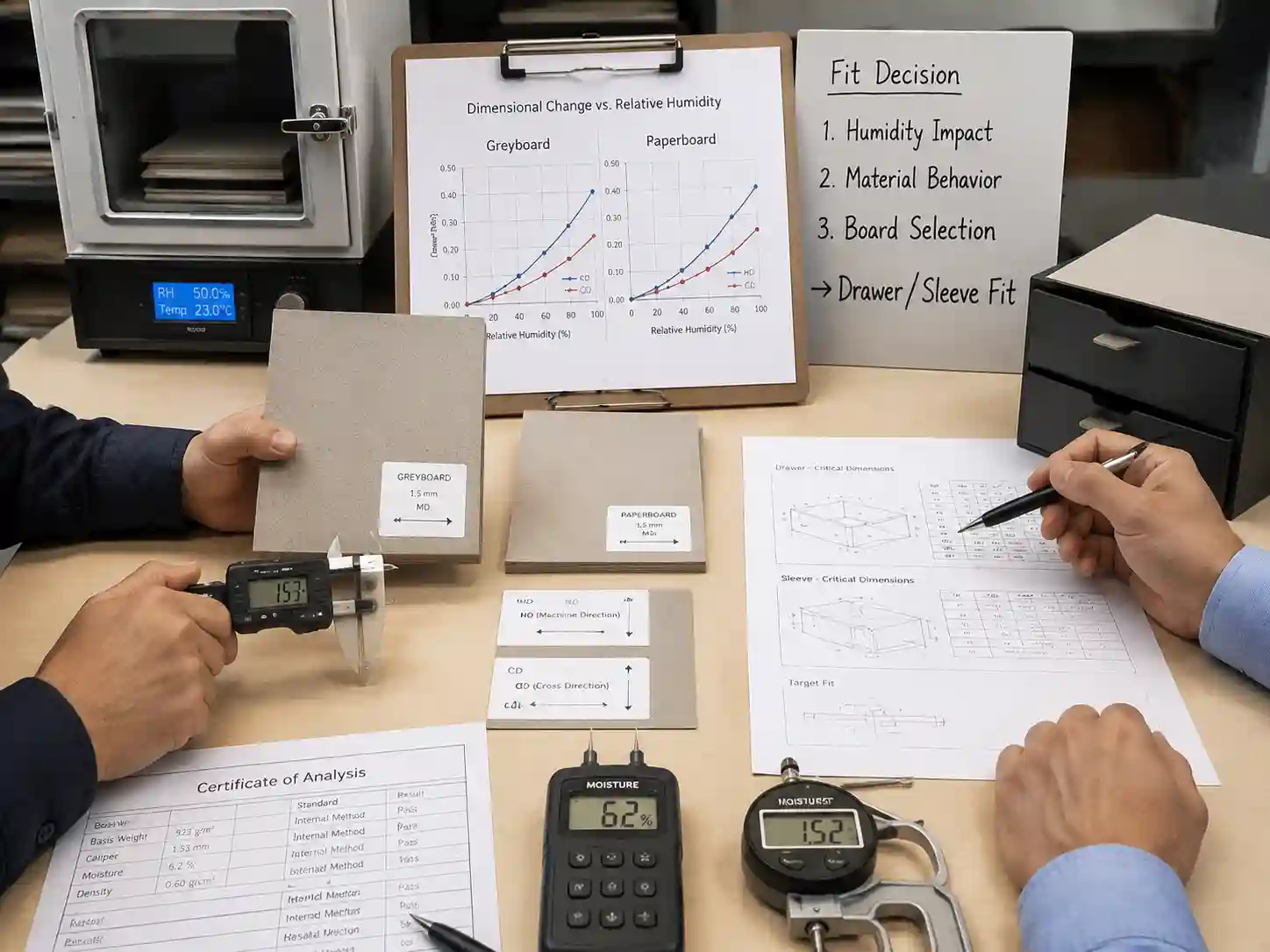
Why does humidity affect drawer and sleeve packaging fit?
Humidity affects drawer and sleeve fit because paperboard fibers naturally expand when they absorb moisture and contract when they lose moisture. These dimensional changes can alter the clearance between the inner drawer and outer sleeve.
For rigid paper packaging such as advent calendar boxes, the risk is usually not a large visible size change. Small dimensional movement can be enough to create problems such as:
- Drawers becoming difficult to open or close.
- Sleeves becoming too tight and increasing friction.
- Edges rubbing and creating scuff marks.
- Panels losing flatness after environmental changes.
- Assembly tolerances becoming inconsistent between batches.
These effects depend on the board structure, paper composition, thickness, coating, construction design, and the humidity conditions during manufacturing, storage, and distribution.
How does humidity change the clearance between drawers and sleeves?
The clearance between a drawer and sleeve must account for expected material movement. A design that fits perfectly in a controlled factory environment may become tight if the paperboard absorbs moisture later.
What packaging materials are most affected by humidity?
| Material factor | Humidity impact | Typical packaging risk |
|---|---|---|
| Greyboard core | Moisture absorption can change thickness and stiffness | Drawer movement becomes tighter or less consistent |
| Paper wrapping layer | Fiber expansion can change surface dimensions | Sleeve friction and edge alignment issues |
| Coating and lamination | Can reduce moisture exchange but may create different movement between layers | Warping or surface tension differences |
| Adhesive layer | Performance can vary depending on moisture exposure | Bond stress or lifting at edges |
Material movement is project-dependent. The correct clearance depends on the board combination, drawer size, sleeve length, finishing method, and expected environmental conditions.
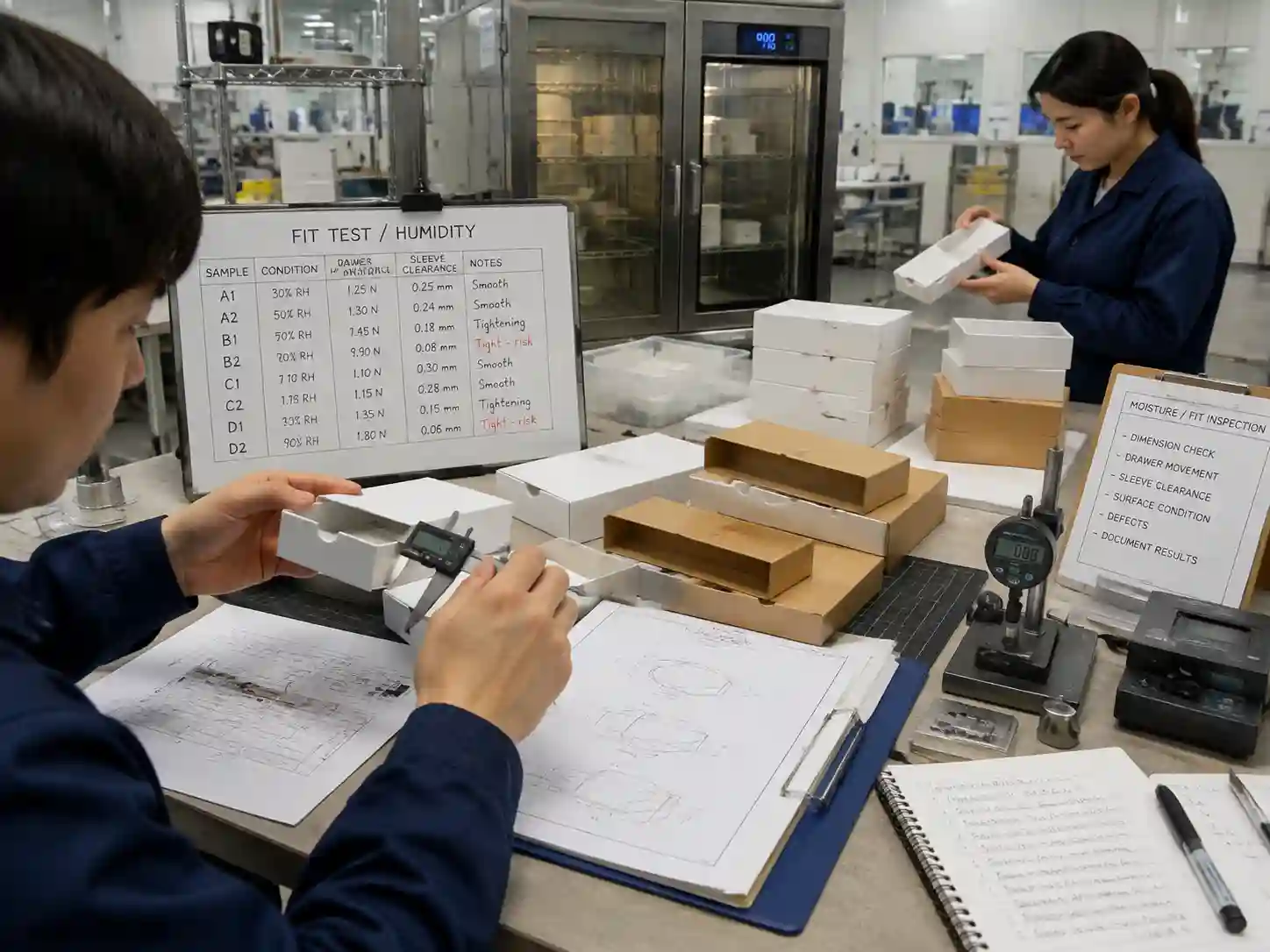
How should buyers check humidity drawer sleeve fit during development?
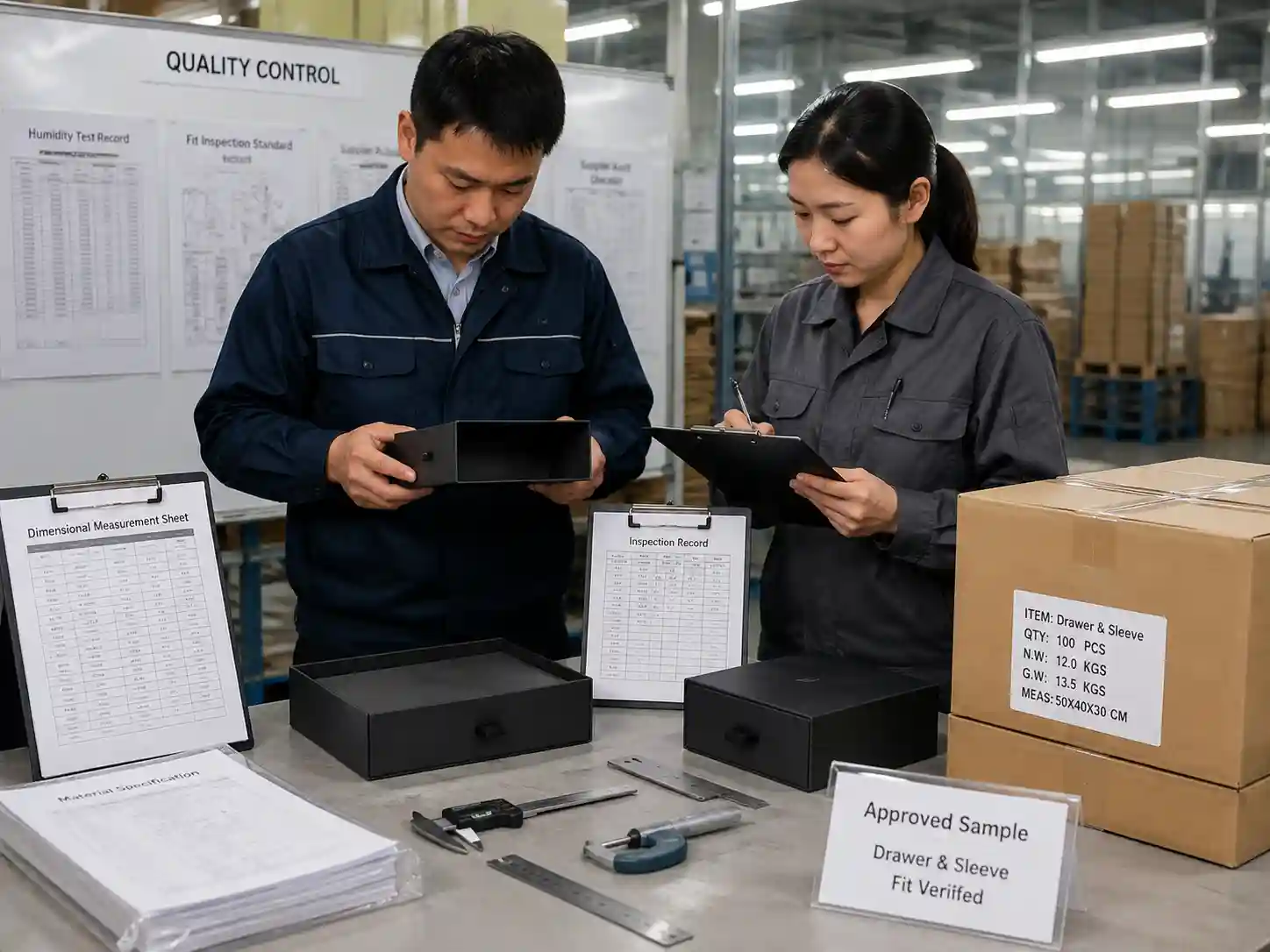
Buyers should verify drawer and sleeve performance using physical samples, measurements, and environmental considerations instead of relying only on artwork approval.
Recommended checks include:
- Measure finished dimensions: Record drawer width, sleeve opening size, panel thickness, and critical gaps.
- Review board specifications: Confirm board type, thickness, grain direction, and surface treatment.
- Inspect movement: Check opening force, closing smoothness, and friction points.
- Evaluate surface contact: Look for rubbing marks, coating damage, or edge wear.
- Compare samples: Review whether fit changes after storage or handling conditions differ.
What evidence should support humidity-related packaging decisions?
Humidity-related risks should be supported by practical evidence from material review, engineering checks, and supplier documentation.
Evidence checklist for drawer and sleeve fit approval
- Board specification sheets showing material construction and thickness.
- Dimensional drawings showing drawer and sleeve tolerances.
- Sample inspection records with measured dimensions.
- Photos or notes showing fit evaluation points.
- Production inspection records confirming approved construction.
- Material change approval records if board or finishing components are substituted.
These records help buyers separate verified material behavior from assumptions. They are especially useful when packaging moves between different climates during production, storage, and shipment.
How can packaging engineers reduce humidity-related fit risks?
Engineers usually reduce humidity risks by designing realistic tolerances and selecting materials that maintain stable performance under expected conditions.
- Select board structures appropriate for the required rigidity and dimensional stability.
- Consider grain direction when designing folding panels and sliding structures.
- Avoid designing drawer systems with zero clearance.
- Check whether coatings or laminations change surface friction.
- Validate the final construction using production-intent samples.
The goal is not to eliminate all material movement, because paper-based materials naturally respond to the environment. The goal is to design enough stability and tolerance for reliable use.
What humidity conditions should buyers consider before approval?
Buyers should consider where the packaging will be manufactured, stored, displayed, and transported. Environmental differences between these stages can influence final fit performance.
Important project variables include:
- Manufacturing humidity conditions.
- Warehouse storage environment.
- Seasonal climate differences between regions.
- Length of storage before retail use.
- Packaging structure and finishing combination.
Exact humidity tolerance requirements vary by project. Packaging suppliers and buyers should agree on inspection methods and acceptance criteria before production approval.
What is a practical example of humidity-related drawer fit evaluation?
A drawer-style advent calendar may pass assembly checks immediately after production but develop higher sliding resistance after environmental exposure. A practical evaluation would compare measured sleeve opening dimensions, drawer thickness, and opening movement before approval.
The buyer can then determine whether the issue comes from board expansion, insufficient clearance, surface friction, or another construction factor. This approach creates evidence-based decisions instead of adjusting dimensions after bulk production.
Frequently asked questions about humidity and drawer sleeve fit
Does thicker board always prevent humidity-related fit problems?
No. Thicker board can improve stiffness, but humidity response also depends on fiber structure, finishing, adhesive layers, and packaging design tolerances.
Can lamination completely stop moisture-related movement?
No. Lamination can influence surface protection and moisture exchange, but paper-based structures can still respond to environmental changes.
Should drawer and sleeve samples be checked before final approval?
Yes. Physical samples allow buyers to confirm dimensions, sliding performance, surface contact, and construction behavior before production decisions are finalized.
Giftpackpro supports custom paper packaging projects with material review, structural evaluation, and production verification. For projects requiring stable drawer and sleeve performance, explore our custom advent calendar box services or request a custom quote with your packaging requirements.