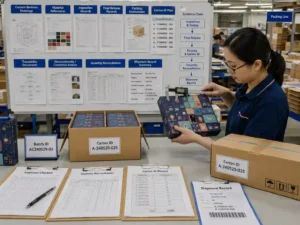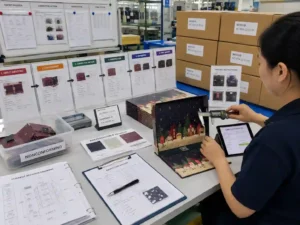
A fold-out advent calendar stays flat when open through balanced panel construction, controlled hinge movement, accurate folding positions, and stable material selection. The design process focuses on how covers, wings, doors, drawers, and internal structures distribute stress after opening. Engineers typically verify flatness through structural drawings, prototype samples, opening tests, and measurement records before production approval.
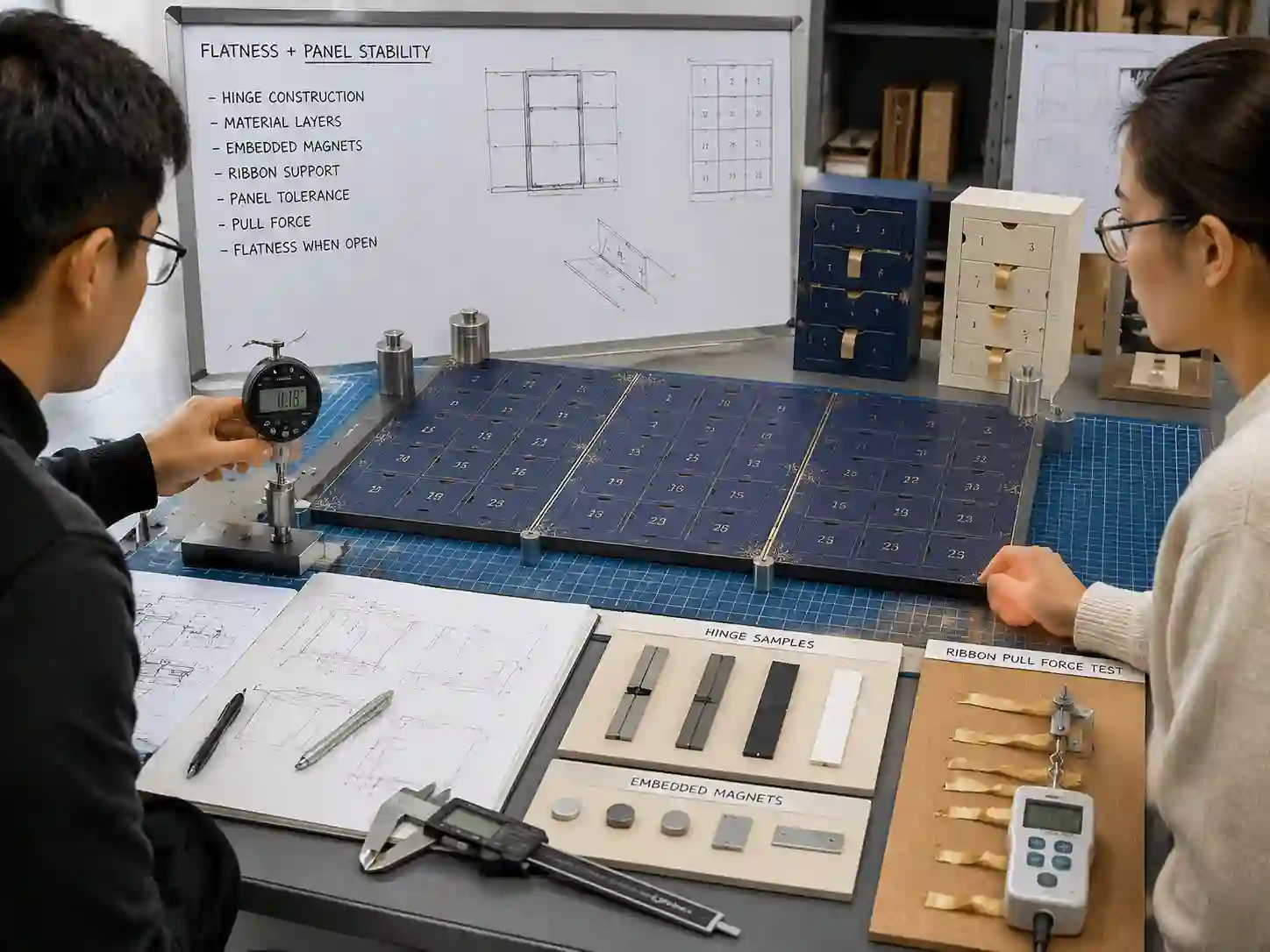
Why is fold out advent calendar flatness difficult to achieve?
Fold-out structures are more sensitive than fixed box designs because multiple panels must remain aligned after movement. Small differences in board thickness, folding direction, hinge stiffness, or magnet position can cause panels to lift, twist, or close unevenly.
The main factors affecting flat opening performance include:
- Panel balance: Front covers and side wings must have similar structural resistance to prevent one side from pulling upward.
- Hinge construction: Folding joints need controlled flexibility without excessive looseness.
- Material memory: Paperboard and wrapped greyboard can naturally return toward their original shape after folding.
- Weight distribution: Uneven product loading or compartment placement can create opening stress.
How do engineers design panels that remain flat after opening?
The first step is balancing the complete structure rather than adjusting only the hinge. Engineers review the unfolded layout, folding lines, panel sizes, and reinforcement areas before making prototypes.
A typical structural review considers:
| Design area | Structural decision | Verification method |
|---|---|---|
| Main panels | Select suitable board thickness and reinforcement based on panel size and opening direction | Check drawings, material samples, and assembled prototypes |
| Fold lines and hinges | Control folding resistance and prevent over-flexing | Perform repeated opening and closing checks |
| Magnet or closure points | Position closures to support alignment without pulling panels out of plane | Measure closure position and opening force |
| Internal compartments | Balance weight and prevent internal pressure on outer panels | Validate loaded samples |
How should hinge and folding areas be engineered?
Hinge areas should allow smooth movement while maintaining enough resistance to hold the opened position. A hinge that is too weak may allow panels to collapse, while excessive stiffness can force the structure to bend elsewhere.
Engineers normally evaluate:
- Folding angle and final open position.
- Alignment between left and right panels.
- Strength of wrapped edges and connection areas.
- Potential cracking or whitening along folding zones.
For custom projects, the correct hinge approach varies according to the calendar format, panel size, product weight, and expected handling frequency. Structural drawings and physical samples are used together because paper-based packaging behavior cannot always be predicted from drawings alone.

How do prototypes verify that a fold-out calendar stays flat?
Prototype testing provides evidence that the structure performs correctly before bulk production. The goal is not only checking appearance but confirming movement, stability, and assembly performance.
What test steps are commonly used?
- Open and close the calendar through the intended movement path.
- Measure whether panels sit evenly on the same surface.
- Check hinge areas for lifting, twisting, or excessive resistance.
- Install representative compartment structures or product loads if required.
- Record observations and compare results with approved drawings.
Useful approval records may include prototype photos, measurement sheets, structural drawings, opening test notes, and revision records. These documents help confirm why a design change was accepted or rejected.
What are common fold-out calendar flatness failure modes?
Most flatness problems come from imbalance between different structural components rather than a single defective part.
| Failure mode | Possible cause | Recommended check |
|---|---|---|
| Panels lift after opening | Uneven tension, weak reinforcement, or material deformation | Compare panel alignment with approved sample |
| Calendar does not open fully flat | Hinge resistance or incorrect folding position | Review hinge design and opening angle |
| Closure pulls panels unevenly | Magnet position or strength is not balanced | Check magnet location and closure force |
| Structure twists after loading | Internal weight is not distributed evenly | Test with representative product weight |
How do buyers approve flatness performance before production?
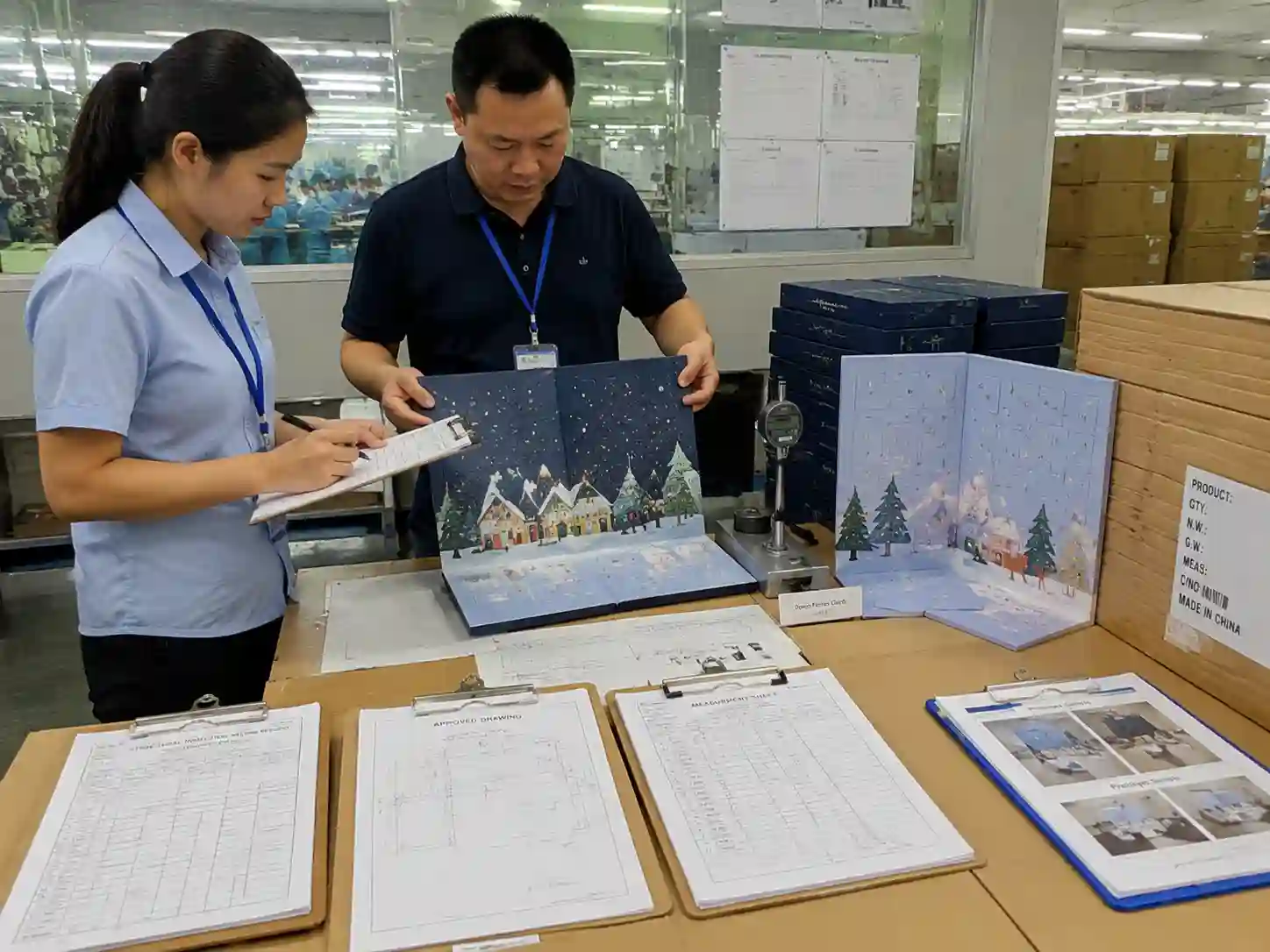
Buyers should approve the physical structure, not only artwork or digital drawings. Important approval points include the opened position, panel alignment, hinge movement, closure behavior, and final assembled appearance.
A practical approval package may include:
- Approved structural drawing with folding locations.
- Prototype sample showing the intended open position.
- Measurement records for critical dimensions.
- Inspection notes covering hinge, magnet, and panel stability.
These records create a clear reference between design intent and production execution. Giftpackpro supports custom advent calendar development through custom advent calendar box services, helping teams review structural requirements before manufacturing.
What factors change the flatness design between projects?
Fold-out calendar structures are project-specific. The final design depends on panel size, number of folds, material combination, internal loading, closure method, and required handling conditions.
Verified facts such as material behavior, structural dimensions, and prototype observations should be separated from project recommendations. Final decisions should be approved using actual samples and inspection records rather than assumptions from similar packaging formats.
FAQs About Fold-Out Advent Calendar Flatness
Can a fold-out calendar be designed completely flat from drawings alone?
No. Drawings define the structure, but prototype testing is needed to confirm folding behavior, material response, and assembled stability.
Do magnets always improve fold-out calendar stability?
Not always. Magnets can support alignment, but incorrect placement or excessive pull force may create unwanted panel tension.
Why does the same design behave differently with different materials?
Different boards, wrapping papers, and reinforcement methods have different stiffness and recovery behavior, which can affect opening flatness.
What should be checked before approving a final sample?
Check the open position, panel alignment, hinge movement, closure performance, and whether the approved structure matches the production specification.
For custom fold-out advent calendar structures, buyers can review requirements with request a custom quote and provide project details for structural evaluation.