
Quick answer: Packaging accessories such as protective poly bags, paper sleeves, shrink sleeves, tamper labels, and product identification labels should always be included in the measured product envelope before cavity design begins. A reliable packaging accessories cavity allowance is based on measuring the fully packaged product rather than the bare item, validating orientation, confirming dimensional variation, and verifying fit with loaded insert samples before production approval.
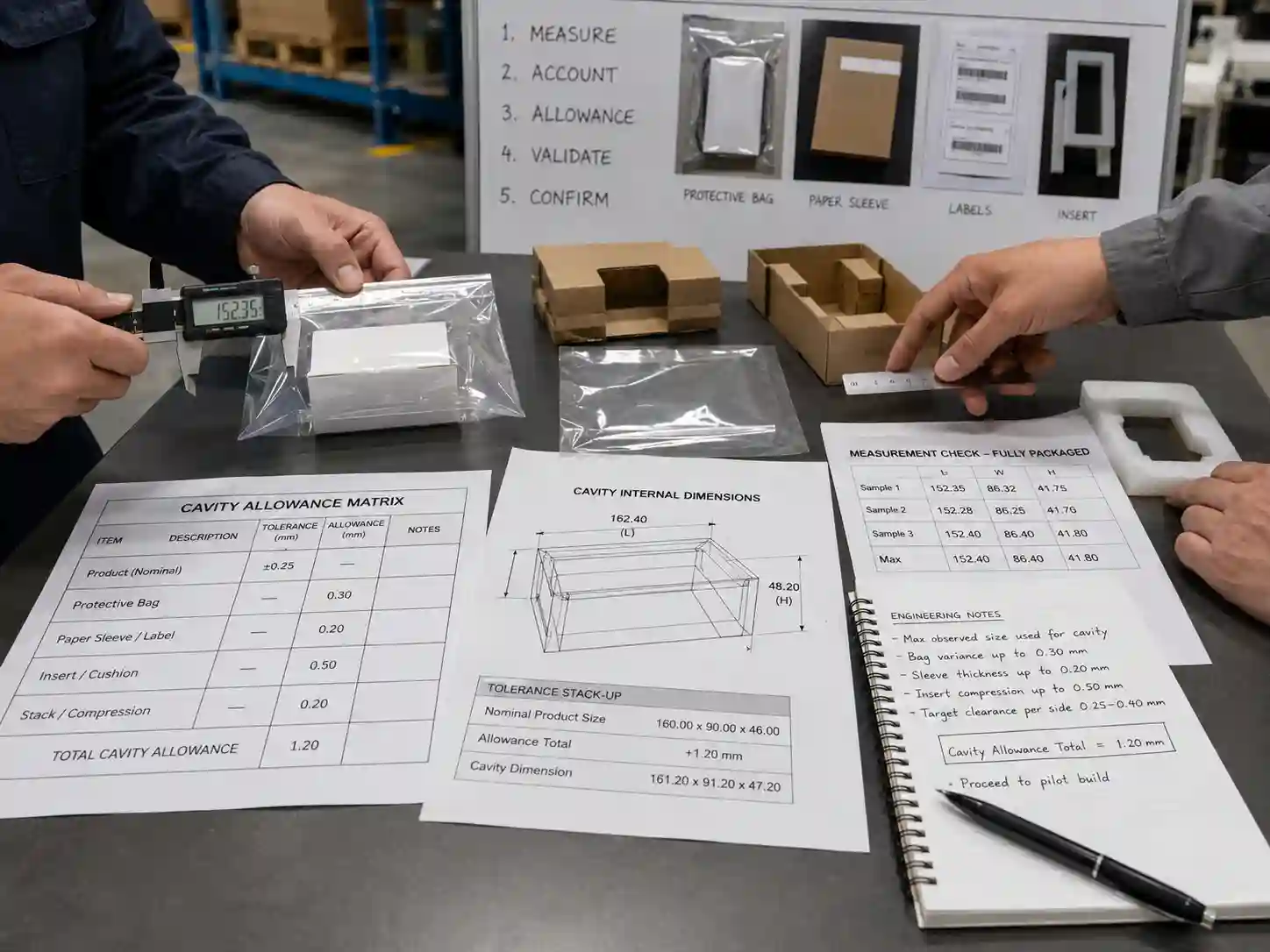
Why should protective bags, sleeves, or labels be included in cavity dimensions?
Every packaging accessory changes the external dimensions that an insert must accommodate. Even a thin bag or folded label can increase overall width, thickness, or create localized bulges that affect insertion and removal.
Ignoring these additions may produce cavities that fit engineering samples but fail during production when products are packed with their required protective materials.
Typical accessories include:
- Poly bags
- Protective paper sleeves
- Shrink sleeves
- Tamper-evident seals
- Barcode labels
- Instruction labels
- Protective films
- Foam wraps
Which dimensions should actually be measured?
Measure the product exactly as it will be loaded into the finished advent calendar insert. Never measure the product before its required protective packaging has been applied.
Recommended measurement procedure
- Prepare production-representative product samples.
- Apply all approved bags, sleeves, labels, and protective materials.
- Place the product in its approved loading orientation.
- Measure length, width, height, and any localized bulges using calibrated digital calipers.
- Record both nominal dimensions and maximum observed dimensions.
- Compare results with cavity drawings.
- Validate using assembled insert prototypes.
Measurement records should clearly identify whether dimensions represent the bare product or the packaged product.
How much can packaging accessories change cavity requirements?
The effect depends on the accessory type, material stiffness, folding method, and placement. Some accessories increase overall dimensions uniformly, while others create only localized interference.
| Accessory | Typical dimensional effect | Primary design concern |
|---|---|---|
| Poly bag | Small increase in thickness | Fold position and trapped air |
| Paper sleeve | Additional wall thickness | Corner compression |
| Shrink sleeve | Localized diameter increase | Seam overlap |
| Barcode label | Minimal overall increase | Raised label edges |
| Foam wrap | Significant thickness increase | Compression allowance |
| Tamper seal | Localized protrusion | Seal position |
Actual allowances should always be established through physical measurement rather than assumptions.
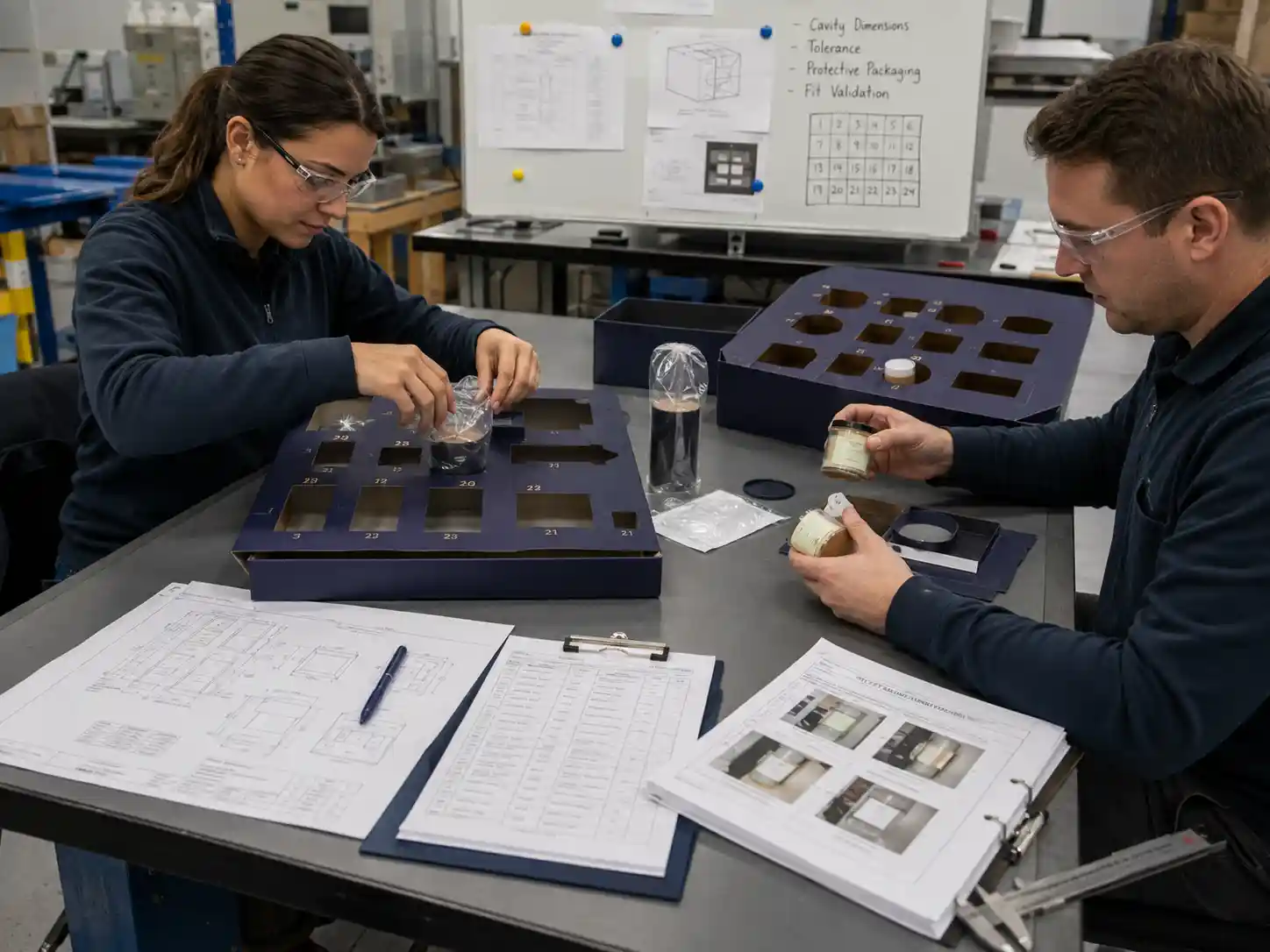
How should engineering teams determine the correct packaging accessories cavity allowance?
The cavity should accommodate the largest approved production condition while maintaining secure product positioning. This requires balancing sufficient clearance against excessive movement.
Engineering teams generally evaluate:
- Maximum packaged dimensions
- Material compression characteristics
- Insert material flexibility
- Loading direction
- Product removal force
- Manufacturing tolerances
- Expected production variation
Project-specific allowances should be documented on approved engineering drawings instead of relying on verbal instructions.
How can loaded samples verify the cavity design?
Prototype validation demonstrates whether calculated dimensions work under realistic production conditions. Verification should include complete products with all protective accessories installed.
Loaded sample validation checklist
- Products fully packaged
- Correct orientation confirmed
- Accessories positioned consistently
- No excessive compression
- No product deformation
- Products seat completely inside cavities
- Lid closes without interference
- Products can be removed without damage
- Insert retains products during handling
- Inspection records approved
Photographs, dimensional records, and inspection reports provide objective evidence supporting cavity approval.
Which project variables should buyers approve?
Some decisions depend on the specific product, insert material, and production process rather than universal engineering rules.
Buyer approval should normally confirm:
- Final product orientation
- Approved accessory configuration
- Accessory supplier specification
- Maximum packaged dimensions
- Accepted cavity tolerances
- Loaded sample approval
- Engineering drawing revision
If accessory specifications change after sampling, cavity validation should be repeated before production proceeds.
How can engineering teams verify important claims?
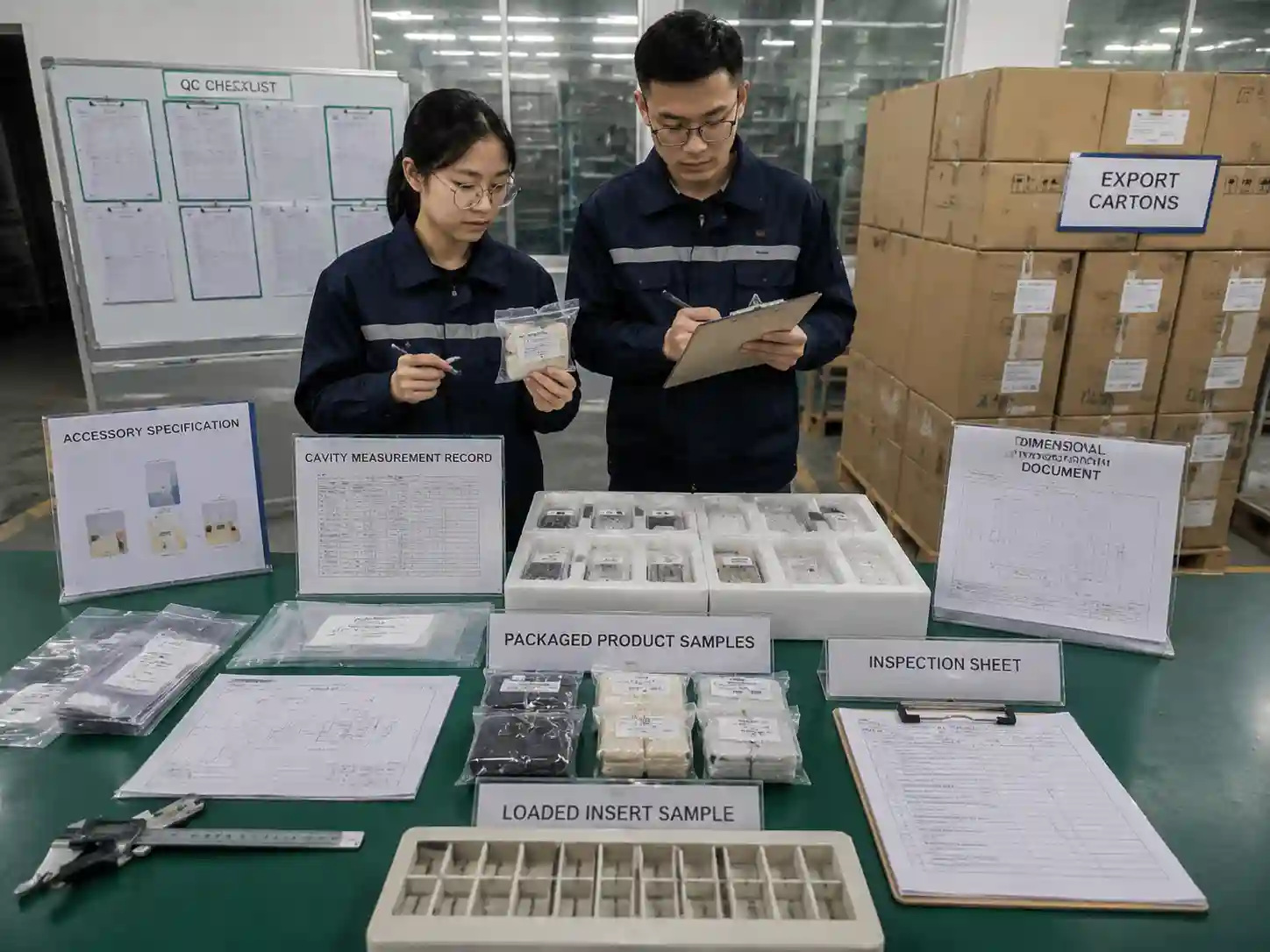
Reliable verification comes from documented evidence rather than assumptions. Engineering decisions should be traceable from measurement through production approval.
Useful verification records include:
- Dimension matrices
- Engineering drawings
- Caliper measurement logs
- Accessory specifications
- Loaded sample photographs
- Inspection reports
- Cavity validation checklists
- Revision-controlled approval documents
These records make future design revisions easier and reduce misunderstandings between engineering, sourcing, and production teams.
FAQs
Should accessory dimensions be measured before or after packaging?
Always measure the product after every approved protective accessory has been applied, since the packaged condition represents the actual production configuration.
Should removable shipping protection be included?
No. Temporary transport materials removed before loading into the advent calendar should not be included in cavity measurements.
Can accessory suppliers change cavity dimensions?
Yes. Different films, sleeves, or label constructions may alter packaged dimensions. Any approved supplier change should trigger dimensional verification.
When should cavity validation be repeated?
Repeat validation whenever the product, accessory specification, insert material, orientation, or engineering drawing changes.
Conclusion
Accurate cavity design depends on measuring the complete packaged product rather than the product alone. Including protective bags, sleeves, labels, and other approved accessories during measurement improves dimensional accuracy, reduces production risk, and helps ensure consistent fit throughout manufacturing. Combined with documented measurements, controlled tolerances, and loaded sample validation, this approach provides a dependable foundation for custom advent calendar insert development.
For additional technical resources, explore our advent calendar box buying guides, review our custom advent calendar box products, or request a custom quote for your next packaging project.


