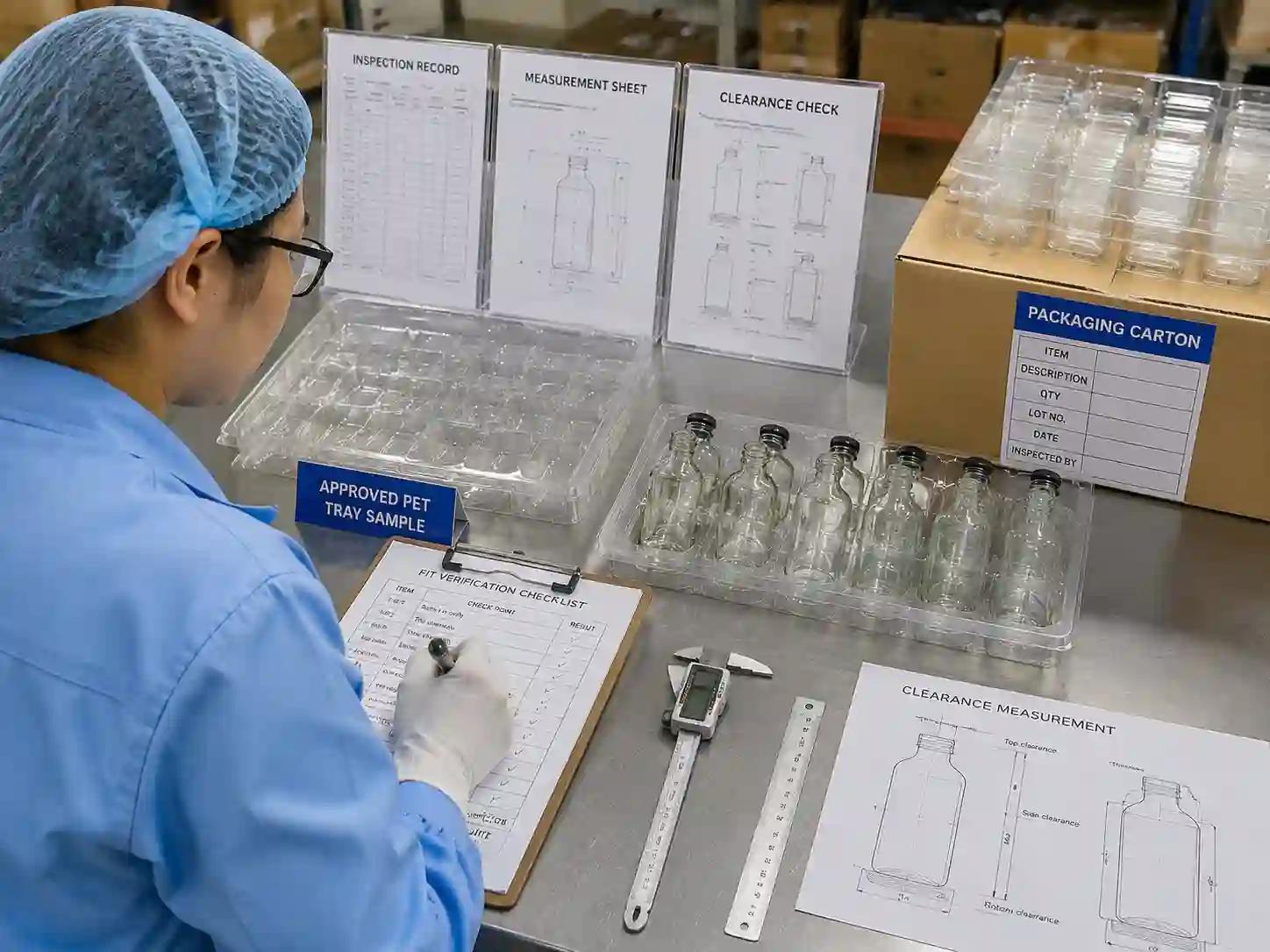
A practical starting point for glass bottle pet tray clearance is to allow enough space for dimensional variation, loading movement, and material tolerance without making the cavity too loose. The correct clearance depends on bottle diameter, height, weight, bottle shape, PET tray thickness, cavity design, and whether the package requires manual or automated loading. Final approval should always be based on measured samples and loaded fit checks.
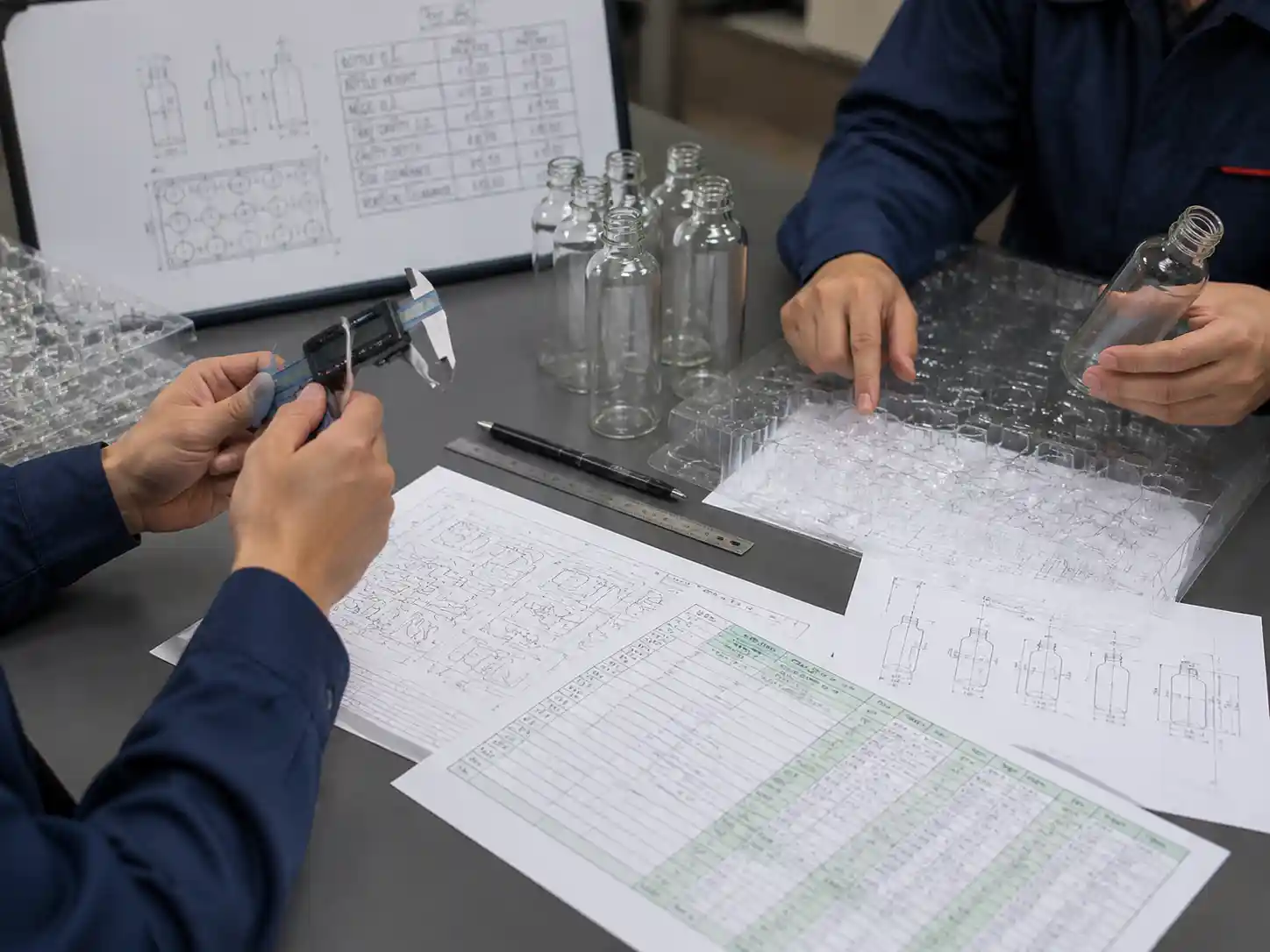
What clearance should be added around glass bottles in PET trays?
The required clearance around glass bottles in PET trays is usually determined by the difference between the actual bottle dimensions and the PET cavity dimensions. A tight cavity improves presentation and prevents movement, but insufficient clearance can create loading problems, stress points, or breakage risks.
For commercial packaging projects, clearance is not a single fixed number because glass bottles vary significantly in diameter, shoulder shape, cap design, and weight distribution. Engineers normally define cavity dimensions after measuring production samples or approved product specifications.
Which dimensions need to be measured before designing the PET tray?
The most important measurements are the bottle body diameter, maximum diameter points, total height, shoulder transition, base shape, closure area, and weight when filled. These dimensions determine the cavity opening, depth, support areas, and retention points.
- Maximum diameter: identifies the widest point that must pass through the cavity opening.
- Bottle height: determines cavity depth and vertical support.
- Shoulder and neck shape: affects side-wall contact and positioning.
- Base structure: determines whether the bottle sits evenly without rocking.
- Loaded weight: influences tray strength and support requirements.
How is glass bottle PET tray clearance calculated?
The calculation begins by comparing the measured bottle dimensions with the designed PET cavity dimensions. The clearance is the available space between the product surface and the tray cavity wall after considering manufacturing tolerance.
A simplified approach is:
Cavity size = Product maximum dimension + required functional clearance + manufacturing tolerance allowance
The clearance should account for:
- PET forming variation and material thickness changes.
- Minor product dimension variation between batches.
- Manual loading requirements and operator handling.
- Movement during transportation or display handling.
- Contact pressure on glass surfaces.
What tolerance factors affect PET tray cavity clearance?
PET trays are formed products, so cavity dimensions may vary slightly depending on tooling accuracy, sheet thickness, forming conditions, and part geometry. Glass bottles also have dimensional variation caused by manufacturing processes.
| Factor | Why It Matters | Verification Method |
|---|---|---|
| Bottle diameter variation | Affects cavity fit and loading force | Measure multiple bottle samples with calipers |
| PET tray forming tolerance | Changes actual cavity size | Inspect formed tray samples |
| Bottle weight | Influences support pressure and tray strength | Check loaded product samples |
| Bottle shape complexity | Creates local contact areas | Review cavity drawings and physical fit |
How should packaging teams validate glass bottle clearance before production?
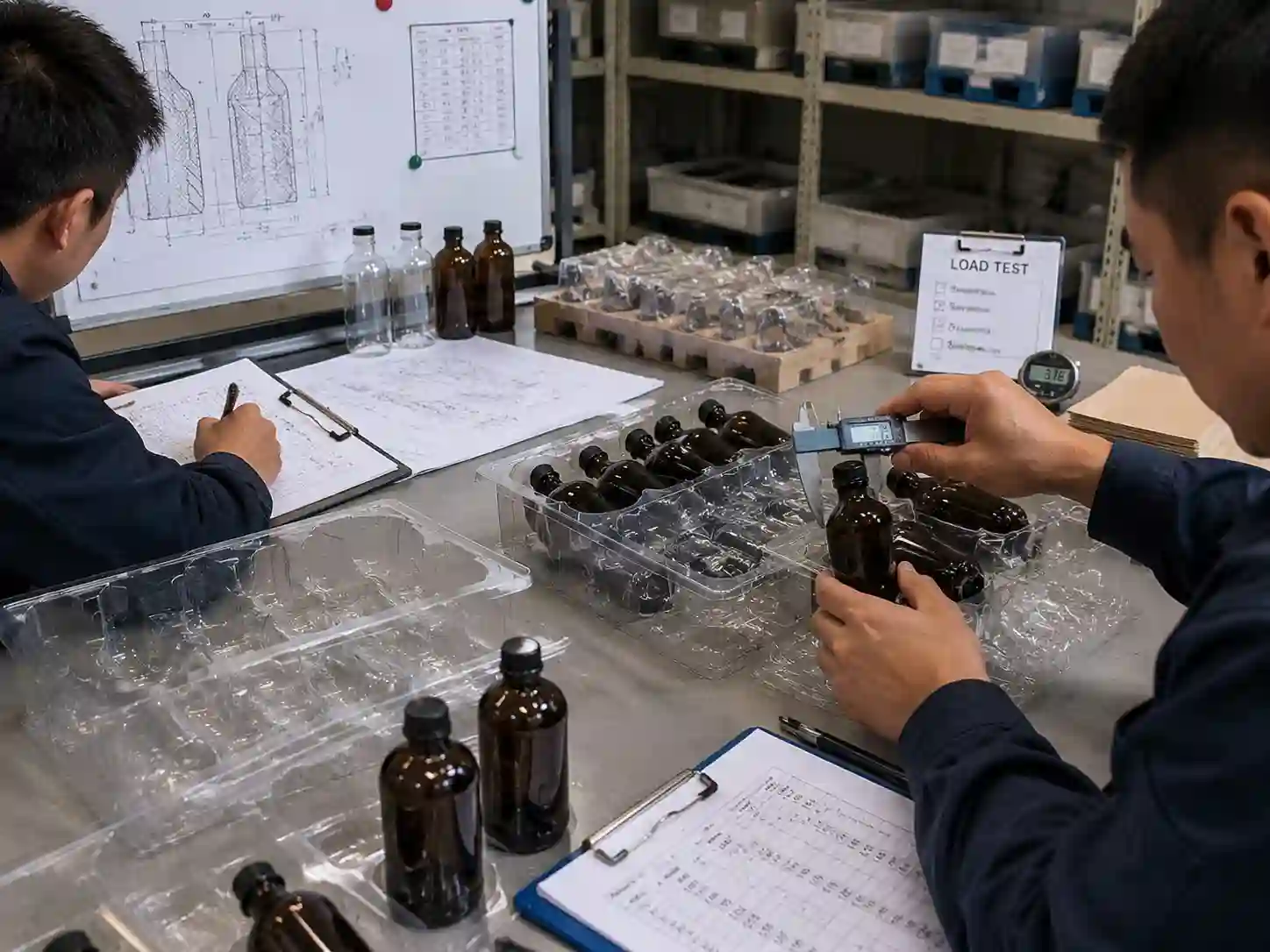
The safest method is to validate the PET tray using real product samples rather than relying only on drawings. A cavity that looks correct digitally may still create problems during loading, handling, or transport.
A typical validation process includes:
- Confirm the approved bottle dimensions and weight data.
- Measure sample bottles at key contact points.
- Review PET tray cavity drawings and critical dimensions.
- Load actual bottles into prototype trays.
- Check insertion force, retention, movement, and removal.
- Record approval results before production release.
What should a loaded-sample checklist include?
- Does the bottle enter the cavity without excessive force?
- Does the bottle remain stable when the tray is moved?
- Are there visible pressure marks or stress points?
- Is the bottle easy to remove without damaging the tray?
- Does the loaded tray maintain the intended product orientation?
- Are inspection records and approved samples retained?
What risks occur when PET tray clearance is too small or too large?
Incorrect clearance can create both protection and presentation problems. A cavity that is too tight may increase loading difficulty and put pressure on glass surfaces, while excessive clearance may allow movement that reduces product protection.
- Too little clearance: difficult loading, surface pressure, inconsistent fit, possible glass damage risk.
- Too much clearance: bottle movement, unstable presentation, reduced protection efficiency.
- Incorrect support points: concentrated loads around bottle shoulders or bases.
The correct balance depends on bottle geometry, PET tray design, packaging orientation, and the handling conditions expected for the finished package.
Which project factors change the required glass bottle PET tray clearance?
Clearance requirements vary between projects because the bottle design and packaging objectives are different. A small sample bottle, a heavy glass container, and an irregularly shaped bottle may require different cavity strategies.
Important project variables include:
- Bottle diameter and shape profile.
- Filled product weight.
- Number of cavities in the tray.
- Tray stacking and support requirements.
- Manual or automated loading method.
- Required product presentation angle or orientation.
What records should buyers approve before final PET tray production?
Buyers and packaging teams should approve measurable evidence rather than only visual samples. Useful approval documents include product dimension sheets, cavity drawings, prototype inspection records, loaded sample photos, and fit evaluation notes.
These records help confirm that the PET tray design matches the actual glass bottle and provide a reference if future production adjustments are required.
FAQ: How much space should be left between a glass bottle and PET tray wall?
The space depends on bottle dimensions, tray forming tolerance, and loading requirements. The correct clearance should be determined through measurement and physical sample testing rather than a universal value.
FAQ: Can PET trays hold heavy glass bottles?
Yes, but the tray design must consider bottle weight, support areas, material thickness, and how the load transfers through the packaging structure.
FAQ: Should clearance be the same for all bottle shapes?
No. Cylindrical bottles, square bottles, tapered bottles, and bottles with shoulders or decorative shapes require different cavity designs and support methods.
For custom advent calendar packaging projects, Giftpackpro evaluates product dimensions, insert structures, and fit requirements together. Explore our custom advent calendar box products or custom advent calendar box services to discuss packaging structures based on your product specifications.