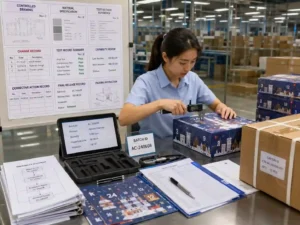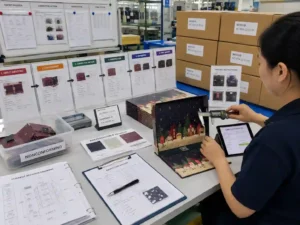
Quick answer: Measuring irregular products for advent calendar compartments requires more than recording length, width, and height. The process should capture the product’s maximum dimensions, protruding features, orientation, clearance needs, tolerance range, and loaded weight. Packaging teams typically combine physical measurement, cavity drawings, prototype checks, and loaded samples to confirm that each compartment protects the product while maintaining efficient use of space.
What is irregular product compartment measurement for advent calendar packaging?
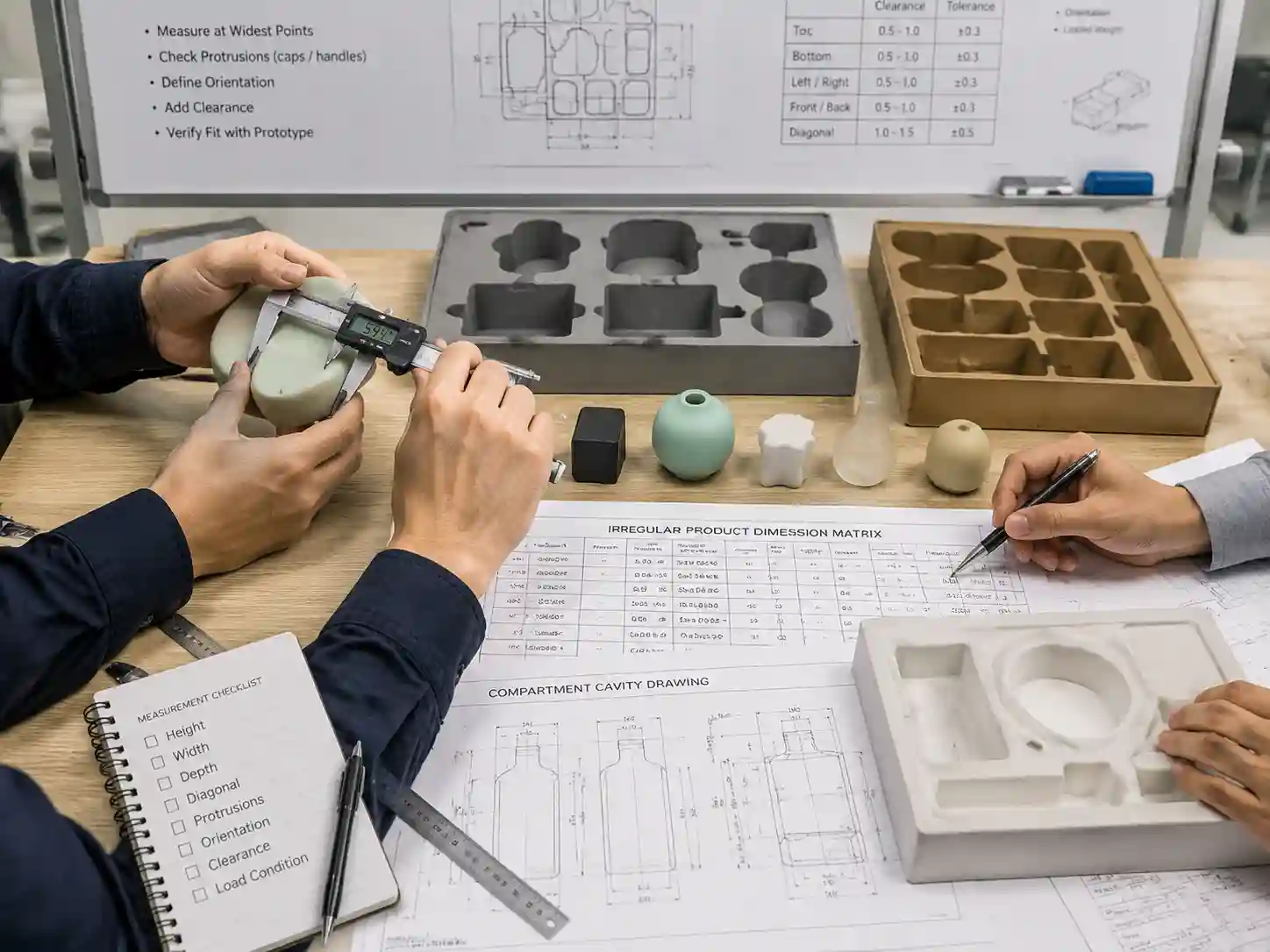
Irregular product compartment measurement is the process of converting a non-standard product shape into accurate packaging dimensions for a custom advent calendar insert or cavity layout. Instead of measuring only the outer rectangle, engineers identify critical points that affect fit, movement, protection, and opening experience.
Common irregular products include items with caps, pumps, handles, curved surfaces, tapered bodies, uneven bases, glass components, or mixed-height structures. Each feature can change the required cavity shape and support method.
How do you measure irregular products before designing compartments?
The measurement process should begin with the actual production sample whenever possible. Product drawings are useful references, but physical samples reveal details such as rounded edges, flexible components, loose caps, and dimensional variation.
- Identify the product orientation: Decide how the product will sit inside the compartment. The same item may require different cavity dimensions depending on whether it is upright, horizontal, angled, or nested.
- Measure maximum external dimensions: Record the largest length, width, height, diameter, and protrusion points, including caps, lids, pumps, tabs, and handles.
- Record functional areas: Mark sensitive zones that should not receive pressure, such as dispensing parts, decorative surfaces, or fragile sections.
- Create a cavity reference drawing: Transfer measurements into a 2D or 3D cavity layout showing support areas and clearance zones.
- Validate with a physical sample: Load the product into the prototype compartment and check insertion, removal, movement, and protection.
Which dimensions matter most when products have unusual shapes?
The most important dimensions are not always the longest measurements. Packaging designers focus on points that influence cavity stability and product protection.
| Measurement area | Why it matters | How it is verified |
|---|---|---|
| Maximum overall size | Defines the minimum cavity envelope | Calipers, rulers, technical drawings |
| Protruding components | Prevents pressure on caps, pumps, or handles | Physical sample measurement and cavity review |
| Contact points | Determines where the insert supports the product | Prototype loading checks |
| Product weight distribution | Helps prevent tilting or collapse | Loaded sample testing |
How much clearance should be added around irregular products?
Clearance depends on the product material, insert material, packaging structure, and required protection level. There is no universal clearance value because a rigid glass container and a flexible cosmetic tube respond differently inside the same type of compartment.
Project-dependent recommendations usually consider:
- Product tolerance: Actual manufacturing variation between individual units.
- Insert tolerance: Cutting, folding, forming, or assembly variation of the compartment structure.
- Surface protection: Whether movement may cause scratching, pressure marks, or cosmetic damage.
- User interaction: Whether the product must be removed easily or held firmly during handling.
Final clearance decisions should be confirmed through cavity drawings and loaded samples rather than estimated only from measurements.
How do you validate irregular product fit before production?
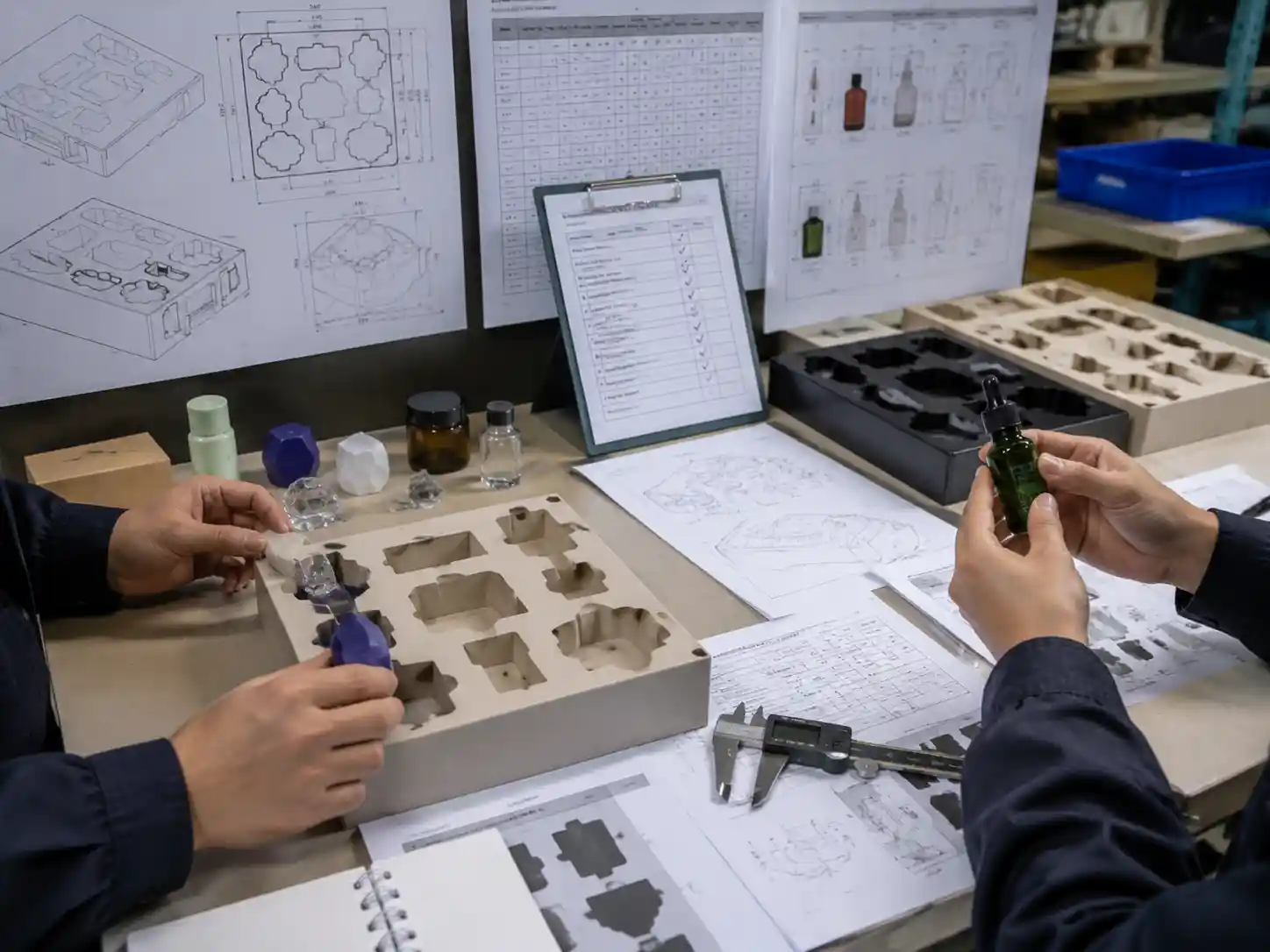
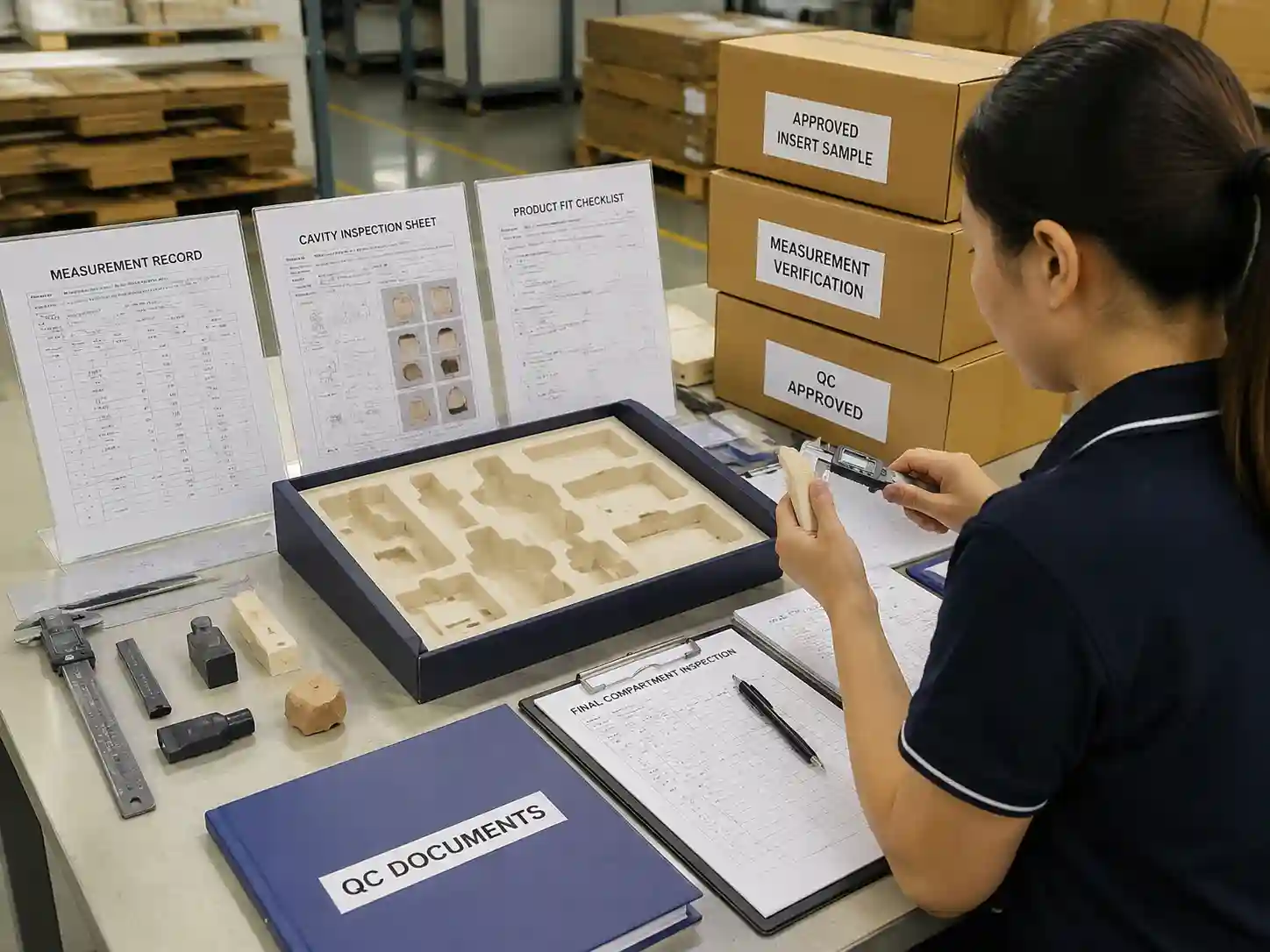
Fit validation confirms that the measured dimensions translate into a functional compartment design. A correct measurement process should include evidence from samples, drawings, and approval records.
What should be checked during a loaded sample review?
- Product enters the compartment without excessive force.
- Product remains stable when the calendar is moved or tilted.
- Protruding parts do not contact neighboring compartments.
- The insert supports the product without deformation.
- Removal is possible without damaging the product or insert.
- The final layout matches the approved cavity drawing.
Packaging teams normally document these checks with measurement sheets, prototype comments, cavity drawings, and approval records. These documents help ensure that the final production version follows the validated design.
What risks occur when irregular products are measured incorrectly?
Incorrect measurement can create problems throughout packaging development. A cavity that is too small may damage products during loading, while excessive space may allow movement and reduce the perceived quality of the package.
Common risks include:
- Product movement during transportation or handling.
- Pressure on sensitive components such as pumps or caps.
- Uneven appearance when multiple compartments contain different shapes.
- Insert redesign after prototypes have already been produced.
These risks can be reduced by measuring real samples, reviewing dimensional drawings, and completing fit checks before final production approval.
How do buyers confirm measurement accuracy with packaging suppliers?
Buyers can verify measurement accuracy by requesting clear technical evidence instead of relying only on verbal confirmation. Useful records include product dimension sheets, cavity layouts, prototype photos, sample review notes, and approved specifications.
For custom advent calendar projects, Giftpackpro supports packaging development through custom advent calendar box services, helping teams coordinate product dimensions, compartment structures, and validation requirements.
FAQ: Can irregular products use standard advent calendar compartments?
Sometimes, but only when the product dimensions and shape match an existing compartment structure. Irregular products usually require customized cavities because standard layouts may not provide correct support or clearance.
FAQ: Should product samples be provided for measurement?
Physical samples are recommended when possible because they allow packaging teams to check real dimensions, surface conditions, weight balance, and functional parts that may not appear in drawings.
FAQ: Are irregular product measurements needed only for the insert?
No. Measurements affect the entire internal structure because compartment depth, support areas, product orientation, and overall calendar thickness may all change based on the product shape.
For projects requiring accurate compartment planning, you can review custom advent calendar box products or request a custom quote with your product dimensions and packaging requirements.