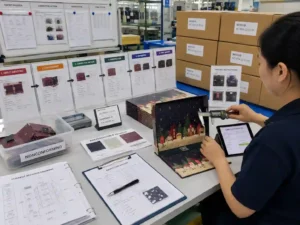
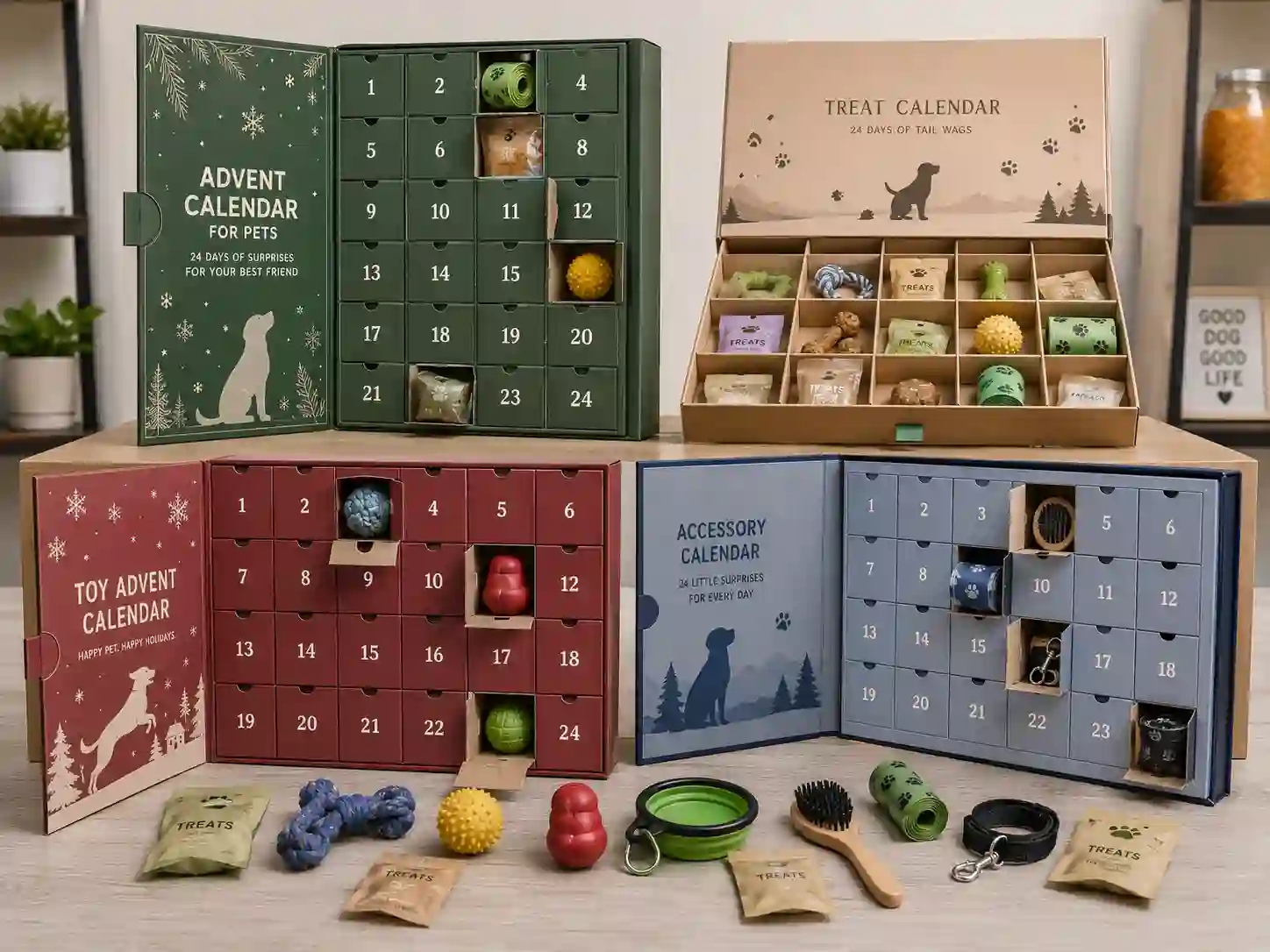
Quick answer: Pet product advent calendar boxes should be engineered around product weight, compartment fit, retail presentation, and export packing method before artwork is finalized. For pet treats, toys, grooming accessories, waste bag rolls, or mixed pet gift items, buyers should confirm the box structure, insert material, opening style, printing process, sample test, master carton design, pallet plan, and shipping marks early. The best solution is not only attractive on the shelf; it must protect filled compartments during assembly, warehouse handling, sea freight, air freight, and last-mile delivery.
For overseas brands and purchasing teams, pet product advent calendar boxes are seasonal packaging projects with tight launch windows. A small dieline error, weak insert, overloaded master carton, or unclear shipping mark can delay inspection, increase damage claims, or create repacking costs. This guide explains the structure, inserts, printing, QC, export packing, and quotation details buyers should compare before placing bulk orders with a custom advent calendar boxes manufacturer.
What should buyers confirm before choosing pet product advent calendar boxes?
Buyers should confirm the product list, target quantity, retail channel, filling method, export route, and launch deadline before selecting the box style. These details decide whether a rigid box, folding carton, drawer box, or door-opening box is practical for cost, protection, and shipping volume.
Pet product calendars often include different item types in one set. A campaign may combine treat pouches, dental chews, small toys, grooming wipes, accessories, and sample packs. Each product has different thickness, weight, odor-control needs, and handling risk. The packaging must hold these items in place without crushing doors, bending dividers, or causing the front panel to bulge.
Buyer tip: Do not approve a calendar structure based only on an empty sample. For pet product advent calendar boxes, a loaded sample is more useful because it shows whether the compartments, insert, closure, and outer carton can handle the real product weight.
Which box structure is best for pet products?
The best structure depends on product weight, filling workflow, presentation level, and shipping budget. Rigid boxes are stronger and more premium, while folding carton calendars are lighter and usually better for high-volume cost control.
| Structure Option | Best For | Key Advantage | Buyer Risk to Check |
|---|---|---|---|
| Rigid door-opening box | Premium pet treat or accessory campaigns | Strong shelf presence and good panel stiffness | Higher assembled shipping volume and heavier export cartons |
| Drawer box | Pet toys, grooming items, mixed gift sets | Reusable feel and easy item access | Drawer tolerance must be tested after printing, wrapping, and loading |
| Folding carton calendar | Large retail quantities and lighter pet samples | Lower unit weight and possible flat-packing efficiency | Door perforation, paperboard strength, and insert support must be checked |
| Book-style calendar | Gift sets, subscription campaigns, influencer mailers | Good opening experience and large artwork area | Magnet, ribbon, hinge, or spine durability may affect cost and lead time |
When should buyers choose a rigid box?
Choose a rigid box when the calendar needs a premium retail look, stronger stacking performance, or heavier contents. Greyboard thickness, wrapping paper quality, edge finishing, and insert locking design should be reviewed together.
Rigid pet product advent calendar boxes are often used for higher-value campaigns where the calendar may contain multiple treat bags, mini toys, or grooming accessories. However, rigid boxes are usually shipped assembled, which increases master carton volume. Buyers should ask the supplier to quote both unit price and packed carton dimensions, because freight cost can change the real landed cost.
When is a folding carton better?
A folding carton calendar is better when the products are light, the order quantity is high, and the buyer wants better shipping efficiency. It can often be delivered flat or semi-assembled, but the structure must still pass loading and door-opening tests.
For pet treats, the door area should not be too close to a heavy pouch edge. If the product presses directly against the perforated door during shipping, the door may deform or open before retail display. A paper insert or tray should create a small buffer between the product and the front panel.
How should inserts be designed for pet treats, toys, and accessories?
Inserts should match the actual product shape, weight, and loading direction. A good insert prevents movement during shipping, keeps each numbered compartment neat, and allows the customer or retail staff to open doors without tearing the calendar structure.
Pet products are not always uniform. Treat pouches can trap air, soft toys may compress, rope toys can shift, and small grooming items may slide under dividers. Buyers should provide product samples or accurate dimensions before dieline development. If real products are not available, a supplier can make a prototype with dummy weights, but the pre-production sample should still be tested with final goods before mass production.
Which insert material should buyers compare?
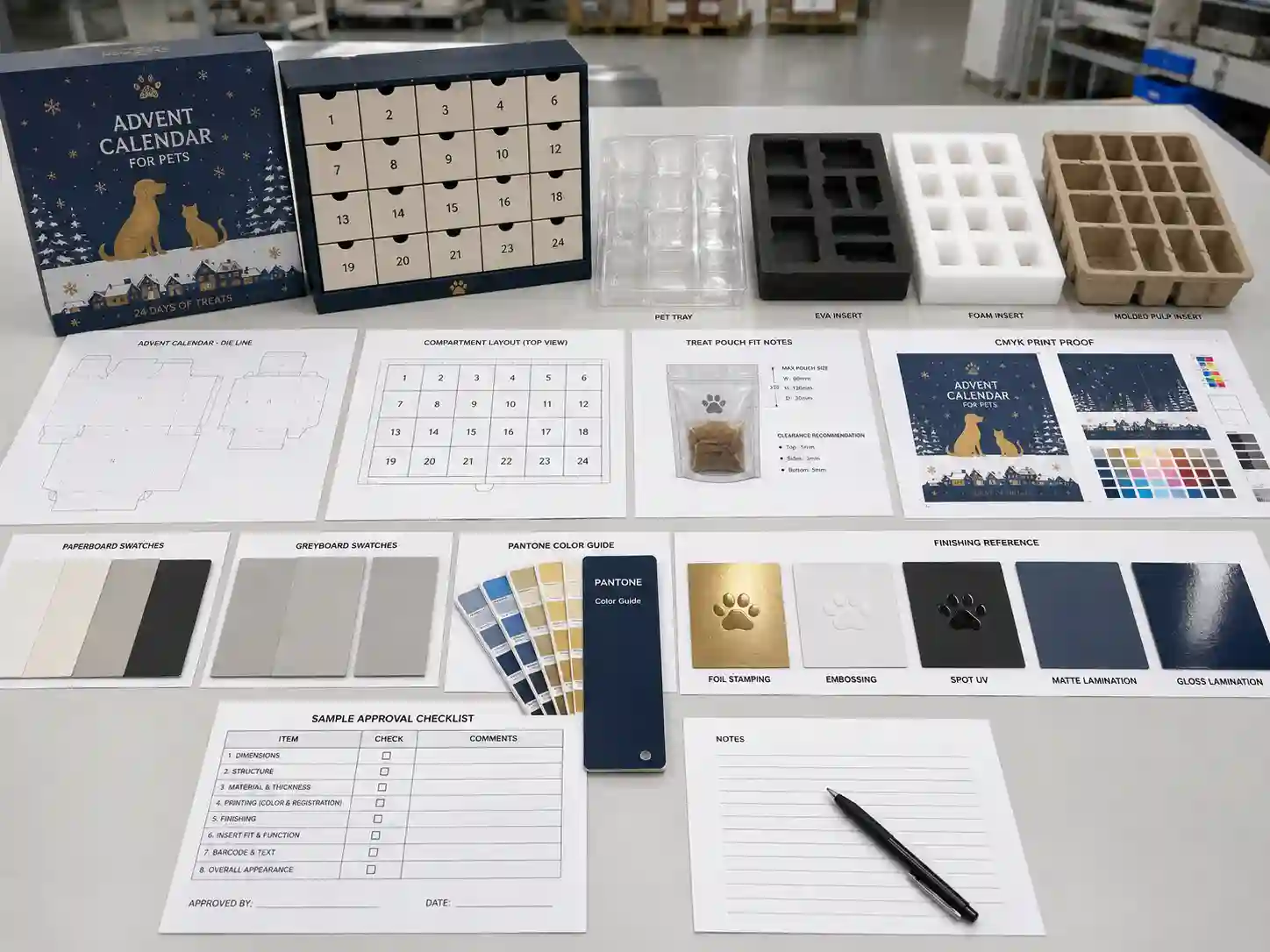
Buyers should compare paper inserts, PET trays, EVA inserts, foam, and molded pulp based on product protection, sustainability goals, cost, tooling, and filling efficiency.
- Paper insert: suitable for lightweight pet treat pouches, flat samples, and campaigns that need recyclable paper-based packaging direction.
- PET tray: suitable for shaped compartments, clear fit control, and automated or semi-automated filling lines, but tooling and material choice should be discussed early.
- EVA insert: useful for premium accessories or items that need firm positioning, but buyers should check material odor and cost impact.
- Foam insert: provides cushioning for delicate items but may not match every brand’s recycling or material policy.
- Molded pulp: useful when buyers want a molded paper-based insert with stronger product positioning, but mold cost and lead time should be confirmed.
Factory tip: Insert selection should not be decided from appearance only. The factory should test product loading, shaking, drop handling, compartment access, and door-opening performance before confirming mass production.
What printing and finishing decisions matter for export-ready calendars?
Printing and finishing decisions matter because surface treatment can change color, panel stiffness, scuff resistance, and assembly tolerance. Buyers should approve artwork on a dieline and review proof color before bulk printing.
Most custom advent calendar boxes use CMYK printing for full-color artwork. Pantone colors may be used for brand colors that need tighter control. Finishes such as foil stamping, embossing, spot UV, matte lamination, and gloss lamination can improve shelf impact, but they also add production steps and inspection points.
How should artwork be prepared for pet product advent calendar boxes?
Artwork should be prepared on the final dieline with bleed, safe area, door numbers, barcode space, product claims, recycling marks, and shipping label zones checked before sample production. Buyers should also confirm whether the packaging will be used in retail, e-commerce, wholesale display, or subscription fulfillment.
For door-opening calendars, artwork alignment is especially important around perforation lines and numbered doors. A design that looks clean on a flat PDF may shift visually after cutting, folding, wrapping, or door punching. For drawer boxes, artwork should consider front pull tabs, drawer gaps, and side-panel visibility. For rigid boxes, wrapped edges and corner folds can affect how patterns align.
How do finishes affect cost and production planning?
Premium finishes increase visual value but may increase cost, sample time, and QC complexity. Buyers should use them where they support brand positioning, not on every surface by default.
Foil stamping is often used on titles, numbers, icons, or seasonal patterns. Embossing can add tactile value to a logo area or illustration. Spot UV can highlight graphics, while matte lamination can reduce glare and provide a more premium surface. Gloss lamination may increase brightness but can show scratches more clearly during transport. The supplier should confirm which finishes are applied before die-cutting, wrapping, or assembly.
Can pet product advent calendar boxes be flat packed?
Some pet product advent calendar boxes can be flat packed, but not every structure is suitable. Folding carton calendars and some paperboard structures can ship flat or semi-assembled, while rigid boxes, drawer calendars, and complex book-style calendars are usually shipped assembled.
Flat packing can reduce freight volume, but it may shift labor and assembly responsibility to the buyer, co-packer, or fulfillment center. If the buyer’s team must assemble the boxes after arrival, the supplier should provide assembly instructions, packing sequence, and carton orientation guidance. For seasonal campaigns, the lowest ocean freight volume is not always the lowest total cost if local assembly delays the launch.
Flat packing versus assembled packing: how should buyers decide?
Buyers should compare unit packaging cost, freight volume, local labor cost, assembly risk, and launch schedule before choosing flat packing or assembled packing.
| Packing Method | Advantages | Limitations | Best Buyer Scenario |
|---|---|---|---|
| Flat packed | Lower shipping volume and easier carton stacking | Requires local assembly control and clear instructions | High-volume folding carton campaigns with buyer-side packing team |
| Semi-assembled | Balances freight efficiency and easier final setup | Needs careful carton layout to avoid bending panels | Calendars with inserts assembled separately or filled after import |
| Fully assembled | Better factory control and easier inspection before shipment | Higher carton volume and potentially higher freight cost | Rigid boxes, drawer boxes, premium gift sets, and ready-to-fill programs |
Buyer tip: When comparing quotations, ask for carton size, quantity per export carton, gross weight, net weight, and pallet plan. A lower unit price can become more expensive if the packed volume is much larger.
How should master cartons, pallets, and shipping marks be planned?
Master cartons should protect the calendar structure during export handling while staying within practical weight and pallet limits. The carton plan should be confirmed before mass production, not after finished boxes are already packed.
For pet product advent calendar boxes, damage often comes from panel compression, corner impact, door deformation, insert movement, moisture exposure, or excessive carton weight. A good export carton plan uses suitable corrugated strength, inner orientation control, corner protection where needed, and clear shipping marks for warehouse handling.
What should be included on shipping marks?
Shipping marks should make cartons easy to identify, count, route, and inspect. They should be generic, accurate, and consistent with the packing list and purchase order.
- Item name or buyer item code
- PO number or project number
- Carton number, such as C/NO. 1-50
- Quantity per carton
- Gross weight and net weight
- Carton dimensions
- Country of origin, if required by the buyer or destination market
- Handling symbols, such as keep dry, this side up, or fragile when applicable
- Barcode area or logistics label area when required
For barcode and retail data requirements, buyers can review official guidance from GS1 standards. For transit testing discussions, buyers may also reference ISTA transport packaging resources when defining testing expectations with suppliers or logistics partners.
How should pallets be arranged for seasonal export shipments?
Pallets should be arranged to reduce carton crushing, avoid overhang, and keep the shipping marks visible. Buyers should confirm pallet height limits, container loading method, warehouse requirements, and whether stretch wrap, corner boards, or pallet labels are needed.
Heavy pet product calendars should not be packed too many layers high without compression review. If the carton contains rigid boxes with decorative surfaces, separators or inner protection may be needed to avoid rubbing. For folding carton calendars, the carton should prevent panel bending and door damage during stacking. A pallet plan should consider both export handling and the buyer’s receiving warehouse process.
What QC checks reduce damage and shipment problems?
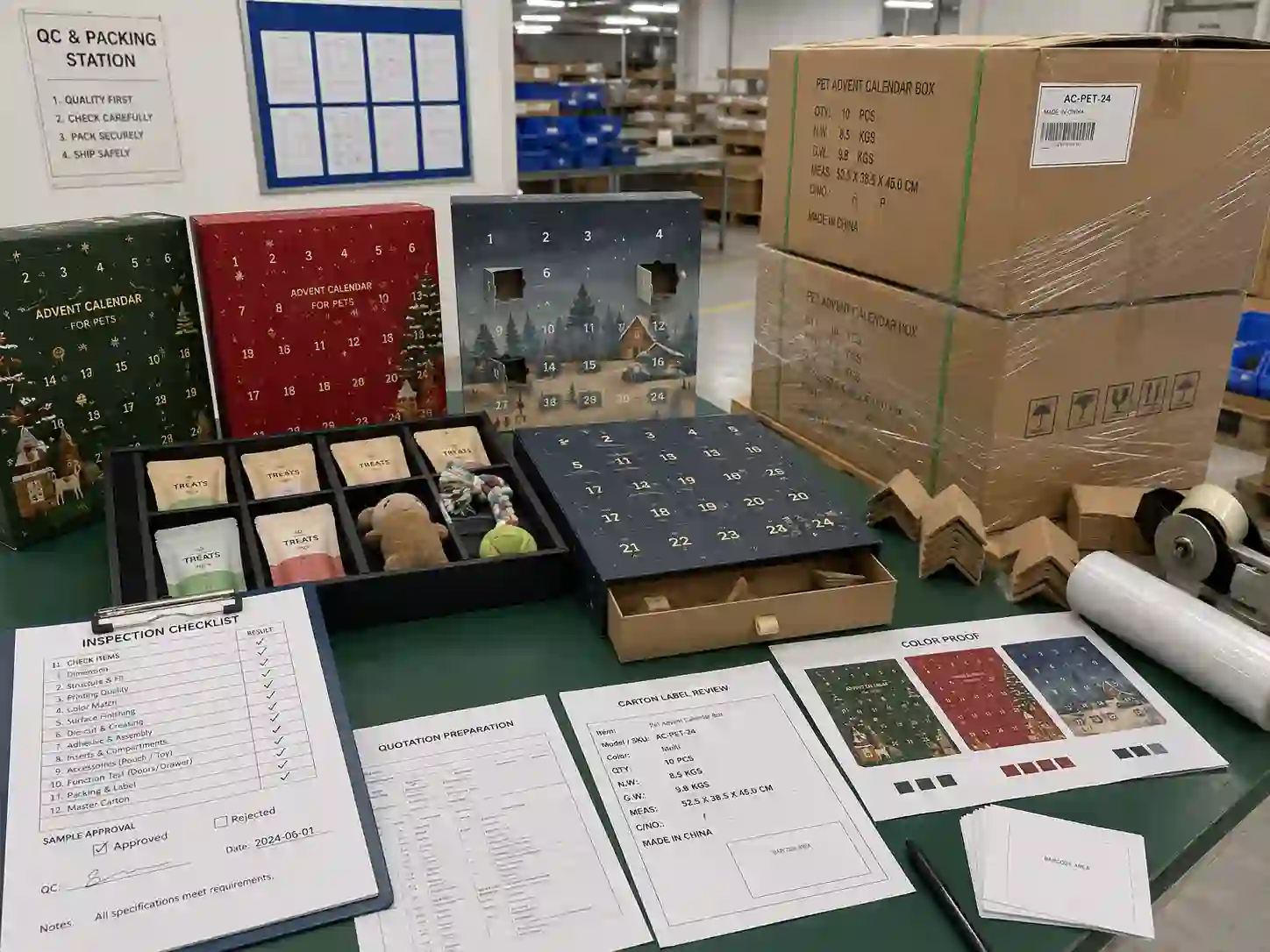
QC should check structure, insert fit, printing color, assembly tolerance, loading performance, carton strength, and export label accuracy. Final inspection should compare finished goods against the approved sample and packing specification.
Giftpackpro’s custom advent calendar box services can support structure planning, sample review, bulk production, and export packing discussion, but buyers should still prepare clear inspection requirements. A factory can control quality more effectively when the standard is written before production starts.
Practical QC checklist for pet product advent calendar boxes
This checklist helps buyers and suppliers align on the main inspection points before shipment.
- Confirm box dimensions against approved dieline and sample.
- Check paperboard or greyboard thickness and surface material against the specification.
- Review CMYK or Pantone color against the approved proof under suitable lighting.
- Inspect foil stamping, embossing, spot UV, matte lamination, or gloss lamination for position and defects.
- Test door perforation, drawer sliding, book-style hinge, magnetic closure, or tab locking performance.
- Load actual pet products into compartments and check bulging, movement, and access.
- Shake test or handling test loaded samples to check insert movement.
- Check barcode area, warning area, recycling marks, and product claim panels according to buyer artwork.
- Confirm quantity per inner carton and export carton.
- Check master carton strength, carton label, shipping marks, pallet label, and packing list consistency.
QC tip: A pre-production sample should not only confirm print color. It should also confirm assembly tolerance, insert fit, product loading sequence, and export packing method.
How do MOQ, lead time, and cost drivers change the quotation?
MOQ, lead time, and cost depend on structure complexity, material thickness, insert type, printing method, finishing, sample rounds, assembly labor, and export packing volume. Buyers should compare the full project cost, not only the printed box unit price.
Rigid drawer boxes normally require more manual assembly and larger export cartons than folding carton calendars. PET trays or molded pulp inserts may require tooling. Foil stamping and embossing require additional plates. Printed samples take longer than blank structural samples because they involve artwork output, printing, finishing, cutting, and assembly.
What cost drivers should buyers compare?
Buyers should compare these cost drivers when reviewing supplier quotations:
- Structure: rigid box, folding carton, drawer box, door-opening box, book-style box, or mixed structure.
- Material: paperboard, greyboard, specialty paper, corrugated support, or laminated surface material.
- Insert: paper insert, PET tray, EVA, foam, molded pulp, or combined insert system.
- Printing: CMYK, Pantone color, double-sided printing, or special color control.
- Finishing: foil stamping, embossing, spot UV, matte lamination, gloss lamination, ribbon, magnet, or handle.
- Sampling: blank sample, digital sample, printed sample, or pre-production sample.
- Assembly: flat packed, semi-assembled, fully assembled, or filled by supplier or buyer.
- Export packing: carton quantity, carton strength, corner protectors, palletizing, labels, and container loading needs.
The custom advent calendar box products page can help buyers review common product directions before preparing an RFQ. For more practical planning content, buyers can also browse advent calendar box buying guides.
How should buyers compare suppliers?
Buyers should compare suppliers by engineering support, sampling discipline, communication speed, QC process, export packing experience, and quotation transparency. The best supplier is not always the lowest unit price; it is the one that can reduce seasonal project risk.
When comparing suppliers, ask whether they can review product dimensions, make a dieline, recommend insert options, provide a blank prototype, create a printed sample, control color proofing, inspect loaded samples, and design master cartons for export. For overseas buyers, export communication matters because late clarification can affect vessel booking, warehouse delivery, and retail launch timing.
Decision guide: which solution fits your pet product campaign?
Use this decision guide before asking for a quotation.
| Buyer Situation | Recommended Direction | Reason |
|---|---|---|
| Premium gift campaign with heavier mixed products | Rigid door-opening or drawer box with reinforced insert | Better strength, better display value, and stronger compartment protection |
| High-volume retail calendar with lightweight treats | Folding carton with paper insert | Better cost control and more efficient shipping volume |
| Products have irregular shapes | PET tray, molded pulp, EVA, or combined insert | Custom cavities reduce movement and improve loading consistency |
| Buyer will fill products locally | Flat packed or semi-assembled structure | Can reduce freight cost if local assembly is controlled |
| Strict retail launch deadline | Printed pre-production sample before bulk order | Reduces risk of artwork, structure, and packing errors before mass production |
Buyers can learn more about factory capability on the Giftpackpro packaging factory page, then prepare a project brief for sample development.
What information should buyers prepare before requesting a quotation?
Buyers should prepare product dimensions, product weights, quantity, target structure, artwork status, insert preference, packing method, delivery destination, and timeline before requesting a quotation. The clearer the RFQ, the more accurate the price, sample plan, and lead time estimate.
A strong quotation request should include:
- Product list for each calendar day or compartment
- Size and weight of every pet treat pouch, toy, accessory, or sample pack
- Target number of doors, drawers, or compartments
- Preferred box type: rigid box, folding carton, drawer box, door-opening box, or book-style box
- Insert preference or protection requirement
- Artwork file status and dieline needs
- Printing requirements, such as CMYK, Pantone, foil stamping, embossing, spot UV, lamination, or special paper
- Estimated order quantity and expected MOQ discussion
- Sample requirement: blank prototype, printed sample, or pre-production sample
- Flat packing, semi-assembled packing, or fully assembled packing preference
- Destination country, delivery terms, carton mark requirements, and pallet requirements
- Required delivery date or retail launch schedule
For faster development, buyers can contact Giftpackpro to request a custom quote with product photos, dimensions, target quantity, and shipping requirements. This helps the factory recommend a practical structure instead of quoting a generic box that may not fit the actual products.
What common mistakes should buyers avoid?
The most common mistakes are approving artwork before structure testing, choosing inserts without real product samples, ignoring packed carton volume, and comparing quotations without checking export packing details. These mistakes can increase damage, delay shipment, or create hidden costs.
- Mistake 1: Quoting without product weights. A calendar filled with chew toys or multiple pouches needs stronger support than an empty mockup suggests.
- Mistake 2: Using a generic insert. Pet products can shift during transit if compartments are too loose or too shallow.
- Mistake 3: Ignoring door pressure. If a treat pouch presses against a perforated door, the door can deform during sea freight.
- Mistake 4: Adding too many finishes without schedule review. Foil, embossing, and spot UV can extend sample and production planning.
- Mistake 5: Comparing only unit price. Freight volume, export carton size, pallet quantity, and repacking risk affect total landed cost.
- Mistake 6: Leaving shipping marks until the end. Carton marks should match the packing list, warehouse requirements, and buyer receiving process.
FAQ: Pet product advent calendar boxes for B2B buyers
Can pet product advent calendar boxes be customized for different item sizes?
Yes. The structure and insert can be customized for different treat pouches, toys, grooming accessories, or pet sample packs. Buyers should provide the size and weight of each item so the supplier can adjust compartment depth, insert material, and box strength.
Should we order a blank sample or printed sample first?
A blank sample is useful for checking size, structure, insert fit, and loading sequence. A printed sample is better for confirming artwork, color, finishing, and retail presentation. For seasonal export projects, many buyers approve a blank structural sample first, then a printed pre-production sample before mass production.
Are rigid boxes better than folding carton calendars?
Rigid boxes are stronger and more premium, but folding carton calendars can be more cost-effective and shipping-efficient for lighter products. The right choice depends on product weight, retail positioning, MOQ, assembly method, and export packing plan.
How early should buyers start a custom pet advent calendar project?
Buyers should start early enough to allow dieline development, sample revisions, artwork proofing, material purchasing, mass production, QC, export packing, and international shipping. The more complex the insert, finishing, or structure, the more time should be reserved before the retail launch date.
Can the supplier help with export carton and pallet planning?
Yes, an experienced supplier should provide carton quantity, carton dimensions, gross weight, net weight, shipping marks, and pallet suggestions. Buyers should confirm warehouse and retailer requirements before final packing instructions are approved.
CTA: Prepare a better RFQ for pet product advent calendar boxes
Before requesting pet product advent calendar boxes, prepare product photos, item dimensions, item weights, target compartment count, preferred structure, insert expectations, artwork status, MOQ target, sample needs, destination country, and export packing requirements. With these details, Giftpackpro can recommend a more practical custom packaging solution, estimate sample steps, and prepare a clearer quotation for seasonal production.
For buyers comparing custom advent calendar boxes, the most reliable project starts with engineering details, not decoration alone. Structure, inserts, printing, QC, master cartons, pallets, and shipping marks should be planned together so the finished calendar looks good, packs efficiently, and arrives ready for the campaign.