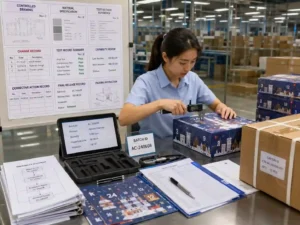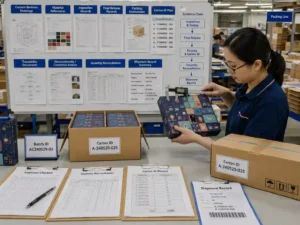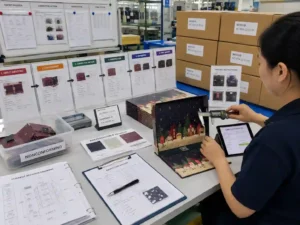
Quick answer: To design beauty advent calendar boxes for seasonal campaigns, buyers should start with the product mix, retail channel, price tier, and shipping route. The best packaging plan connects box structure, insert type, artwork, finishing, sampling, MOQ, quality control, and export packing before mass production begins. Beauty sets often include mixed SKU sizes such as palettes, tubes, mini bottles, jars, brushes, and fragile compact products, so insert fit and assembly tolerance are as important as the outer design. A reliable supplier should help check dielines, produce samples, control color consistency, inspect finished boxes, and prepare export cartons for safe delivery.
Beauty advent calendar boxes are not simple gift boxes with numbered windows. For overseas brands, wholesalers, retail buyers, Amazon sellers, and purchasing teams, they are seasonal packaging systems that must protect many small items, present a premium retail story, and survive bulk production and international shipment.
This guide explains how to design custom beauty gift set advent calendar packaging from a B2B purchasing perspective. It covers structures, applications, inserts, materials, artwork, samples, MOQ, supplier comparison, QC, export packing, and quotation preparation for buyers who need practical decisions, not consumer holiday storytelling.
What should buyers understand before choosing beauty advent calendar boxes?
Buyers should understand that the product list drives the packaging design. Box shape, insert material, compartment size, finishing method, carton packing, and final quotation all depend on the size, weight, fragility, and presentation needs of the beauty products inside.
A cosmetics calendar may include lipstick tubes, compact palettes, mini serum bottles, brushes, fragrance vials, eye shadow pans, jars, sheet masks, or mixed promotional gifts. These products rarely share the same dimensions. A weak brief such as “24-piece beauty calendar box” is not enough for accurate design or pricing.
Before discussing decoration, buyers should confirm the sales channel. A retail shelf display needs strong front-panel impact and barcode placement. An influencer PR kit may need a stronger unboxing experience and premium foil stamping. An e-commerce gift set may need more attention to drop resistance, export carton strength, and insert retention.
Buyer tip: Treat the advent calendar as a complete packaging project, not only a printed box. A beautiful outer design can still fail if the insert allows mini bottles to shake, palettes to crack, or doors to tear during opening.
Which seasonal product categories can use beauty advent calendar box structures?
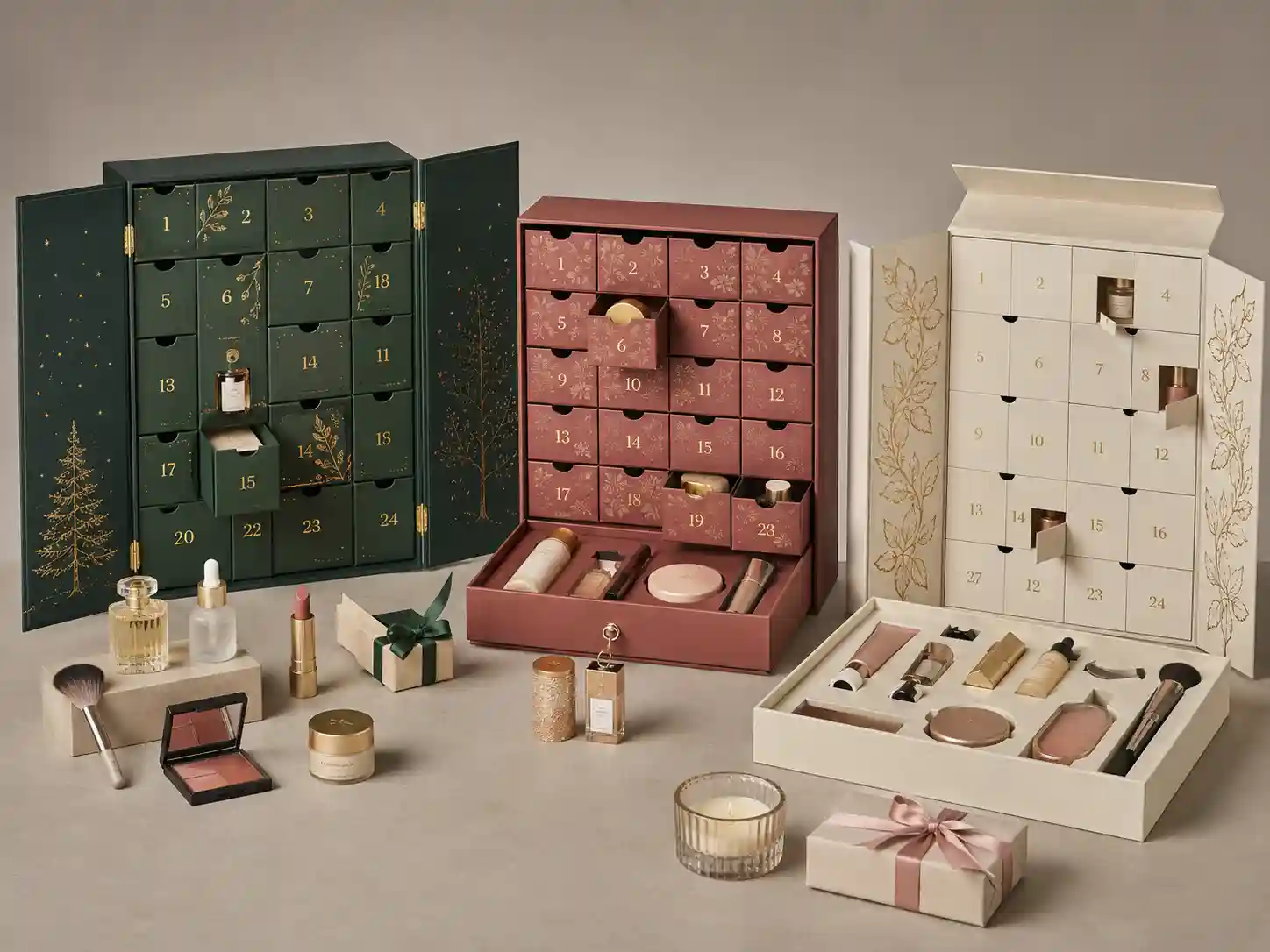
Beauty advent calendar boxes are often designed for cosmetics, skincare, fragrance, candles, jewelry, toys, tea, coffee, chocolate, beverages, and mixed gifts. The same seasonal calendar structure can support many product categories, but the insert, material, and testing method should change according to the contents.
| Product category | Common contents | Main packaging risk | Recommended design focus |
|---|---|---|---|
| Cosmetics and makeup | Palettes, lipstick, mascara, brushes, powders | Fragile pans, mixed SKU heights, powder breakage | Secure insert fit, premium front design, color consistency |
| Skincare and beauty gifts | Mini bottles, tubes, jars, sachets, tools | Leaking, shaking, uneven product sizes | Compartment tolerance, upright positioning, easy removal |
| Fragrance samples | Glass vials, mini atomizers, sample bottles | Glass breakage and movement inside cells | EVA, foam, PET tray, or tight paperboard insert testing |
| Candles and home fragrance | Mini candles, wax melts, diffusers | Weight concentration and surface scuffing | Rigid box, reinforced insert, carton protection |
| Jewelry and accessories | Charms, earrings, bracelets, small pouches | Small items moving or disappearing in large cells | Small drawers, paper pockets, velvet-like presentation options |
| Chocolate, tea, coffee, and beverages | Wrapped chocolate, tea bags, coffee sachets, mini drinks | Food-contact requirements, aroma, temperature, labeling | Buyer-verified compliance, clean inserts, clear lot planning |
| Toys and mixed gifts | Mini figures, stationery, accessories, novelty gifts | Irregular shapes and uneven weight | Flexible compartment layout and reinforced outer box |
For beauty packaging, the buyer should pay special attention to retail presentation. Cosmetic products often depend on color impression, influencer photography, and premium finishing. Matte lamination, gloss lamination, foil stamping, embossing, debossing, and spot UV can improve shelf impact, but each finish should be checked against the artwork, paper surface, and expected handling.
When sustainability claims are important, ask your supplier whether paperboard, greyboard, and printed paper options can support your sourcing requirements. Buyers can also review official information from the Forest Stewardship Council paper and packaging page when preparing responsible paper sourcing questions.
Which box structure is best for a beauty seasonal campaign?
The best structure depends on product weight, price point, unboxing style, production budget, and shipping method. Rigid boxes feel premium and protect heavier sets, while folding carton calendars can be more cost-efficient for lighter promotional products.
Beauty gift set calendars commonly use rigid door-opening boxes, drawer boxes, book-style boxes, folding carton calendars, fold-out structures, and hybrid paperboard structures. Each option affects tooling, assembly time, insert design, carton size, and MOQ.
| Structure option | Best for | Advantages | Buyer watch-outs |
|---|---|---|---|
| Rigid door-opening box | Premium cosmetics, skincare, fragrance, influencer kits | Strong presentation, good protection, high perceived value | Higher material use, longer assembly time, larger shipping volume |
| Drawer box calendar | Jewelry, beauty minis, candles, luxury gifts | Reusable feel, neat compartment access, strong gifting impression | Drawer tolerance must be controlled so drawers do not jam or slide out |
| Folding carton calendar | Lightweight cosmetics, sachets, tea, coffee, toys, promo sets | Lower unit weight, efficient packing, suitable for larger campaigns | Needs careful board selection and insert support for fragile products |
| Book-style or fold-out box | Retail storytelling, PR campaigns, multi-category gift sets | Large artwork surface, strong opening experience, display-friendly | Hinge strength, magnet placement, and flatness require sample checking |
| Window or sleeve structure | Retail shelf visibility and product previews | Shows product color or gift value quickly | Plastic window, scuffing, and export protection must be reviewed |
Factory tip: A rigid box is not automatically better than a folding carton. The right choice is the structure that matches product weight, target retail price, production quantity, and logistics cost.
If you are comparing early options, review existing formats from custom advent calendar box products and then refine the structure with your exact product dimensions.
How should buyers choose inserts for mixed beauty SKU sizes?
Insert design is one of the most important decisions for beauty advent calendar boxes because cosmetic items often vary in size, shape, and fragility. A good insert holds every SKU in the correct position, supports easy removal, and prevents movement during handling and transport.
Common insert options include paper insert, PET tray, EVA insert, foam, molded pulp, and hybrid combinations. A paperboard insert can be suitable for light tubes, sachets, and boxed minis. A PET tray may work well for clear product positioning and repeatable cavity shapes. EVA and foam can provide stronger support for fragile palettes, glass vials, jars, and mini bottles. Molded pulp may be considered when buyers want a paper-based protective insert, but the surface texture and cavity precision should be reviewed during sampling.
For beauty gift sets, buyers should provide the supplier with actual product samples or accurate 3D dimensions whenever possible. Product drawings alone may miss cap shape, shoulder angle, soft-tube flexibility, or label thickness. These details can affect fit.
- Use tighter cavities for glass vials, compact palettes, and mini bottles.
- Use finger notches or removal gaps for products that sit deeply in the insert.
- Check whether tubes deform when pressed into paperboard or PET cavities.
- Confirm that powder palettes do not receive direct pressure on weak points.
- Test upside-down and side-facing positions if the box may be handled in multiple directions.
- Review whether the insert hides too much of the product or reduces perceived value.
QC tip: Insert testing should include product loading, shaking, opening, removal, and repacking. A compartment that looks correct in a dieline may still be too loose, too tight, or difficult for workers to assemble during mass production.
What materials and finishes work best for beauty advent calendar boxes?
Material selection should balance appearance, strength, sustainability preference, production efficiency, and export durability. For beauty packaging, greyboard, paperboard, coated paper, specialty paper, and corrugated export materials often work together as one packaging system.
Rigid boxes usually use greyboard wrapped with printed paper. Folding carton options use paperboard grades selected according to box size, window design, and product weight. For premium beauty sets, buyers often request matte lamination, gloss lamination, soft-touch effects, foil stamping, embossing, debossing, spot UV, and metallic ink effects. These finishes can add strong shelf value, but they also introduce production risks.
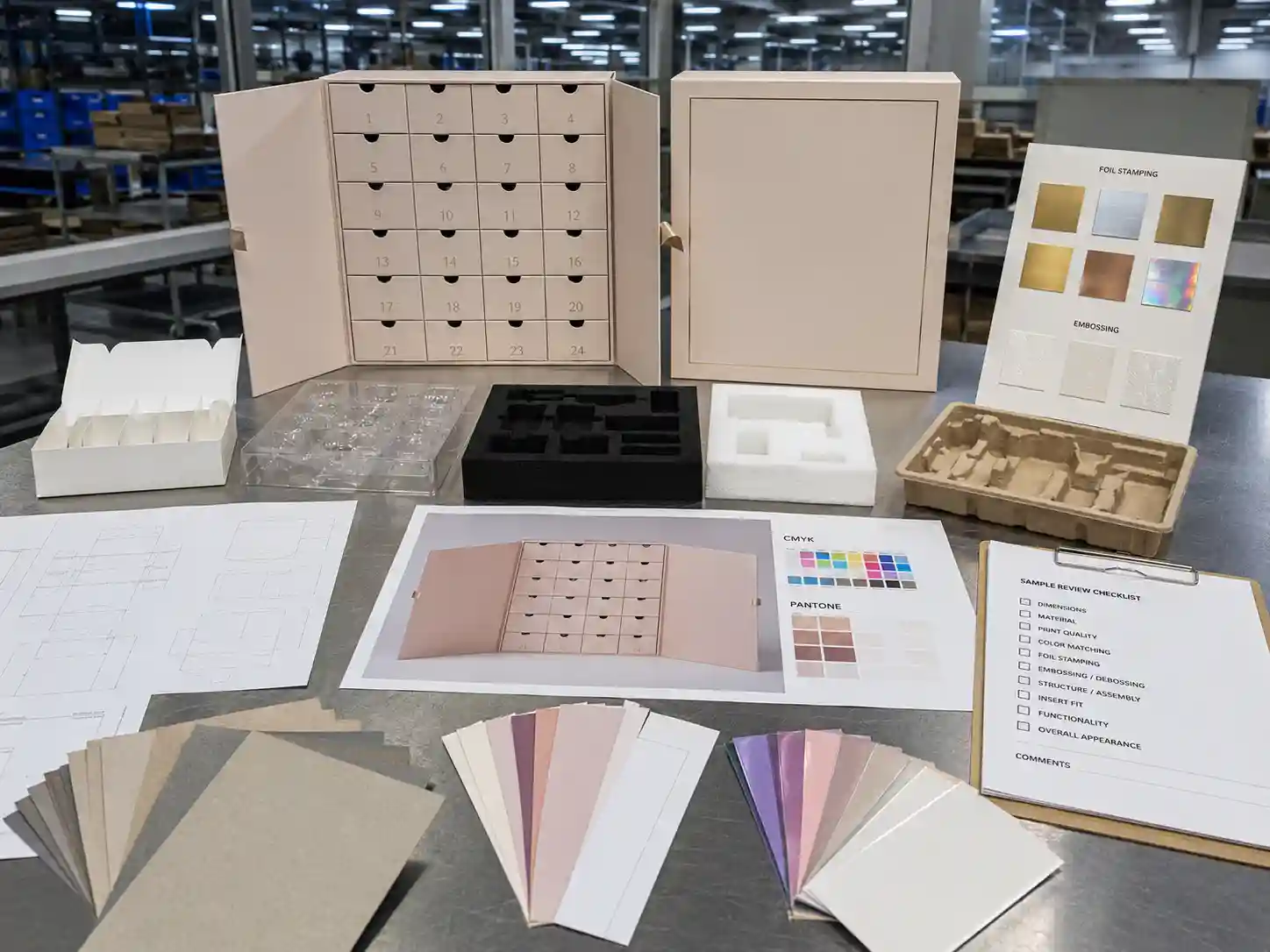
Foil stamping requires accurate position control. Embossing and debossing require enough material thickness and clear artwork separation. Spot UV needs correct registration, especially on fine lines and small cosmetic pattern details. Matte lamination can reduce glare for influencer photography, while gloss lamination can increase shine and color saturation. Both should be checked on a physical proof rather than judged only from a screen.
Buyer tip: Premium finishing should support the product positioning, not overload the calendar. Too many effects on one panel can increase cost, slow production, and create higher inspection risk.
How should artwork, dielines, and color proofing be handled?
Artwork should be prepared after the structure and insert layout are confirmed. For custom advent calendar boxes, the dieline controls panel size, door position, drawer front, window cut, insert opening, glue area, and safe print zone.
Buyers should ask the supplier to provide an approved dieline before final artwork is created. The artwork file should include CMYK settings, Pantone references if required, bleed, safe margins, barcode area, number placement, finish layers, and notes for foil stamping, embossing, spot UV, or lamination.
Beauty packaging is especially sensitive to color consistency. A pink skincare set, nude makeup theme, metallic holiday palette, or minimalist luxury design can look very different across paper types and printing batches. If color is critical, request a printed proof or pre-production sample before mass production.
- Confirm the dieline version before placing final artwork.
- Keep important text and numbers away from cut lines, fold lines, and door perforations.
- Separate artwork layers for CMYK, Pantone, foil stamping, embossing, spot UV, and cutting.
- Check barcode size and placement using your retailer or marketplace requirements. Buyers can review official GS1 barcode standards when planning barcode use.
- Approve a physical sample under realistic light, not only a digital mockup.
A useful supplier will check whether the design is printable, whether the numbers align with doors or drawers, whether the insert matches the outer structure, and whether finishing effects can be mass-produced within tolerance.
What sample process should buyers expect before mass production?
Buyers should expect several sample stages if the project is complex. A white sample checks structure and insert fit, a printed sample checks artwork and finishing, and a pre-production sample confirms the final approved version before mass production.
Not every project needs every stage, but beauty advent calendars with many SKUs usually benefit from a structured sample approval process. A prototype can reveal whether doors tear cleanly, drawers slide smoothly, bottles stay upright, and fragile palettes are protected. A printed sample can reveal color shift, foil position, lamination feel, and assembly quality.
The buyer should record sample approval notes clearly. Notes may include “increase cavity depth by 2 mm,” “adjust drawer tolerance,” “move number away from fold line,” “change matte lamination to gloss lamination,” or “strengthen corner protection in export carton.” These notes should be confirmed before bulk production begins.
Factory tip: The approved sample becomes the production reference. If the buyer changes product size, insert material, paper surface, or finishing after sample approval, the quotation, lead time, and production risk may change.
How do MOQ, cost drivers, and lead time affect the buying decision?
MOQ, cost, and lead time depend on structure, material, insert type, printing, finishing, tooling, order quantity, and packing method. Buyers should compare the complete specification instead of comparing only the unit price.
Rigid advent calendars usually require more manual assembly and more material than simple folding cartons. Drawer boxes may require additional components and careful fitting. Special inserts, heavy greyboard, complex foil stamping, multiple Pantone colors, spot UV, magnetic closures, ribbons, windows, and custom export packing can all increase cost.
Lead time should include dieline confirmation, sample making, sample shipping, buyer review, artwork adjustment, pre-production approval, mass production, QC, export carton packing, and shipping arrangement. Seasonal campaigns should not treat production time as the only schedule. Buyer-side artwork delays and product sample delays are common causes of late projects.
- Lower unit cost usually needs higher order quantity, simpler structure, and efficient material use.
- Faster sampling requires complete product dimensions, artwork, and clear finishing instructions.
- Premium appearance often increases cost through finishing, assembly, inspection, and packing requirements.
- Export volume can affect logistics cost as much as the box unit price.
For early budgeting, send your brief to the custom advent calendar box services team and ask for option-based pricing, such as rigid box versus folding carton, paper insert versus EVA insert, or matte lamination versus foil stamping.
How should buyers compare beauty advent calendar box suppliers?
Buyers should compare suppliers by engineering support, sample accuracy, printing control, insert testing, QC process, export packing experience, communication quality, and quotation transparency. The cheapest supplier is not always the lowest-risk supplier for seasonal beauty programs.
A practical supplier comparison should include whether the factory can review dielines, recommend materials, test product fit, control color proofs, document sample changes, inspect finished goods, and pack cartons for export. Buyers should also ask whether the supplier has experience with mixed cosmetic SKUs, fragile palettes, tubes, mini bottles, retail labeling, and seasonal deadlines.
When reviewing a Giftpackpro packaging factory or any other supplier, ask for project-specific evidence rather than broad claims. Useful questions include: Can the supplier produce a structural sample? Can they check insert tolerance with actual products? Can they separate finishing layers correctly? Can they provide carton dimensions for freight planning? Can they prepare shipping marks according to the buyer’s instructions?
Supplier comparison checklist
- Does the supplier ask for product dimensions, weight, and quantity per calendar?
- Can the supplier recommend rigid box, drawer box, door-opening box, or folding carton based on the project?
- Does the quotation clearly list material, size, insert, printing, finishing, packing, and sample cost?
- Can the supplier provide a dieline and revise it after product fit testing?
- Does the factory control CMYK, Pantone, lamination, foil stamping, embossing, and spot UV details?
- Is there a pre-production sample approval step before mass production?
- Are QC checkpoints included for printing, assembly, insert fit, door opening, carton label, and export packing?
- Can the supplier support overseas shipping documents, carton labels, pallet packing, and shipping marks?
What QC checks matter most before shipment?
Quality control should check structure, printing, finishing, assembly, insert fit, product loading, carton packing, and shipping marks. For beauty advent calendar boxes, final inspection should focus on both appearance and function.
Appearance checks include color consistency, print scratches, glue marks, foil stamping alignment, embossing depth, lamination bubbles, spot UV registration, and clean edges. Functional checks include door opening, drawer movement, magnet position, hinge strength, insert retention, product fit, and carton drop-resistance planning.
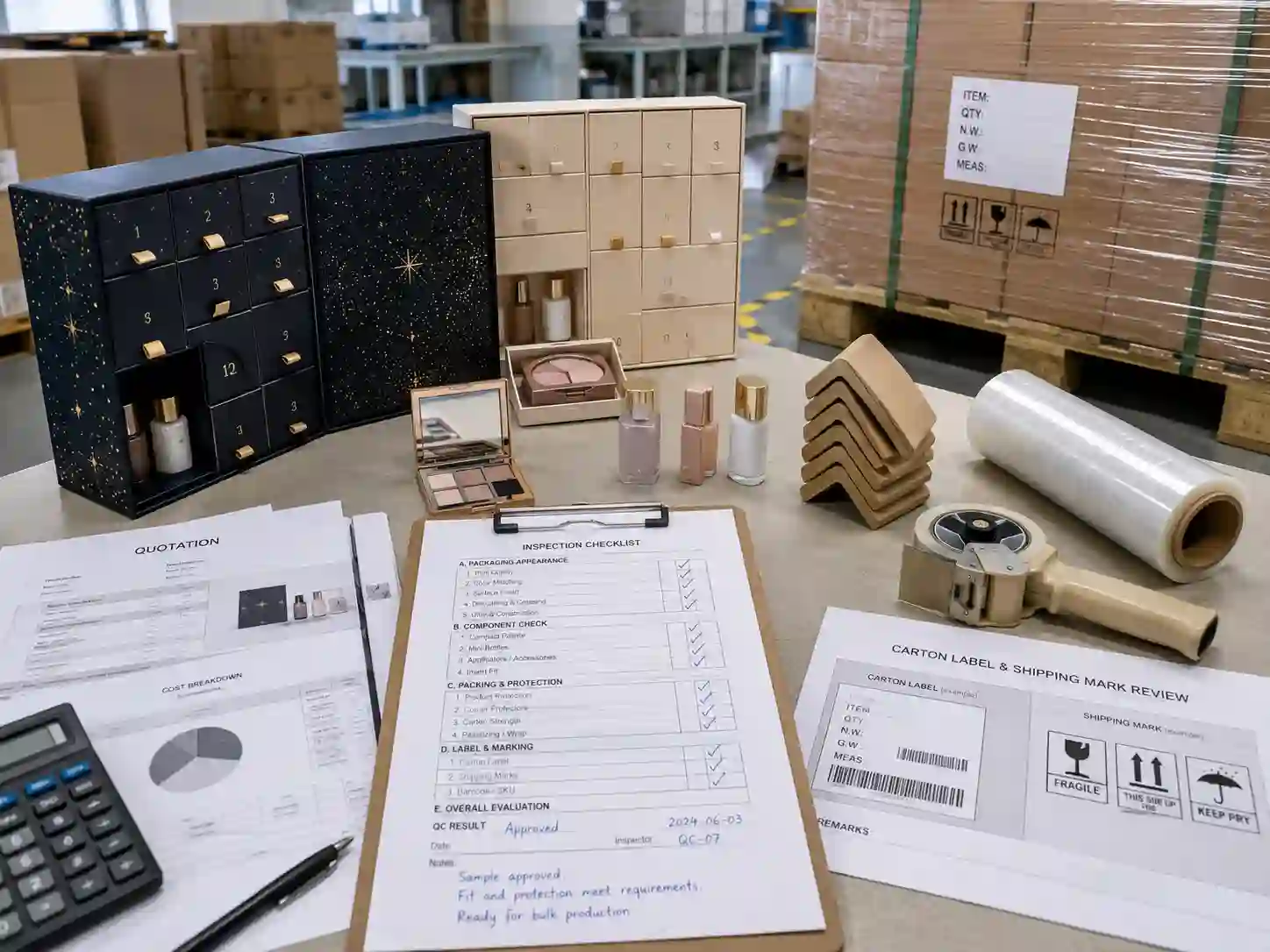
For fragile palettes, glass mini bottles, and delicate cosmetic components, QC should also include shake checks or handling simulations based on the buyer’s risk level. If the products are packed into the calendar at the factory, the inspection plan should include product count, sequence, compartment accuracy, and final weight checks.
QC tip: A finished beauty calendar should be inspected as a complete retail unit, not only as flat printed paper. The inspector should open, close, shake, view, and handle the sample like a warehouse worker, retail buyer, and end customer would.
How should export packing be planned for seasonal campaigns?
Export packing should be planned early because advent calendar boxes can be large, decorated, and easy to scuff. Carton size, carton strength, corner protection, pallet pattern, pallet wrap, shipping marks, and carton labels all affect delivery condition.
Beauty gift set calendars often have premium printed surfaces. Rubbing during transport can damage matte lamination, dark ink panels, foil stamping, and sharp corners. Buyers should ask whether each unit needs a polybag, tissue wrap, paper sleeve, corner protector, inner carton, or divider. The right solution depends on surface finish, box weight, shipping route, and retailer requirements.
Export cartons should be checked for gross weight, net weight, carton dimensions, product quantity, shipping marks, PO number, item number, destination mark, and barcode or carton label requirements. If goods will be palletized, confirm pallet height, pallet wrap, corner boards, and whether the destination warehouse has any special receiving rules.
What information should buyers prepare before requesting a quotation?
Buyers should prepare product details, box target size, structure preference, insert requirements, artwork status, order quantity, destination, packing needs, and deadline. A complete RFQ helps the supplier quote faster and reduces later changes.
Before asking Giftpackpro to price beauty advent calendar boxes, prepare the following information:
- Product list, quantity per set, product dimensions, weight, and photos.
- Target structure: rigid box, drawer box, door-opening box, folding carton, book-style box, or open to recommendation.
- Number of compartments, door layout, drawer layout, or insert layout preference.
- Insert choice or product protection goal: paper insert, PET tray, EVA insert, foam, molded pulp, or supplier recommendation.
- Artwork files, brand color references, CMYK or Pantone requirements, and finishing notes.
- Expected order quantity, sample requirement, prototype deadline, mass production deadline, and launch date.
- Retail channel: department store, supermarket, gift shop, Amazon, e-commerce, influencer PR, subscription box, or wholesale distribution.
- Export destination, carton label requirements, pallet requirements, and shipping marks.
Buyers can also read more advent calendar box buying guides before finalizing their brief, especially when comparing structures, inserts, and printing options.
Decision guide: which design direction should you choose?
Choose the design direction by matching the product risk and campaign goal. The safest design is the one that protects the contents, fits the sales channel, and can be produced consistently within the project schedule.
If your campaign is premium beauty retail
Choose a rigid door-opening box, drawer box, or book-style box with a strong greyboard structure, controlled color proofing, and premium finishing such as foil stamping, embossing, or spot UV. Use insert testing for palettes, jars, bottles, and tools.
If your campaign is e-commerce or Amazon-focused
Prioritize compact carton size, stronger insert retention, export carton strength, and surface protection. Avoid overly delicate finishes if the box will face heavy warehouse handling.
If your campaign has many mixed SKU sizes
Start with the insert layout before finalizing the outer box. Use product samples to test cavities, finger notches, product sequence, and assembly speed.
If your campaign needs better cost control
Consider folding carton structures, paperboard inserts, fewer finishing processes, efficient box dimensions, and higher order quantities. Ask for two or three quotation options instead of forcing one early design.
If your campaign includes food, drink, or beauty-adjacent gifts
Separate packaging appearance from compliance responsibility. Ask suppliers what materials and processes they can provide, but verify food-contact, labeling, recycling, and destination-market requirements with your compliance team or official authorities.
What common mistakes should buyers avoid?
Most problems come from incomplete product information, late artwork changes, weak insert testing, unclear sample approval, or underestimating export packing needs. These issues can delay a seasonal launch even when the box design looks attractive.
- Approving artwork before confirming the dieline and insert layout.
- Using only product photos instead of accurate dimensions or physical samples.
- Choosing a premium finish without checking production tolerance.
- Ignoring product movement inside compartments during shipping.
- Comparing quotations without matching structure, material, insert, and packing details.
- Changing product SKUs after the sample has been approved.
- Leaving barcode, carton label, or shipping mark requirements until the end.
- Assuming MOQ, lead time, or pricing will remain the same after specification changes.
Buyer tip: For seasonal campaigns, the best time to prevent delays is before sampling. A complete RFQ, accurate product data, and clear approval process reduce the risk of expensive late-stage corrections.
FAQ: Beauty advent calendar boxes for B2B buyers
What is the best structure for beauty advent calendar boxes?
The best structure depends on product weight, budget, retail positioning, and shipping route. Premium beauty sets often use rigid door-opening boxes, drawer boxes, or book-style boxes, while lighter promotional sets may use folding carton calendars.
Which insert is best for fragile palettes and mini bottles?
EVA, foam, PET trays, and well-engineered paperboard inserts can all work depending on the product. Fragile palettes and glass mini bottles usually need tighter fit testing, movement control, and sample approval with real products.
Can one calendar box hold cosmetics, candles, jewelry, tea, and gifts together?
Yes, mixed gift calendars are possible, but the insert layout must be designed around the largest, smallest, heaviest, and most fragile items. Mixed categories may also create labeling, aroma, food-contact, or compliance questions that buyers should verify separately.
How early should buyers start a seasonal advent calendar project?
Buyers should start as early as possible because structure design, dieline creation, sample making, artwork approval, pre-production confirmation, mass production, QC, export packing, and freight booking all take time. Delays often happen when products or artwork are not ready.
What affects the quotation most?
The largest cost drivers are box size, structure, material thickness, insert type, printing method, finishing, order quantity, manual assembly, sample requirements, export packing, and shipping volume. A complete specification produces a more reliable quotation.
Do I need a pre-production sample?
For complex beauty advent calendar boxes, a pre-production sample is strongly recommended. It confirms the final structure, insert fit, artwork, finishing, and assembly standard before mass production starts.
Ready to design beauty advent calendar boxes for your campaign?
To request a sample or quotation, prepare your product list, dimensions, photos, target quantity, structure preference, artwork status, finishing requirements, deadline, export destination, and packing instructions. Giftpackpro can review these details and help compare structure, insert, printing, and export-packing options for beauty advent calendar boxes.
If you need a practical packaging plan, contact Giftpackpro as a custom advent calendar boxes manufacturer or request a custom quote with your project brief. The more complete your RFQ is, the faster the team can recommend a workable sample plan and quotation for your seasonal campaign.