
Compartment advent calendar boxes are a good choice when a brand needs many small items to stay separated, protected, and presented in a clear order. For B2B buyers, the decision is not only about appearance. It also affects MOQ, tooling, labor, material use, packing method, sampling time, and the final quotation.
This guide explains when compartment structures make sense, what cost factors to check before requesting a quote, and how purchasing teams can reduce avoidable changes before bulk production.
What Are Compartment Advent Calendar Boxes?
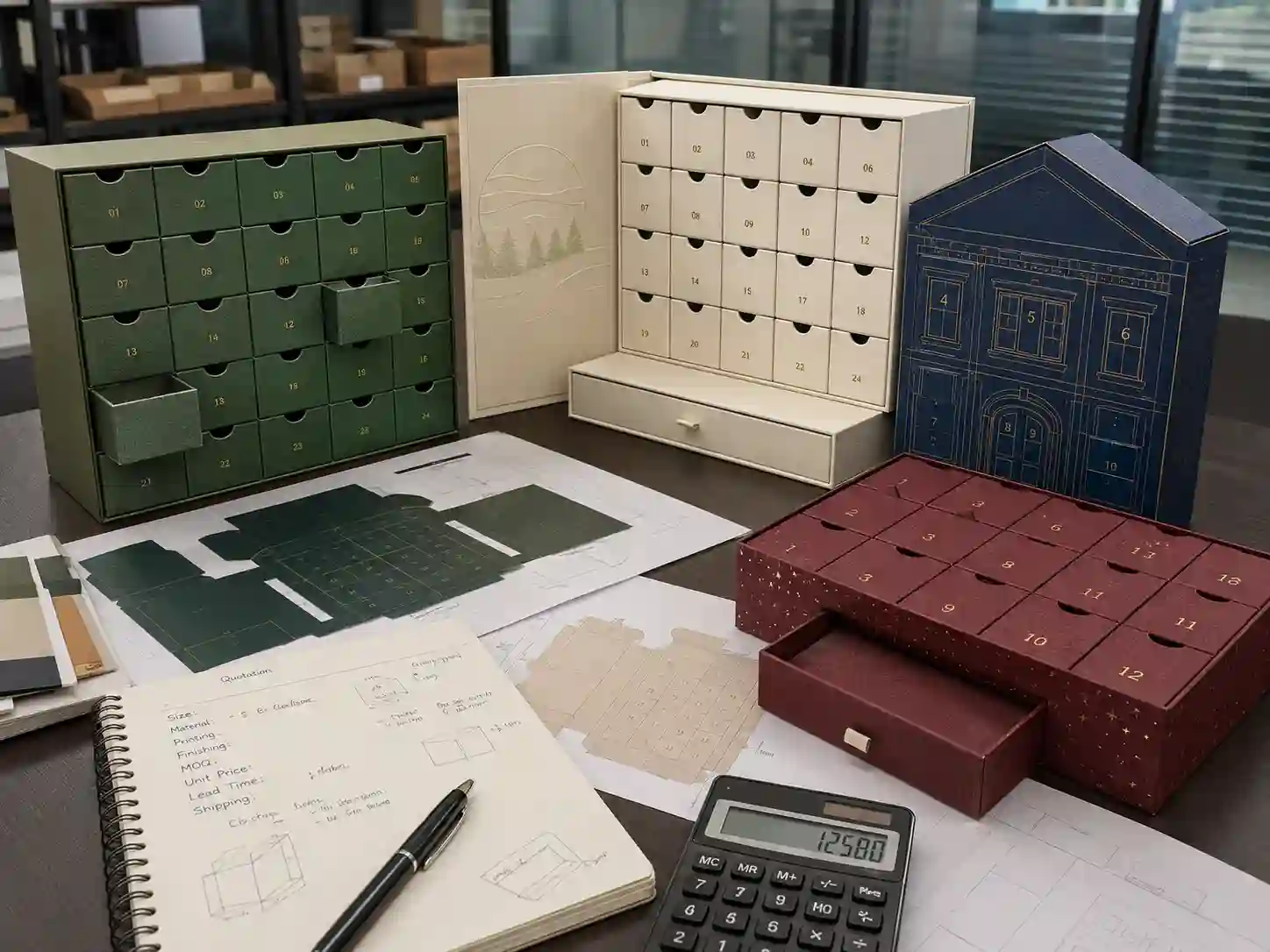
Compartment advent calendar boxes use separated inner spaces to hold products in fixed positions. These spaces may be made with paperboard dividers, drawer units, molded pulp trays, EVA inserts, plastic trays, or custom paper structures. The outer box can be a drawer box, book-style rigid box, folding carton, magnetic box, or display-style calendar.
Brands often choose this format for cosmetics, skincare samples, candles, tea, confectionery, jewelry, stationery, mini toys, socks, wellness kits, and seasonal gift sets. If each item has a different size, weight, or opening order, compartments can make the unboxing experience easier to control.
When Should Brands Choose Compartment Advent Calendar Boxes?
1. When Products Need Fixed Positions
If the set includes bottles, jars, tubes, sachets, small boxes, or fragile items, loose packing can create movement during shipment. Compartment advent calendar boxes help each item stay in a planned position. This is useful when retail buyers need neat presentation after long-distance transport.
For example, a skincare brand may have 24 products with mixed sizes: serum bottles, cream jars, masks, and small cartons. A compartment layout allows the supplier to plan different cavity sizes while keeping the front artwork clean.
2. When the Brand Needs a Clear Daily Reveal Order
Some calendars only need 12 or 24 generic cavities. Others require a strict product sequence. If day 1 must hold a hero product and day 24 must hold the highest-value item, a compartment layout should be confirmed before artwork starts.
Buyers can review custom advent calendar box products to compare common formats before deciding whether a simple divider, drawer system, or shaped insert is more suitable.
3. When Retail Display Quality Matters
For wholesale, department store, club store, and online gift set projects, the box must look stable after packing, shipping, and shelf handling. Compartments reduce product shifting and help the final set look more organized in product photos, retail listings, and buyer presentations.
Giftpackpro supports B2B buyers who need structure planning, sample review, artwork checking, and export packing through custom advent calendar box services.
How Compartment Structure Affects MOQ and Cost
MOQ is usually affected by material purchasing, printing setup, die-cut tooling, handwork, insert assembly, and packing requirements. Compartment advent calendar boxes normally require more planning than simple folding cartons because the inside structure must fit the product set accurately.
A rigid calendar with many drawers will usually have a higher labor cost than a folding carton calendar with paperboard dividers. A molded pulp insert may be efficient for repeated orders, but it can require tooling and sample confirmation. A paper insert may be more flexible for smaller seasonal projects.
| Cost Factor | What Buyers Should Confirm | Cost Control Tip |
|---|---|---|
| Box structure | Rigid box, folding carton, drawer box, book-style box, or display calendar | Choose the simplest structure that still protects the product set |
| Insert type | Paperboard divider, paper tray, molded pulp, EVA, foam, or plastic tray | Use one insert material when possible to reduce sampling and sourcing work |
| Product quantity | 12, 24, 25, or custom number of compartments | Avoid unnecessary cavities if the project budget is tight |
| Finishing | Matte lamination, gloss lamination, foil stamping, embossing, debossing, spot UV | Use premium finishing only on visible areas or hero panels |
| Labor | Drawer assembly, insert placement, window patching, magnetic closure, product loading | Ask whether the box can be supplied flat-packed or semi-assembled |
| Export packing | Master carton size, pallet plan, drop protection, shipping marks | Confirm carton quantity and pallet height before final quote approval |
Material Choices for Compartment Advent Calendar Boxes
Paperboard Dividers
Paperboard dividers are often suitable for lightweight products and simple cavity layouts. They are flexible for different SKUs and can reduce tooling cost compared with molded inserts. They are also useful when the buyer expects seasonal design changes each year.
Rigid Greyboard Structures
Rigid greyboard is common for premium advent calendar boxes. It gives the box a stronger hand feel and better shelf presence. However, it usually increases material cost, handwork time, carton volume, and shipping weight.
Molded Pulp, EVA, or Foam Inserts
Molded pulp, EVA, and foam can help hold special product shapes. These inserts are useful when the item is fragile, heavy, or irregular. Buyers should confirm whether the product touches the insert directly, especially for food, cosmetics, or liquid products.
For paper sourcing claims, buyers can review official information from FSC paper and packaging guidance. For food-related gift sets, buyers should also review relevant food-contact rules such as the FDA food contact substances guidance.
Customization Process: What to Prepare Before Asking for a Quote
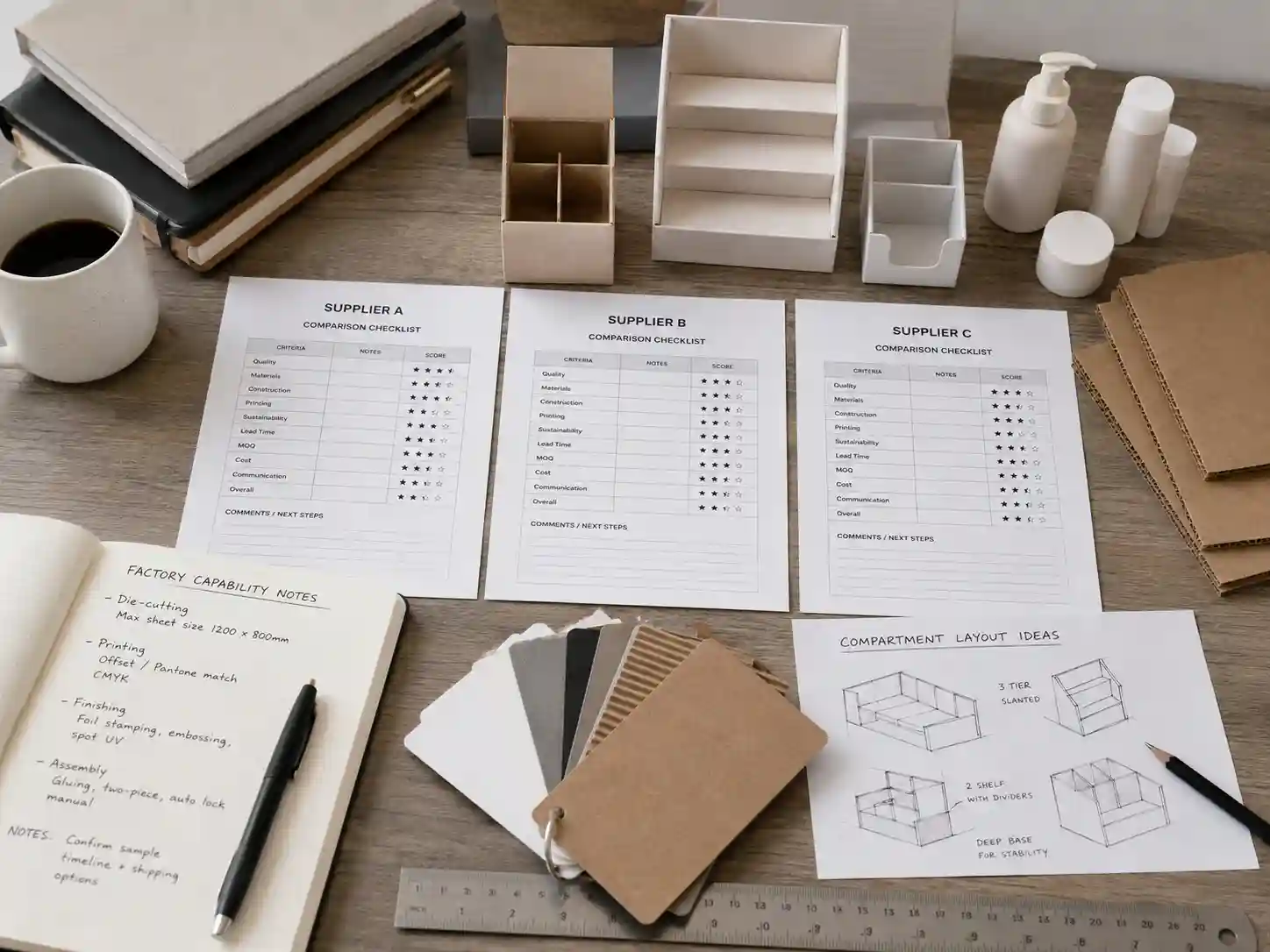
A clear RFQ helps the supplier quote faster and reduces back-and-forth emails. Before contacting a custom advent calendar boxes manufacturer, buyers should prepare the product list, product dimensions, target quantity, required box style, artwork status, shipping destination, and expected delivery time.
Basic Quote Information
For compartment advent calendar boxes, the supplier should know the size and weight of every product. A simple spreadsheet is useful. Include product name, size, weight, quantity per box, required compartment number, and whether the item needs extra protection.
If the artwork is not ready, buyers can still request a preliminary estimate. However, final pricing should be confirmed after dieline, insert layout, printing method, finishing, and packing details are reviewed.
Sample Planning
Sampling is important because compartment fit cannot be judged by artwork alone. A white sample can check structure and product fit. A printed sample can check color, finishing, surface texture, opening experience, and retail presentation.
Buyers can use advent calendar box buying guides to prepare better questions before sample development, especially when comparing box styles or insert options.
MOQ Planning for Seasonal Buyers
MOQ depends on the structure and production method. A simple paperboard calendar may support a lower starting quantity than a complex rigid box with many drawers and special finishing. For overseas buyers, the practical MOQ should also consider shipping efficiency, carton quantity, and unit cost.
For example, a buyer may ask for 300 pieces of a highly customized rigid 24-day calendar with foil stamping, magnetic closure, EVA insert, and product loading. The unit cost may be high because material setup, handwork, and packing labor are spread across a small order. If the order increases to 1,000 or 3,000 pieces, the cost structure can become more efficient.
Giftpackpro can help purchasing teams review structure, MOQ, sample direction, and packing options through request a custom quote.
How Labor Affects the Final Price
Labor cost is often underestimated in compartment advent calendar boxes. More compartments usually mean more die-cut parts, folding steps, gluing points, insert placement, and inspection work. Drawer calendars may also require manual assembly for each small drawer.
If the buyer needs product loading service, the supplier must also check loading sequence, barcode labels, carton sorting, and final inspection. This should be discussed early because it changes the production workflow.
Common Labor-Heavy Features
Magnetic closure, ribbon pull tabs, shaped windows, multi-layer inserts, individual drawers, foil details on many panels, and complicated sleeve structures can all increase labor time. These features may be worth the cost for premium retail projects, but they should match the sales channel and target budget.
Finishing Choices and Cost Control
Finishing can improve perceived value, but it also adds cost and production time. Matte lamination is often used for a clean premium surface. Foil stamping can highlight the logo or seasonal theme. Embossing or debossing can add tactile detail. Spot UV can create contrast on selected graphics.
For cost control, avoid applying expensive finishing to every panel. Use it on the front cover, logo area, or key display surface. If the box will be sold online only, product photography may matter more than complex finishing. If the box will be placed in retail stores, surface durability and shelf impact may be more important.
Quality Control and Export Packing
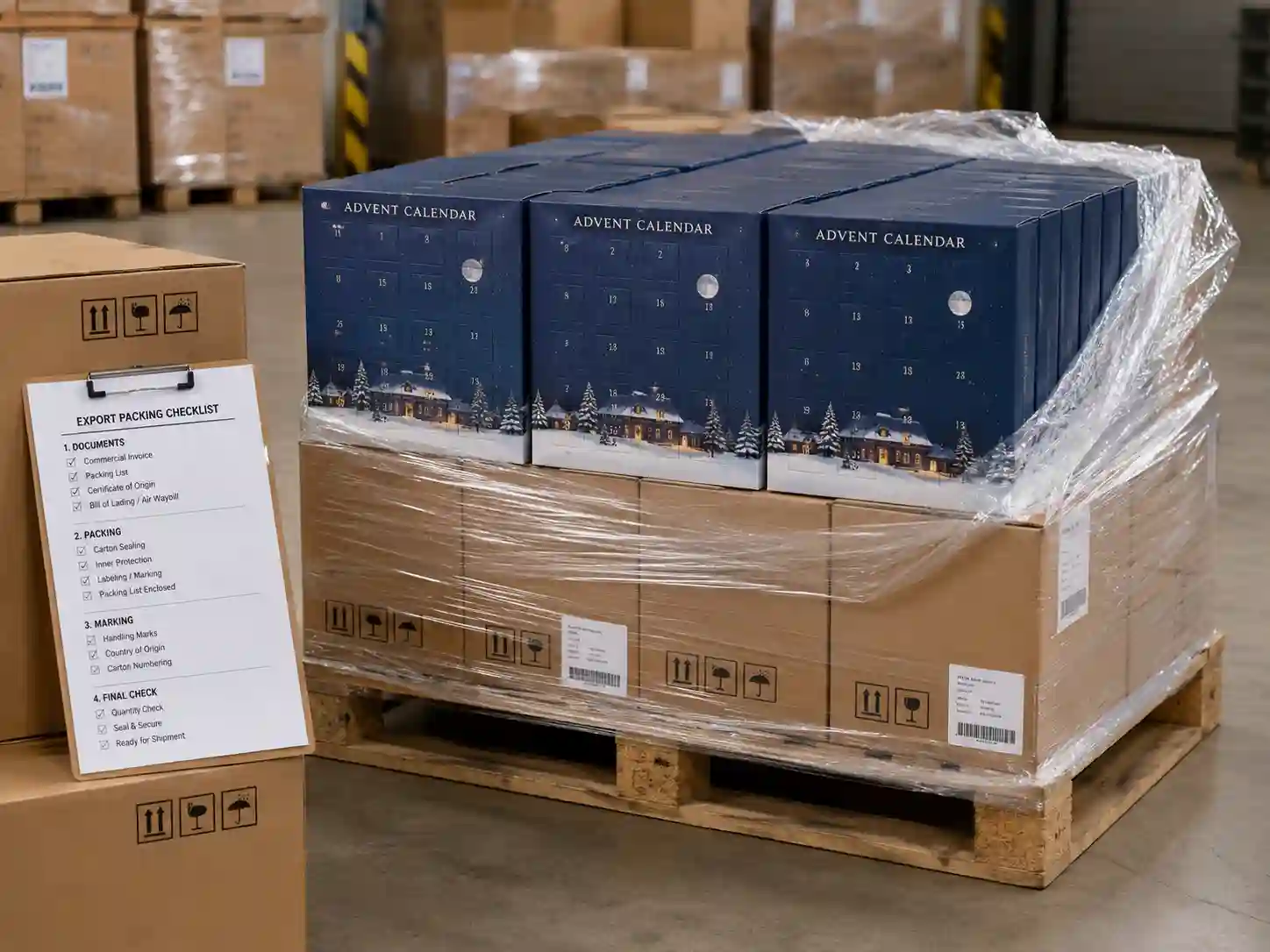
Quality control should cover structure, printing, finishing, insert fit, opening experience, glue strength, product placement, carton packing, and shipping marks. For compartment advent calendar boxes, insert accuracy is especially important because small size errors can affect product loading.
QC Points Buyers Should Ask About
Before bulk production, ask how the supplier checks dieline accuracy, sample approval, color tolerance, insert fit, compartment sequence, and final carton packing. For export orders, confirm whether the goods will be shipped flat-packed, assembled, or product-loaded.
Buyers can also learn more about supplier capability from the Giftpackpro packaging factory page before confirming a production plan.
Export Packing Details
Export packing affects both protection and freight cost. A strong retail box may still need protective master cartons, corner protection, pallet planning, and clear shipping marks. If the finished calendar is large or heavy, carton size and pallet quantity should be reviewed before production.
For seasonal campaigns, late packing decisions can cause delays. Confirm carton dimensions, gross weight, pallet plan, and destination requirements before approving the final quote.
Practical Quote-Preparation Checklist
Before sending an inquiry, prepare these details:
- Target quantity and expected reorder plan
- Number of compartments, such as 12, 24, 25, or custom layout
- Product dimensions and weight for each item
- Preferred box structure and insert material
- Artwork file status and printing requirements
- Required finishing, such as foil stamping or matte lamination
- Flat-packed, assembled, or product-loaded packing method
- Shipping destination and target delivery date
When buyers provide these details at the beginning, the quotation is more accurate and the sampling stage moves faster. It also helps the supplier suggest cost-saving changes before the dieline is locked.
Final Recommendation
Brands should choose compartment advent calendar boxes when product organization, presentation, protection, and daily reveal order are important. The format is especially useful for multi-SKU gift sets, premium retail campaigns, and seasonal wholesale programs.
For cost control, keep the structure practical, choose inserts based on real product weight, limit premium finishing to key areas, and confirm export packing early. To start a project, review available custom advent calendar box services, compare custom advent calendar box products, read more advent calendar box buying guides, or request a custom quote with your product list and target quantity.


