Compartment Advent Calendar Boxes: Structure, Uses, and Buyer Tips
Compartment advent calendar boxes are used when a brand needs more than a decorative seasonal box. Each compartment must protect the product, control the opening experience, support printing, and survive bulk shipping.
For B2B buyers, the main question is not only how the box looks. It is whether the structure can fit the product range, match the campaign schedule, pass sampling, and stay stable during export packing.
As a custom advent calendar boxes manufacturer, Giftpackpro often works with overseas brands, wholesalers, gift companies, and purchasing teams that need practical structure advice before artwork and quotation.
What Are Compartment Advent Calendar Boxes?
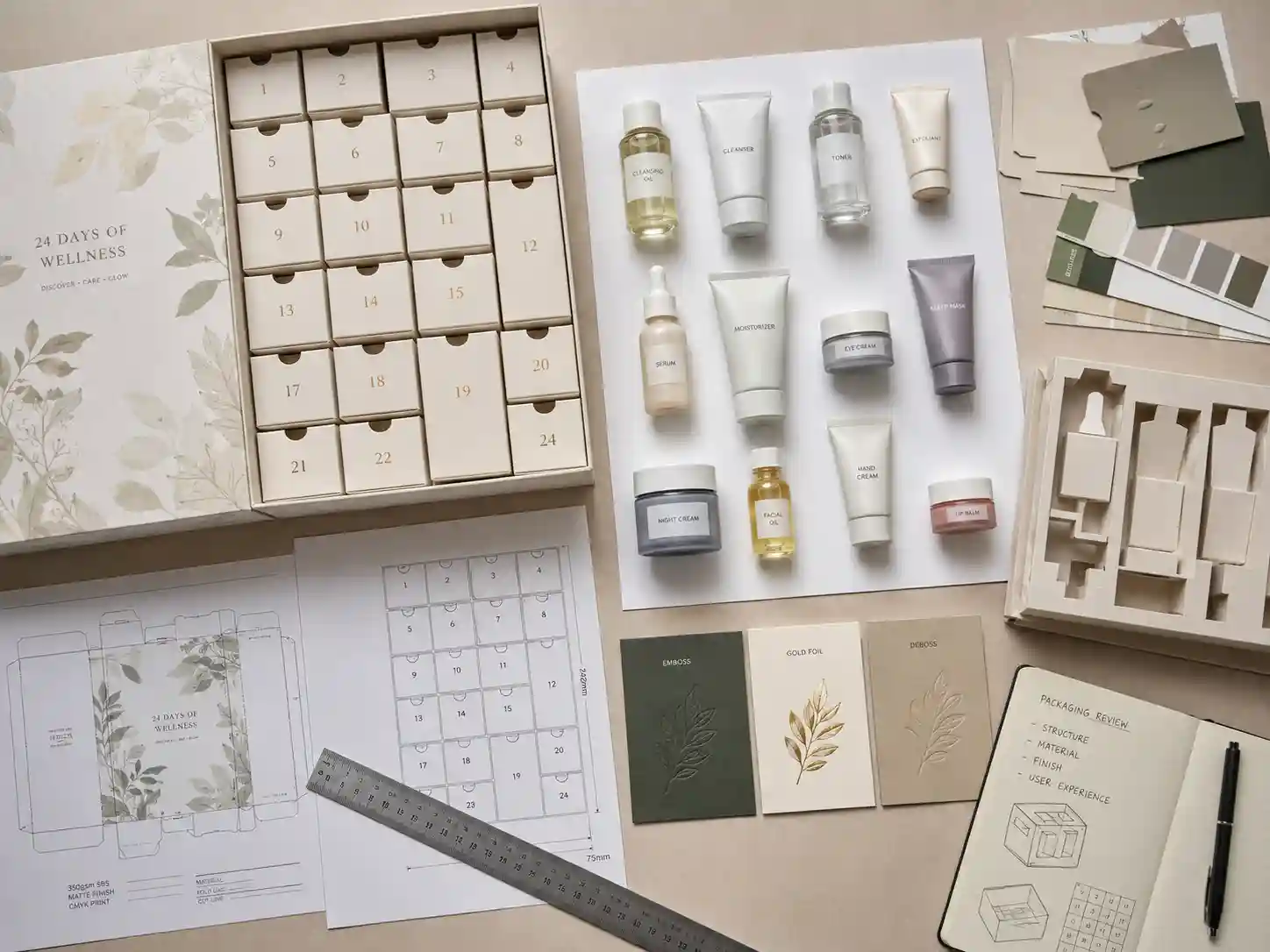
Compartment advent calendar boxes are paper-based packaging structures divided into multiple spaces, usually for 12-day, 24-day, or customized product-count campaigns. The compartments may be created by drawers, paperboard dividers, insert trays, rigid box sections, or a mixed structure.
The goal is simple: each product should have its own place. This helps buyers organize different SKUs, control product movement, and create a clear daily-opening format for retail or promotional campaigns.
Compared with a basic gift box, compartment advent calendar boxes need more structural planning. The supplier must check product size, product weight, insert material, door strength, drawer tolerance, printing area, and packing method before mass production.
Common Structures for Compartment Advent Calendar Boxes
Drawer Structure
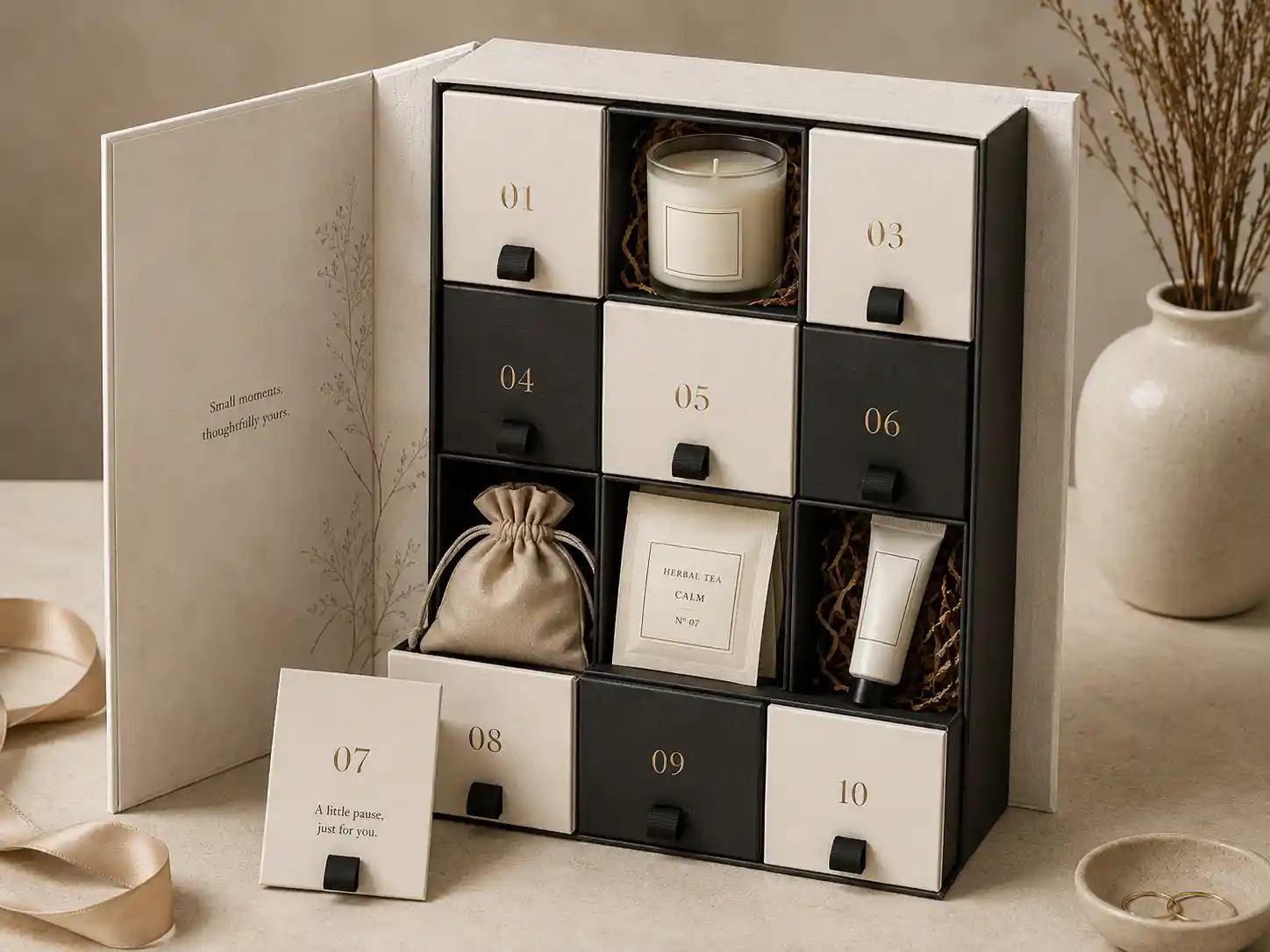
Drawer advent calendar boxes are popular for cosmetics, jewelry, candles, tea, coffee, and premium gift sets. Each drawer can hold one product or a small group of items. The drawer format gives a neat retail presentation and works well for higher-value product lines.
For drawer boxes, buyers should check drawer sliding tolerance, pull-tab strength, outer box rigidity, and whether the products need extra inserts inside each drawer.
Window and Door Structure
Window or numbered-door structures are widely used for chocolate, toys, skincare samples, and promotional gift packs. The consumer opens one section at a time, while the internal tray or divider keeps the product in position.
This structure needs careful testing. If the paperboard is too thin, doors may tear during opening. If the insert fit is loose, products can shift during transport.
Rigid Box with Insert Tray
Rigid compartment boxes are suitable for premium products such as fragrance samples, jewelry, candles, cosmetics, and seasonal gift sets. The outer box gives a stronger presentation, while the insert tray controls product placement.
Common insert options include paperboard, EVA, foam, molded pulp, and customized cardboard dividers. Buyers can review more production options through custom advent calendar box services.
Industry Applications: Which Products Fit Best?
Different product categories require different compartment planning. A structure that works for chocolate may not work for glass cosmetic bottles. A layout for tea sachets may not be strong enough for candles or beverage samples.
| Product Category | Common Box Structure | Key Buyer Checkpoints |
|---|---|---|
| Cosmetics and skincare | Drawer box, rigid box with insert tray, door-style box | Bottle height, cap protection, leakage risk, insert fit, premium printing |
| Chocolate and confectionery | Door-style box, paperboard tray, food-safe inner packaging support | Food-contact requirements, product movement, heat sensitivity, clean packing |
| Candles | Rigid drawer box, divided insert tray | Weight, glass jar protection, fragrance leakage, divider strength |
| Jewelry | Small drawer box, velvet-style insert, paperboard insert | Anti-scratch protection, small compartment accuracy, premium finish |
| Toys and collectibles | Door-style box, tray insert, mixed compartment layout | Different SKU sizes, choking warning placement, carton strength |
| Tea and coffee | Drawer box, sachet compartment, sleeve-style layout | Bag size, aroma protection, sequence layout, retail shelf presentation |
| Beverages and mini bottles | Rigid box, reinforced insert, vertical compartment layout | Bottle weight, breakage risk, export packing, drop-test planning |
| Gift sets | Mixed drawer and insert structure | Multiple product sizes, visual balance, unboxing order, quotation accuracy |
Customization Points Buyers Should Confirm Early
Product Size and Compartment Layout
The most important starting point is the actual product size. Buyers should provide length, width, height, weight, and product photos for each SKU. If the product is round, fragile, flexible, or irregular, the supplier should also know how it will be packed before entering the box.
For mixed product sets, do not only provide the outer box size. The supplier needs to know the size of each item to design the internal layout correctly.
Insert Material
Insert choice affects cost, protection, appearance, and sustainability positioning. Paperboard inserts are common for lightweight goods. EVA and foam provide stronger cushioning for fragile items. Molded pulp can support eco-focused packaging projects when the structure allows it.
For buyers comparing custom advent calendar box products, it is useful to ask whether one insert material can cover all SKUs or whether several insert styles are required.
Printing and Finishing
Most B2B projects need custom artwork, brand colors, and campaign graphics. Common finishing choices include matte lamination, gloss lamination, foil stamping, embossing, debossing, and spot UV.
For color-sensitive campaigns, buyers should prepare Pantone references, CMYK files, and approved color samples. Color proofing is especially important for cosmetics, jewelry, candles, and premium gift packaging.
Material and Compliance Positioning
If the project needs certified paper materials, buyers can review responsible sourcing information from the official Forest Stewardship Council. For food-related products, buyers should also check whether their own inner packaging and product-contact requirements follow the correct market guidance, such as the official FDA food contact substances guidance.
These requirements should be discussed before sampling. They may affect material selection, print coating, insert design, and production documentation.
Sample Development and Bulk Production Process
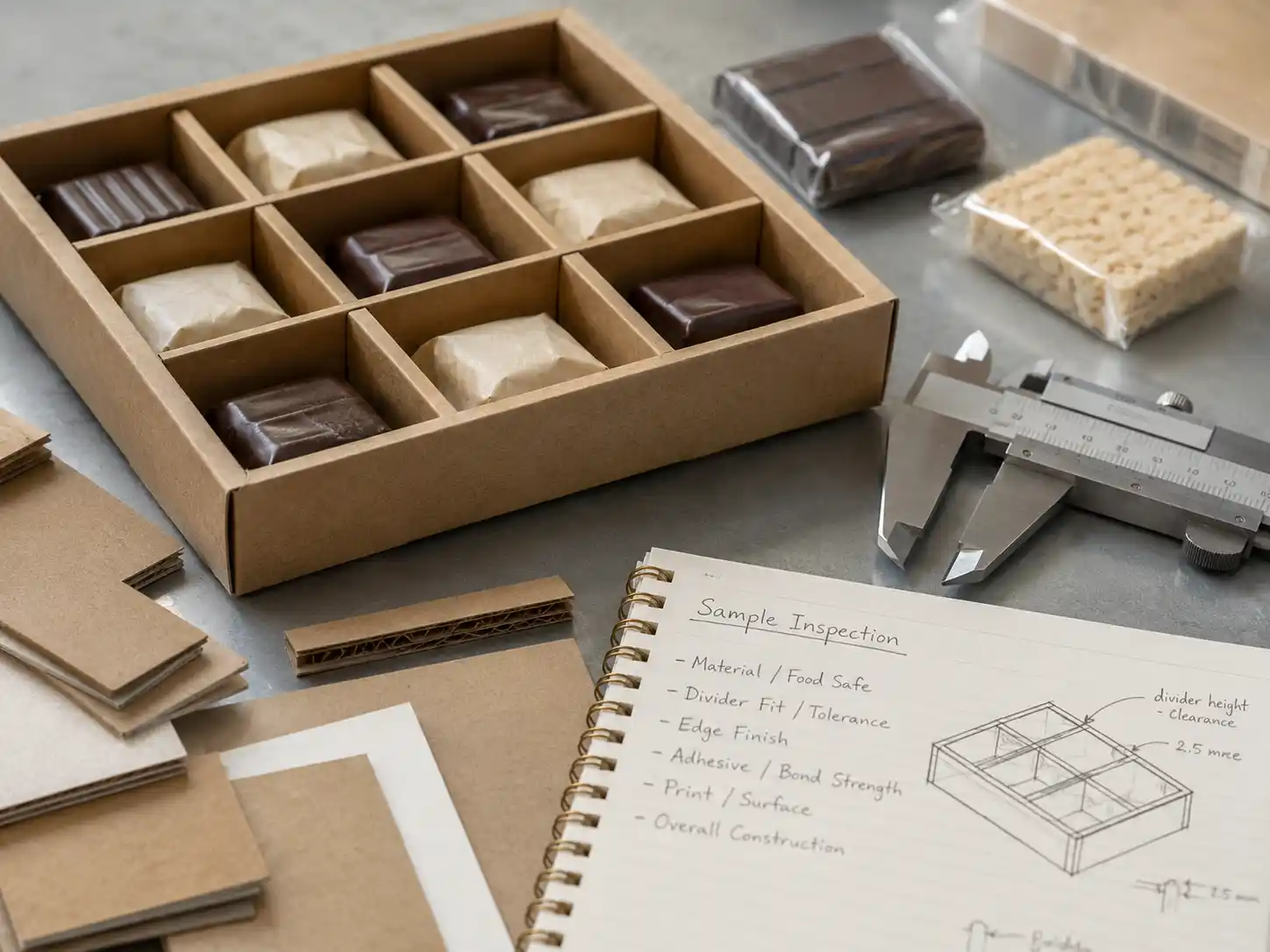
A good sample process reduces mistakes before mass production. For compartment advent calendar boxes, the sample is not only for checking the look. It is also for checking whether every product fits properly.
Step 1: Product and Requirement Review
The buyer provides product dimensions, product weight, SKU list, artwork direction, order quantity, delivery market, and target launch date. Giftpackpro can then review the box style, insert material, and packing method through its custom advent calendar box services.
Step 2: Structure Proposal
The supplier confirms whether the project should use drawers, doors, dividers, trays, or a mixed structure. At this stage, buyers should ask about box thickness, insert support, compartment tolerance, and whether the calendar can be shipped flat or assembled.
Step 3: White Sample
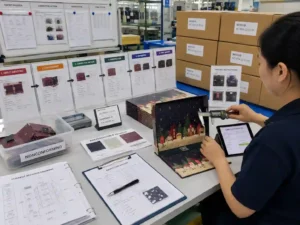
A white sample helps check structure before printing. For complex compartment advent calendar boxes, this step is valuable because it shows whether the product fits, whether drawers move smoothly, and whether the doors open correctly.
Step 4: Printed Sample
The printed sample checks artwork position, color, finishing, lamination, foil stamping, and overall retail presentation. Buyers should compare the printed sample with brand guidelines before approving bulk production.
Step 5: Bulk Production and Inspection
After approval, bulk production includes printing, mounting, die-cutting, assembly, insert production, packing, and final inspection. Buyers can learn more about factory background through Giftpackpro packaging factory.
MOQ, Lead Time, and Cost Factors
MOQ and lead time depend on the structure, material, printing process, finishing, insert complexity, and assembly requirements. A simple paperboard door-style calendar may be easier to produce than a rigid drawer calendar with several insert sizes.
For many custom paper packaging projects, the MOQ is usually discussed based on structure and production setup. Buyers should not treat all advent calendar formats as the same cost level.
The main cost factors include:
- Outer box size and paper material thickness
- Number of compartments, drawers, or doors
- Insert material and insert cutting complexity
- Printing method and finishing process
- Manual assembly time
- Export carton size and packing method
- Sample requirements and approval rounds
For more planning topics, buyers can browse advent calendar box buying guides before starting a new seasonal packaging project.
Quality Control and Export Packing
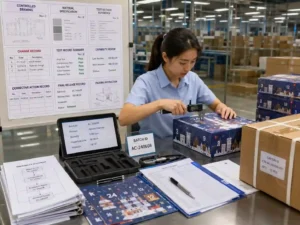
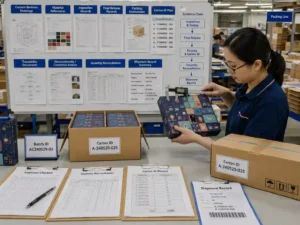
Compartment advent calendar boxes need QC at several points. The supplier should check structure strength, color consistency, insert fit, drawer movement, door opening, glue position, surface scratches, and final packing condition.
Export packing is also important. Some boxes can be shipped flat to save space. Others must be shipped assembled because the structure, insert, or product loading process requires it. The right choice depends on box design, product fragility, labor plan, and destination requirements.
For fragile products such as glass bottles, candles, or beverage samples, buyers should discuss carton strength, inner protection, palletizing, and drop-test expectations before confirming the final quotation.
Quote Preparation Advice for B2B Buyers
A clear inquiry helps the supplier quote faster and more accurately. Instead of asking only for a general price, prepare the project details in one message.
Information to Prepare Before Requesting a Quote
- Target product category, such as cosmetics, chocolate, candles, jewelry, toys, tea, coffee, beverages, or gifts
- Number of compartments, such as 12, 24, 25, or a custom count
- Product dimensions and weight for each SKU
- Preferred structure, such as drawer box, door-style box, rigid box, or insert tray
- Artwork status, including whether dieline artwork is ready
- Printing and finishing requirements
- Estimated order quantity
- Target delivery date and destination market
- Flat-pack or assembled packing preference
- Any certification, food-related, or retailer-specific requirements
If the structure is not confirmed, buyers can send the product list first and request a custom quote. The supplier can then suggest a practical structure before the artwork stage.
Buyer Tips Before Placing an Order
Do Not Start with Artwork Only
Artwork is important, but structure comes first. If the compartment layout is wrong, even attractive printing cannot solve product movement, drawer jamming, or poor fit.
Check the Heaviest Product First
For mixed gift sets, the heaviest or most fragile product often controls the structure. This is common for candles, mini beverages, glass jars, and skincare bottles.
Ask for a Fit Test
A fit test helps confirm whether the actual products match the compartments. For high-value campaigns, buyers should test real products instead of relying only on digital dimensions.
Confirm Packing Method Early
Flat packing can reduce shipping volume for some structures, but not every compartment advent calendar box is suitable for flat packing. Assembled packing may be safer for rigid drawer calendars, premium gift sets, or loaded product kits.
Keep the Launch Schedule Realistic
Seasonal packaging projects often have fixed retail deadlines. Buyers should leave enough time for structure design, sampling, artwork revision, printed sample approval, bulk production, inspection, and export shipping.
Final Thoughts
Compartment advent calendar boxes can support many B2B product categories, from cosmetics and chocolate to candles, jewelry, toys, tea, coffee, beverages, and mixed gift sets. The best result comes from matching the structure to the product, not forcing every project into the same box style.
For buyers planning a custom seasonal packaging project, Giftpackpro can help review product size, compartment layout, insert options, sample steps, and export packing details. To move faster, prepare product dimensions, artwork requirements, order quantity, and delivery schedule before you request a custom quote.