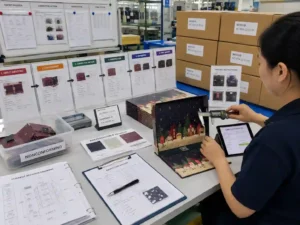
Drawer advent calendar boxes are widely used for seasonal retail gift sets, beauty kits, candle collections, food gifts, tea packs, stationery sets, and promotional product launches. For B2B buyers, the key decision is not only the outside design, but also the drawer structure, compartment layout, insert fit, paper material, dieline accuracy, packing method, and production repeatability.
This guide explains how to plan drawer-style, door-opening, rigid, paperboard, and fold-out advent calendar box projects before requesting samples or bulk quotations. It is written for brands, wholesalers, retail buyers, and purchasing teams comparing structures with a custom advent calendar boxes manufacturer.
What Are Drawer Advent Calendar Boxes?
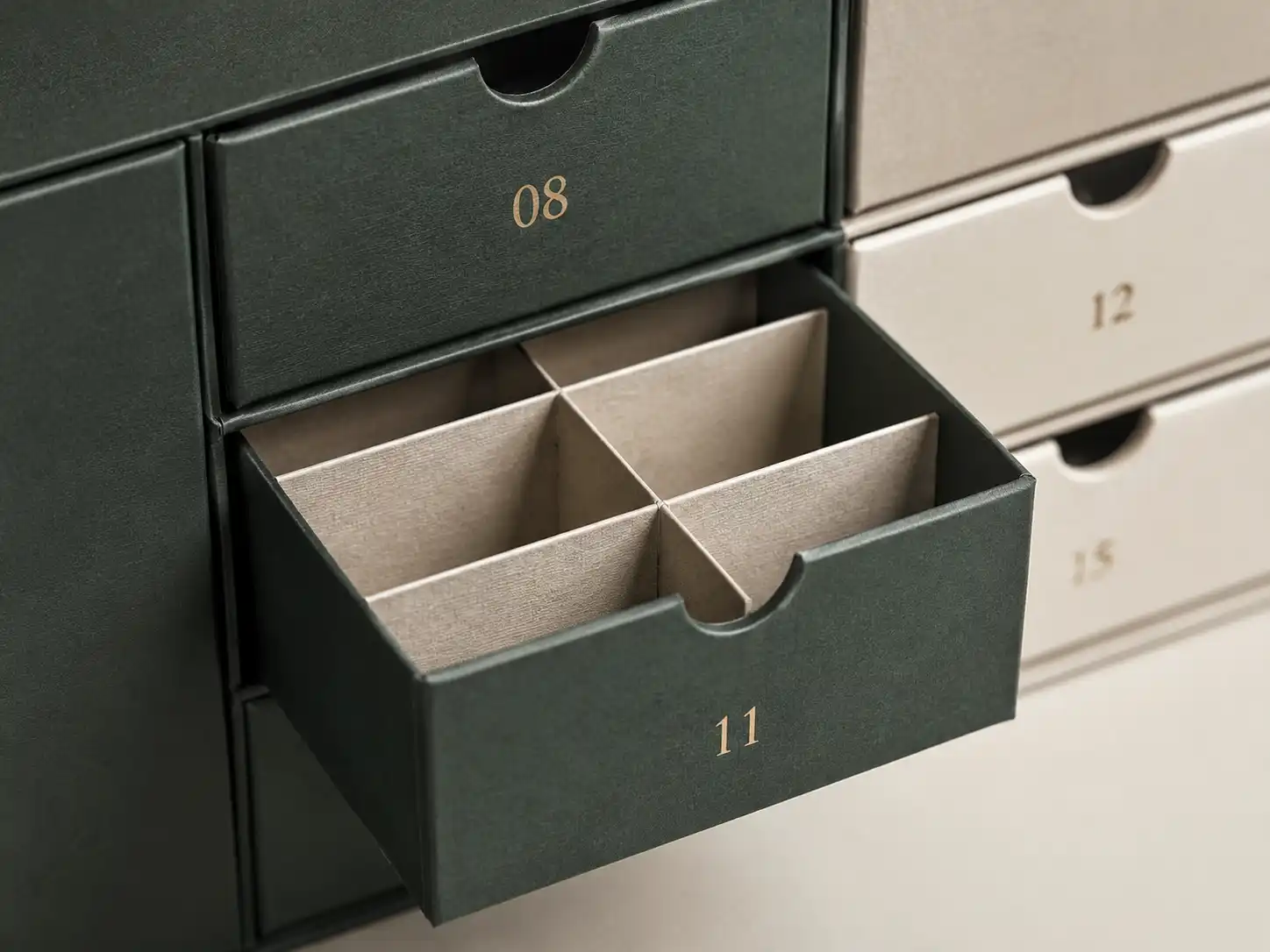
Drawer advent calendar boxes use pull-out compartments instead of only front-opening doors. Each drawer can hold one product, one sample, one mini gift, or one grouped item set. The format gives buyers better control over product protection, refill experience, perceived value, and shelf presentation.
Compared with simple paperboard door calendars, drawer structures often need more material, more accurate assembly, and tighter quality control. However, they can be a good fit when the products are heavier, fragile, premium, or irregular in shape.
Common Structures for Drawer Advent Calendar Boxes
1. Single-Side Drawer Structure
A single-side drawer calendar has all drawers pulled from the front. This structure is easy for retail display and product photography. It works well for cosmetics, candles, jewelry accessories, tea sachets, coffee capsules, and small branded gifts.
The buyer should confirm drawer quantity, drawer depth, finger notch style, sleeve strength, and whether the outer box needs a magnetic closure, ribbon pull, or paper pull tab.
2. Double-Side Drawer Structure
A double-side drawer design allows drawers to open from two sides. This can reduce the front panel size or create a more interactive layout. It is useful when the buyer wants 12-day, 24-day, or mixed-size compartments without making the package too tall.
For bulk production, the dieline needs to define which drawers open from each side. The packing team also needs clear assembly instructions to avoid drawer direction mistakes during mass production.
3. Rigid Drawer Advent Calendar Boxes
Rigid drawer advent calendar boxes are often selected for premium gift sets. The outer frame is usually made with greyboard wrapped by printed paper. This gives better shape stability and a stronger retail presentation.
Rigid construction is suitable for higher-value sets, but buyers should plan enough time for sampling, wrapping tests, color approval, insert fitting, and export packing. For material discussions, buyers can review custom advent calendar box services before preparing an RFQ.
4. Paperboard Drawer Calendars
Paperboard drawer calendars are lighter and may be more cost-efficient for promotional campaigns. They are commonly used when the product weight is lower and the order needs a balance between presentation and budget.
Paperboard thickness, folding strength, glue area, and drawer sliding performance should be checked at the sample stage. If the drawer is too loose, it may slide during shipment. If it is too tight, the customer experience and packing speed may suffer.
5. Fold-Out Drawer Calendar Structures
Fold-out structures combine drawer compartments with panels that open like a book or display board. This format can create more visual space for artwork, product instructions, countdown numbering, or campaign messages.
The buyer should confirm whether the fold-out panels must stand open on a table, lay flat for photography, or fit a specific retail shelf depth. These details affect board thickness, hinge lines, magnet placement, and carton packing.
Drawer, Door-Opening, Rigid, and Paperboard Structures Compared
| Structure Type | Best For | Buyer Notes |
|---|---|---|
| Drawer Advent Calendar Boxes | Beauty, candles, tea, jewelry, premium samples, mixed small gifts | Check drawer sliding, insert fit, product weight, drawer depth, and assembly tolerance. |
| Door-Opening Calendar Boxes | Lightweight items, chocolate-style layouts, flat retail packs, lower-cost promotions | Confirm perforation, window size, product access, and whether products need extra inserts. |
| Rigid Advent Calendar Boxes | Premium gifting, retail launch kits, influencer seeding, high-value seasonal sets | Allow more sample time for wrapping, corner finish, magnets, ribbons, and color approval. |
| Paperboard Advent Calendar Boxes | Promotional sets, lightweight products, cost-sensitive seasonal campaigns | Review board thickness, folding strength, packing flatness, and MOQ impact. |
| Fold-Out Calendar Boxes | Gift storytelling, multi-panel artwork, retail shelf impact, display-style packaging | Confirm open size, closed size, hinge strength, shelf depth, and export carton layout. |
Product Uses and B2B Application Examples
Beauty and Skincare Sets
Drawer advent calendar boxes are often used for mini creams, serums, masks, lip products, fragrance samples, and beauty tools. The buyer should provide product size, product weight, bottle shape, cap height, and whether the products must stand upright.
For mixed skincare items, a paperboard or EVA insert may be required inside each drawer. This helps prevent movement during transport and improves the unboxing presentation.
Candle, Fragrance, and Home Gift Sets
Small candles and fragrance items may be heavier than beauty samples. The drawer bottom, outer frame, and insert material should be tested with real product weight or accurate dummies.
For glass jars, buyers should not rely only on the drawer wall. Extra dividers, paper wraps, or protective inserts may be needed.
Tea, Coffee, Snacks, and Food Gift Sets
For food-related packaging, buyers should confirm whether the product has direct contact with the box or is already packed in a primary pouch, sachet, capsule, or wrapper. If food-contact requirements apply, buyers should review official guidance such as the FDA food contact substances guidance.
Most B2B seasonal food projects use inner primary packaging and an outer advent calendar box for retail display. The RFQ should still mention food category, product weight, market, and compliance requirements.
Corporate Gifts and Promotional Launch Kits
Brands may use drawer calendars for new product launches, loyalty gifts, trade show giveaways, employee gift kits, and influencer boxes. These projects often need short production windows, clear artwork deadlines, and strict packing instructions.
Buyers can compare existing custom advent calendar box products to decide whether a drawer, door-opening, or fold-out structure is closer to the target design.
Size, Layout, and Dieline Decisions
Start With Product Dimensions, Not Only Box Appearance
A good drawer calendar starts from the product list. The supplier needs the length, width, height, weight, and packing direction of each item. If product sizes are not final, buyers can provide the largest expected size and mark it as a temporary reference.
For 12-day or 24-day layouts, the drawer grid should avoid unnecessary empty space. Large empty space increases board usage, shipping volume, and carton cost.
Choose Equal Drawers or Mixed Drawers
Equal-size drawers are easier for production and packing. Mixed-size drawers can improve product fit, but the dieline, insert plan, numbering artwork, and packing process become more complex.
For example, a beauty brand may use 20 small drawers for sachets and 4 larger drawers for jars or tools. A tea brand may prefer equal drawers to simplify filling and reduce picking mistakes.
Confirm Drawer Clearance
Drawer clearance is the small space that allows the drawer to slide smoothly inside the sleeve or outer frame. If the clearance is too small, drawers may jam after wrapping, lamination, or humidity changes. If the clearance is too large, drawers may feel loose.
During sample approval, buyers should test drawer movement with product weight inside, not only with an empty drawer.
Plan the Dieline Before Final Artwork
Artwork should follow the approved dieline. The dieline should define cut lines, fold lines, glue areas, drawer numbers, panel direction, bleed, safe area, and any special finish location.
Buyers should avoid sending final artwork before confirming structure. When the structure changes, the artwork layout may also need to change.
Customization and Sample Process
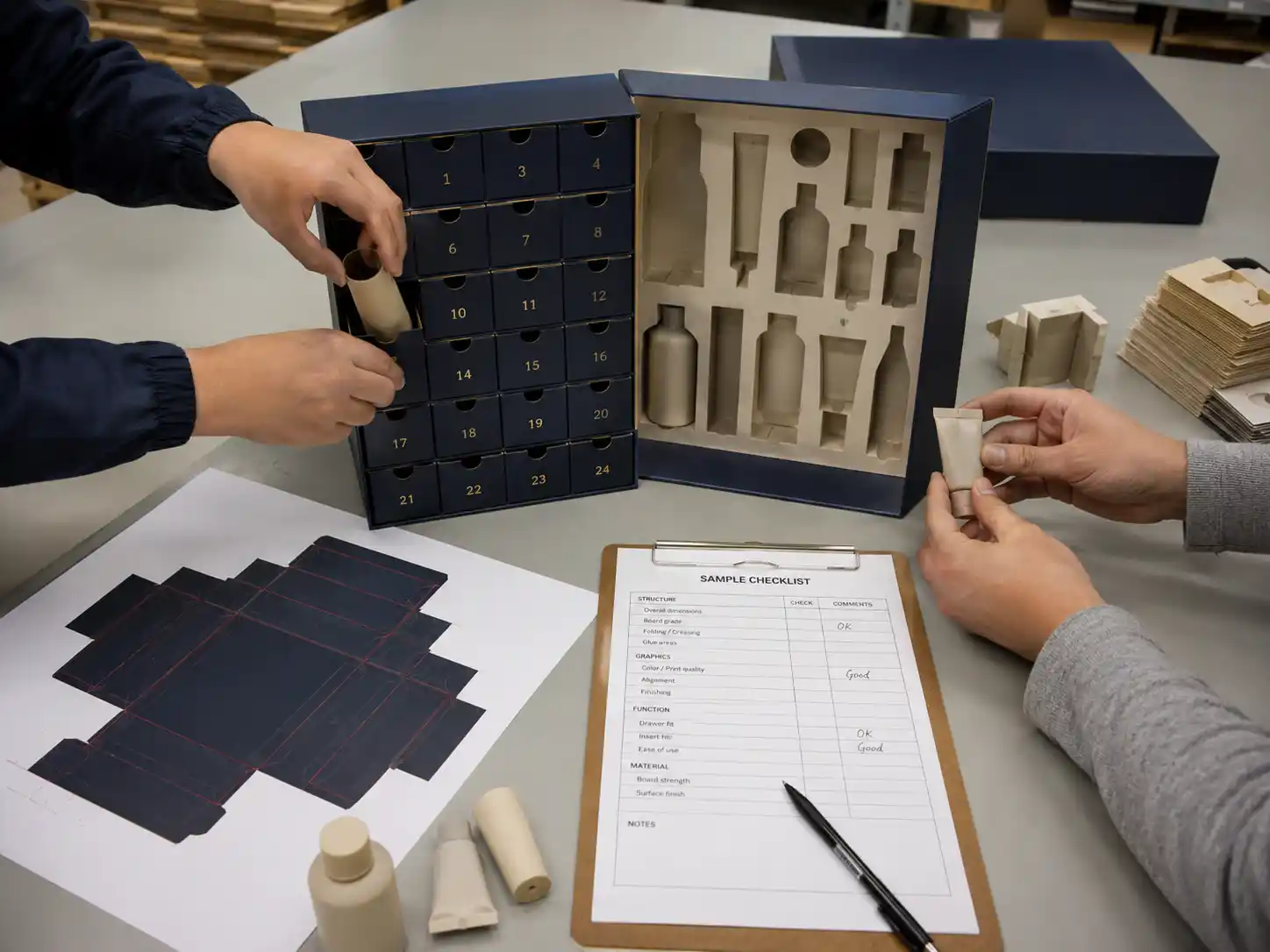
Customization usually covers structure, material, printing, surface finish, insert, drawer pull, numbering style, outer closure, carton packing, and shipping marks. Giftpackpro can support buyers who need structure planning, sample checking, and bulk production coordination through custom advent calendar box services.
Useful Custom Options
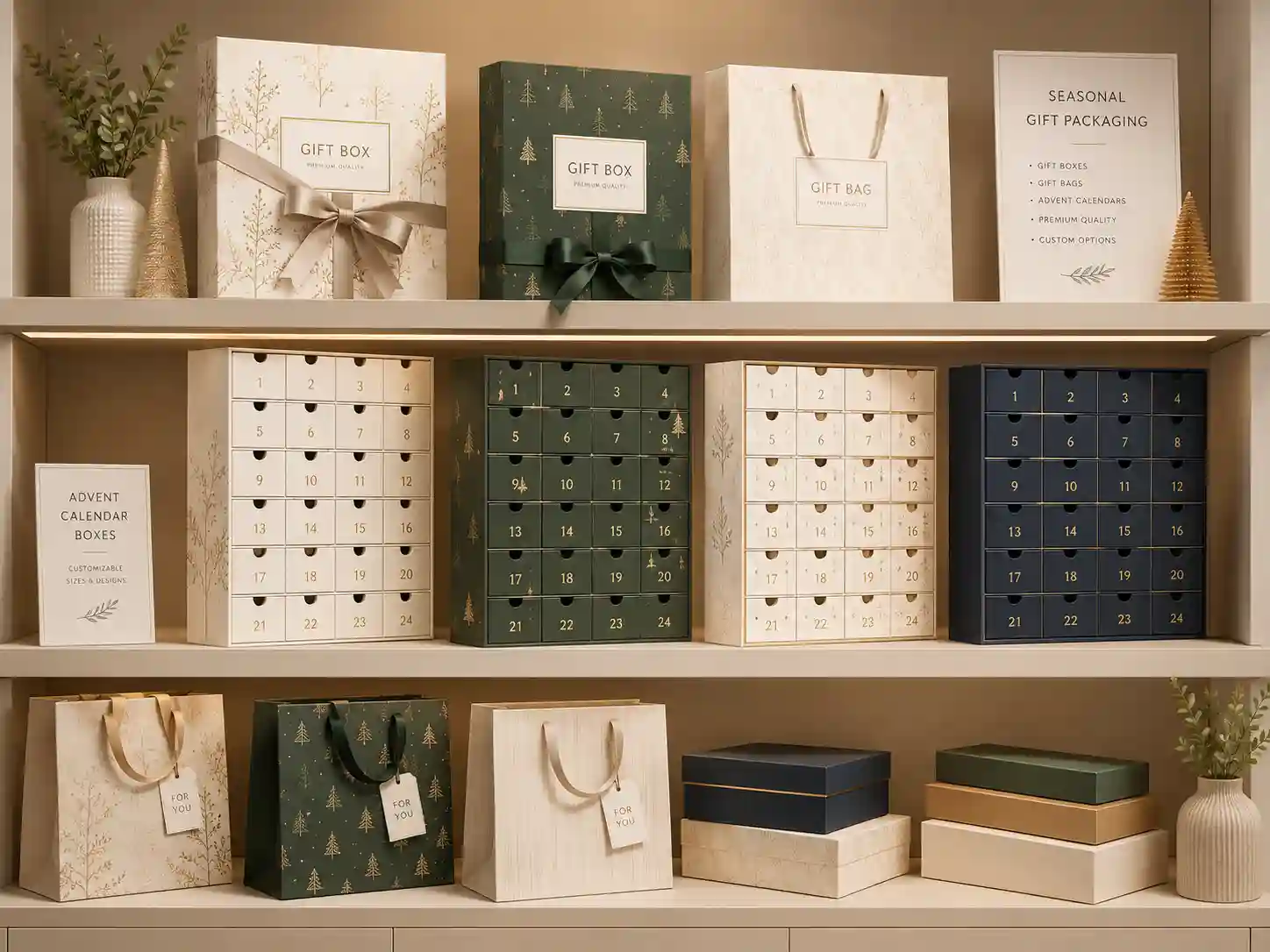
Common custom options include CMYK printing, Pantone color matching, matte lamination, gloss lamination, soft-touch finish, foil stamping, embossing, debossing, spot UV, ribbon pull, paper pull tab, magnetic closure, sleeve structure, window cutout, and custom insert.
For sustainability claims, buyers should confirm material needs early. If FSC-certified material is required, use the official FSC source as a reference and ask the supplier what documentation can be provided for the project.
Sample Approval Checklist
Before mass production, buyers should check the sample for outer size, drawer quantity, drawer sliding, insert fit, artwork position, color, finish, glue strength, corner quality, numbering order, product loading method, and carton packing.
For complex projects, it is better to test with real products or realistic product dummies. A beautiful empty sample may still fail if the filled drawers become too heavy or the insert does not hold products securely.
MOQ and Lead Time Considerations
MOQ depends on structure, material, printing method, finish, and assembly workload. Many custom advent calendar projects are discussed from around 300 to 500 pieces, but the actual MOQ should be confirmed after structure and artwork details are reviewed.
Lead time can be affected by sample revisions, material availability, special finishes, manual assembly, insert complexity, and export packing requirements. Buyers should leave enough time for sample approval before seasonal sales deadlines.
Quality Control, Export Packing, and Quotation Details
Drawer advent calendar boxes often include many repeated components. Small tolerance issues can become serious when 12, 24, or more drawers must fit into the same outer structure. This is why QC should cover both appearance and function.
QC Points for Drawer Calendar Boxes
Important QC points include board thickness, printing color, surface finish, drawer sliding, drawer direction, glue strength, insert fit, corner finish, magnet position, ribbon pull strength, numbering accuracy, and carton drop protection.
For larger programs, buyers can ask how the Giftpackpro packaging factory controls incoming material inspection, sample approval, production checks, final inspection, and export carton packing.
Export Packing for Bulk Orders
Export packing should protect the calendar box from compression, moisture, corner damage, and movement inside the carton. The packing method may include polybags, tissue paper, protective paper, inner cartons, master cartons, corner protection, palletizing, and shipping marks.
Buyers should confirm whether boxes ship assembled, semi-assembled, or flat packed. Drawer-style rigid boxes are often shipped assembled or semi-assembled, which may increase carton volume but reduce retail-side assembly work.
What to Prepare Before Requesting a Quote
A complete RFQ helps the supplier give a more accurate quotation and avoid repeated questions. Before you request a custom quote, prepare the following details:
- Target structure: drawer, door-opening, rigid, paperboard, fold-out, or mixed structure.
- Quantity: estimated order quantity and expected reorder plan.
- Product list: size, weight, material, and packing direction for each item.
- Calendar layout: 12-day, 24-day, equal drawers, mixed drawers, or custom layout.
- Material preference: rigid greyboard, paperboard, corrugated board, insert type, and any FSC request.
- Printing and finish: CMYK, Pantone, foil, embossing, spot UV, lamination, or special texture.
- Artwork status: final artwork, rough design, reference style, or need for dieline support.
- Market and delivery plan: destination country, retail deadline, shipping method, and packing requirements.
Buyer Tips for Better Project Planning
Do Not Choose the Structure Only by Appearance
A drawer calendar may look premium, but it should match the product weight, retail price, packing budget, and shipping plan. A paperboard door-opening structure may be better for lighter items and larger promotional quantities.
Ask for Insert Testing Early
Insert design affects product protection and packing speed. If the insert is too tight, workers may spend more time loading products. If it is too loose, products may move during shipping.
Keep Artwork Flexible Until the Dieline Is Approved
Artwork should not be locked before the structure is confirmed. Drawer direction, panel fold, pull-tab position, and numbering order can all change the print layout.
Use Buying Guides Before Finalizing the RFQ
If your team is still comparing structures, materials, and order planning, review more advent calendar box buying guides. This can help align marketing, purchasing, design, and logistics teams before the supplier prepares a sample.
Conclusion
Drawer advent calendar boxes can create a strong retail presentation for seasonal gift sets, but successful production depends on structure planning, dieline accuracy, insert fit, sample testing, QC, and export packing. Buyers should prepare product dimensions, layout requirements, artwork status, quantity, material preferences, and delivery needs before asking for pricing.
Giftpackpro works with overseas brands, wholesalers, gift companies, and retail purchasing teams that need practical packaging support from structure discussion to bulk production. For a new seasonal project, compare the structure options first, then request a custom quote with clear product and packing details.