When Should Brands Choose Paperboard Advent Calendar Boxes?
Paperboard advent calendar boxes are a practical choice when brands need seasonal packaging that balances structure, print quality, MOQ, packing efficiency, and project cost. They are often used for cosmetics, chocolate, tea, coffee, candles, small toys, jewelry, samples, and promotional gift sets.
For B2B buyers, the decision is usually not only about appearance. It is about whether the box structure can protect the products, fit the retail plan, meet the launch schedule, and stay within a realistic quotation range.
This guide explains when paperboard advent calendar boxes make sense, what affects cost, and how purchasing teams can prepare better quote details before contacting a custom advent calendar boxes manufacturer.
When Paperboard Advent Calendar Boxes Are a Good Fit
Paperboard advent calendar boxes are suitable when the products are relatively light, the retail display effect matters, and the brand needs custom printing without making the packaging too heavy or expensive.
Compared with many rigid structures, paperboard options can be more flexible for seasonal campaigns, limited-edition sets, sample programs, and supermarket or online retail promotions. They can support doors, drawers, sleeves, trays, windows, and compartment layouts depending on the product size and budget.
Best Application Scenarios
Brands usually choose paperboard structures for projects such as:
- Chocolate or candy advent calendars with divided inner compartments
- Cosmetic sample sets with lightweight tubes, sachets, jars, or mini bottles
- Tea, coffee, or beverage sachet gift calendars
- Small toy, stationery, or accessory countdown gift boxes
- Promotional retail packaging for holiday campaigns
If the products are heavy, fragile, liquid-filled, or premium-priced, the structure may need thicker paperboard, reinforced inserts, or even a rigid box alternative. Buyers can review more structure options through custom advent calendar box products before deciding the final direction.
MOQ Planning: Why Quantity Changes the Unit Cost
MOQ is one of the first questions buyers ask, but it cannot be separated from printing, die-cutting, material purchasing, hand assembly, insert design, and packing method.
For custom paperboard advent calendar boxes, a small order may still need the same setup work as a larger order. Dielines, printing plates, cutting molds, sample proofing, color checks, and production line preparation all create fixed costs. When the quantity is low, these setup costs are spread across fewer pieces, so the unit price becomes higher.
Giftpackpro usually recommends that buyers discuss MOQ together with structure complexity, product size, and expected launch date. A purchasing team can use custom advent calendar box services to understand which project details should be confirmed before sampling.
Practical MOQ Example
A simple paperboard advent calendar with 12 doors and printed artwork may be easier to quote at a moderate quantity. A 24-day calendar with multiple product sizes, different compartments, foil stamping, and export carton requirements will need more engineering and production planning.
That is why two boxes with similar outside dimensions can have very different prices. The structure, number of compartments, finishing process, and labor steps may matter more than size alone.
Main Cost Factors Buyers Should Check
When requesting a quote for paperboard advent calendar boxes, buyers should not only ask for “price per piece.” A useful quotation should make the cost logic clear enough for comparison.
| Cost Factor | What It Affects | Buyer Preparation Tip |
|---|---|---|
| Box structure | Material usage, cutting mold, assembly time, packing volume | Confirm door style, drawer style, sleeve, tray, or foldable structure before quoting. |
| Paperboard thickness | Strength, product protection, shipping weight, unit cost | Share product weight and retail display requirements with the supplier. |
| Insert material | Product fit, protection, assembly labor, sustainability preference | Provide product dimensions and photos for each item inside the calendar. |
| Printing and finishing | Visual effect, setup cost, proofing time, defect control | Confirm CMYK, Pantone, matte lamination, foil stamping, embossing, or spot UV early. |
| Labor process | Assembly speed, QC time, final unit price | Avoid overly complex manual assembly if cost control is the priority. |
| Export packing | Carton size, pallet loading, freight efficiency, damage risk | Ask for carton quantity, carton size, gross weight, and pallet plan before shipment. |
Material Choices: Paperboard, Inserts, and Surface Paper
The material decision should match product weight, display period, sales channel, and sustainability requirements. Paperboard advent calendar boxes can use different board grades, printed surface paper, and inner insert solutions.
Common Material Directions
For lighter products, paperboard inserts may be enough. For products that need stronger positioning, molded pulp, EVA, foam, or corrugated inserts may be considered. If the brand requires responsible sourcing claims, buyers can check official information from the Forest Stewardship Council and discuss available certified material options with the supplier.
Food-related projects need extra attention. For chocolate, candy, tea, or other food-adjacent packaging, buyers should confirm whether direct food contact is involved or whether the product has primary packaging before being placed inside the box. Official guidance from the U.S. FDA food contact substances page can help teams understand why material contact details matter.
Customization and Finishing: Where Cost Can Rise Quickly
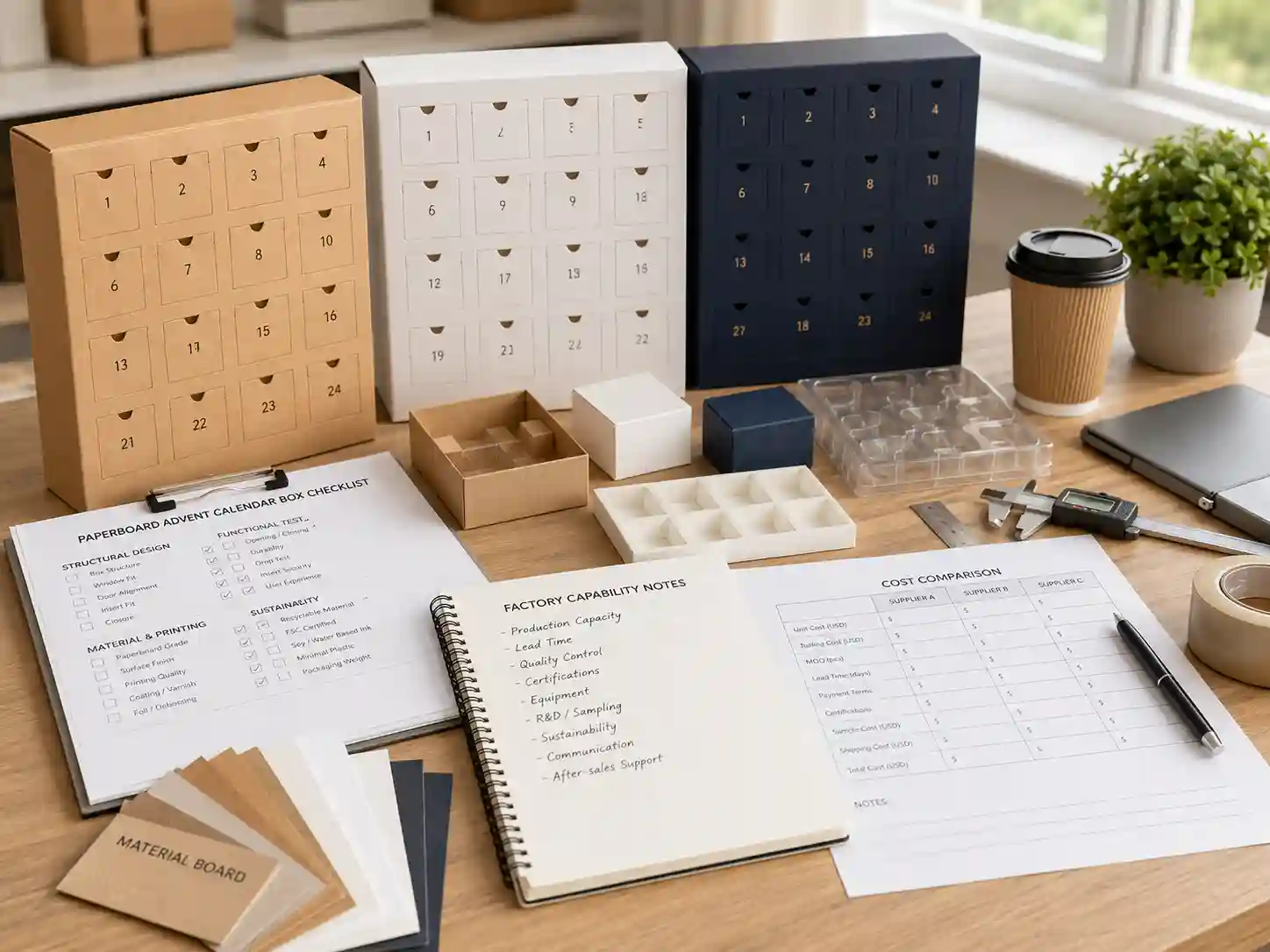
Many buyers want premium finishing, but each added process changes cost, lead time, and QC requirements. Foil stamping, embossing, debossing, spot UV, textured paper, window patches, magnetic closures, ribbons, and special inserts can improve the retail look, but they also add setup and inspection steps.
A good supplier should help buyers separate “must-have” features from “nice-to-have” features. This is especially important for seasonal packaging because launch dates are fixed. Delays in artwork approval, color proofing, or sample confirmation can affect the final delivery schedule.
Cost-Control Advice for Custom Finishing
Buyers can control cost by keeping the outer structure stable, limiting the number of special finishes, using one consistent insert system, and avoiding too many product cavity sizes. If the design requires strong shelf impact, it may be better to invest in one clear visual feature instead of adding many small decoration processes.
For example, a matte laminated paperboard advent calendar with one foil logo area may be easier to manage than a box with foil, embossing, spot UV, ribbon, window patch, and multiple hand-glued accessories. Giftpackpro can help compare these options during custom advent calendar box services planning.
Labor, Assembly, and Packing Should Be Quoted Early
Advent calendar packaging often involves more labor than standard folding cartons. Doors, drawers, inserts, separators, sleeves, and product loading all need to be checked. Even if the material cost looks reasonable, the final price may increase if assembly is complicated.
Buyers should ask whether the boxes will be shipped flat, semi-assembled, or fully assembled. Flat packing can reduce shipping volume, but it may require the buyer or co-packer to handle more assembly later. Fully assembled packing can save time at the destination but may increase carton volume and freight cost.
Example: Flat Pack vs Fully Assembled
A tea brand may choose flat-packed paperboard advent calendar boxes if its local team will load tea sachets after import. A cosmetics brand may prefer fully assembled boxes if each cavity must hold a specific product and the final gift set needs to be ready for retail distribution.
There is no single best option. The right choice depends on who loads the products, where the products are sourced, how the retail channel receives the goods, and how much time is available before the selling season.
QC and Export Packing: Important for Overseas Buyers
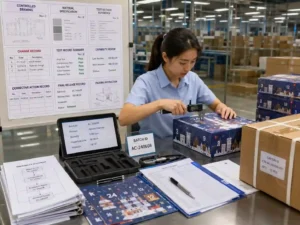
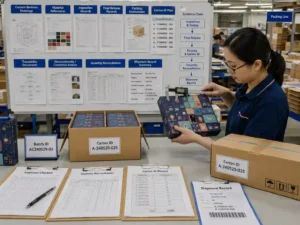
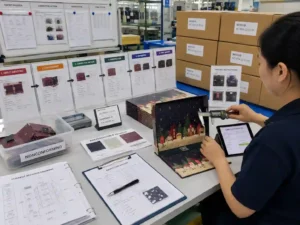
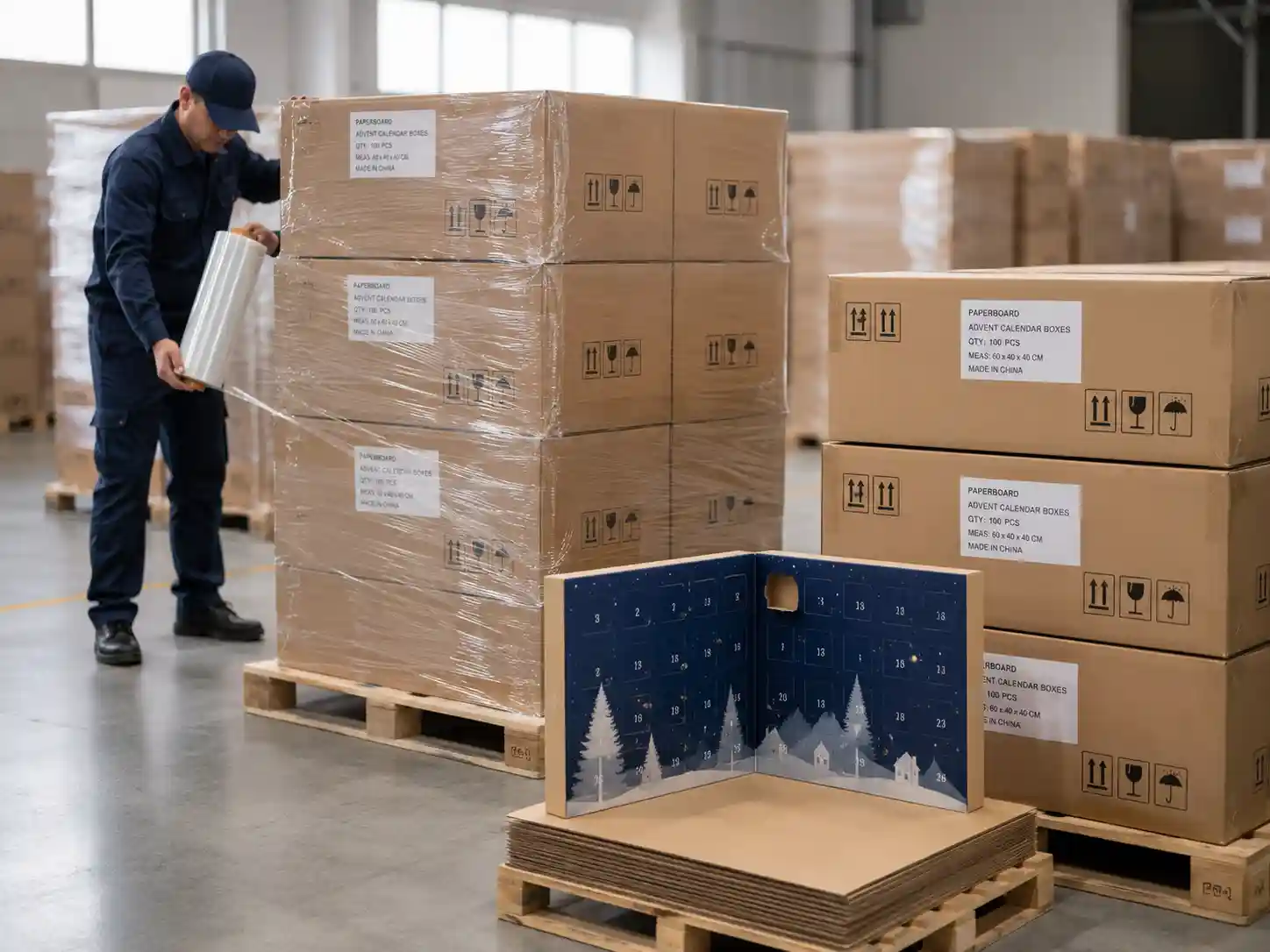
For overseas brands and wholesalers, QC and export packing should be part of the quotation discussion, not an afterthought. Paperboard advent calendar boxes often have printed surfaces, folding areas, doors, drawers, and inserts that must stay clean and aligned.
Key QC points usually include color consistency, die-cut accuracy, glue strength, insert fit, door opening performance, surface scratches, carton strength, and pallet stability. Buyers can learn more about factory capability and project handling through the Giftpackpro packaging factory page.
Export Packing Details to Request
Before placing an order, ask the supplier for master carton size, pieces per carton, gross weight, net weight, pallet loading estimate, and recommended packing method. These details help purchasing and logistics teams estimate freight cost more accurately.
If the project will ship to multiple markets, confirm labeling, carton marks, pallet requirements, and any retailer-specific packing instructions early. Packaging that looks good in a sample room still needs to survive bulk handling, warehouse transfer, and international shipment.
How to Prepare a Better Quote Request
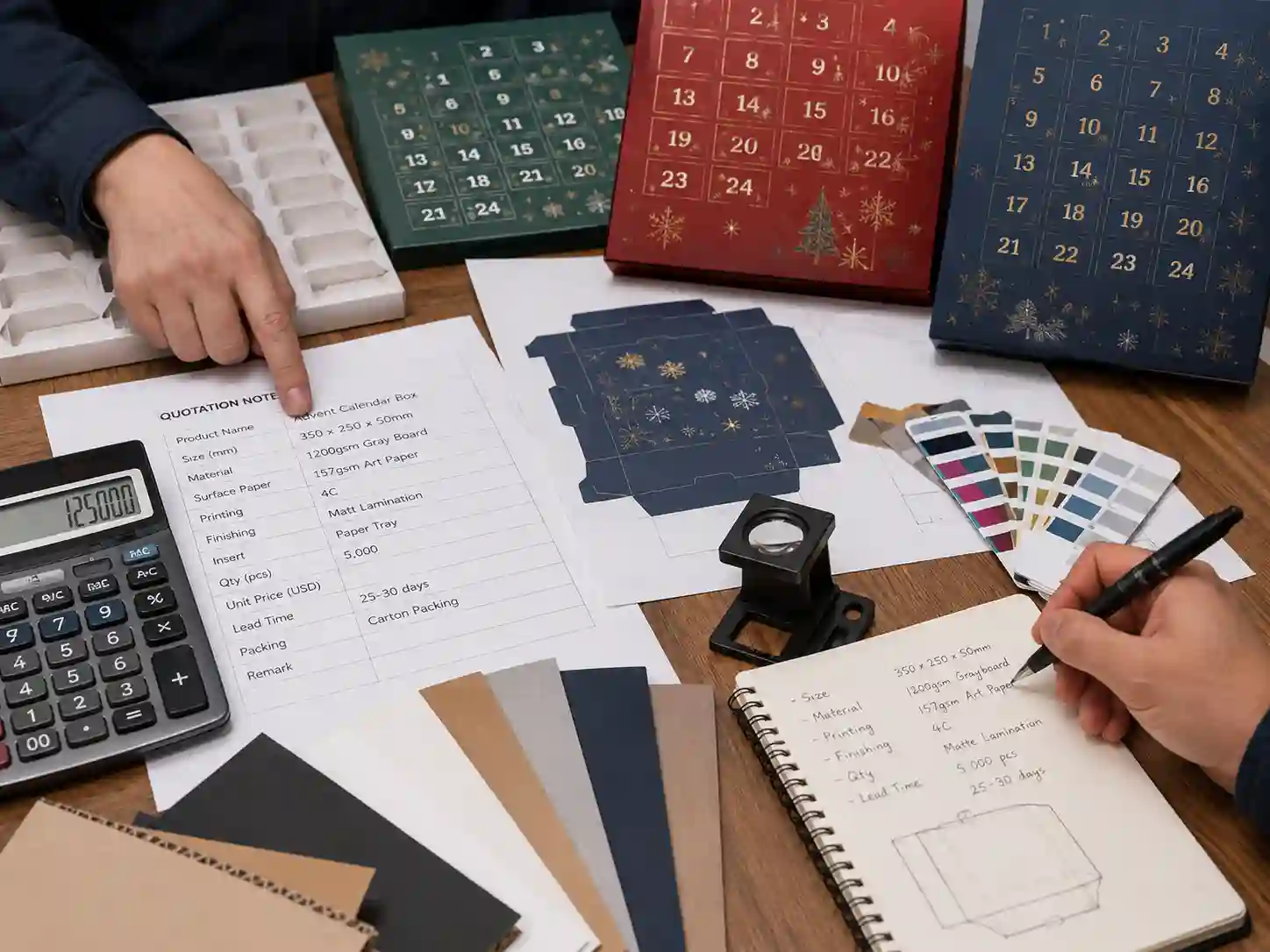
A clear quote request saves time and reduces pricing mistakes. Instead of sending only a product image, buyers should prepare a basic specification sheet for the supplier.
Information to Include
- Target box size or product dimensions
- Number of days, doors, drawers, or compartments
- Product weight and product photos
- Preferred material and insert type
- Printing requirement, artwork status, and finishing ideas
- Estimated order quantity and target MOQ range
- Flat-packed or assembled packing preference
- Destination country and expected delivery schedule
- Retailer or marketplace packing requirements, if any
Buyers who are still comparing options can read more advent calendar box buying guides before finalizing structure and budget. When the project details are ready, the next step is to request a custom quote with drawings, product sizes, and target quantity.
When Not to Choose Paperboard Advent Calendar Boxes
Paperboard may not be the best fit when the products are very heavy, the gift set requires a luxury rigid feel, or the box must be reused for a long time. It may also be less suitable if the internal products need strong shock protection and cannot be supported by normal inserts.
In these cases, buyers may need a rigid advent calendar box, reinforced drawer box, magnetic gift box, or stronger insert structure. The best approach is to compare product weight, retail positioning, and packing method before approving the design.
Final Buying Advice
Brands should choose paperboard advent calendar boxes when they need a seasonal packaging solution with good print effect, flexible structure, manageable MOQ, and practical cost control. The best results come from early planning, accurate product dimensions, realistic finishing choices, and clear export packing requirements.
Giftpackpro works with overseas brands, wholesalers, gift companies, and purchasing teams that need custom seasonal packaging from sample development to bulk production. To move faster, prepare product sizes, quantity, artwork direction, and packing expectations before contacting the supplier through request a custom quote.