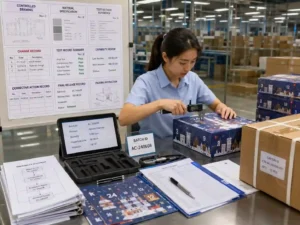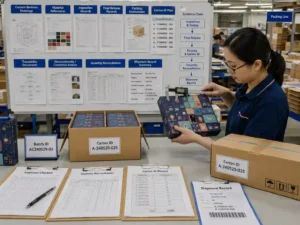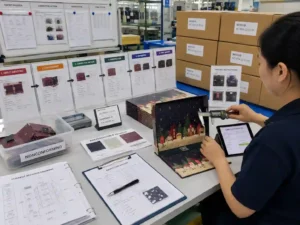
Quick answer: Tea advent calendar boxes should be planned around product fit, insert stability, artwork control, MOQ, finishing cost, packing method, and export safety. For B2B buyers, the lowest unit price is not always the best choice because tea sachets, capsules, pouches, or small boxes need accurate compartment sizing, aroma and moisture awareness, clean labeling space, and reliable assembly tolerance. Before requesting a quotation, prepare product dimensions, quantity range, box structure preference, insert material, printing requirements, sample expectations, delivery deadline, and packing instructions. A clear RFQ helps suppliers quote faster, reduce redesign cost, and avoid production delays.
For overseas brands, wholesalers, retail buyers, Amazon sellers, and gift companies, tea advent calendar boxes are not only seasonal retail packaging. They are a structured packaging project that combines paper engineering, insert testing, printing control, manual or semi-manual assembly, quality inspection, and export packing. This guide explains how to compare structures, inserts, materials, finishing, MOQ, lead time, and quotation details before working with a custom advent calendar boxes manufacturer.
What should buyers understand before choosing tea advent calendar boxes?
Buyers should understand that a tea advent calendar is a multi-compartment packaging system, not a simple printed box. The structure, insert, product sequence, artwork dieline, and export carton plan all affect cost, lead time, and quality.
A tea calendar may hold individually wrapped sachets, tea capsules, small pouches, sample tins, stick packs, or small inner boxes. Each product type creates different requirements. Sachets need flat compartments and easy removal. Capsules need depth control and stable cavities. Pouches may need wider tolerances because flexible packaging can swell. Small boxes need consistent outer dimensions so the calendar doors, drawers, or tray openings remain aligned.
Buyer tip: Ask your supplier to check the actual filled tea item, not only the empty pouch or artwork size. Filled sachets and pouches may become thicker after sealing, which can change insert fit and door-closing performance.
Giftpackpro supports B2B buyers through custom advent calendar box services covering structure planning, dieline development, insert matching, sample review, production, and export packing. Buyers can also review custom advent calendar box products to compare common rigid, drawer, folding carton, and door-opening formats before preparing a quote request.
Which structure is best for tea advent calendar boxes?
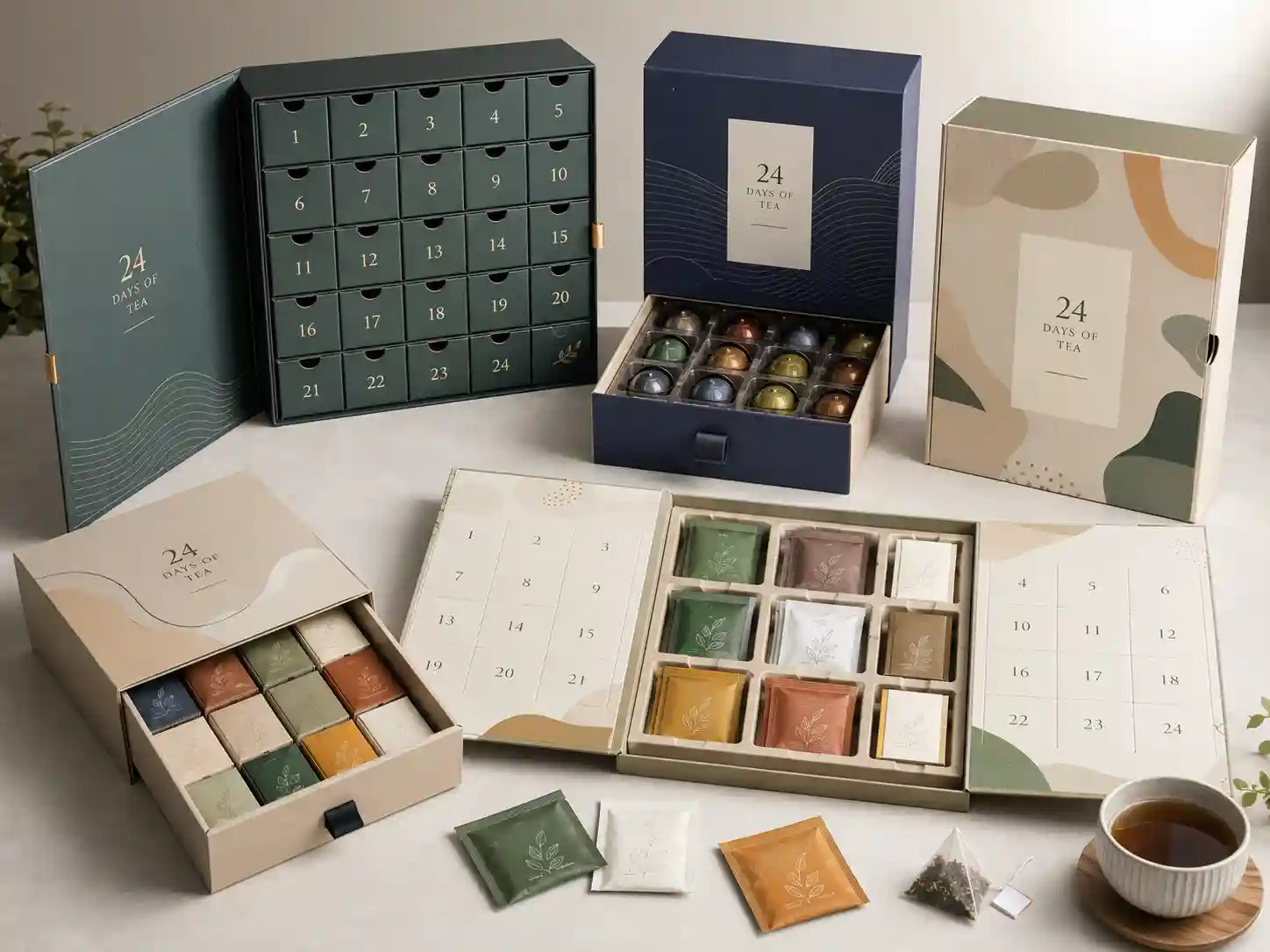
The best structure depends on target price, retail display needs, product weight, assembly method, and shipping plan. Rigid boxes usually feel more premium, folding cartons are more cost-efficient, drawer boxes improve product access, and door-opening boxes create a strong retail calendar experience.
| Structure option | Best for | Cost impact | Buyer notes |
|---|---|---|---|
| Rigid door-opening box | Premium tea gift sets, retail campaigns, influencer seeding, department store programs | Higher material and labor cost | Uses greyboard and wrapped paper. Check door perforation, hinge strength, compartment alignment, and assembled packing volume. |
| Folding carton calendar | Higher-volume promotions, e-commerce bundles, lighter sachet programs | Lower unit cost at scale | Uses paperboard. Efficient for flat packing, but structure strength and product weight must be tested carefully. |
| Drawer box calendar | Tea capsules, small pouches, mini tins, reusable gift packaging | Medium to high, depending on drawer count | Requires accurate drawer tolerance. Too tight causes poor user experience; too loose causes shifting during transport. |
| Fold-out calendar | Story-led product ranges, tasting journeys, mixed tea formats | Medium to high | Needs strong hinge areas, stable opening angle, and enough artwork space for sequence information. |
| Book-style magnetic box | Premium tea collections, corporate gifts, limited seasonal launches | Higher due to hardware, wrapping, and assembly | Check magnet position, board thickness, insert depth, and export carton protection. |
A simple rule works for early comparison: if the project needs luxury presentation and lower quantity, start with a rigid box; if it needs cost control at higher volume, start with a folding carton; if product access and reuse matter, compare drawer or book-style formats.
Factory tip: The quote difference between a rigid box and folding carton is not only material. It also comes from wrapping labor, drying time, glue control, assembly tolerance, packing volume, and inspection time.
How should buyers choose inserts for sachets, capsules, pouches, or small boxes?
Buyers should choose inserts based on product weight, shape, fragility, moisture sensitivity, and the desired opening experience. A good insert prevents movement, supports the calendar doors, and keeps the product sequence clear.
Tea products are often light, but they still require careful insert design. Loose sachets can slide behind doors. Capsules can rattle if cavities are oversized. Pouches can bulge and push against door panels. Small tea boxes can create pressure points if the compartment depth is too shallow.
Which insert material is most practical for tea calendars?
Paper inserts are common for paper-based tea advent calendar boxes because they are printable, foldable, and cost-friendly. PET trays provide clean cavity definition for capsules or mixed items. EVA insert and foam insert options can hold products firmly, but they increase cost and may not match every sustainability target. Molded pulp can be considered for buyers seeking a fiber-based insert with stronger cavity formation.
- Paper insert: Good for sachets, flat pouches, and small boxes; cost-efficient and suitable for many seasonal campaigns.
- PET tray: Good for capsules, shaped products, and mixed contents requiring accurate cavities.
- EVA insert: Good for premium positioning and firm product holding, but usually higher cost.
- Foam insert: Useful for delicate or irregular items, but buyers should confirm appearance, odor, and compliance requirements.
- Molded pulp: Suitable for brands that prefer a fiber-based tray, but tooling, surface texture, and tolerance should be reviewed.
QC tip: Insert testing should include shake testing, upside-down handling, door-opening checks, and product removal checks. A product that fits during desktop review may still move during export handling.
How do aroma, moisture, and labeling space affect tea packaging design?
Tea calendar packaging should protect presentation quality while respecting the sensitivity of tea products. The outer box is usually not the primary aroma or moisture barrier, so buyers should confirm that each sachet, pouch, capsule, or inner pack is properly sealed before it enters the calendar.
The advent calendar box should avoid unnecessary compression on tea sachets or pouches. Over-tight inserts can damage seals or create wrinkles. Oversized compartments can make the calendar look cheap when customers open each door. For tea capsules, the insert should prevent rolling and protect printed capsule lids if they are visible.
Labeling space also matters. Buyers may need space for flavor names, numbers, ingredient references, barcode labels, QR codes, warning statements, recycling marks, or country-specific information. For retail projects, the back panel and side panels should be planned early so required text does not crowd the main seasonal artwork.
For barcode and product identification rules, buyers can review official guidance from GS1 barcode standards. If sustainability claims, paper sourcing, or recycled material statements are important, buyers can verify requirements through official sources such as FSC rather than relying only on supplier claims.
What printing and finishing choices affect cost most?
Printing and finishing affect cost through plate setup, material waste, production speed, manual handling, and defect risk. CMYK printing is usually the base option, while Pantone color, foil stamping, embossing, spot UV, matte lamination, and gloss lamination add cost and approval steps.
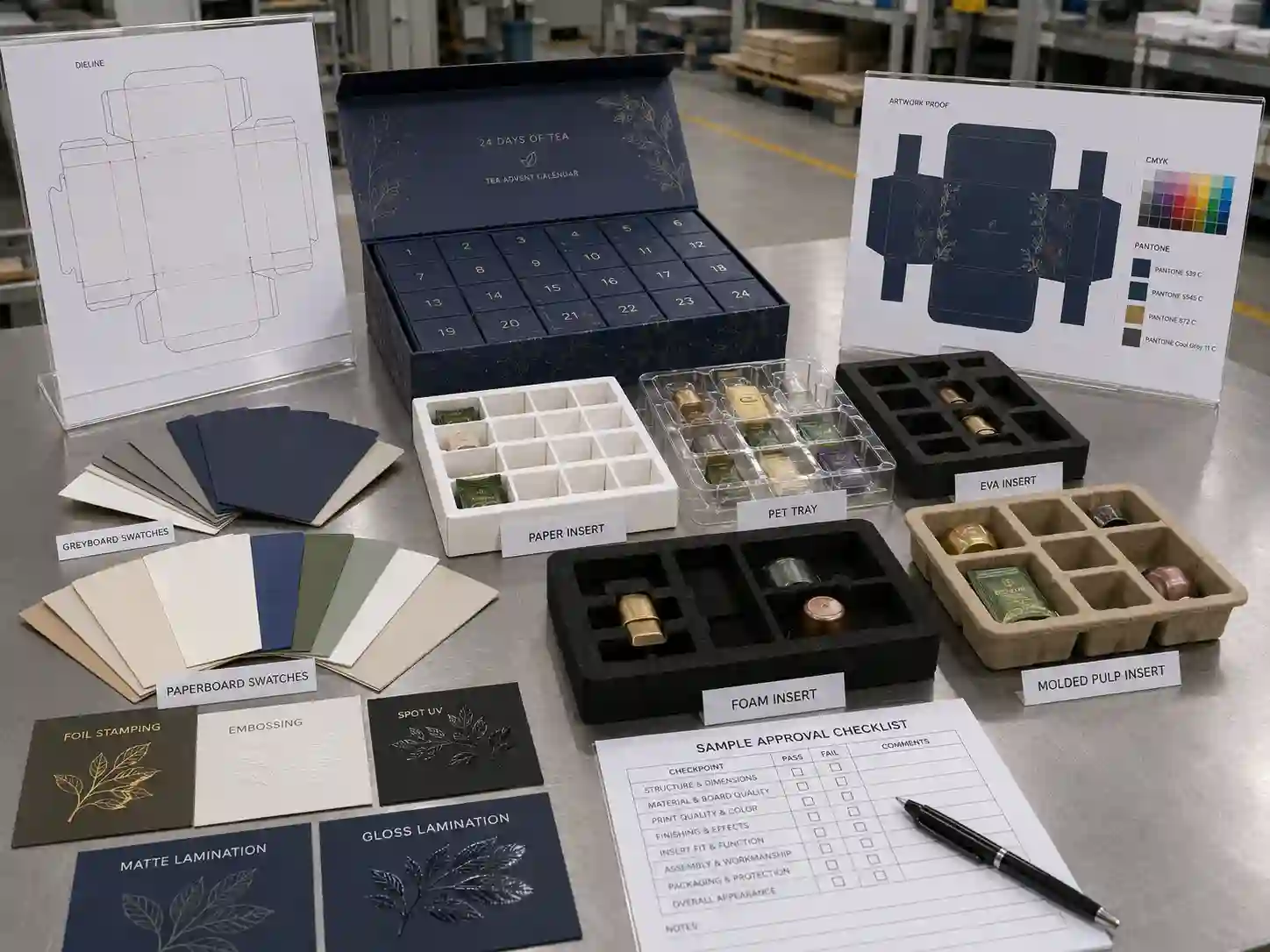
For tea advent calendar boxes, artwork often includes numbered doors, flavor sequence, holiday patterns, product information, and retail branding. The artwork must match the dieline accurately. If the numbers, perforation lines, door cuts, and compartment positions are not aligned, the finished calendar may look attractive in a flat proof but fail during opening.
Which artwork files should buyers prepare?
Buyers should prepare editable artwork files, approved brand colors, barcode files, product text, dieline confirmation, and finishing instructions. A PDF proof is useful, but it should not replace editable production artwork when the supplier needs to check bleed, overprint, spot color, and cutting layers.
- Final dieline with structure, door numbers, opening direction, glue areas, and insert position.
- CMYK artwork with bleed and safe margins.
- Pantone references if brand colors must be controlled.
- Separate layers for foil stamping, embossing, debossing, spot UV, or window areas.
- Matte lamination or gloss lamination choice for surface protection and visual style.
- Barcode, QR code, recycling marks, and country-specific labeling information.
Factory tip: Every special finish should be marked as a separate production layer. If foil, embossing, and spot UV are mixed into the CMYK artwork without clear layer naming, proofing time increases and production mistakes become more likely.
How do MOQ and quantity affect the quotation?
MOQ affects unit price because setup cost, material purchasing, printing preparation, die-cut tooling, insert setup, and labor planning are spread across the order quantity. Lower quantities are possible for some structures, but they usually have a higher unit cost.
There is no universal MOQ for tea advent calendar boxes because the structure, size, insert, printing, and finishing choices change the production method. A simple folding carton calendar may have a different MOQ from a rigid drawer box with EVA insert and foil stamping. Buyers should ask for quantity breaks such as 500, 1,000, 2,000, 5,000, and 10,000 units instead of requesting only one quantity.
| Cost driver | Why it changes price | Cost-control suggestion |
|---|---|---|
| Box structure | Rigid boxes require greyboard, wrapping paper, more labor, and more packing volume. | Compare rigid, folding carton, and drawer options before locking the design. |
| Insert material | PET tray, EVA, foam, molded pulp, and paper insert options have different tooling and material costs. | Use paper insert for flat sachets when premium cavity shaping is not necessary. |
| Calendar size | Larger boxes use more paperboard, greyboard, printing area, and carton space. | Confirm real product dimensions before increasing the box footprint. |
| Finishing | Foil stamping, embossing, spot UV, and lamination add setup, handling, and defect control. | Apply special finishing to key visual areas instead of the whole box. |
| Assembly method | Complex door, drawer, or insert assembly increases labor time. | Ask whether flat packing or assembled packing is more efficient for your project. |
| Export packing | Carton strength, corner protectors, pallet packing, and shipping marks affect logistics cost. | Share shipping method and warehouse requirements during RFQ, not after production. |
Quotable B2B note: For custom advent calendar boxes, MOQ is not only a purchasing number; it is a production-efficiency point where material setup, printing setup, tooling, assembly labor, and export packing become commercially practical.
Should buyers choose flat packing or assembled packing?
Flat packing can reduce shipping volume and storage cost, while assembled packing can reduce buyer-side labor and protect presentation consistency. The right choice depends on structure, insert complexity, filling location, and the buyer’s warehouse capability.
Flat packing is often attractive for folding carton calendars because the buyer or co-packer can assemble and fill the box near the product source. However, rigid boxes, drawer boxes, and complex insert systems may be better shipped assembled or semi-assembled to protect shape and reduce assembly errors.
Decision guide: flat packed or assembled?
| Buyer situation | Recommended packing direction | Reason |
|---|---|---|
| You fill tea sachets in your own facility or with a local co-packer. | Consider flat packing or semi-assembled packing. | Reduces international shipping volume and lets the filling team manage product sequence locally. |
| You need premium rigid presentation and tight insert alignment. | Consider assembled packing. | Factory assembly helps control shape, wrapping quality, and insert position before export. |
| You sell through e-commerce and need strong outer protection. | Consider assembled box plus protective mailer or export carton plan. | Presentation damage after fulfillment can create higher hidden costs than the original box saving. |
| You have limited warehouse labor before the seasonal launch. | Consider assembled or pre-set packing. | Labor shortage near peak season can delay launch even when packaging arrives on time. |
Buyer tip: Ask the supplier to quote both flat and assembled packing if you are unsure. The cheaper factory unit price may not be cheaper after ocean freight, warehouse labor, repacking, and damage risk are included.
What sampling steps reduce mass production risk?
Sampling reduces risk by confirming structure, product fit, artwork alignment, finishing effect, and packing method before mass production. For tea advent calendar boxes, buyers should not approve production based only on a digital mockup.
A prototype can confirm size and structure. A printed sample can confirm color direction, lamination, foil stamping, embossing, and spot UV effect. A pre-production sample should represent the final material, dieline, insert, printing, finishing, and packing method as closely as possible.
- White sample or structural prototype: Checks size, compartment layout, door opening, drawer movement, and product fit.
- Artwork proof: Checks dieline placement, CMYK color, Pantone references, text, barcode, numbering, and finishing layers.
- Printed sample: Checks visual effect, surface finish, board feel, and assembly appearance.
- Pre-production sample: Confirms approved production standard before mass production starts.
- Packing sample: Confirms export carton quantity, carton label, shipping marks, corner protection, and pallet plan if required.
QC tip: Keep one approved sample at the factory and one with the buyer. During final inspection, compare mass production against the signed sample instead of relying only on email descriptions.
How should buyers compare tea advent calendar box suppliers?
Buyers should compare suppliers by engineering support, sampling clarity, cost breakdown, quality control process, export packing experience, and communication accuracy. The best supplier is not always the one with the lowest initial quote.
A reliable supplier should ask about product dimensions, filled weight, product sequence, insert preference, printing method, target quantity, delivery deadline, and shipping method. If a supplier quotes immediately without asking for product size or structure details, the price may be incomplete.
- Can the supplier create or adjust the dieline for your tea sachet, capsule, pouch, or small box?
- Can they explain the difference between paperboard, greyboard, paper insert, PET tray, EVA insert, foam, and molded pulp?
- Do they offer clear sample stages and sample approval notes?
- Can they identify cost drivers instead of only giving one total price?
- Do they check artwork layers for CMYK, Pantone, foil stamping, embossing, spot UV, and lamination?
- Do they provide export carton details, shipping marks, and pallet suggestions when needed?
- Can they support final inspection and production photos before shipment?
Buyers can learn more about supplier-side planning from the advent calendar box buying guides or review the Giftpackpro packaging factory background before starting a new project.
What QC points matter before shipment?
QC should confirm that the finished boxes match the approved sample in structure, printing, insert fit, assembly, opening function, and export packing. For tea advent calendar boxes, small alignment errors can become obvious because every door, number, and compartment is part of the user experience.
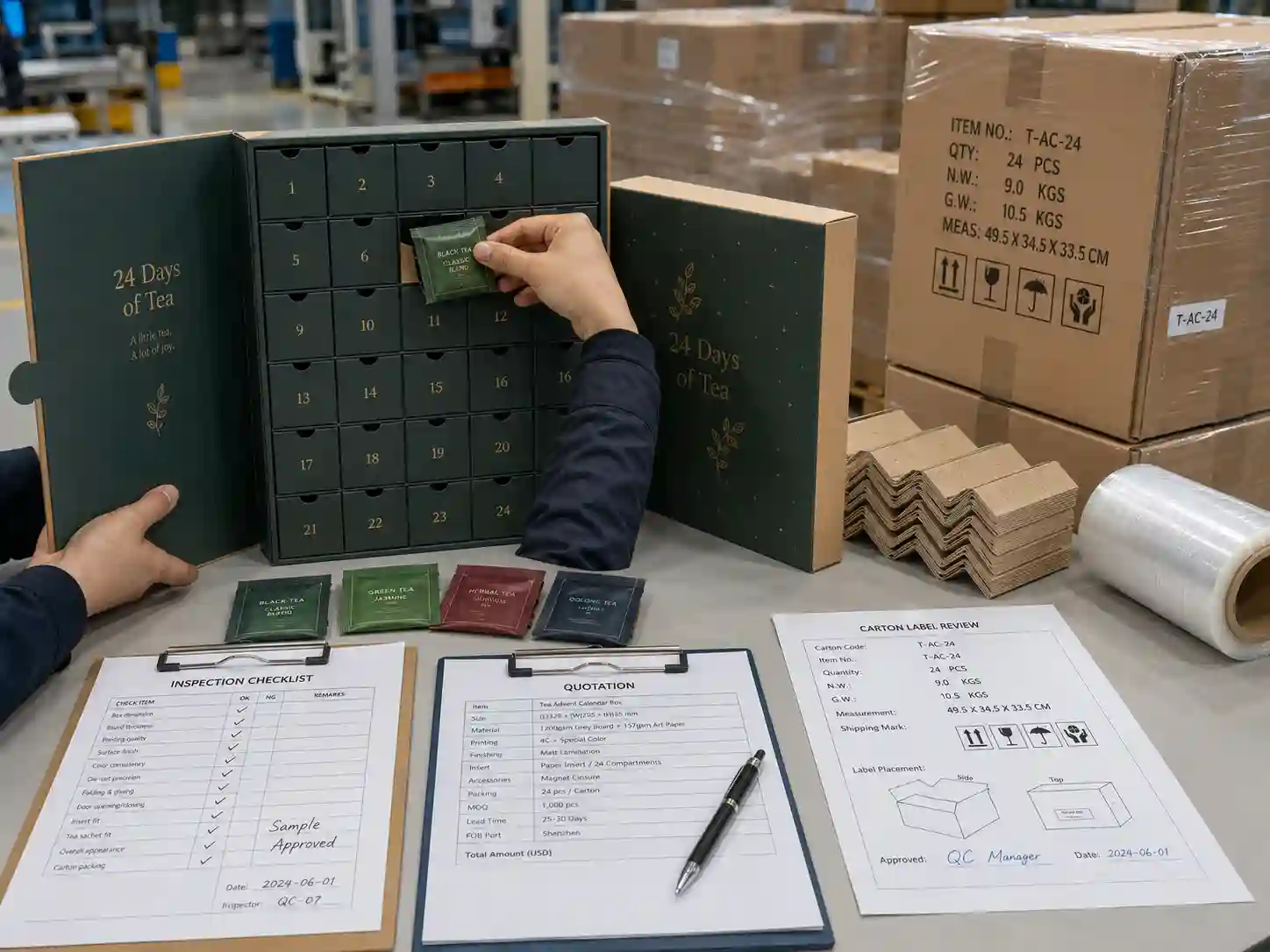
Practical QC checklist for tea advent calendar boxes
- Confirm outer dimensions, board thickness, and box structure against the approved sample.
- Check door-opening performance, perforation quality, drawer movement, and hinge strength.
- Test actual sachet, capsule, pouch, or small box fit in every compartment size.
- Confirm product sequence, numbering, labeling space, and artwork direction.
- Check CMYK color, Pantone color, foil stamping position, embossing depth, spot UV registration, and lamination surface.
- Inspect glue areas, corner wrapping, edge neatness, scratches, dents, stains, and warping.
- Perform shake and handling checks to see whether inserts hold products correctly.
- Confirm export carton strength, carton quantity, shipping marks, carton labels, and pallet requirements.
- Keep inspection photos and approval records for buyer reference.
Quotable B2B note: A tea advent calendar box should be inspected as a finished packaging system: outer box, insert, product fit, opening sequence, artwork, and export carton must work together.
What information should buyers prepare before requesting a quotation?
Buyers should prepare enough technical and commercial details for the supplier to quote the real project, not a rough assumption. A clear RFQ reduces back-and-forth, prevents missing costs, and helps the supplier recommend suitable cost-control options.
| RFQ item | What to send | Why it matters |
|---|---|---|
| Product details | Tea sachet, capsule, pouch, or small box size, filled thickness, weight, and quantity per calendar. | Determines compartment size, insert type, board strength, and packing method. |
| Structure preference | Rigid box, folding carton, drawer box, door-opening box, fold-out box, or reference image. | Controls material, tooling, labor, MOQ, and unit price. |
| Insert requirement | Paper insert, PET tray, EVA insert, foam, molded pulp, or open to supplier suggestion. | Affects product stability, tooling cost, and sustainability positioning. |
| Artwork and finishing | Dieline, CMYK artwork, Pantone colors, foil stamping, embossing, spot UV, matte or gloss lamination. | Controls proofing, printing setup, finishing cost, and approval timing. |
| Quantity range | Target MOQ and quantity breaks such as 500, 1,000, 2,000, 5,000, or 10,000 units. | Helps compare unit price and setup cost across volumes. |
| Sampling expectation | White sample, printed sample, pre-production sample, or full packing sample. | Clarifies sample cost, sample lead time, and approval process. |
| Packing and logistics | Flat or assembled packing, export carton rules, pallet needs, shipping marks, destination, and delivery deadline. | Affects carton size, freight cost, warehouse handling, and production schedule. |
When you are ready to compare options, you can request a custom quote with your product size, quantity range, structure idea, artwork status, and target delivery date. Giftpackpro can then suggest a practical direction instead of quoting an unsuitable box style.
What common mistakes should buyers avoid?
The most common mistakes are asking for price before confirming product fit, approving artwork without dieline checking, choosing too many expensive finishes, ignoring packing volume, and leaving QC requirements until the end. These mistakes often create higher cost than the original design choices.
- Mistake 1: Quoting without product samples. Actual filled tea items may be thicker or less regular than expected.
- Mistake 2: Treating insert design as an afterthought. Inserts control product stability, opening experience, and perceived quality.
- Mistake 3: Using complex finishing everywhere. Foil, embossing, and spot UV are more effective when used with clear visual hierarchy.
- Mistake 4: Ignoring assembly tolerance. Door-opening and drawer structures need enough tolerance for smooth use after mass production.
- Mistake 5: Choosing flat packing only by freight cost. Buyer-side labor and incorrect assembly can remove the saving.
- Mistake 6: Approving a digital proof only. Physical samples reveal thickness, stiffness, folding behavior, and opening performance.
- Mistake 7: Forgetting export carton details. Weak cartons, unclear shipping marks, or poor pallet planning can damage seasonal inventory before launch.
How should buyers plan lead time for seasonal tea calendar projects?
Buyers should plan lead time from structure development, sampling, artwork approval, material purchasing, mass production, inspection, export packing, and shipping. Seasonal packaging should be started early because late changes to inserts or artwork can affect the whole schedule.
A practical planning sequence is to confirm product size first, then structure and insert, then dieline, then artwork, then sample approval, then mass production. If the buyer changes from sachets to capsules after the dieline is approved, the insert and compartment depth may need redesign. If the buyer adds foil stamping after sample approval, the supplier may need new finishing setup and another proof.
Factory tip: For seasonal campaigns, the safest cost-control method is early decision-making. Rush production often increases labor pressure, limits material choices, reduces sampling time, and creates higher logistics cost.
FAQ: What do B2B buyers ask about tea advent calendar boxes?
What is the most cost-efficient structure for tea advent calendar boxes?
For many tea sachet projects, a folding carton calendar with a paper insert is the most cost-efficient starting point. For premium retail programs, rigid door-opening boxes or drawer boxes may justify the higher cost through stronger presentation and better shelf impact.
Can one calendar hold different tea formats?
Yes, but mixed sachets, capsules, pouches, and small boxes require careful compartment planning. Buyers should provide the largest and smallest product dimensions so the supplier can design suitable insert zones and avoid loose or over-tight fit.
Does the outer box protect tea aroma and moisture?
The outer calendar box mainly provides structure, presentation, and retail communication. Aroma and moisture protection should usually come from the individually sealed tea sachet, pouch, capsule, or inner pack.
Why does MOQ change between suppliers?
MOQ changes because suppliers may use different material sourcing, printing setup, tooling methods, labor models, and finishing processes. A custom rigid box with multiple finishes usually has a different MOQ from a simpler paperboard folding carton.
Should buyers request a prototype before mass production?
Yes. A prototype or sample is strongly recommended because it confirms box size, compartment sequence, insert fit, door opening, drawer movement, and artwork placement before mass production starts.
What should be checked in a pre-production sample?
Buyers should check material thickness, structure, insert fit, printing color, Pantone matching, foil stamping, embossing, spot UV, lamination, numbering, barcode readability, carton packing, and overall workmanship against the final order requirements.
How can buyers reduce cost without making the box look cheap?
Buyers can reduce cost by optimizing box size, using paper inserts where suitable, limiting special finishes to key areas, comparing quantity breaks, avoiding unnecessary oversized compartments, and deciding flat or assembled packing based on total landed cost.
How should buyers move from idea to quote?
To request accurate tea advent calendar boxes pricing, prepare product dimensions, filled samples if available, target quantity, preferred structure, insert choice, artwork status, finishing requirements, packing method, destination, and deadline. The more complete the RFQ, the easier it is to compare material options, MOQ, sample cost, mass production lead time, QC requirements, and export packing details.
Giftpackpro works with overseas brands, wholesalers, gift companies, retail buyers, and packaging purchasing teams that need practical support from sample planning to bulk shipment. If you are preparing a seasonal tea campaign, use the checklist above and contact the team with your product details, artwork files, and target quantity so the quotation can reflect the real structure, insert, printing, packing, and delivery requirements.