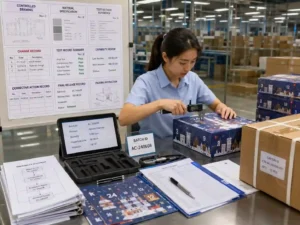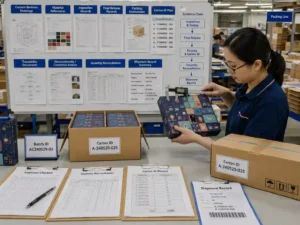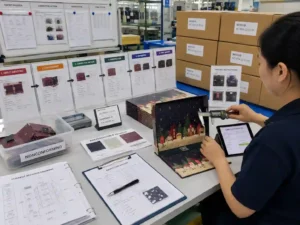
Quick answer: Perfume sample advent calendar boxes are custom seasonal packaging systems designed to hold small fragrance vials, mini bottles, atomizers, or discovery-set samples in separate numbered cavities. For B2B buyers, the key decisions are box structure, insert tolerance, vial protection, artwork approval, sampling, MOQ, QC, and export packing. Because perfume samples often involve glass, caps, pumps, and leakage risks, the packaging must balance premium presentation with practical protection. A reliable supplier should help check dielines, test inserts, confirm printing finishes, prepare samples, control assembly, and pack finished boxes safely for international shipping.
For fragrance brands, wholesalers, retail buyers, and promotional gift teams, perfume sample advent calendar boxes are not just decorative seasonal packaging. They are a controlled product-presentation format that must protect small fragile components, organize multiple SKUs, and support a premium unboxing experience without causing damage, leakage, or assembly confusion during bulk production.
This guide explains how to evaluate structures, inserts, materials, printing, sampling, MOQ, supplier capability, QC, export packing, and quotation preparation before starting a custom project with a custom advent calendar boxes manufacturer such as Giftpackpro.
What should buyers understand before choosing perfume sample advent calendar boxes?
Buyers should understand that perfume sample advent calendar boxes require tighter insert control than many general gift boxes because the products are small, fragile, and often cylindrical. The packaging must hold each vial securely while still allowing the customer to remove the sample easily.
Unlike larger cosmetics or skincare sets, perfume samples may include glass vials, spray atomizers, mini bottles, rollerballs, caps, sleeves, or paper sample cards. A small cavity error can cause rattling, broken glass, cap loosening, or poor presentation. Before selecting a box style, buyers should confirm the exact sample dimensions, filled weight, cap diameter, bottle height, orientation, and whether the product must stand upright during storage or shipping.
Buyer tip: A perfume sample box should be designed around the actual filled sample, not only the nominal bottle size from a catalog. Cap height, spray actuator shape, label thickness, and shrink wrap can change the final cavity fit.
Brands usually choose this packaging for discovery sets, holiday retail campaigns, department-store promotions, e-commerce gift sets, influencer kits, subscription boxes, and wholesale seasonal programs. The best design is one that looks premium at retail but can still be assembled, inspected, packed, and shipped efficiently at scale.
Which box structure is best for perfume sample advent calendar boxes?
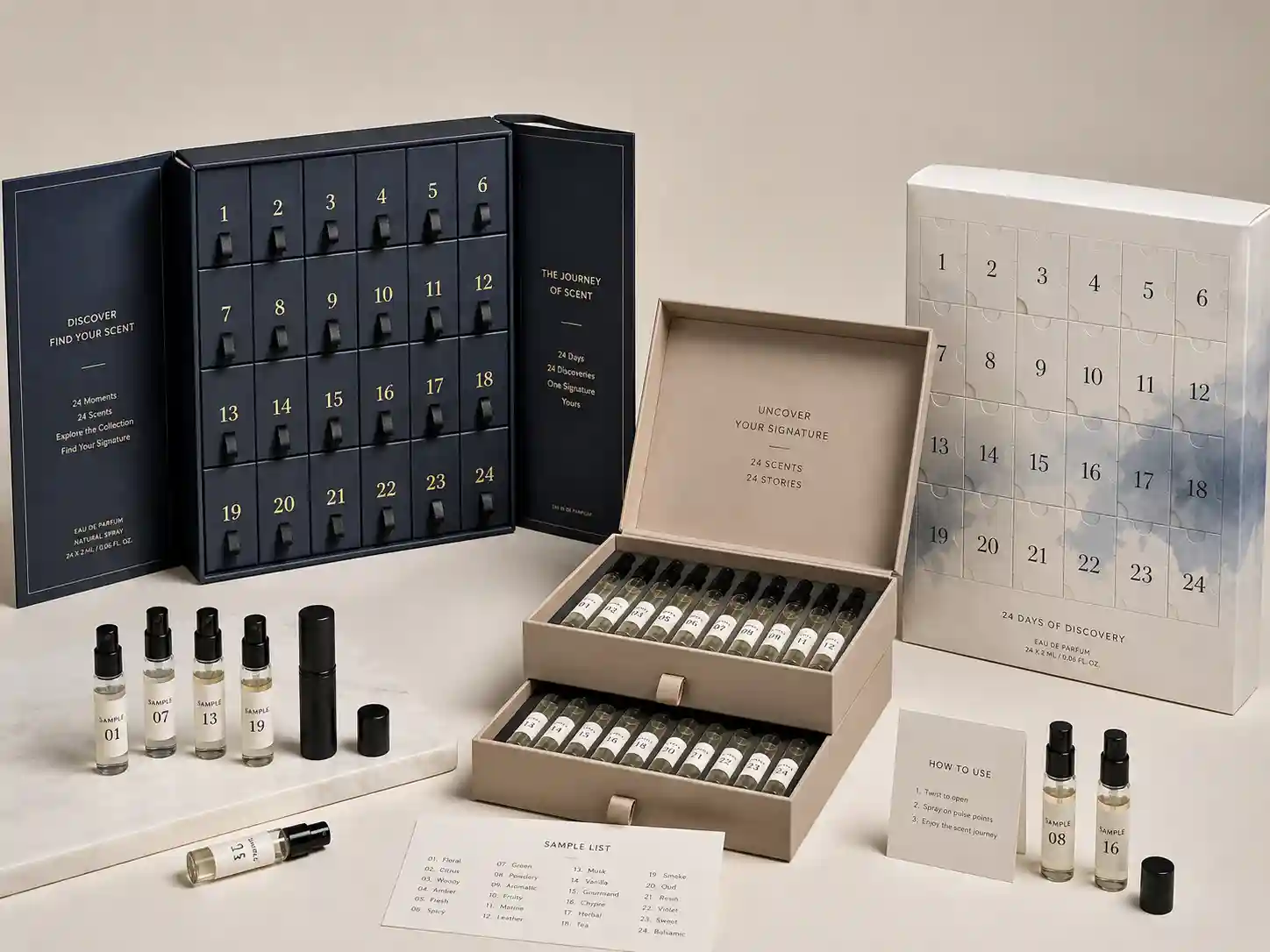
The best structure depends on product weight, retail price point, shipment method, and how many perfume samples will be packed. Rigid boxes are usually chosen for premium fragrance discovery sets, while folding cartons may suit lighter promotional programs with lower cost targets.
| Structure option | Best use case | Main advantages | Buyer watch point |
|---|---|---|---|
| Rigid door-opening box | Premium fragrance calendars, retail gifting, luxury discovery sets | Strong presentation, good structure, suitable for numbered doors and premium finishes | Higher material, handwork, and freight cost than folding carton options |
| Rigid drawer box | High-end sample sets, influencer kits, reusable gift packaging | Smooth opening experience, strong protection, suitable for foam or EVA insert systems | Drawer clearance and insert positioning must be tested carefully |
| Book-style magnetic box | Premium perfume sample launches and VIP retail gifts | Luxury feel, large printable surface, easy product reveal | Magnet strength, hinge durability, and export-carton compression should be checked |
| Folding carton advent calendar | Cost-sensitive seasonal campaigns and lighter sample sets | Lower unit cost, lighter shipping weight, efficient for large retail quantities | Less rigid protection for glass vials unless insert and outer packing are reinforced |
| Tray-and-sleeve box | Discovery sets with organized rows of samples | Clean structure, efficient display, good for PET tray or paperboard insert | Sleeve friction and tray pull strength should be confirmed during sampling |
A door-opening structure works well when the buyer wants numbered daily access. A drawer box works well when the calendar is positioned as a premium discovery kit rather than a traditional door calendar. A folding carton can work for lighter sample vials, but buyers should not assume it will protect glass samples without testing compression, drop handling, and insert grip.
Quotable B2B statement: For perfume sample advent calendar boxes, the insert design is often more important than the outer box shape because vial movement is the main source of breakage, noise, and poor customer experience.
How should inserts protect perfume vials, caps, and small bottles?
Inserts should hold each sample tightly enough to prevent movement, but not so tightly that workers damage the vial during assembly or customers struggle to remove it. For perfume samples, cavity tolerance, grip position, and material recovery are critical.
Common insert options include paper insert, PET tray, EVA insert, foam, molded pulp, and combined structures. Each option has a different balance of appearance, cost, protection, sustainability perception, and tooling requirements.
When should buyers choose paper inserts?
Paper inserts are suitable for lightweight vials and buyers who want a recyclable paper-based appearance. They are often used with paperboard or greyboard structures and can be printed or left plain depending on the visual requirement.
Paper inserts work best when the product shape is simple and the sample weight is low. For small perfume vials, the cut line, fold line, and locking tabs must be tested to prevent tilting. If the vial has a rounded bottom or uneven cap, a simple paper slot may not hold it securely enough.
When are PET trays useful?
PET trays are useful when the buyer needs precise cavities and clear product positioning. A thermoformed PET tray can hold small vials neatly, reduce movement, and support fast assembly during mass production.
The main watch points are tooling cost, cavity depth, tray thickness, visible reflections, and environmental requirements in the destination market. Buyers should also confirm whether the tray needs to be transparent, white, black, or custom colored.
When should EVA, foam, or molded pulp be considered?
EVA and foam inserts provide stronger cushioning and a premium fitted look for fragile glass samples. Molded pulp can support paper-based packaging goals, but it requires careful mold development and surface-quality review.
EVA works well for high-value perfume samples, but the cavity cut must match bottle shape closely. Foam can protect well but may not fit every brand’s sustainability direction. Molded pulp can be a good option for buyers seeking a plastic-reduction story, but it may need more development time to achieve clean edges and consistent small cavities.
QC tip: During sample approval, test the insert with filled samples, not empty bottles only. Filled weight changes how the vial sits, shakes, and presses against the cavity during transport.
What materials and finishes create a premium fragrance presentation?
Perfume packaging usually needs a more premium visual standard than general promotional packaging. Buyers should choose materials and finishes that support the fragrance brand position while staying practical for production, assembly, and shipping.
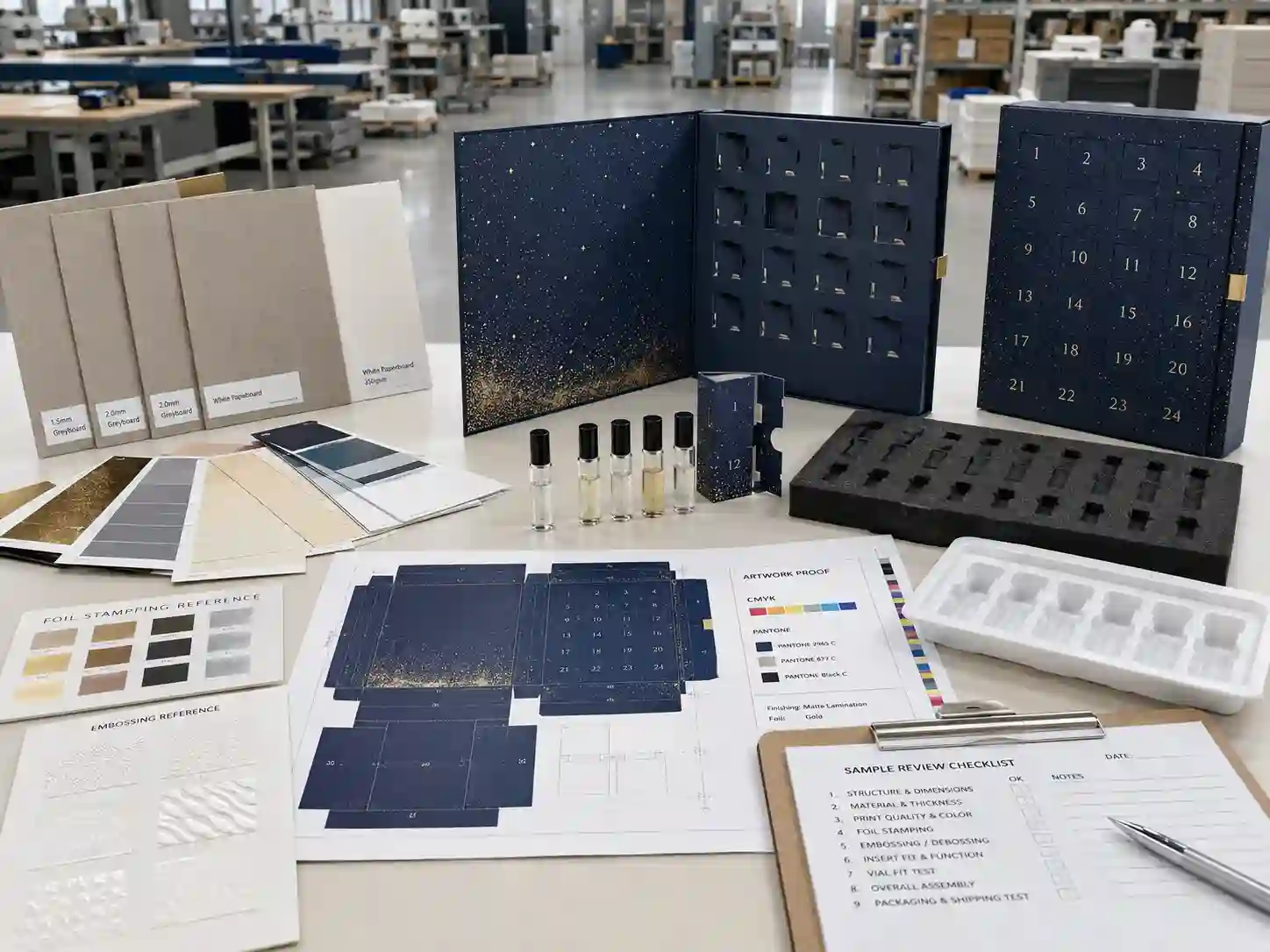
Common material choices include paperboard for folding carton structures, greyboard wrapped with printed paper for rigid boxes, specialty paper for luxury texture, and laminated art paper for high-quality CMYK or Pantone printing. The material thickness should be matched to the product weight, insert type, and export-packing method.
Popular printing and finishing options include CMYK printing, Pantone spot color, foil stamping, embossing, debossing, spot UV, matte lamination, gloss lamination, soft-touch lamination, and textured paper wrapping. For fragrance brands, foil stamping and embossing can create a premium look, but they should be tested on actual paper because thin lines, small numbers, and large foil areas may behave differently.
Factory tip: If every door number uses foil stamping, the supplier should check registration tolerance between printing, die-cutting, and foil position. Small numbered doors leave less room for error than large flat gift-box panels.
Buyers should also consider whether the outer surface will be touched frequently in retail or during e-commerce unboxing. Matte lamination can look premium but may show scratches on dark colors. Gloss lamination can increase visual brightness but may feel less refined for luxury fragrance. Spot UV can highlight numbers, patterns, or campaign graphics, but it should not interfere with folding or door-opening areas.
What artwork and dieline details should be checked before sampling?
Artwork should be checked against the dieline before sampling because perfume sample advent calendar boxes often include many small doors, cavities, numbers, and product-position references. A small artwork error can affect assembly, numbering, product matching, or the final opening experience.
Buyers should prepare print-ready files with bleed, safe zones, CMYK or Pantone color information, finish layers, barcode placement if needed, and clear notes for foil stamping, embossing, spot UV, or lamination. The dieline should show cut lines, crease lines, glue areas, opening doors, insert position, and any product cavity reference.
- Confirm the number of cavities and the product assigned to each cavity.
- Check whether all door numbers match the product packing plan.
- Keep important artwork away from crease lines, door cuts, and glue flaps.
- Mark foil stamping, embossing, and spot UV as separate layers.
- Confirm CMYK and Pantone requirements before proofing.
- Leave enough tolerance around vials, caps, and sample cards.
- Check barcode and shipping label areas if the box will enter retail or e-commerce channels.
For retail programs, buyers may also need GS1 barcode planning. Official barcode guidance can be checked through GS1. For paper sourcing claims, buyers can verify requirements with official resources such as FSC rather than assuming every paper option automatically qualifies.
How do MOQ, sampling, and lead time affect the buying decision?
MOQ, sampling, and lead time depend on structure complexity, material choice, printing process, insert type, and assembly requirements. Buyers should not compare suppliers only by unit price unless the quotation scope, sample standard, and packing method are the same.
A simple folding carton calendar may have a lower MOQ and shorter production cycle than a rigid drawer box with EVA insert, foil stamping, embossing, and hand assembly. A PET tray or molded pulp insert may require tooling and extra sample rounds. Premium wrapped rigid boxes often involve more manual work, so the supplier’s production planning and QC process matter.
| Cost or lead-time driver | Why it matters | How buyers can control risk |
|---|---|---|
| Box structure | Rigid box, drawer box, and magnetic styles usually require more materials and handwork | Compare structures early before finalizing artwork |
| Insert type | PET, EVA, foam, and molded pulp may need tooling or special cutting | Send actual samples for fit testing before mass production |
| Printing finish | Foil stamping, embossing, and spot UV add process steps | Approve finish samples or production proofs before bulk printing |
| Number of cavities | More cavities increase die-cutting, assembly, and packing complexity | Provide a clear packing map with product sequence |
| Export packing | Glass vials need stronger carton protection and possibly pallet planning | Confirm master carton size, corner protection, and shipping marks |
Buyer tip: A low quotation may become expensive if it excludes insert tooling, sample revision, inner protection, export cartons, pallet requirements, or special packing instructions.
Sampling normally includes a structural prototype, printed sample, or pre-production sample depending on project stage. A white mockup can confirm size and structure. A printed sample can confirm artwork, color, finish, and basic appearance. A pre-production sample should represent the approved materials, printing, insert, assembly method, and packing standard before mass production starts.
How should buyers compare perfume sample advent calendar box suppliers?
Buyers should compare suppliers by project understanding, structural engineering, sample accuracy, insert testing, printing control, QC process, export packing ability, and communication quality. The right supplier should help reduce development risk, not only provide a low price.
When evaluating a supplier, ask whether they can review dielines, recommend structures, create samples, test insert fit, manage printing proofing, control assembly tolerance, inspect finished boxes, and prepare export cartons for international shipment. Buyers can review custom advent calendar box services to understand what development support should be included in a custom packaging project.
Supplier comparison checklist
- Can the supplier design around actual perfume vial dimensions and filled weight?
- Can they provide rigid box, folding carton, drawer box, and door-opening box options?
- Can they make paper insert, PET tray, EVA insert, foam, or molded pulp samples?
- Do they check dieline, artwork layers, printing proof, and finish registration?
- Do they provide a pre-production sample before mass production?
- Do they have a clear QC process for printing, assembly, insert fit, and packing?
- Can they prepare export cartons, shipping marks, pallet plans, and carton labels?
- Do they communicate quotation details clearly, including exclusions and assumptions?
Buyers can also browse custom advent calendar box products to compare possible structures before requesting a tailored quotation. For factory background, production focus, and supplier capability, the Giftpackpro packaging factory page can help buyers understand how a packaging partner supports custom projects.
What QC points matter most for glass perfume sample packaging?
The most important QC points are vial fit, cap security, leakage risk, door function, printing accuracy, assembly alignment, carton strength, and finished-box cleanliness. Perfume sample calendars should be inspected both as packaging items and as protective systems for fragile samples.
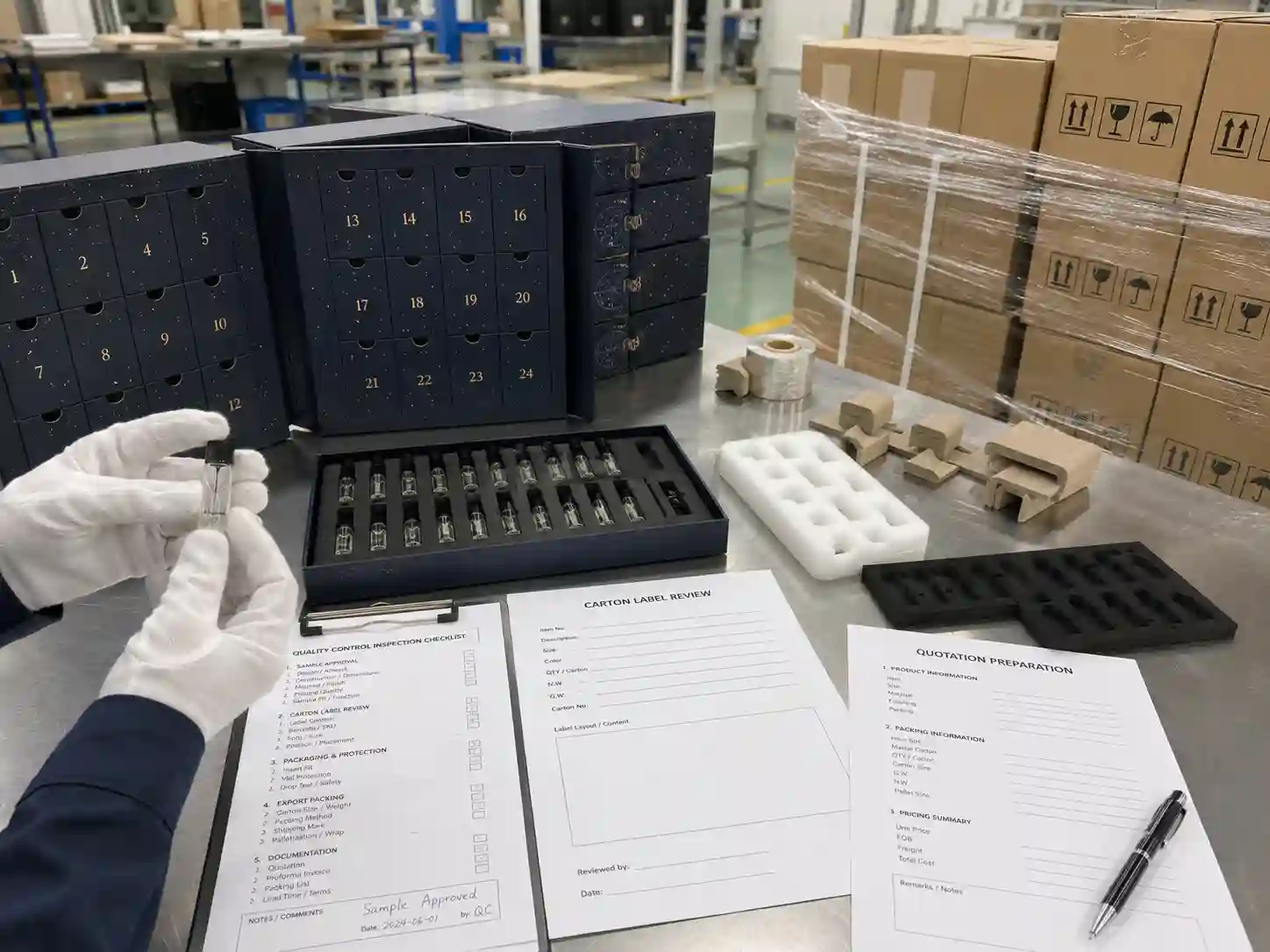
Because fragrance samples may be glass or contain liquid, buyers should build QC expectations into the project before mass production. The packaging supplier may not be responsible for the filled perfume itself unless product filling is included, but the box and insert should still be checked for cavity security, movement control, and export-packing protection.
Practical QC checklist for perfume sample advent calendar boxes
- Check outer box dimensions against the approved sample.
- Check door opening, drawer sliding, magnetic closure, or sleeve movement.
- Check printing color, Pantone matching, foil stamping, embossing, spot UV, and lamination.
- Check insert position, cavity size, cavity depth, and product grip.
- Shake-test sample units gently to detect rattling or loose vials.
- Confirm caps and spray components are not pressed by the insert or lid.
- Check whether vials can be removed without tearing the insert.
- Inspect glue areas, wrapped edges, corners, and surface scratches.
- Confirm product sequence against the packing map.
- Review export carton labels, shipping marks, carton weight, and pallet instructions.
Quotable B2B statement: For glass perfume samples, QC should focus on movement control and cavity consistency, not only print appearance.
How should export packing be planned for fragile perfume sample calendars?
Export packing should be planned early because perfume sample advent calendar boxes may contain glass vials, premium surfaces, and multiple small components. The master carton, inner protection, corner protectors, pallet wrap, and shipping marks should match the shipment route and buyer requirements.
A finished calendar with vials can be heavier and more fragile than an empty paper box. Buyers should confirm whether boxes are shipped flat, semi-assembled, fully assembled without products, or fully packed with perfume samples. Each packing method affects carton size, labor, freight cost, damage risk, and warehouse handling.
| Packing method | Advantage | Risk to manage |
|---|---|---|
| Flat packed components | Lower freight volume and easier bulk carton packing | Buyer or co-packer must assemble accurately |
| Semi-assembled boxes | Balances freight efficiency and easier final packing | Requires clear assembly instructions and component counting |
| Fully assembled empty boxes | Ready for filling by brand, warehouse, or co-packer | Higher shipping volume and surface-protection needs |
| Fully packed with samples | Convenient for finished retail delivery if project scope allows | Requires stronger QC, leakage control, carton protection, and compliance review |
For international shipping, cartons should avoid excessive empty space and should protect corners, edges, and premium printed surfaces. Shipping marks should be generic and accurate, and carton labels should match the buyer’s purchase order, SKU, destination, and warehouse requirements. Palletization may be useful for reducing handling damage on larger retail orders.
Factory tip: Do not wait until mass production is finished to discuss carton packing. Carton size and packing direction can affect box surface pressure, corner damage, and freight cost.
What information should buyers prepare before requesting a quotation?
Buyers should prepare product dimensions, quantity, structure preference, insert requirement, artwork status, finish expectations, packing method, delivery destination, and target timeline before requesting a quotation. Clear RFQ details help the supplier quote accurately and reduce repeated revisions.
Before contacting Giftpackpro to request a custom quote, prepare the following:
- Perfume sample type: vial, atomizer, mini bottle, rollerball, sample card, or mixed set.
- Exact product size: height, diameter, cap size, filled weight, and any outer wrapping.
- Number of samples: 12, 24, 25, 31, or another custom quantity.
- Preferred structure: rigid box, folding carton, drawer box, door-opening box, book-style box, or tray-and-sleeve box.
- Insert preference: paper insert, PET tray, EVA insert, foam, molded pulp, or supplier recommendation.
- Material direction: paperboard, greyboard, specialty paper, recyclable paper focus, or premium wrapped finish.
- Artwork status: finished dieline artwork, design concept, or request for structural support.
- Printing and finish: CMYK, Pantone, foil stamping, embossing, spot UV, matte lamination, or gloss lamination.
- Order quantity and expected MOQ flexibility.
- Sample requirement: blank prototype, printed sample, or pre-production sample.
- Packing method: flat, semi-assembled, fully assembled, or fully packed with samples.
- Export requirements: carton label, shipping marks, pallet, warehouse routing, or e-commerce packing needs.
- Target delivery date and destination country or port.
For buyers still researching options, the advent calendar box buying guides section can support early comparison before finalizing specifications.
Decision guide: which option fits your perfume sample project?
Use the decision guide below to narrow your direction before supplier discussion. It will not replace sampling, but it helps buyers avoid mismatched structures and unrealistic quotation comparisons.
| Buyer situation | Recommended direction | Reason |
|---|---|---|
| Luxury fragrance discovery set for retail | Rigid door-opening box or book-style rigid box with EVA or PET insert | Premium appearance, stronger presentation, better vial control |
| Large promotional campaign with lighter samples | Folding carton calendar with reinforced paper insert or PET tray | Better cost and freight efficiency for larger runs |
| High-value glass mini bottles | Rigid drawer box or magnetic box with EVA or foam insert | Improved cushioning and premium reveal |
| Plastic-reduction packaging goal | Rigid or folding carton with paper insert or molded pulp | Supports paper-based material direction, subject to testing |
| E-commerce direct shipping | Stronger rigid structure plus protective export carton or mailer plan | Reduces damage risk during parcel handling |
What common mistakes should buyers avoid?
The most common mistakes are quoting before product dimensions are confirmed, choosing inserts only by appearance, approving artwork without dieline checking, skipping pre-production samples, and underestimating export-packing needs.
- Using empty vials for all fit tests: Filled samples behave differently during handling and transport.
- Ignoring cap pressure: Inserts or lids can press against caps, sprayers, or stoppers and increase leakage risk.
- Choosing a premium finish without testing: Dark matte surfaces, foil areas, and embossed details may reveal scratches or registration issues.
- Comparing quotations with different scopes: One price may include insert tooling, export cartons, and sampling while another does not.
- Leaving shipping marks until the last minute: Carton labels and warehouse requirements should be confirmed before packing.
- Skipping assembly tolerance checks: A box can look good as a single handmade sample but become difficult in mass production if tolerances are too tight.
QC tip: Keep one approved sample as the production standard. During final inspection, compare bulk goods against that approved sample for color, structure, insert fit, finish, and packing method.
FAQ: perfume sample advent calendar boxes for B2B buyers
What are perfume sample advent calendar boxes?
Perfume sample advent calendar boxes are custom packaging boxes with multiple numbered compartments designed to hold fragrance vials, atomizers, mini bottles, or discovery samples. They are used for seasonal retail campaigns, gift sets, promotional launches, and e-commerce fragrance programs.
Can one box hold different vial sizes?
Yes, but the insert must be designed with separate cavities for each size. Buyers should provide exact dimensions and a product-position map so the factory can check tolerance, sequence, and assembly efficiency.
Which insert is best for fragile glass perfume samples?
For fragile glass samples, EVA, foam, and well-designed PET trays usually provide stronger holding performance than simple flat paper inserts. Paper or molded pulp can also work when the cavity structure is properly tested with filled samples.
Do buyers need a prototype before mass production?
Yes. A prototype or sample is strongly recommended because perfume sample packaging involves small cavities, fragile vials, cap security, and premium visual expectations. A pre-production sample is especially important before bulk production.
What affects MOQ for custom perfume sample advent calendar boxes?
MOQ is affected by structure, material, printing method, insert tooling, finish process, and assembly complexity. Rigid boxes with special finishes and custom inserts usually require more planning than simple folding carton designs.
How can buyers reduce leakage or breakage risk?
Buyers should test filled samples in the insert, avoid cap pressure, reduce vial movement, confirm carton protection, and review packing orientation. Packaging cannot replace proper bottle sealing, but it can reduce movement and impact risk during handling.
What should be included in a quotation request?
A strong quotation request should include quantity, box size, sample dimensions, number of cavities, structure preference, insert type, material, artwork status, printing finishes, sample needs, packing method, destination, and target delivery date.
CTA: prepare your perfume sample advent calendar box project for quotation
To develop perfume sample advent calendar boxes efficiently, prepare your sample dimensions, quantity, preferred structure, insert direction, artwork files, finish requirements, packing method, and delivery schedule before asking for pricing. Clear information allows Giftpackpro to recommend practical custom advent calendar boxes, confirm sampling steps, and provide a more accurate quotation for production and export packing.
If you are comparing structures or still deciding between a rigid box, folding carton, drawer box, door-opening box, PET tray, paper insert, EVA insert, foam, or molded pulp solution, start with a clear product list and target retail positioning. Then contact Giftpackpro through the quotation page so the team can review your specifications and suggest a packaging direction that fits your campaign, budget, and shipping plan.