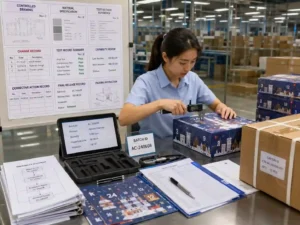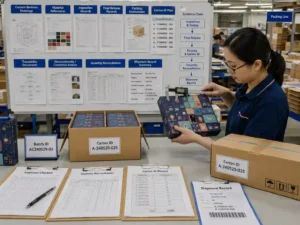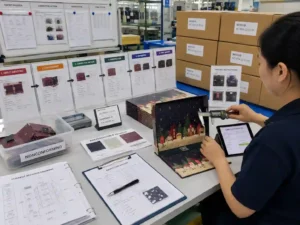
Quick answer: Kids advent calendar boxes are custom seasonal packaging designed to hold small children’s gift items such as mini toys, stationery, craft accessories, puzzles, stickers, hair accessories, socks, or activity items in a numbered calendar format. For B2B buyers, the best solution is not only about a colorful printed design. It depends on structure, insert engineering, artwork control, CMYK or Pantone color accuracy, lamination durability, finishing choices, sample approval, MOQ, QC, export cartons, and quotation preparation. A reliable supplier should help you confirm product fit, dieline accuracy, child-friendly appearance, printing consistency, and shipping protection before mass production.
What should buyers understand before ordering kids advent calendar boxes?
Buyers should understand that kids advent calendar boxes combine retail display packaging, product organization, print decoration, and export protection in one project. The box must look playful on shelf, but it also needs stable compartments, clean numbering, safe material choices, and consistent printing across bulk production.
For children’s gift campaigns, the packaging often carries a stronger visual burden than ordinary gift boxes. Bright colors, illustrated patterns, large numbers, window areas, doors, drawers, or activity themes may all be part of the artwork. At the same time, overseas buyers need predictable sampling, MOQ planning, assembly control, and export packing because many kids gift sets include mixed items with different dimensions and weights.
Giftpackpro works as a custom advent calendar boxes manufacturer for B2B buyers who need seasonal paper packaging built around real product dimensions, not only a decorative outer box. Before requesting a quotation, prepare the gift list, item sizes, product weight, target selling channel, preferred structure, finishing direction, and expected launch schedule.
Buyer tip: For kids gift sets, the artwork should be reviewed together with the insert layout. A cute illustration can fail in production if important graphics cross door cuts, drawer gaps, fold lines, or glue areas.
Which box structures work best for kids advent calendar boxes?
The right structure depends on the gift item mix, target retail price, assembly budget, and how the child will open the packaging. For B2B buyers, the main choices are door-opening boxes, drawer boxes, book-style rigid boxes, folding cartons, and fold-out calendar structures.
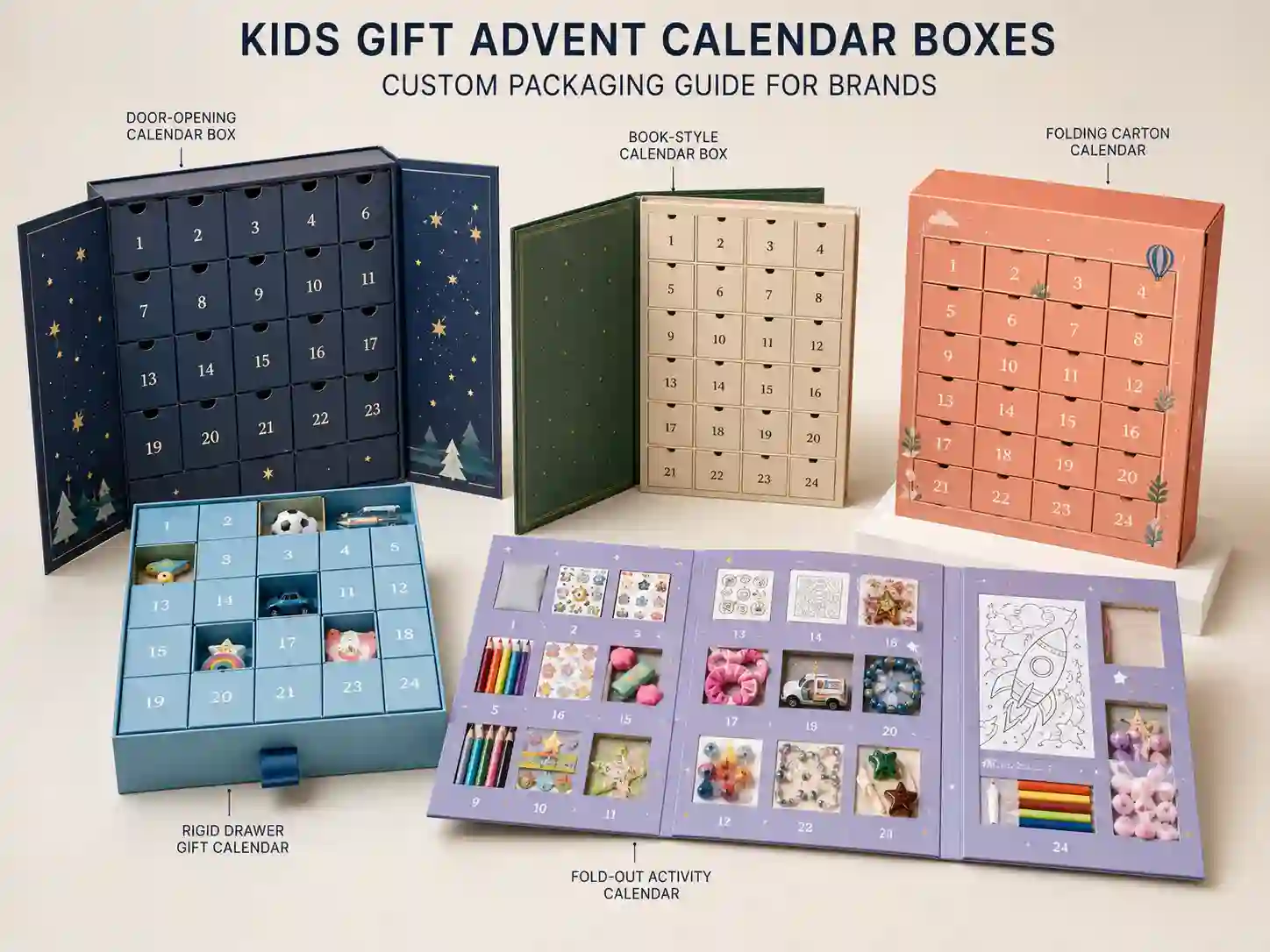
| Structure option | Best for | Key advantages | Buyer checks before sampling |
|---|---|---|---|
| Door-opening advent calendar box | Stickers, stationery, mini toys, craft items, small accessories | Classic numbered opening experience, strong retail front panel, efficient flat or semi-assembled packing options | Door tear strength, perforation depth, number position, insert alignment behind each door |
| Rigid drawer box | Premium kids gift sets, heavier mixed gifts, collectible-style campaigns | Better hand feel, stronger structure, reusable appearance, high perceived value | Drawer sliding tolerance, sleeve strength, inner tray fit, shipping weight impact |
| Book-style rigid box | Story-themed gift sets, premium seasonal campaigns, retail display gifts | Large printable cover area, premium opening experience, easy to combine with paperboard or EVA insert | Magnetic closure position, spine tolerance, hinge durability, product weight distribution |
| Folding carton calendar | Cost-sensitive campaigns, lightweight kids items, high-volume retail programs | Lower unit cost, lighter export weight, efficient production for larger quantities | Paperboard thickness, door function, carton compression, flat-packing feasibility |
| Fold-out calendar box | Activity kits, multi-scene illustrations, educational or craft gift sets | Strong display impact, large artwork area, flexible compartment layout | Panel warping, folding sequence, glue strength, shelf display stability |
Kids products often vary more than beauty or chocolate items because one calendar may include erasers, small figures, crayons, cards, badges, toy cars, puzzle pieces, or DIY accessories. A structure should be selected after measuring the longest, widest, thickest, and heaviest item, not only after reviewing the design concept.
Factory tip: A rigid box can improve premium presentation, but it also increases greyboard usage, manual assembly steps, export carton weight, and lead time. A folding carton may be more suitable when the campaign prioritizes high volume, lightweight gifts, and cost control.
How should inserts be engineered for mixed kids gift products?
Inserts should keep each item in the correct numbered position during assembly, transport, retail handling, and opening. For kids advent calendar boxes, insert design must account for mixed shapes, small loose parts, product visibility, and the force created when children push or pull doors and drawers.
Common insert choices include paper insert, PET tray, EVA insert, foam insert, and molded pulp. Paperboard inserts are often suitable for lightweight stationery, stickers, cards, and slim items. PET trays can hold molded cavities for more precise product placement. EVA and foam are useful when products need cushioning or a premium fitted look. Molded pulp may be considered when buyers want a more paper-based insert direction, but tooling, surface texture, and cavity precision should be checked during sampling.
What product-fit details are specific to kids gift calendars?
Kids gift calendars often contain small items that can shift, rattle, or fall behind the wrong door if the insert is too loose. The factory should test compartment height, finger access, item removal force, and whether the product can damage the printed door from inside.
- For mini toy cars or building pieces, confirm the insert cavity allows easy removal without tearing the door panel.
- For stationery items such as pencils, crayons, rulers, or erasers, check length direction and anti-shift tabs.
- For stickers, cards, or flat craft pieces, use paper sleeves or slot-style compartments to prevent bending.
- For mixed activity kits, group items logically so the numbered opening sequence matches the campaign plan.
- For fragile novelty items, test foam, EVA, or reinforced paperboard supports before mass production.
QC tip: Product fit should be checked with real production goods whenever possible. Dummy samples are useful for early structure review, but small weight or thickness differences can affect door alignment, drawer movement, and carton compression.
How do CMYK and Pantone choices affect kids calendar artwork?
CMYK is suitable for full-color illustrations, gradients, photos, and playful backgrounds, while Pantone is useful when a buyer needs more controlled brand colors or strong spot colors. For kids gift advent calendars, color consistency matters because bright artwork, numbered doors, and retail display panels are highly visible.
Many children’s gift campaigns use colorful scenes, icons, animals, patterns, or character-like generic illustrations. Buyers should avoid real brand names, copyrighted characters, trademarks, or fake logos unless they own the rights and provide approved artwork. The supplier should check that all artwork is print-ready, high-resolution, and positioned correctly on the dieline.
CMYK printing can create attractive full-color designs, but color may vary depending on paper type, lamination, ink density, and production batch. Pantone spot colors can help control important brand tones, but they may increase cost and require careful proofing. When color is critical, request a printed sample or color proof before pre-production sample approval.
Buyer tip: For kids advent calendar boxes, do not approve artwork only from a screen image. Check a printed proof under normal lighting because bright yellow, red, blue, and purple tones can shift after matte lamination, gloss lamination, or spot UV.
Which lamination and finishing options should buyers compare?
Finishing should be selected according to retail positioning, handling durability, artwork style, and budget. Matte lamination, gloss lamination, foil stamping, embossing, and spot UV can all improve appearance, but each adds production steps, cost, and proofing requirements.
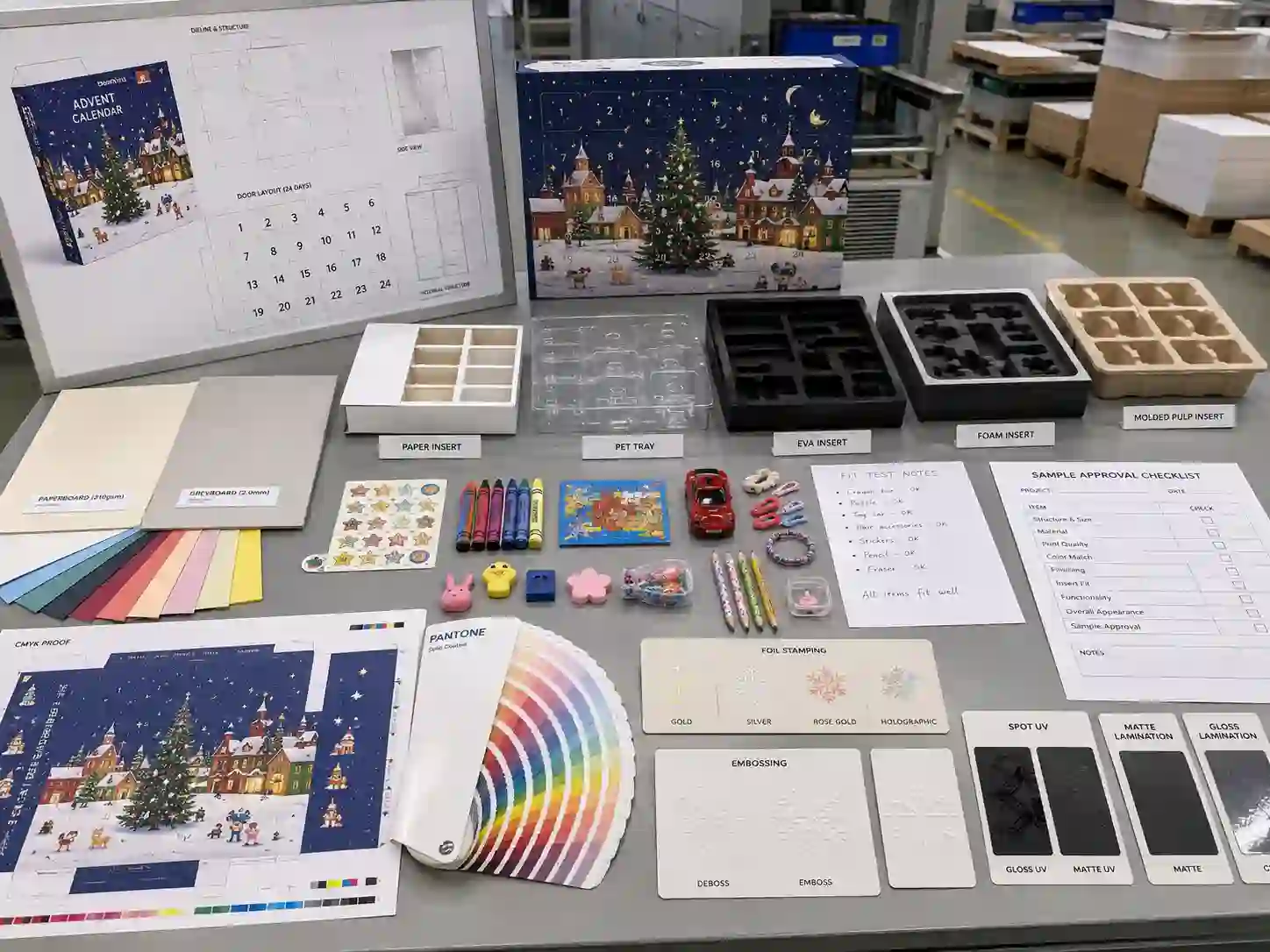
| Printing or finishing option | Use case for kids gift calendars | Practical production note | Cost impact |
|---|---|---|---|
| CMYK printing | Full-color scenes, playful illustrations, seasonal graphics, numbered panels | Requires high-resolution artwork and color proof review | Standard |
| Pantone spot color | Brand color control, strong flat colors, logo or campaign color matching | Best checked with printed proof and paper material confirmation | Medium |
| Matte lamination | Soft premium appearance, reduced glare, modern children’s gift presentation | May slightly reduce color brightness; check scuff resistance | Low to medium |
| Gloss lamination | Bright retail display, vivid color, playful kids packaging style | Can show reflection and fingerprints; check carton handling marks | Low to medium |
| Foil stamping | Premium title, numbers, snow effects, stars, icons, gift set highlights | Requires accurate foil plate and registration checks | Medium to high |
| Embossing | Raised logo, calendar title, tactile details on premium rigid box covers | Needs enough board support and correct pressure control | Medium to high |
| Spot UV | Highlighting numbers, icons, title text, decorative patterns | Registration should be checked against printed artwork | Medium |
For children’s packaging, finishing should support readability and durability. Calendar numbers must be easy to find. Door cuts should not destroy key printed elements. Heavy foil on fold lines can crack if not designed correctly. Spot UV on door perforations may affect opening feel if the finish crosses cut or crease areas.
External sustainability or labeling requests should be verified with official sources and customer-side compliance teams. Buyers who require responsible paper sourcing can review information from the Forest Stewardship Council. If barcodes are required for retail or e-commerce channels, buyers can confirm barcode rules through GS1.
What artwork checks should happen before sampling?
Artwork checks should happen before the sample is made, not after the factory has already printed the prototype. A complete dieline review helps prevent wrong door positions, missing bleed, unreadable numbers, barcode problems, and finishing misregistration.
For custom kids packaging, the dieline normally includes outer panels, inner panels, door cuts, crease lines, glue areas, insert position, drawer direction, sleeve panels, and carton layout. Buyers should check whether the front design aligns with actual product compartments. If a printed number opens to the wrong item, the entire calendar experience may fail even if the printing looks attractive.
Artwork checklist for kids advent calendar boxes
- Confirm final box structure: door-opening, drawer box, rigid box, folding carton, book-style, or fold-out format.
- Check the dieline version number before sending artwork to avoid using an outdated layout.
- Add bleed outside cutting lines and keep important graphics away from door cuts, crease lines, and glue areas.
- Make sure calendar numbers are large enough, correctly sequenced, and placed near the intended opening area.
- Convert fonts to outlines or provide approved font files according to the supplier’s artwork requirements.
- Separate CMYK layers, Pantone colors, foil stamping, embossing, spot UV, and die-cut lines clearly.
- Confirm barcode position, warning text area, age-grade text area, recycling marks, and shipping label space where required by the buyer’s market.
- Review inner artwork if doors open to reveal printed messages, activity instructions, or product names.
- Check that no unauthorized characters, trademarks, brand logos, or copyrighted images are included.
Factory tip: A prepress file can look correct as a flat PDF, but problems may appear when the dieline folds into a three-dimensional box. Ask the supplier to review artwork together with a blank structure sample when the design includes wraparound illustrations or numbered door sequencing.
How should buyers plan sampling and proof approval?
Sampling should confirm structure, product fit, printing appearance, finishing effect, and assembly workflow before mass production. For kids advent calendar boxes, a useful approval process often includes a blank sample, a printed sample, and a pre-production sample when the project is complex or high volume.
A blank sample helps buyers review structure, insert layout, opening function, product fit, and carton size without waiting for full printing. A printed sample shows CMYK color, Pantone matching, lamination, foil stamping, embossing, spot UV, and overall retail appearance. A pre-production sample should represent the approved final materials, artwork, insert, structure, and assembly method before bulk production starts.
| Sample type | What it verifies | When to request it |
|---|---|---|
| Blank prototype | Box size, insert fit, drawer movement, door-opening function, product placement | Early development stage, especially for mixed kids gift items |
| Printed sample | CMYK color, Pantone tone, lamination, foil, embossing, spot UV, artwork layout | Before confirming visual direction and customer approval |
| Pre-production sample | Final structure, final material, final artwork, final insert, final assembly method | Before mass production, especially for retail or export programs |
Sample review should be documented. Buyers should mark approved dimensions, color references, finishing details, insert tolerance, barcode location, carton packing method, and any revisions. Clear sample approval reduces disputes during bulk production because both sides have a defined reference.
What drives MOQ, cost, and lead time?
MOQ, cost, and lead time are driven by structure complexity, material choice, printing method, finishing, insert type, manual assembly, product loading requirements, and export packing. A simple folding carton calendar usually costs less than a rigid drawer or book-style calendar with multiple inserts and premium finishing.
For kids advent calendar boxes, labor can be a major cost factor if the calendar requires many compartments, hand-glued elements, product loading support, or complex inspection. Finishing such as foil stamping, embossing, spot UV, and special lamination may require additional plates, setup time, drying time, and registration checks.
Buyers should ask whether the MOQ is based on printing setup, material purchasing, rigid box assembly, insert tooling, or overall order value. A supplier may be able to suggest alternative materials or structures to control cost, but the product fit and shipping protection should not be weakened only to reduce unit price.
Quotable B2B statement: The lowest unit price is not always the lowest project cost; a weak insert, poor door tolerance, or under-tested export carton can create replacement cost, delivery delay, and retail complaints after mass production.
How should buyers compare suppliers for custom kids packaging?
Buyers should compare suppliers by engineering support, dieline accuracy, sample quality, print control, communication, QC process, export packing experience, and quotation clarity. A low price is not enough if the supplier cannot manage artwork, inserts, sampling, and shipment details.
When evaluating a supplier, ask whether they can provide custom advent calendar box services including structure design, insert development, artwork checking, sample production, bulk manufacturing, QC, and export packing. Review whether they understand kids gift item fit, door-opening function, printed numbering, and mixed-product packing.
- Can the supplier create or adjust the dieline based on actual product dimensions?
- Can they recommend paperboard, greyboard, insert material, and carton strength for the target shipping method?
- Can they produce blank samples and printed samples before mass production?
- Can they check CMYK, Pantone, lamination, foil stamping, embossing, and spot UV registration?
- Can they explain MOQ, lead time, packing method, and quotation details clearly?
- Can they support export cartons, pallet planning, shipping marks, and carton label review?
Buyers can also review custom advent calendar box products to compare structure options and discuss which solution best matches the campaign budget, gift items, and launch timeline. For factory background and production capability, visit the Giftpackpro packaging factory page.
What QC checks matter before export packing?
QC should confirm that the approved sample has been followed in mass production. For kids advent calendar boxes, inspection should cover print color, artwork position, door or drawer function, insert fit, glue strength, finishing quality, carton packing, and shipping mark accuracy.
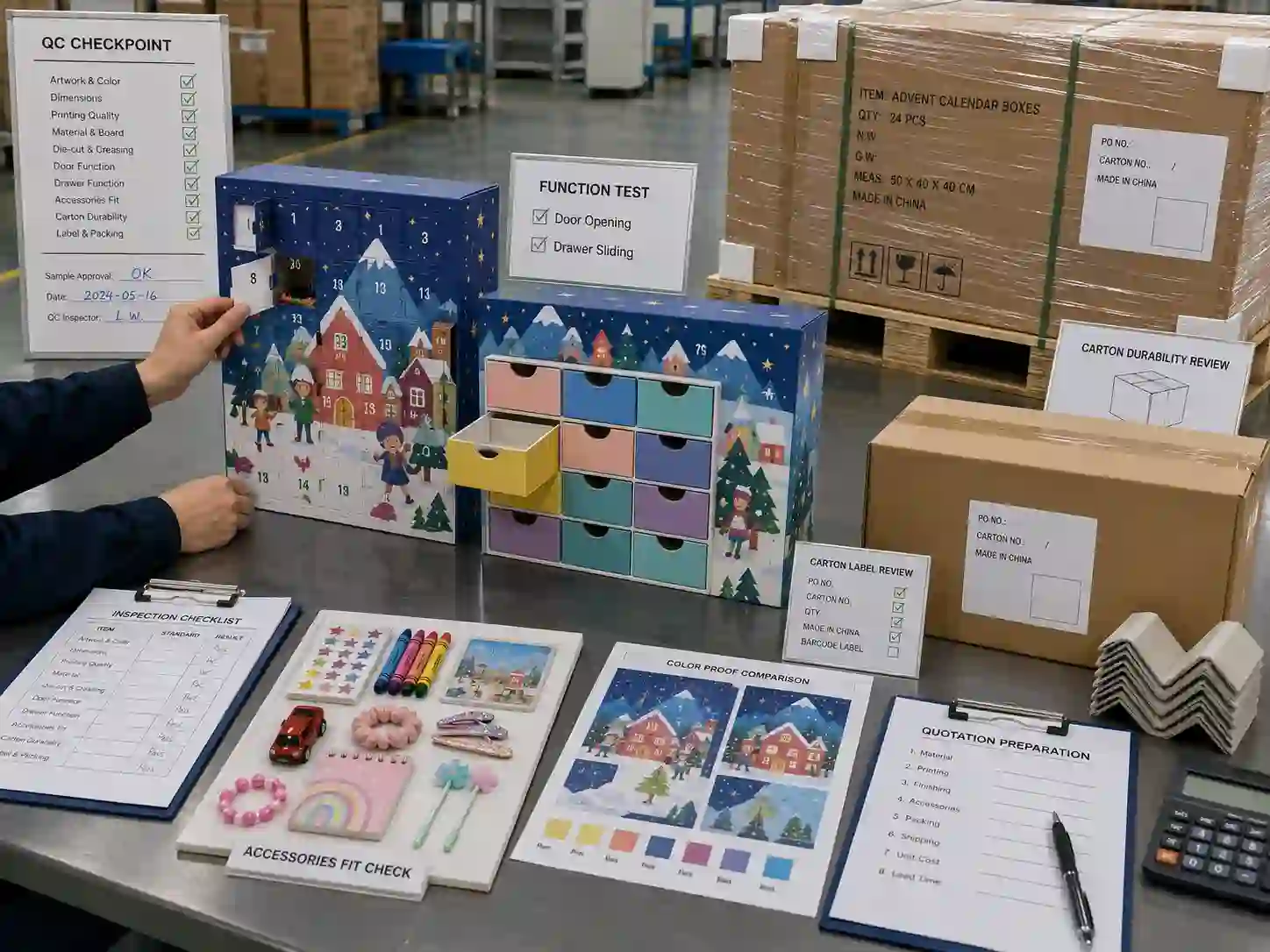
Because kids gift calendars are often used in retail and e-commerce promotions, visible defects can affect the whole set. Common QC issues include color variation between batches, door cuts that are too deep or too shallow, misaligned numbers, glue marks, warped rigid boxes, loose inserts, damaged corners, incorrect carton labels, and missing barcode areas.
Practical QC checklist for bulk production
- Compare bulk production against the approved sample and signed artwork proof.
- Check CMYK color consistency, Pantone matching, lamination surface, foil stamping, embossing, and spot UV registration.
- Inspect door-opening strength, drawer sliding function, fold lines, glue areas, and panel alignment.
- Test insert position using actual kids gift items from the production set.
- Check whether small items shift into the wrong compartment after carton movement.
- Review barcode print area, generic shipping marks, carton label position, and customer-required text.
- Check export carton strength, corner protection, pallet wrap, and carton quantity per master carton.
- Confirm final packed carton dimensions and gross weight for shipping documents.
QC tip: For mixed-item kids calendars, inspect both empty packaging and loaded packaging. A box that passes visual inspection when empty may still fail after product loading if compartments bulge, doors press against items, or drawers become too tight.
How should export packing be planned for kids advent calendar boxes?
Export packing should protect the calendar structure, printed surface, corners, and inner products during international transport. The packing method depends on whether the boxes are shipped flat, semi-assembled, fully assembled, or loaded with products.
Flat packing can reduce freight volume for some folding carton designs, but it may require local assembly by the buyer or co-packer. Fully assembled rigid boxes protect presentation quality but increase carton volume and shipping cost. Loaded advent calendars need stronger master cartons, suitable carton quantity, corner protectors where needed, pallet wrapping, and clear shipping marks.
Buyers should confirm export carton material, carton size, carton weight, inner polybag or paper wrapping requirements, palletization plan, and container loading assumptions. For retail deliveries, carton labels and barcodes should be reviewed before bulk shipment. For e-commerce programs, buyers may need additional drop-test or transit-test requirements through their own logistics channel.
What information should buyers prepare before requesting a quotation?
A good RFQ should give the supplier enough information to quote the correct structure, material, insert, printing, finishing, MOQ, sample cost, lead time, and packing method. Missing details often lead to inaccurate prices or delays during sample development.
Before you request a custom quote, prepare the following information:
- Target quantity or estimated order range.
- Calendar structure preference: door-opening, drawer box, rigid box, folding carton, book-style, or fold-out box.
- Number of compartments and opening sequence.
- Product list with dimensions, weight, material, and photos for each kids gift item.
- Preferred insert material: paper insert, PET tray, EVA insert, foam, molded pulp, or supplier recommendation.
- Box size target or retail shelf size limitation.
- Artwork file, reference design, color requirements, CMYK or Pantone needs, and finishing preferences.
- Barcode, warning text, age-grade text area, recycling marks, or customer-required label positions.
- Sampling needs: blank sample, printed sample, or pre-production sample.
- Target delivery date, destination country, export packing requirements, and shipping mark details.
For more planning references, buyers can review our advent calendar box buying guides and compare common structures, insert materials, printing choices, and sourcing questions before finalizing the RFQ.
Decision guide: which packaging direction should you choose?
Choose the packaging direction by balancing product fit, visual impact, cost, lead time, and shipment method. The best kids advent calendar boxes are engineered around the actual gift items and the buyer’s sales channel, not selected only from a catalog photo.
| Buyer situation | Recommended direction | Reason |
|---|---|---|
| High-volume retail campaign with lightweight items | Folding carton or door-opening paperboard calendar | Efficient material usage, strong front-panel branding, practical cost control |
| Premium gift set with heavier mixed items | Rigid drawer box or book-style rigid box | Better structure strength, higher perceived value, more stable insert support |
| Color-critical branded children’s campaign | CMYK plus selected Pantone colors and printed proof approval | Improves brand color control and reduces risk before mass production |
| Mixed small items that may shift during shipping | Custom PET tray, EVA insert, foam insert, or reinforced paper insert | Improves compartment control and reduces wrong-position product movement |
| Cost-sensitive seasonal promotion | Simplified structure, fewer finishing processes, paperboard insert | Controls unit cost, setup cost, and lead time while keeping the calendar function |
What common mistakes should buyers avoid?
The most common mistakes are approving artwork before confirming the dieline, choosing finishing before checking budget, ignoring insert tolerance, and requesting a quotation without product dimensions. These mistakes can cause sample revisions, production delays, or shipment damage.
- Using generic box dimensions: Kids gift items vary widely, so packaging should be engineered around real product measurements.
- Ignoring door and insert alignment: Each numbered opening must match the correct compartment and product.
- Overusing finishing: Foil stamping, embossing, and spot UV can look premium, but too many effects can increase cost and production risk.
- Approving digital color only: Screen color is not a reliable production reference for CMYK, Pantone, lamination, or paper material.
- Underestimating lead time: Structure design, insert testing, printed sampling, revisions, bulk production, QC, and export packing all need planning time.
- Skipping export carton review: Poor carton strength or unclear shipping marks can create avoidable logistics problems.
FAQ: Kids advent calendar boxes for B2B buyers
What is the best material for kids advent calendar boxes?
Paperboard is common for folding carton and door-opening calendars, while greyboard is used for premium rigid box structures. The best material depends on product weight, box size, retail positioning, shipping method, and whether the packaging needs to be flat packed or fully assembled.
Can kids advent calendar boxes use both CMYK and Pantone printing?
Yes. Many projects use CMYK for full-color artwork and Pantone for specific brand colors or key graphic areas. Buyers should confirm this during artwork setup and request a printed proof when color accuracy is important.
Which insert is best for mixed children’s gifts?
Paper inserts work well for lightweight flat items, while PET trays, EVA, foam, or molded pulp may be better for mixed shapes or heavier products. The insert should be tested with real products before mass production.
Should buyers choose matte or gloss lamination?
Matte lamination gives a softer premium appearance, while gloss lamination makes colors appear brighter and more reflective. For kids gift packaging, buyers should compare both options with the actual artwork because color brightness and scuff visibility can differ.
Can foil stamping, embossing, and spot UV be used on children’s calendar packaging?
Yes, but they should be used selectively. Foil, embossing, and spot UV are most effective for titles, numbers, icons, or highlight areas. Avoid placing these effects across fold lines, door cuts, or heavy crease areas without testing.
What should be approved before mass production?
Buyers should approve the dieline, box structure, insert, material, artwork, CMYK or Pantone color reference, finishing effect, sample, carton packing method, shipping marks, and final quotation details before bulk production begins.
How can Giftpackpro support your kids gift calendar project?
Giftpackpro can help overseas brands, wholesalers, retail buyers, Amazon and e-commerce sellers, gift companies, and purchasing teams develop kids advent calendar boxes from concept to production. The most efficient projects start with clear product dimensions, artwork goals, target quantity, preferred structure, finishing requirements, and delivery schedule.
To prepare your request, send the gift item list, size and weight details, preferred calendar format, artwork files or design reference, insert requirements, MOQ target, sample expectations, and export packing needs. With those details, Giftpackpro can recommend a practical custom advent calendar packaging solution, confirm sample direction, and prepare a more accurate quotation for your seasonal campaign.