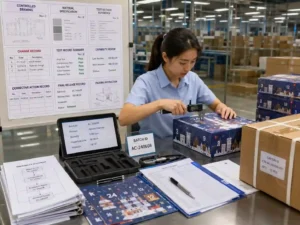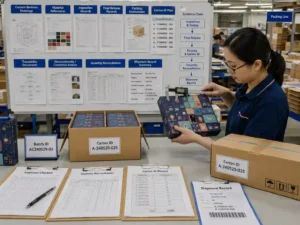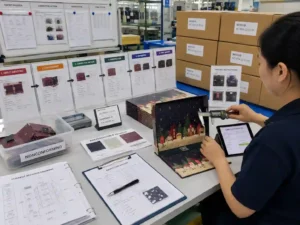
Quick answer: To design earring advent calendar boxes for seasonal campaigns, buyers should start with the sales channel, earring assortment, insert layout, box structure, artwork requirements, and launch timeline. A retail shelf program may need a rigid door-opening box with strong display value, while an e-commerce gift set may need a drawer box, tighter insert protection, and stronger export packing. The best packaging plan connects product fit, dieline accuracy, insert tolerance, printing proof, MOQ, sampling, QC, and shipping marks before mass production. This guide explains how overseas brands, wholesalers, retail buyers, and e-commerce sellers can prepare a practical RFQ and compare suppliers.
What should buyers define before designing earring advent calendar boxes?
Buyers should define the earring assortment, campaign channel, target retail price, order quantity, launch date, and shipping method before choosing a box style. These decisions affect structure, insert material, artwork layout, sample cost, MOQ, lead time, and export packing.
For earring advent calendar boxes, product fit is more detailed than many seasonal paper gift boxes because earrings are small, paired, and easily mixed if the insert layout is loose. Stud earrings, hoop earrings, huggie earrings, drop earrings, charm earrings, and earring cards may require different compartment depths and fixing methods. If the buyer plans a 12-day or 24-day calendar, the factory should know whether each compartment contains one pair, one carded pair, a mini pouch, or a small jewelry envelope.
A clear design brief helps the supplier engineer the packaging instead of only estimating from an image. When discussing custom advent calendar box services, prepare the earring size range, packaging format, artwork direction, expected order quantity, inspection requirements, and shipping destination. This reduces quotation revisions and helps the factory suggest a realistic structure for retail, e-commerce, wholesale, or promotional campaigns.
Buyer tip: connect the box to the campaign channel
A seasonal retail display box needs strong shelf impact, consistent color, and stable door-opening performance. An e-commerce gift set needs more drop resistance, tighter insert holding, and more protective master cartons. A wholesale promotion may need a simpler folding carton structure to control cost and lead time.
Which box structure works best for seasonal earring campaigns?
The best structure depends on the sales channel, product weight, display requirement, and budget. Rigid boxes are better for premium jewelry campaigns, while folding carton calendars are useful when cost, shipping volume, and large promotional quantities matter most.
Earring advent calendar boxes often use drawer, door-opening, book-style, or folding carton structures. The right choice should support the campaign message and also protect the small jewelry pieces during handling, warehousing, and shipment.
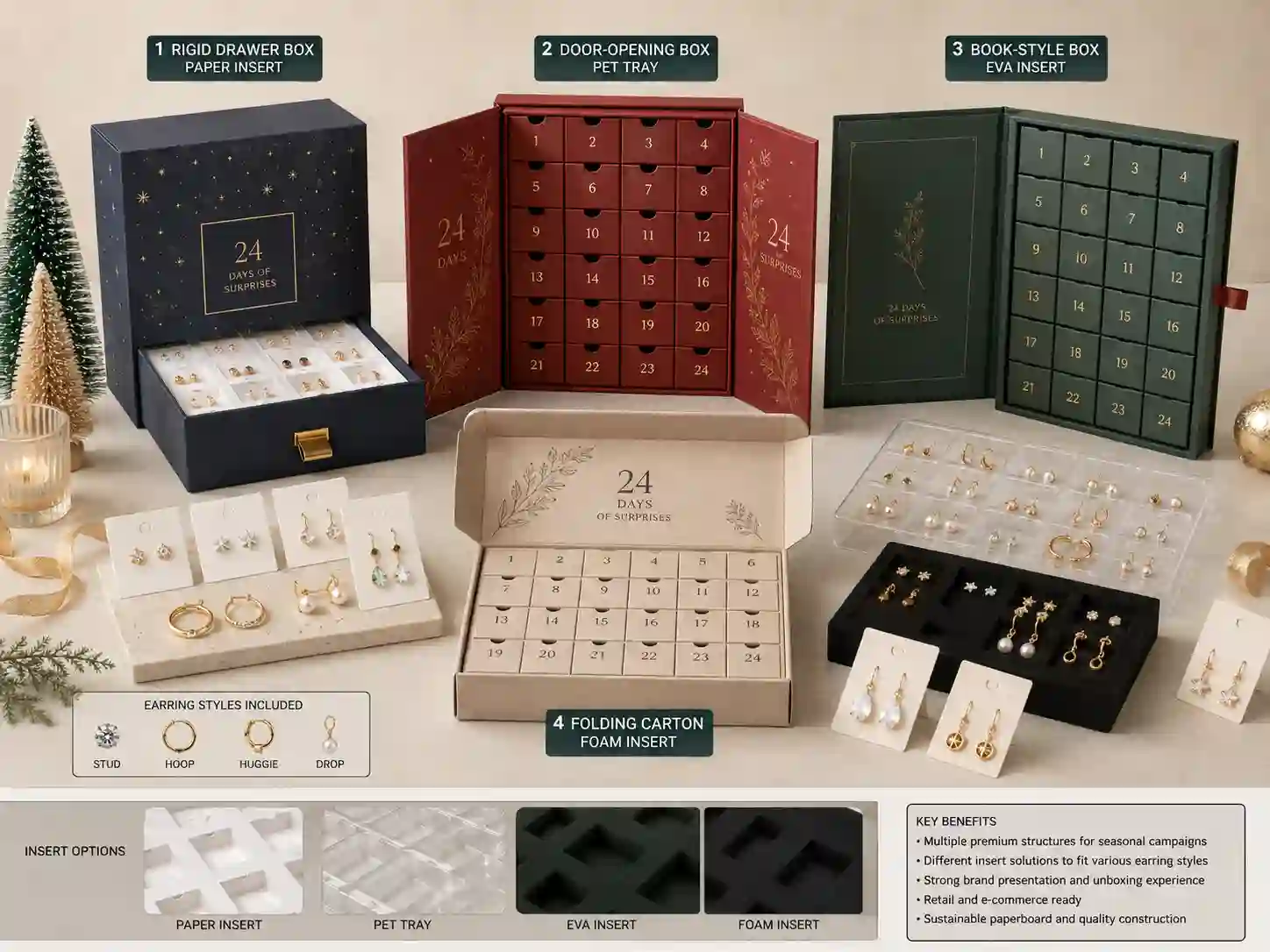
| Structure option | Best for | Engineering focus | Buyer watch point |
|---|---|---|---|
| Rigid drawer box | Premium e-commerce gift sets, influencer kits, boutique launches | Drawer sliding tolerance, tray depth, pull ribbon strength, greyboard thickness | Loose drawers can open during shipping; overly tight drawers reduce user experience. |
| Door-opening rigid box | Retail shelf campaigns and high-perceived-value seasonal launches | Door crease accuracy, magnet or ribbon position, compartment alignment | Doors must open cleanly without tearing printed paper or exposing glue marks. |
| Book-style jewelry calendar | Gift campaigns requiring storytelling space and flat front artwork | Spine strength, hinge durability, inside panel printing, insert bonding | The spine should be tested after repeated opening and closing. |
| Folding carton calendar | High-volume promotional programs, lighter earrings, cost-sensitive channels | Paperboard stiffness, die-cut door strength, assembly speed, flat packing | Thin paperboard may deform if compartments are large or inserts are weak. |
| Hybrid paperboard and tray design | Mixed retail and online sales where cost and protection both matter | Tray locking method, compartment layout, outer sleeve fit, packing efficiency | The buyer should confirm whether trays are shipped assembled or flat. |
Quotable B2B statement: “For earring advent calendar boxes, the structure should be selected after confirming the earring card size and insert method, not only after choosing the outer artwork.”
How should inserts be designed for studs, hoops, huggies, and drop earrings?
The insert should hold each earring pair in the correct position, prevent movement, and make daily removal easy. For earrings, the insert is not just decoration; it controls fit, presentation, anti-mixing, and product protection.
Common insert options include paper insert, PET tray, EVA insert, foam insert, molded pulp insert, and card-based fixing. The best option depends on whether earrings are packed loose, attached to cards, held in mini pouches, or placed in small envelopes. Stud earrings need small, accurate holes or card slots. Hoops and huggies need enough vertical clearance to avoid deformation. Drop earrings need longer compartments and sometimes a card or foam backing to prevent tangling.
Insert comparison for earring advent calendar boxes
| Insert material | Advantages | Limitations | Suitable earring formats |
|---|---|---|---|
| Paper insert | Cost-effective, printable, recyclable direction, easy to match box artwork | Less cushioning than foam or EVA; needs precise folding and locking | Carded studs, small hoops, lightweight huggies |
| PET tray | Clear product visibility, stable molded cavities, good for uniform layouts | Mold cost and sustainability requirements should be reviewed | Carded earrings, small jewelry sets, repeated cavity shapes |
| EVA insert | Good cushioning, premium look, strong holding for small pieces | Higher cost and may need surface covering for luxury presentation | Stud earrings, huggies, charm earrings, small hoops |
| Foam insert | Soft protection, easy cutting, useful for sample-stage testing | Can look less premium if not covered or finished carefully | Mixed earring shapes, fragile decorative earrings |
| Molded pulp insert | Paper-based direction, good for brands reviewing plastic reduction | Requires tooling and fit testing for small jewelry details | Carded earrings, simple lightweight pairs, eco-positioned campaigns |
Factory tip: test the smallest and largest earring pair
During prototype review, do not test only one hero product. Ask the factory to check the smallest stud pair, largest hoop pair, longest drop pair, and thickest earring card. The insert should keep all items stable after carton vibration, handling, and repeated opening of sample compartments.
How do artwork, printing, and finishing affect seasonal campaign results?
Artwork should be built on the approved dieline and checked for door positions, drawer fronts, compartment numbers, barcode areas, and safety margins. Printing and finishing should support the campaign without making production unstable or too expensive.
For custom advent calendar boxes, buyers usually prepare CMYK artwork, Pantone color references, logo position, product numbering, legal text, barcode placement, and carton label requirements. The factory should confirm bleed, fold lines, cut lines, glue areas, foil stamping areas, embossing plates, spot UV masks, and lamination direction before sampling.
Common finishing options for earring advent calendar boxes include matte lamination, gloss lamination, foil stamping, embossing, debossing, spot UV, textured paper, and metallic paper. Premium jewelry campaigns often use matte lamination with foil stamping or embossing, but too many finishing effects can increase tooling cost, sample time, and defect risk. If a campaign uses multiple SKUs or language versions, the buyer should organize artwork files carefully to avoid mixed versions in mass production.
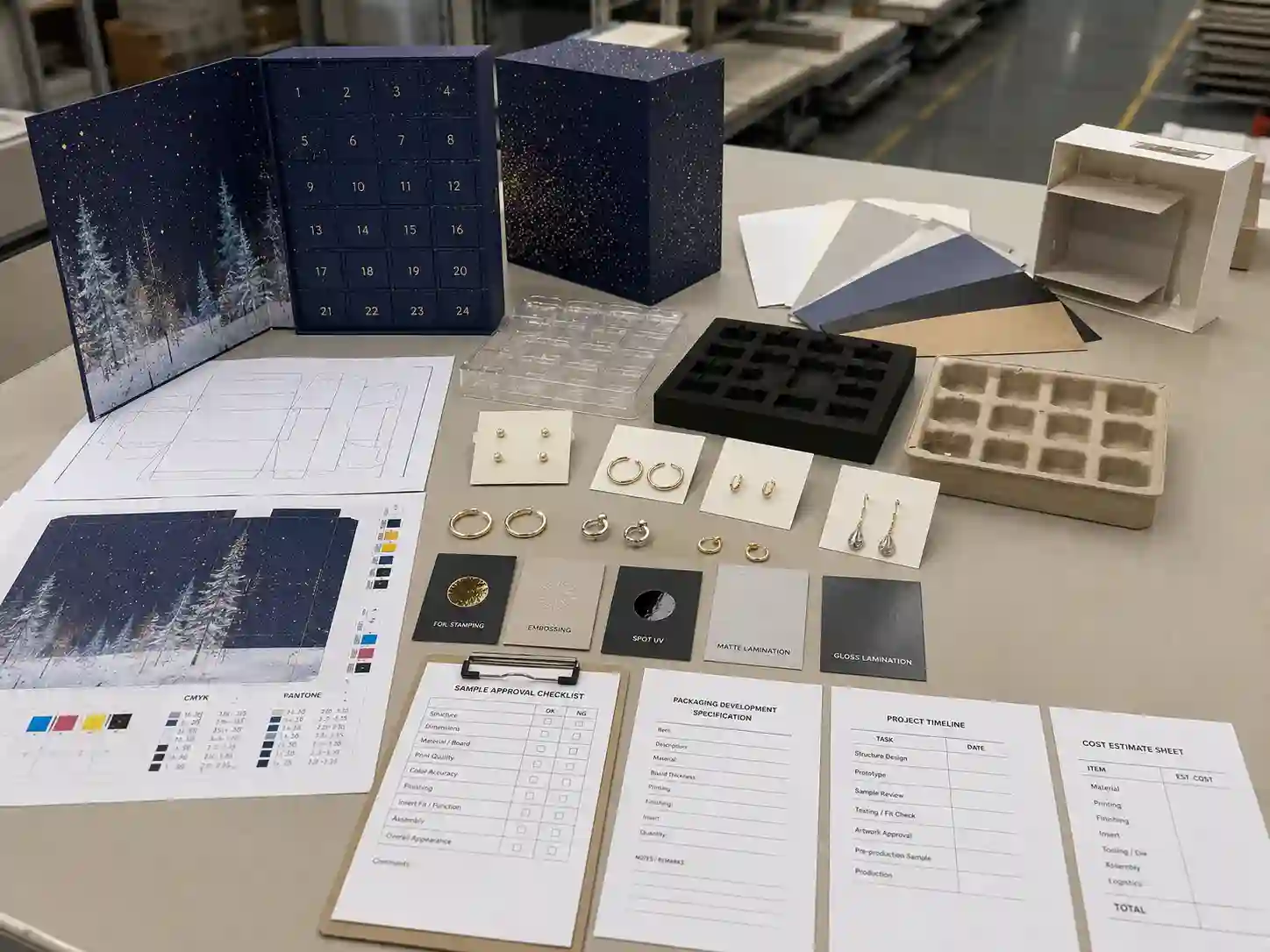
Practical artwork checklist before sampling
- Confirm the final dieline size, compartment count, door numbering, and opening direction.
- Mark all CMYK and Pantone color areas clearly.
- Separate foil stamping, embossing, spot UV, and cutting layers in the artwork file.
- Check whether barcode or QR code size follows the buyer’s retail system requirements. For general barcode guidance, buyers can review GS1 barcode standards.
- Keep important text away from fold lines, drawer edges, tear lines, and glue areas.
- Provide a mockup reference, but treat the dieline proof as the production document.
- Confirm if recycled paper, FSC-related claims, or responsible sourcing marks require verification. Buyers can review official information from FSC before making label claims.
QC tip: Color approval should be based on a printed proof or approved sample under agreed lighting conditions, not only on a screen mockup.
How should buyers plan sampling and pre-production approval?
Buyers should use sampling to verify structure, insert fit, artwork placement, finishing effect, and packing method before authorizing mass production. A good sample process prevents expensive revisions after materials are purchased and tooling is prepared.
For earring advent calendar boxes, sampling usually includes a blank sample, digital printed sample, handmade sample, or pre-production sample. A blank sample is useful for checking structure, size, drawer movement, door opening, and insert layout before full printing. A printed sample helps verify color, logo scale, finishing effect, and retail presentation. A pre-production sample should represent mass production materials, printing, finishing, insert method, and packing standard as closely as possible.
What should be checked on an earring calendar sample?
- Outer structure: Check box squareness, drawer movement, door tear strength, spine durability, and closure alignment.
- Insert fit: Test stud earrings, hoops, huggies, drop earrings, and earring cards in actual cavities.
- Artwork alignment: Review numbering, front panel graphics, inside printing, barcode area, and seasonal campaign text.
- Finishing quality: Check foil stamping registration, embossing depth, spot UV accuracy, matte lamination, and gloss lamination.
- Assembly tolerance: Confirm glue marks, paper wrapping edges, compartment consistency, and door perforation strength.
- Packing method: Confirm whether each unit uses a polybag, tissue wrap, sleeve, corner protector, or inner carton.
Quotable B2B statement: “A pre-production sample for earring advent calendar boxes should prove both presentation and logistics performance before the buyer releases bulk production.”
What MOQ, cost, and lead time factors should purchasing teams compare?
MOQ, cost, and lead time are driven by structure complexity, material selection, insert type, printing process, finishing, labor, packing method, and order quantity. Buyers should compare quotations by specification, not by unit price alone.
A rigid drawer box with EVA insert, foil stamping, embossing, and assembled packing will usually require more labor and production time than a folding carton calendar with a paper insert. A PET tray or molded pulp insert may require tooling, so the buyer should confirm whether tooling cost is included, amortized, or quoted separately. For e-commerce campaigns, stronger export cartons and more protective packing can increase cost but reduce damage risk.
Cost driver decision guide
| Decision point | Lower-cost direction | Premium direction | Buyer question to ask |
|---|---|---|---|
| Outer structure | Folding carton or simple sleeve design | Rigid drawer box or book-style box | Does the sales channel require premium unboxing or lower landed cost? |
| Insert | Paper insert or card slots | EVA, foam, PET tray, or molded pulp insert | Are earrings loose, carded, or packed in mini pouches? |
| Printing | CMYK with matte or gloss lamination | Pantone color, foil stamping, embossing, spot UV | Which effects are essential for the campaign and which are optional? |
| Packing | Flat packing where possible | Assembled unit packing with corner protection | Will the buyer save freight cost or save fulfillment labor? |
| Timeline | Use existing structure and standard materials | New tooling, custom insert, and complex finishing | Is there enough time for sample approval before mass production? |
Buyers reviewing custom advent calendar box products should ask whether a similar existing structure can be adjusted for the earring assortment. This can shorten development time and reduce engineering uncertainty compared with a fully new box structure.
How should earring advent calendar boxes be designed for retail shelf and e-commerce?
Retail and e-commerce campaigns have different packaging priorities. Retail needs shelf visibility, clean graphics, barcode placement, and display stability; e-commerce needs stronger protection, compact packing, and resistance to handling damage.
For retail buyers, the front panel should communicate the earring assortment clearly without using confusing claims. The box should stand or stack safely, and the outer surface should resist scuffing during store handling. If the calendar has a hang-tab, display sleeve, or shelf-ready carton, these features should be discussed during dieline development.
For e-commerce sellers, the packaging must survive warehouse storage, parcel handling, and customer delivery. A beautiful rigid box can still fail if the drawer opens inside the shipping carton or the earring cards move out of position. Consider inner sleeves, belly bands, tissue wrapping, tighter inserts, and stronger export cartons when the product will ship directly to consumers.
Retail and e-commerce planning checklist
- Confirm whether the calendar must stand upright, lay flat, hang, or fit a shelf-ready carton.
- Reserve space for barcode, SKU label, country-of-origin text, and campaign information.
- Check whether the outer size fits retailer shelf limits or e-commerce shipping tiers.
- Test whether drawers, doors, or compartments remain closed during transport.
- Choose lamination and paper surface based on scuff resistance and brand appearance.
- Confirm carton quantity, carton weight, carton size, pallet plan, and shipping marks.
What QC points matter most before mass production and shipment?
QC should focus on structure, insert fit, printing consistency, finishing registration, assembly quality, and export packing strength. For earring advent calendar boxes, the most important inspection point is whether every earring pair stays in the correct compartment without damage or mixing.
A practical QC plan starts before production. The buyer and factory should agree on approved sample references, color tolerance, material specification, insert dimensions, finished box size, carton packing method, and defect classification. During mass production, the factory should check paper mounting, die-cut accuracy, drawer or door function, glue strength, foil stamping, embossing, spot UV registration, lamination bubbles, and compartment alignment.
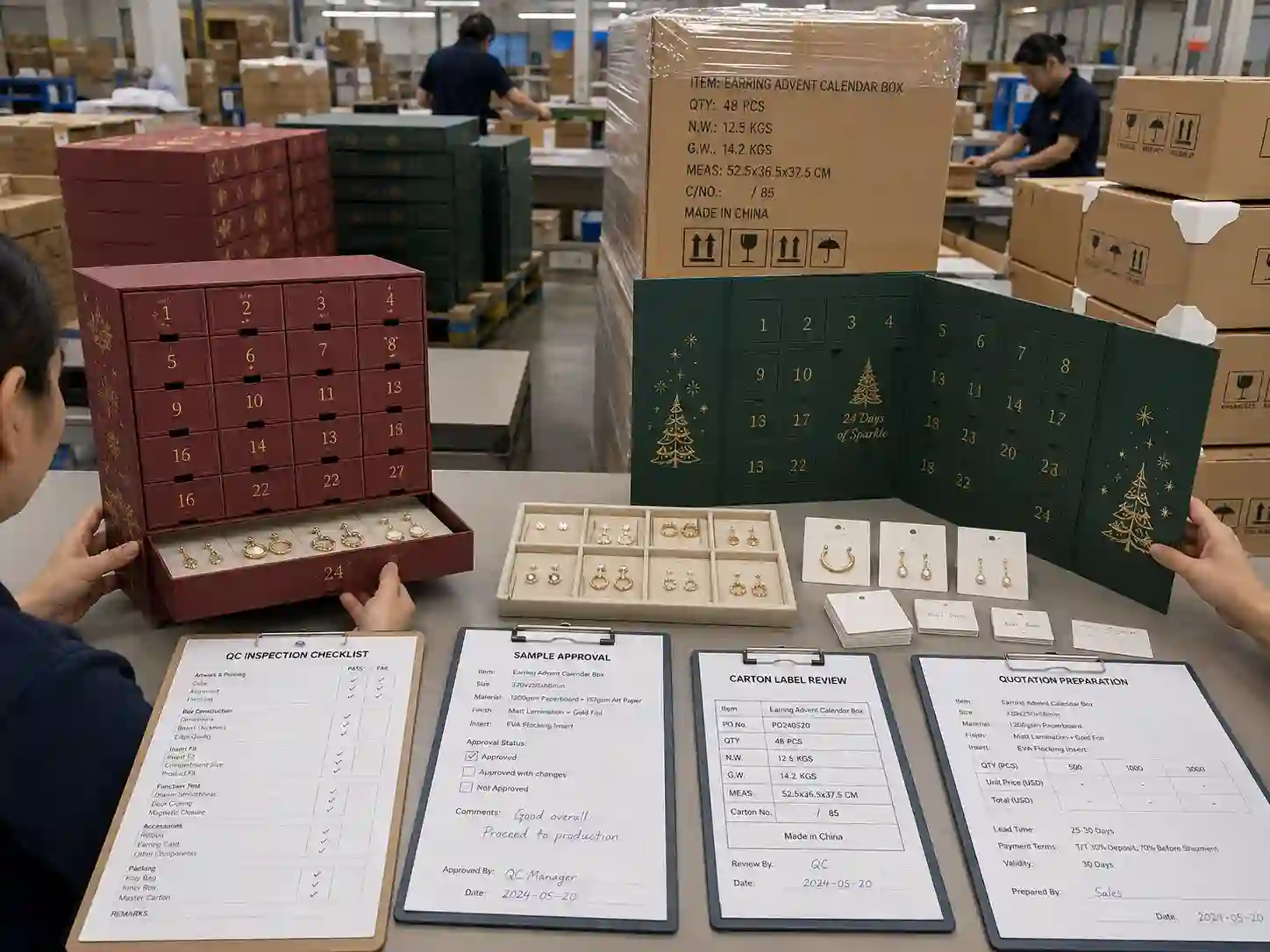
QC checklist for earring advent calendar boxes
- Compare bulk production with the approved pre-production sample.
- Check finished size, structure stability, and box squareness.
- Open and close drawers, doors, or book-style panels repeatedly to test function.
- Confirm earring card fit, stud hole position, hoop clearance, and drop earring compartment depth.
- Inspect CMYK and Pantone color consistency across panels and batches.
- Check foil stamping, embossing, spot UV, matte lamination, and gloss lamination for registration defects.
- Review glue marks, paper wrapping edges, exposed greyboard, dust, scratches, and crushed corners.
- Confirm unit packing, export carton strength, carton label, pallet plan, and shipping marks.
QC tip: For small jewelry calendars, inspectors should shake-test selected finished units lightly to confirm the earrings and cards do not move into adjacent compartments.
How should export packing be planned for seasonal launches?
Export packing should protect the finished calendar during factory handling, ocean or air shipment, warehouse storage, and final distribution. Packing decisions should be confirmed during sampling because they affect carton size, freight cost, damage rate, and fulfillment efficiency.
Common export packing details include individual polybag or paper wrap, inner carton, master export carton, corner protectors, pallet wrapping, carton labels, and shipping marks. Rigid earring calendars are often packed assembled, which improves presentation but increases carton volume. Folding carton designs may support flat packing, but the buyer must confirm who will assemble the calendars and insert the earrings.
For seasonal campaigns, late delivery can be more damaging than a small unit cost increase. Purchasing teams should build time for sample revisions, artwork approval, material purchasing, mass production, final inspection, export packing, customs documents, and transportation. When comparing suppliers, ask for a realistic production calendar instead of only a short estimated lead time.
Factory tip: carton design is part of product design
A premium earring calendar can be damaged by weak master cartons, poor stacking, or unclear shipping marks. Ask the factory to confirm carton size, gross weight, packing quantity, pallet height, and whether corner protectors or extra cushioning are needed for assembled rigid boxes.
How should buyers compare earring calendar suppliers?
Buyers should compare suppliers by packaging engineering ability, sample accuracy, communication clarity, quotation detail, QC process, export packing experience, and delivery planning. The lowest unit price is not always the lowest landed cost if the supplier cannot control fit, color, assembly, and shipping damage.
A capable supplier should ask practical questions about earring size, card format, compartment count, artwork layers, retail channel, e-commerce packing, target MOQ, shipping destination, and launch timeline. If a supplier quotes without confirming the insert, material, size, packing, and finishing, the quotation may not be comparable with other offers.
As a custom advent calendar boxes manufacturer, Giftpackpro focuses on custom seasonal paper packaging for overseas buyers who need structure development, sample review, production coordination, and export packing support. Buyers can also review the Giftpackpro packaging factory background when evaluating supplier fit for custom packaging projects.
Supplier comparison checklist
- Can the supplier explain structure differences instead of only sending a price?
- Can they create or adjust a dieline based on actual earring and card dimensions?
- Do they provide blank samples, printed samples, and pre-production sample support?
- Can they test paper insert, PET tray, EVA insert, foam, or molded pulp options?
- Do they check artwork layers for CMYK, Pantone, foil stamping, embossing, and spot UV?
- Do they explain MOQ, tooling cost, sample cost, production lead time, and packing method clearly?
- Can they support export cartons, pallet plans, shipping marks, and carton label review?
What information should buyers prepare before requesting a quotation?
Buyers should prepare product dimensions, box style preference, quantity, insert requirement, artwork status, finishing request, packing method, shipping destination, and target delivery date. The more complete the RFQ, the more accurate the quotation.
For earring advent calendar boxes, quotation accuracy depends on small details. A 24-compartment rigid drawer box with carded earrings and EVA insert is not the same project as a 12-compartment folding carton with paper insert. Buyers should avoid sending only a reference image and asking for a unit price, because the factory cannot confirm material, labor, tooling, or packing requirements from an image alone.
RFQ preparation list for Giftpackpro
- Calendar format: 12-day, 24-day, 25-day, or custom compartment count.
- Earring assortment: studs, hoops, huggies, drop earrings, charms, carded pairs, pouches, or mixed sets.
- Product dimensions: largest and smallest earring size, earring card size, pouch size, and total weight per unit.
- Preferred structure: rigid drawer box, door-opening box, book-style box, folding carton, or open to factory suggestion.
- Insert direction: paper insert, PET tray, EVA insert, foam insert, molded pulp insert, or supplier recommendation.
- Material preference: paperboard, greyboard, specialty paper, recycled paper direction, or required board thickness.
- Printing and finishing: CMYK, Pantone, matte lamination, gloss lamination, foil stamping, embossing, spot UV, or other effects.
- Artwork status: final dieline artwork, design concept, reference image, or need for dieline support.
- Order quantity and versions: MOQ target, total quantity, language versions, SKU variations, or retailer-specific labels.
- Packing and logistics: assembled packing, flat packing, export carton needs, pallet requirements, shipping marks, destination country, and target arrival date.
Buyers can read more advent calendar box buying guides or request a custom quote when the project information is ready for review.
What common mistakes should buyers avoid?
Most problems come from choosing the structure before confirming product fit, approving artwork before checking the dieline, or comparing supplier prices without matching specifications. These mistakes can cause sample delays, bulk defects, higher freight cost, or missed seasonal launch dates.
Mistake 1: using one compartment size for all earrings
Studs, hoops, huggies, and drop earrings do not need the same cavity shape. A single cavity size may waste space for small studs and fail to protect long drop earrings. Mixed assortments should be mapped compartment by compartment.
Mistake 2: ignoring earring card thickness
Earring cards affect insert slot width, drawer clearance, and compartment depth. If the buyer changes card thickness after sample approval, the insert may need to be revised.
Mistake 3: over-designing finishing effects
Foil stamping, embossing, spot UV, and textured paper can improve retail presentation, but every extra process adds cost and control points. Seasonal campaigns with tight timelines should prioritize the effects that buyers will notice most.
Mistake 4: approving samples without packing tests
A sample that looks good on a desk may still fail in export packing. Buyers should review unit packing, carton direction, carton quantity, and basic movement testing before bulk shipment.
Mistake 5: comparing quotations without the same specification
One supplier may quote a rigid greyboard box with EVA insert and assembled packing, while another quotes a folding carton with paper insert and flat packing. These are different products. Always compare size, material, insert, printing, finishing, packing, MOQ, sample terms, and lead time.
FAQ: Earring advent calendar boxes for B2B seasonal campaigns
What is the best structure for earring advent calendar boxes?
The best structure depends on channel and budget. Rigid drawer boxes and door-opening boxes are suitable for premium retail and e-commerce gift sets, while folding carton calendars are better for high-volume promotional campaigns where cost and freight efficiency are important.
Which insert is best for earrings?
Paper inserts work well for carded earrings and cost-controlled programs. EVA, foam, and PET trays provide stronger positioning for small or mixed earring types. Molded pulp may be considered when the buyer wants a paper-based insert direction, but it requires careful fit testing.
How early should buyers start development before a seasonal launch?
Buyers should start early enough to allow dieline design, blank sample review, printed sample approval, material purchasing, mass production, final QC, export packing, and international shipping. Seasonal packaging should not be planned only around production days; sample revisions and logistics time are often the risk points.
What affects MOQ for custom earring calendar packaging?
MOQ is affected by material purchasing, printing setup, tooling, finishing process, insert production, and assembly labor. Custom rigid boxes, molded trays, special paper, Pantone printing, foil stamping, and multiple versions may increase MOQ or setup cost.
Can buyers use the same box for retail and e-commerce?
Yes, but the packing plan may need adjustment. Retail packaging focuses on shelf display and barcode placement, while e-commerce packaging needs stronger protection against movement, compression, and parcel handling.
What should be approved before mass production?
Buyers should approve the pre-production sample, dieline, artwork, color reference, material specification, insert fit, finishing effect, unit packing, export carton plan, shipping marks, and production schedule before mass production begins.
Ready to develop earring advent calendar boxes for your campaign?
To move from concept to quotation, prepare your earring size range, card dimensions, compartment count, preferred structure, insert direction, artwork status, order quantity, packing method, destination, and target delivery date. Giftpackpro can review these details and suggest a practical structure, sample route, and quotation plan for earring advent calendar boxes used in retail, e-commerce, wholesale, and seasonal promotional campaigns.
For faster development, send clear product photos, earring card drawings, reference box images, and any retailer or shipping requirements when you request a custom quote. A complete RFQ helps the factory quote the correct material, insert, printing, finishing, MOQ, lead time, QC standard, and export packing method from the beginning.