How to Design Cosmetic Advent Calendar Boxes for Seasonal Campaigns
Seasonal campaigns are planned months before products reach retail shelves, especially when buyers need custom structures, printed artwork, inserts, samples, bulk production, and export packing. For brands, wholesalers, gift companies, and purchasing teams, cosmetic advent calendar boxes are not only visual packaging; they are a product launch tool that must protect small items, support a premium unboxing experience, and stay realistic for mass production.
This guide explains how to design advent calendar packaging for cosmetics and related seasonal gift categories, including skincare, chocolate, candles, jewelry, toys, tea, coffee, beverages, and mixed gift sets. It focuses on practical B2B decisions: box structure, insert design, artwork preparation, sample approval, MOQ planning, lead time control, QC checks, export packing, and quotation details.
1. Start with the Product Category and Retail Plan
The best structure for cosmetic advent calendar boxes depends on what will be packed inside. A 24-piece skincare calendar needs different drawer strength, insert depth, and carton protection than a lightweight tea sachet calendar or a premium jewelry gift set.
Before asking a supplier for pricing, define the basic campaign plan:
- Product category and number of items
- Retail channel: department store, e-commerce, supermarket, beauty store, club store, or gift wholesaler
- Target unit price and expected packaging budget
- Required opening style: drawers, doors, book-style, rigid box, foldable rigid box, or sleeve structure
- Quantity range for sampling, pilot order, and bulk production
- Shipping method and destination market
If your team is still comparing structures, reviewing custom advent calendar box products can help you match product size, opening experience, and production budget before moving into artwork and sampling.
2. Choose the Right Structure for Seasonal Applications
Structure is the first cost and risk control point. For cosmetic advent calendar boxes, the box must hold small bottles, tubes, jars, sachets, mini palettes, or mixed cosmetic samples without collapsing during handling. For heavier gift categories, such as candles or beverages, the internal support system becomes even more important.
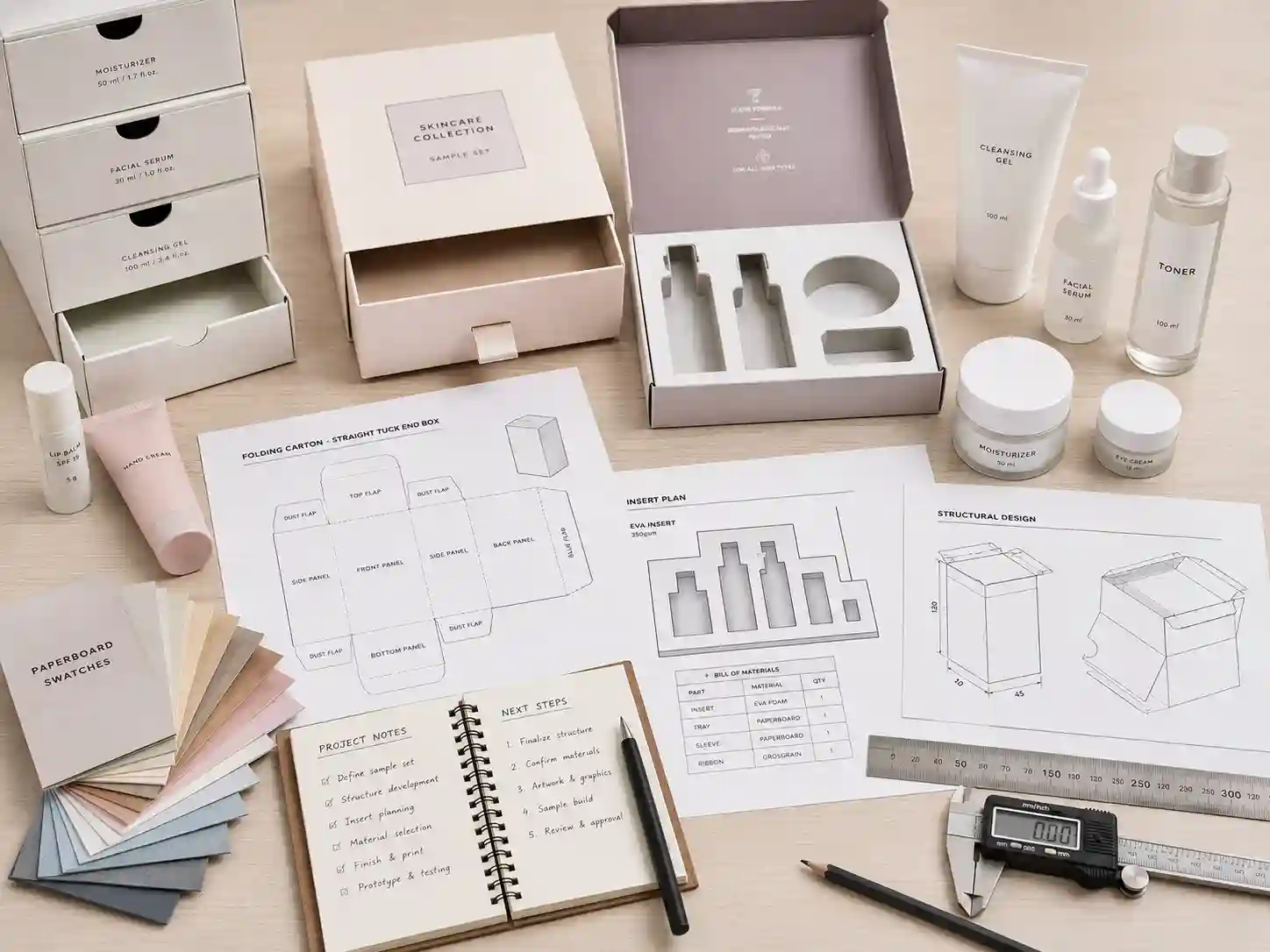
Drawer Advent Calendar Boxes
Drawer structures are popular for beauty, skincare, jewelry, tea, and premium gifts because each item can be separated and opened individually. They support a high-end retail look but require accurate drawer sizing, stable outer casing, and clean printing alignment.
Door-Opening Advent Calendar Boxes
Door-style calendars are often used for chocolate, toys, coffee capsules, small gifts, and promotional samples. They can be cost-effective for larger quantities, but the paperboard thickness, perforation strength, and inner tray fit must be tested carefully.
Book-Style and Rigid Gift Structures
Book-style or rigid structures are suitable for premium cosmetic sets, jewelry, fragrance samples, candles, and luxury gift campaigns. They offer strong shelf presence, but buyers should confirm carton size, packing weight, pallet loading, and shipping cost early.
Foldable Rigid Structures
Foldable rigid advent calendar boxes can reduce shipping volume compared with fully assembled rigid boxes. This option is useful when overseas buyers need a premium look but also care about container loading efficiency and export packing costs.
3. Match Inserts to the Product Type
Inserts decide whether the product sits neatly inside the box. A beautiful printed calendar can still fail if bottles shake, candles rub against the paper surface, or food samples move during shipment.
| Product Category | Common Insert Option | Main Design Focus | Quote Preparation Tip |
|---|---|---|---|
| Cosmetics and skincare | Paperboard insert, EVA insert, molded pulp, or PET tray | Protect small bottles, jars, tubes, and sample sets | Provide product dimensions, weight, and bottle shape for each item |
| Chocolate and food gifts | Food-safe paper tray, blister tray, or compartment insert | Clean separation, food-contact suitability, and stable compartments | Confirm whether direct food contact is required before sampling |
| Candles | Thick paperboard insert, molded pulp, or reinforced divider | Weight support, jar protection, and shock resistance | Share filled candle weight and jar diameter |
| Jewelry | Velvet-style pad, paper insert, or small drawer insert | Premium presentation and anti-scratch protection | Confirm whether the insert must hold rings, bracelets, necklaces, or mixed items |
| Toys and small gifts | Paperboard tray, compartment divider, or blister tray | Item visibility, child-safe edges, and easy packing | Provide the largest and smallest item sizes |
| Tea, coffee, and beverages | Paperboard slots, tube holders, capsule trays, or reinforced dividers | Moisture awareness, product separation, and carton strength | Share packaging type: sachet, capsule, bottle, tin, tube, or pouch |
4. Food, Chocolate, Tea, Coffee, and Beverage Calendar Planning
For chocolate, tea, coffee, snacks, and beverage gift sets, the design conversation should include food-contact requirements. Not every printed paper surface should touch unpacked food directly. If products are individually wrapped, the box design is simpler. If direct food contact is required, the material and coating must be reviewed more carefully.
Buyers can refer to official food-contact guidance such as the U.S. FDA’s information on food contact substances when preparing compliance questions for suppliers, importers, or internal quality teams.
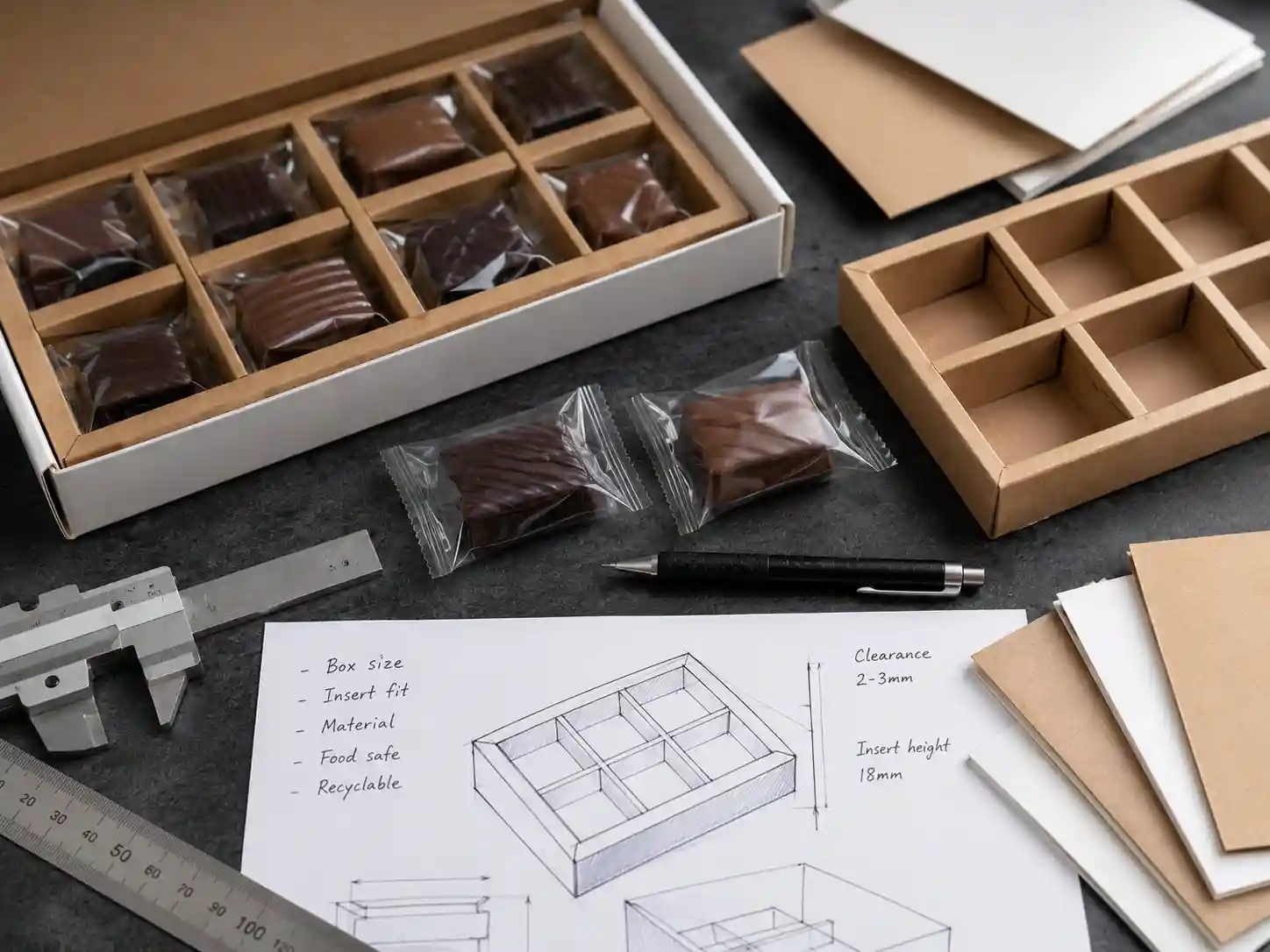
For food-related seasonal packaging, prepare these details before requesting a sample:
- Whether the food touches the insert or is individually wrapped
- Product temperature and storage requirements
- Product weight per compartment
- Any market-specific labeling or recycling requirements
- Whether moisture resistance, grease resistance, or barrier material is needed
5. Artwork and Branding Requirements for Seasonal Campaigns
Artwork for cosmetic advent calendar boxes needs more than attractive graphics. Seasonal packaging often has many small panels, drawer fronts, numbers, icons, product names, and legal copy. If the dieline is not prepared correctly, printing mistakes can become expensive during bulk production.
A practical artwork checklist includes:
- Final dieline with bleed, safe zone, cut line, fold line, and glue area
- CMYK or Pantone color references
- Logo files in vector format
- Clear numbering order for 12-day, 24-day, or custom layouts
- Material preference, such as greyboard, white cardboard, kraft board, or corrugated board
- Finishing options, such as matte lamination, gloss lamination, foil stamping, embossing, debossing, or spot UV
- Barcode, warning copy, recycling marks, and importer details when needed
If your team needs support from structure to print-ready artwork, custom advent calendar box services can be used as a reference for the typical custom development process.
6. Plan Samples Before Confirming Bulk Production
Sampling is where most design problems should be found. For seasonal campaigns, a sample should not only look good in photos; it must be assembled, opened, packed, handled, and shipped in a realistic way.
Common sample stages include:
White Sample
A white sample checks the structure, size, drawer movement, insert fit, and product placement before printing. It is useful when the buyer is still adjusting the number of compartments or product mix.
Printed Sample
A printed sample checks color, artwork placement, finishing effect, logo size, numbering, and retail presentation. This is especially important for premium cosmetic and gift campaigns.
Pre-Production Sample
A pre-production sample should match the confirmed material, printing, finishing, insert, and packing method. It becomes the reference for bulk production and QC inspection.
Giftpackpro usually recommends confirming the product list and insert layout before final artwork, because even small changes in bottle height or candle diameter can affect drawer depth, insert tooling, and carton size.
7. MOQ, Lead Time, and Bulk Production Planning
MOQ for cosmetic advent calendar boxes depends on structure, material, printing, finishing, insert type, and assembly method. A simple folding carton calendar may have a different MOQ than a rigid drawer calendar with foil stamping and custom inserts.
For quotation planning, separate the order into three stages:
- Sample order: used to confirm structure, artwork, insert, and packing method.
- Pilot order: useful when launching a new category, testing retail response, or confirming assembly workflow.
- Bulk order: planned according to seasonal launch date, shipment schedule, and warehouse receiving deadline.
Buyers should avoid leaving custom advent calendar projects too close to the selling season. Printed paper packaging may involve dieline engineering, sample revisions, material purchasing, printing, surface finishing, die-cutting, hand assembly, packing, QC, and export logistics. For more planning topics, see our advent calendar box buying guides.
8. Sustainability and Material Selection
Many buyers now ask for recyclable paperboard, reduced plastic inserts, FSC-certified paper options, or more compact packing methods. Sustainability requirements should be discussed at the beginning, not after the design is finished.
When FSC material is required, buyers can check the official Forest Stewardship Council website for general information about FSC certification and responsible sourcing.
For a B2B project, sustainability planning may include:
- Paper-based inserts instead of plastic trays where suitable
- Foldable rigid structures to reduce shipping volume
- Right-sized cartons to improve container loading
- Clear recycling marks based on the destination market
- Material certificates requested before bulk production
As a custom advent calendar boxes manufacturer, Giftpackpro can help buyers compare structure, material, insert, and packing options based on product weight, retail price point, and shipping plan.
9. QC, Export Packing, and Shipment Readiness
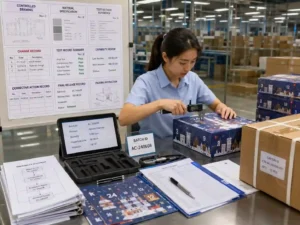
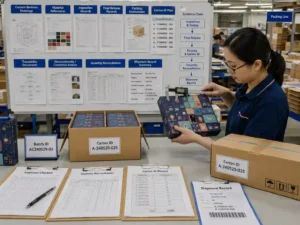
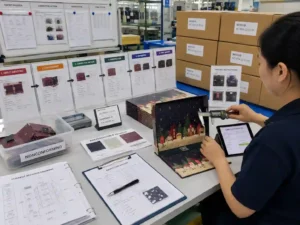
Quality control for seasonal packaging should be practical and measurable. For cosmetic advent calendar boxes, the inspection should cover structure, printing, finishing, drawer movement, insert fit, product loading, carton strength, and export packing condition.
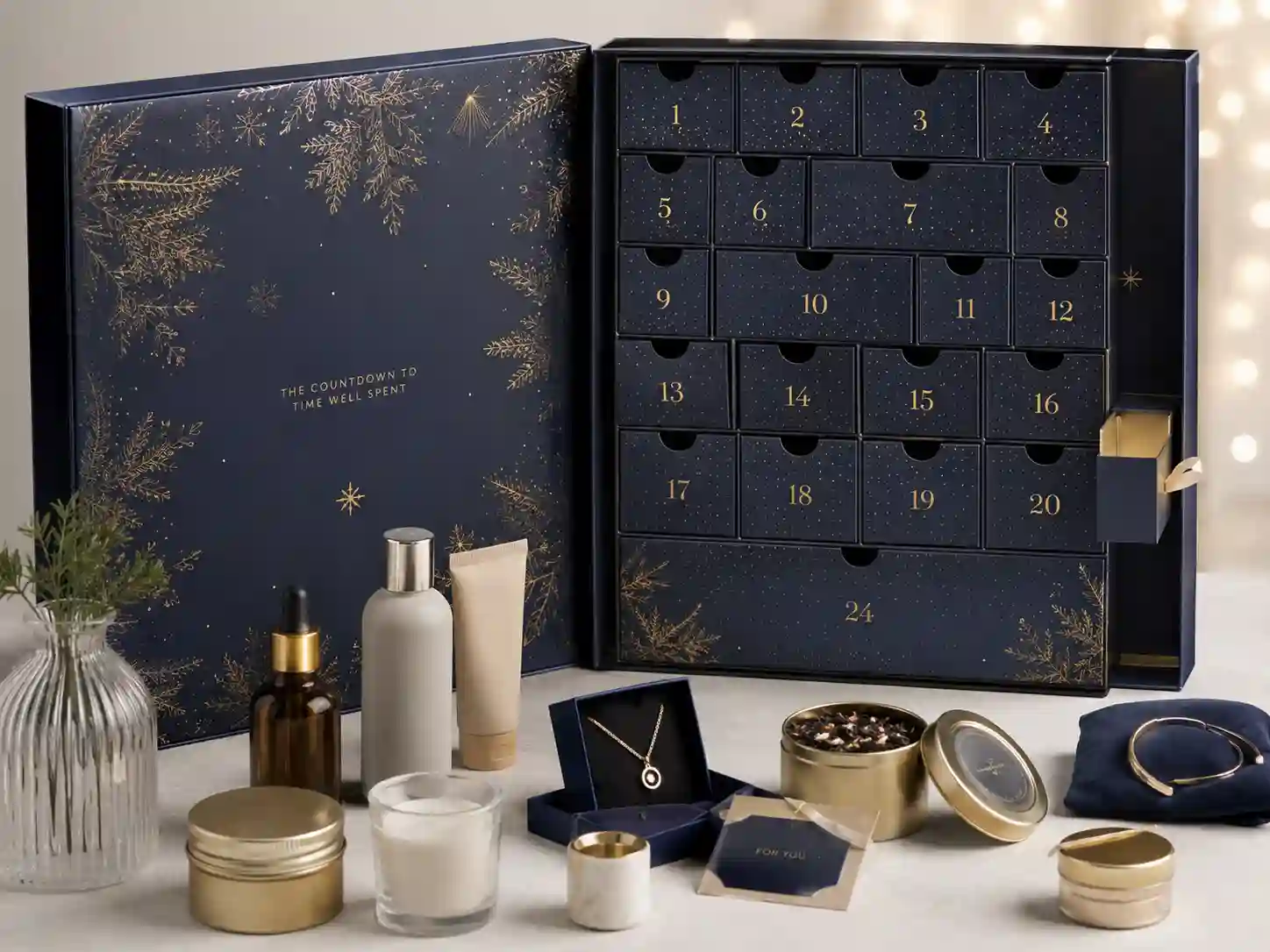
Key QC Points
- Box dimensions match the approved sample
- Drawer or door opening is smooth and consistent
- Insert holds each product securely
- Color and finishing match the approved printed sample
- No major scratches, glue marks, dents, stains, or loose parts
- Barcode, number sequence, and product copy are correct
- Inner carton and master carton labels match the packing list
- Export cartons are suitable for stacking, handling, and transport
For overseas buyers, export packing is not a small detail. A premium retail box can lose value if cartons are too weak, products move inside the calendar, or pallet loading is not planned. Buyers should confirm inner packing, master carton size, carton weight, pallet requirements, and container loading method before shipment.
10. Quote Preparation Checklist for Buyers
A clear quote request saves time and reduces repeated revisions. When contacting request a custom quote, prepare as much of the following information as possible:
- Target product category: cosmetics, chocolate, candles, jewelry, toys, tea, coffee, beverages, or gifts
- Box structure preference or reference image
- Number of compartments, drawers, or doors
- Product dimensions and weight for each item
- Expected order quantity and delivery schedule
- Material preference and sustainability requirements
- Printing and finishing requirements
- Insert type preference
- Destination country and shipping method
- Packing requirements, carton marks, pallet requirements, or warehouse rules
If you do not yet know the exact structure, start with the product list and target retail channel. A packaging factory can then suggest whether a drawer calendar, door calendar, book-style box, folding carton, or rigid gift structure is more suitable.
11. Practical Design Examples by Industry
Cosmetics and Skincare
A skincare brand may need 24 small drawers for serums, creams, masks, and mini bottles. The main focus is insert accuracy, premium printing, clean drawer movement, and strong outer casing.
Chocolate and Food Gifts
A chocolate calendar may use door openings with food-safe compartments. The key points are food-contact planning, compartment size, and stable packing during delivery.
Candles and Home Fragrance
Candle calendars need stronger support because glass jars and wax-filled containers add weight. Reinforced inserts, thicker board, and stronger export cartons are usually required.
Jewelry and Accessories
Jewelry calendars often require a premium gift look, soft-touch finishing, foil stamping, and small protective inserts. Drawer alignment and presentation quality are important.
Toys and Promotional Gifts
Toy calendars require flexible compartment sizes and easy packing. Buyers should provide the largest item size early to avoid redesigning the whole layout later.
Tea, Coffee, and Beverage Gifts
Tea sachets, coffee capsules, mini tins, and small beverage samples need separate slots and moisture-aware packing. The structure should balance shelf appeal and shipping efficiency.
Conclusion
Designing cosmetic advent calendar boxes for seasonal campaigns requires more than choosing a nice graphic style. Buyers should confirm product category, structure, inserts, artwork, sample stages, MOQ, lead time, QC standards, and export packing before bulk production.
For overseas brands, wholesalers, gift companies, retail buyers, and purchasing teams, the safest workflow is to start with product dimensions and campaign goals, then move step by step through structure design, insert planning, artwork confirmation, sampling, production, inspection, and shipment. Working with an experienced Giftpackpro packaging factory can make the process clearer from early concept to final export packing.