Flat-Pack Advent Calendar Boxes: Structure, Uses, and Buyer Tips
Flat pack advent calendar boxes are designed to reduce shipping volume, support easier storage, and give brands more flexibility before final assembly. For B2B buyers, the key is not only the outside artwork but also the folding structure, insert fit, assembly control, and quality inspection before mass production.
This guide explains how flat-pack structures work, where they are commonly used, what production teams should check, and how buyers can prepare a clearer quotation request for seasonal packaging projects.
What Are Flat-Pack Advent Calendar Boxes?
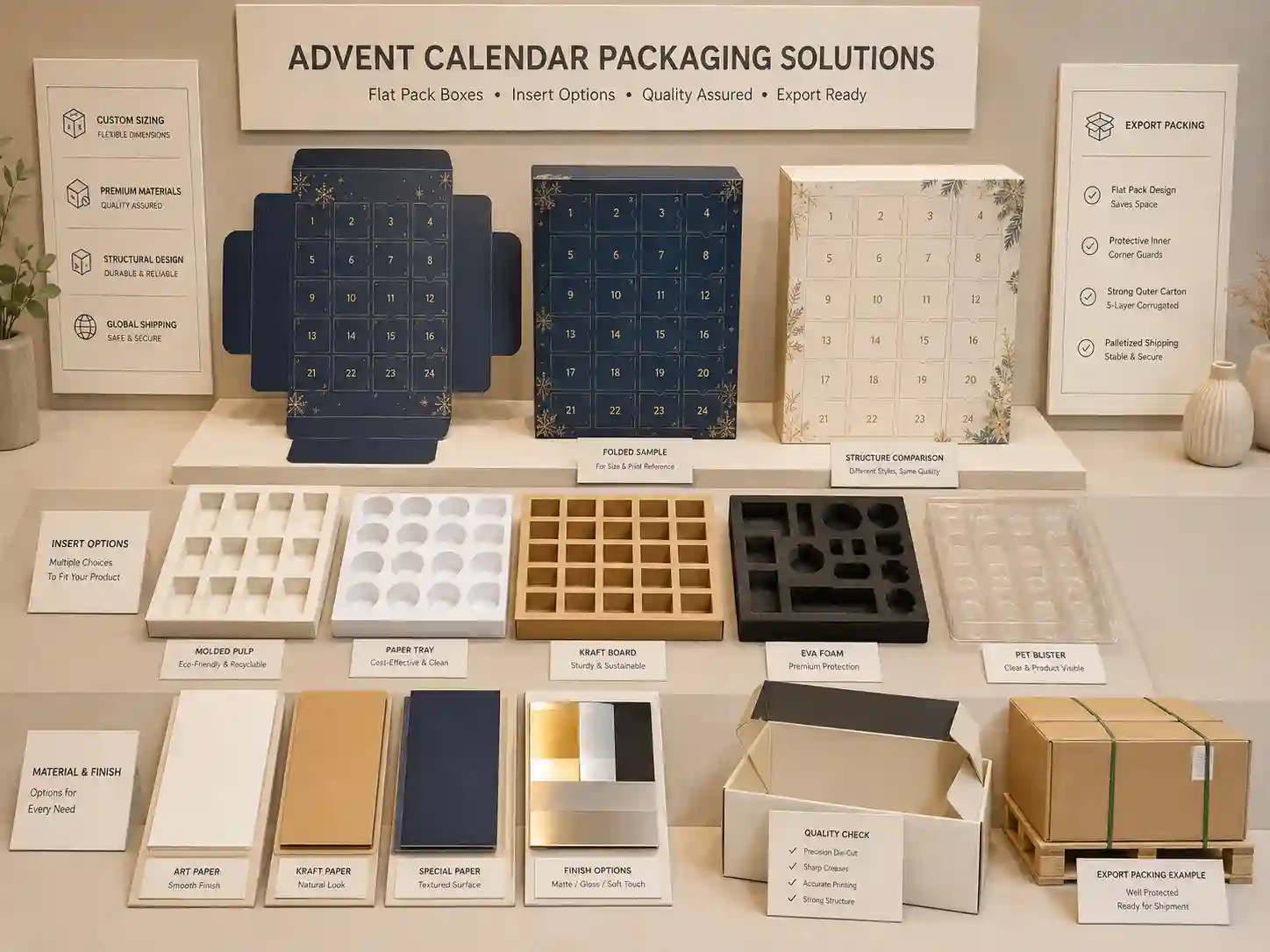
Flat-pack advent calendar boxes are supplied in a folded or semi-flat format before final setup. Depending on the structure, the box may include outer panels, drawer sleeves, compartment trays, paperboard inserts, folding lines, locking tabs, and printed doors.
This format is often selected by brands, wholesalers, gift companies, and retail buyers that need efficient export packing, lower warehouse pressure, or local assembly after receiving goods. A custom advent calendar boxes manufacturer can help adjust the structure based on product size, weight, display method, and packing plan.
Common Flat-Pack Structures
Flat-pack designs are not all the same. Some projects use simple folding cartons with printed countdown doors. Others use rigid-style flat components, drawer systems, or paperboard trays that need controlled assembly before retail display.

| Structure Type | Common Use | Buyer Checkpoint |
|---|---|---|
| Foldable paperboard calendar box | Lightweight gift items, stationery, small toys, tea bags, candy, or promotional samples | Check folding lines, door opening strength, and carton compression after packing |
| Flat-pack drawer calendar box | Cosmetics, jewelry, small accessories, candles, or premium seasonal gift sets | Check drawer sliding, sleeve alignment, pull-tab position, and inner tray stability |
| Flat components with separate inserts | Projects with mixed product sizes or fragile items | Check insert tolerance, product movement, and assembly sequence |
| Display-ready flat-pack kit | Retail campaigns, brand launches, and store promotional packs | Check final standing effect, graphic alignment, and packing instruction clarity |
Typical Uses for Flat Pack Advent Calendar Boxes
Flat pack advent calendar boxes are suitable for B2B projects where packaging volume, cost control, and seasonal timing matter. They are often used for cosmetics, skincare samples, chocolate, tea, coffee, candles, jewelry, toys, stationery, and promotional gift sets.
For e-commerce gift sets, the flat-pack format can support compact warehousing before assembly. For retail campaigns, it allows buyers to plan packaging, product loading, and store launch timing separately. For wholesalers, it may help reduce storage pressure when multiple seasonal SKUs are prepared at the same time.
Buyers comparing options can review existing custom advent calendar box products to understand drawer layouts, compartment sizes, window options, printed doors, and insert styles before starting a new project.
Production Steps for Flat-Pack Advent Calendar Boxes
Production control starts before bulk manufacturing. A good flat-pack project should move from structure confirmation to artwork proofing, sample approval, material preparation, printing, die-cutting, folding, insert production, inspection, and export packing.
1. Structure and Dieline Confirmation
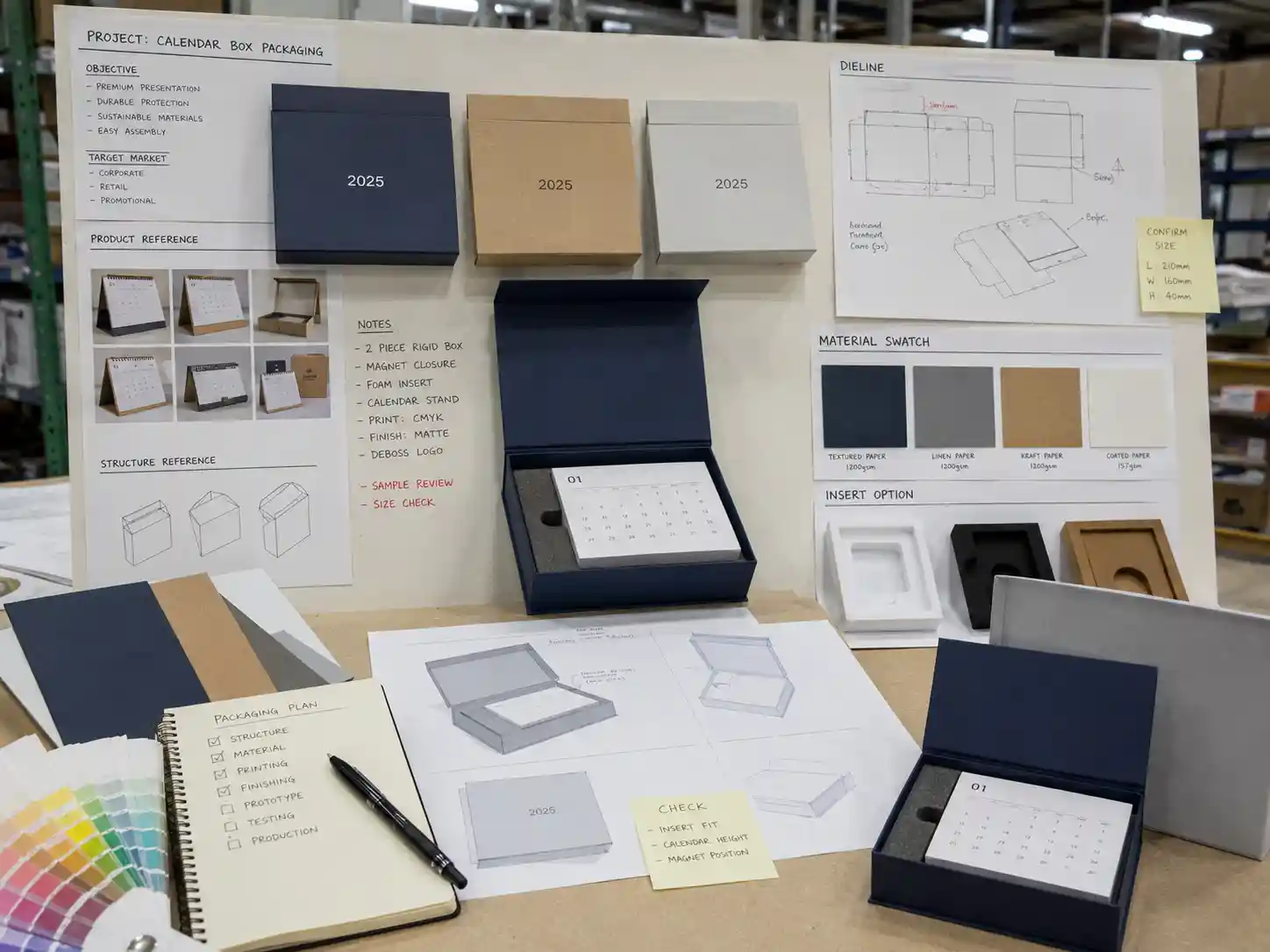
The first step is to confirm the box size, product loading method, opening style, and flat-pack assembly method. The dieline should show folding lines, glue areas, locking tabs, inserts, door cuts, and any assembly marks.
At this stage, buyers should provide product dimensions, product weight, quantity per box, retail display requirements, and whether the box will be assembled by the factory, the buyer, a warehouse team, or a third-party packing center.
2. Material and Insert Planning
Material choice affects durability, folding performance, print quality, and final cost. Paperboard, corrugated board, greyboard, and specialty paper may be used depending on the structure. Inserts can be made from paperboard, corrugated board, molded pulp, EVA, foam, or other materials depending on product protection needs.
For food, cosmetics, or children’s products, buyers should confirm the relevant packaging requirements for their market. For sustainability-sensitive projects, buyers may also review official information from FSC when discussing certified paper materials.
3. Sample Making and Assembly Testing
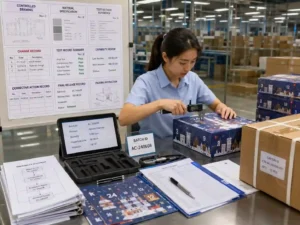
Before mass production, a blank sample can test structure and product fit. A printed sample can confirm color, finishing, artwork position, door cuts, and retail appearance. For flat-pack calendar boxes, assembly testing is especially important because small tolerance issues can become bigger problems during bulk setup.
Giftpackpro usually recommends that buyers check whether the flat components are easy to fold, whether the locking tabs hold properly, whether the insert stays in place, and whether the final box can stand or display correctly after loading products.
Quality Control Points During Bulk Production
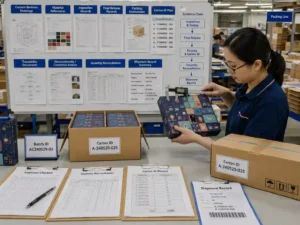
Quality control for flat pack advent calendar boxes should not wait until the finished carton stage. The structure, printing, cutting, folding, inserts, and packing method all need inspection during production.
Printing and Color Checks
Printed seasonal packaging often includes large color areas, countdown numbers, campaign graphics, and product category labels. The factory should check CMYK or Pantone color consistency, coating effect, registration, text clarity, and finishing position.
If the project uses foil stamping, spot UV, embossing, debossing, matte lamination, or soft-touch lamination, buyers should confirm these effects on a sample before bulk production. For quality management systems, buyers may also refer to official ISO 9001 information when discussing supplier quality processes.
Die-Cutting and Folding Accuracy
Flat-pack boxes depend heavily on accurate die-cutting. If the folding line is too deep, the board may crack. If it is too shallow, the box may be hard to assemble. If door cuts are not clean, the calendar opening experience may feel rough or inconsistent.
Key inspection points include folding line depth, tab position, glue area accuracy, hole or window position, perforation strength, and whether all components match the approved sample.
Insert Fit and Product Movement
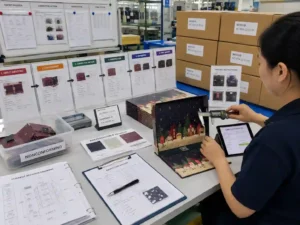
Insert fit is one of the most important details in advent calendar packaging. Products should not move too much during transport, but the insert should not be so tight that assembly becomes slow or product loading damages the packaging.
For mixed-size gift sets, each compartment should be checked against actual products or accurate product dummies. Buyers should provide final product dimensions early, especially for bottles, jars, candles, chocolate pieces, jewelry boxes, sachets, and irregular promotional items.
Assembly Control
Flat-pack assembly should be tested with a practical workflow. The team should check how long each box takes to assemble, which steps are easy to confuse, whether instruction sheets are needed, and whether local warehouse teams can repeat the setup consistently.
If the buyer plans to receive flat components and assemble locally, the supplier should provide clear packing sequence, component labels, and setup guidance. This is a useful topic to discuss when reviewing custom advent calendar box services.
Durability and Export Packing Checks
Seasonal packaging often moves through several stages: factory packing, export shipping, warehouse storage, product loading, retail distribution, and final display. Flat-pack calendar boxes should be checked for board strength, corner protection, surface rubbing, moisture sensitivity, and carton stacking.
For export projects, buyers should confirm master carton size, carton weight, packing quantity per carton, pallet plan, barcode or shipping marks, and whether extra protection is required for printed surfaces or delicate finishes.
Quote Preparation Advice for B2B Buyers
A clear quotation request helps reduce repeated emails and avoids inaccurate pricing. When asking for a quote, buyers should prepare both product information and packaging expectations.
Information to Prepare Before Requesting a Quote
For a faster and more accurate quotation, include the target box size, product dimensions, product weight, number of compartments, artwork status, quantity, required sample type, target delivery date, packing method, and destination market.
If the structure is not decided, share product photos, reference packaging, retail channel, and budget range. Giftpackpro can then recommend whether a foldable paperboard structure, drawer structure, or semi-flat rigid-style structure is more suitable.
Buyers can also review advent calendar box buying guides to compare structure options before sending project details.
Useful Quote Checklist
Before you request a custom quote, prepare the following details:
- Product category and target market
- Box style, opening method, and flat-pack requirement
- Outer box size and product compartment sizes
- Product weight and protection needs
- Material preference and sustainability requirements
- Printing method, finishing effect, and artwork status
- Sample requirement: blank sample, printed sample, or pre-production sample
- Estimated order quantity and expected shipment date
- Export carton, pallet, and labeling requirements
How Giftpackpro Supports Flat-Pack Calendar Box Projects
Giftpackpro works with B2B buyers on structure planning, sample development, printing review, insert matching, assembly testing, and export packing for seasonal paper gift packaging projects. The goal is to make the box practical for production, stable for transport, and clear for the buyer’s internal approval process.
For buyers comparing suppliers, it is useful to check whether the factory can discuss structure, inserts, artwork, QC, and packing details together. You can learn more about the Giftpackpro packaging factory or start with custom advent calendar box services if your project is still in the planning stage.
Flat pack advent calendar boxes can be a practical choice when the project needs lower storage volume, controlled assembly, and flexible seasonal production. The best result usually comes from early structure testing, accurate product dimensions, clear artwork files, and careful inspection before bulk shipment.