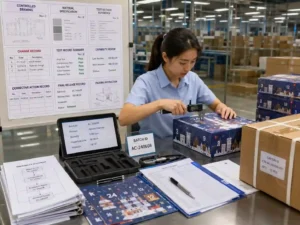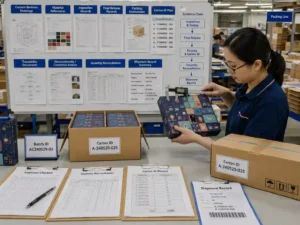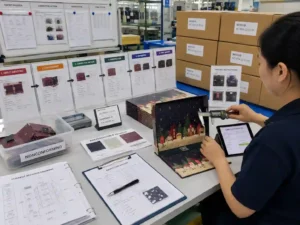
Door-opening advent calendar boxes are used by brands that need a seasonal gift package with multiple compartments, a clear countdown layout, and strong retail presentation. For B2B buyers, the main decision is not only the outside design, but also the structure, insert system, product weight, filling method, artwork control, and export packing plan.
This guide explains how door-opening advent calendar boxes work for cosmetics, chocolate, candles, jewelry, toys, tea, coffee, beverages, and gift sets. It also covers the details buyers should prepare before requesting samples or bulk quotations from a custom advent calendar boxes manufacturer.
What Are Door-Opening Advent Calendar Boxes?
Door-opening advent calendar boxes use individual paper doors, windows, or perforated panels to reveal products one by one. Each door usually covers a separate compartment, insert cavity, or small drawer-like space. This structure is popular when brands want a numbered countdown experience without using a full drawer system.
Compared with simple gift boxes, door-opening advent calendar boxes require more planning. The supplier must match the outer board thickness, inner tray, product cavity, door size, opening direction, and artwork position. If one product is heavier than the others, the insert and box wall must be reinforced to prevent deformation during shipping.
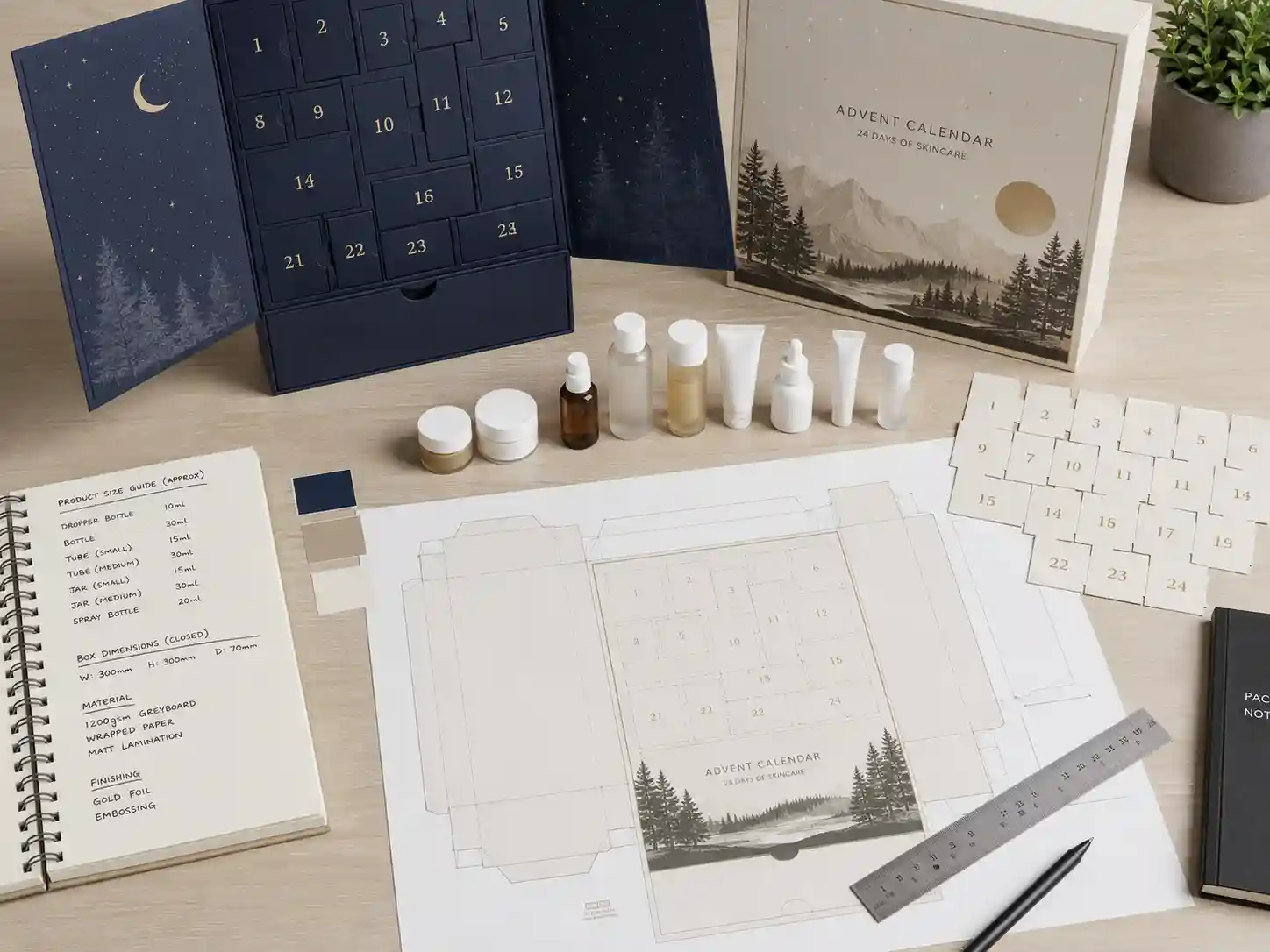
Common Structures for Door-Opening Advent Calendar Boxes
The structure depends on the product type, unit size, and packing process. A cosmetics set may need small cavities for bottles and tubes, while a chocolate calendar may require food-safe compartments and a cleaner insert layout.
Rigid Paperboard Door Calendar Box
A rigid paperboard structure gives the box a premium hand-feel and stronger shelf presence. It is often used for skincare, fragrance samples, jewelry, candles, and high-value gift sets. The outer shell can be wrapped with printed paper, specialty paper, or laminated artwork.
Folding Paperboard Door Calendar Box
A folding paperboard structure is lighter and can reduce shipping volume. It is suitable for medium-volume campaigns where the buyer needs a balance between cost, flat packing, and visual impact. This structure needs careful testing because repeated door opening can stress the crease lines.
Corrugated Door Calendar Box
Corrugated board is useful for heavier products, beverage samples, larger gift packs, and retail promotional kits. It can provide better compression strength, especially when the calendar box needs to be shipped in master cartons or displayed in retail stores for several weeks.
Product Category Applications
Door-opening advent calendar boxes are flexible, but each product category has different insert, artwork, and compliance concerns. Buyers should avoid using one universal structure for all product lines.
| Product Category | Recommended Structure | Key Buyer Checkpoints |
|---|---|---|
| Cosmetics and skincare | Rigid board with paperboard, EVA, or molded pulp insert | Bottle height, cap protection, leakage risk, product sequence, premium print finish |
| Chocolate and snacks | Food-safe paperboard structure with separated compartments | Food-contact requirements, cavity cleanliness, temperature risk, filling workflow |
| Candles | Rigid or corrugated structure with reinforced insert | Glass jar protection, fragrance oil residue, weight distribution, drop test |
| Jewelry | Rigid board with small compartments and soft insert options | Anti-scratch surface, small item visibility, door numbering, premium gift look |
| Toys and gifts | Folding paperboard or corrugated paperboard | Mixed product sizes, child-safe opening design, retail durability, carton packing |
| Tea, coffee, and beverages | Paperboard or corrugated structure based on product weight | Sachet or bottle size, aroma protection, insert strength, export carton layout |
Cosmetics and Skincare Packaging Uses
Cosmetic brands often use door-opening advent calendar boxes for mini bottles, ampoules, sheet masks, lip products, fragrance samples, and skincare trial sets. The main challenge is matching many small items with different heights and shapes.
For this category, buyers should provide product dimensions, weight, bottle material, cap shape, and any leakage concerns. A good insert plan should hold each item firmly without making the door difficult to open.
For premium cosmetic projects, common finishes include matte lamination, soft-touch lamination, foil stamping, embossing, debossing, spot UV, and metallic ink. Buyers can review more production options through custom advent calendar box services before confirming the artwork direction.
Chocolate, Tea, Coffee, and Beverage Uses
Food and beverage calendars need a different approach. The box may look similar from the outside, but the inside must support cleaner compartment planning, accurate cavity sizing, and practical filling. Chocolate, tea sachets, coffee capsules, mini bottles, and beverage samples all have different handling requirements.
When food contact is involved, buyers should discuss material selection, inner wrapping, and compliance responsibilities early. Official guidance such as the U.S. FDA information on food contact substances can help buyers understand why packaging material decisions should be handled before mass production.
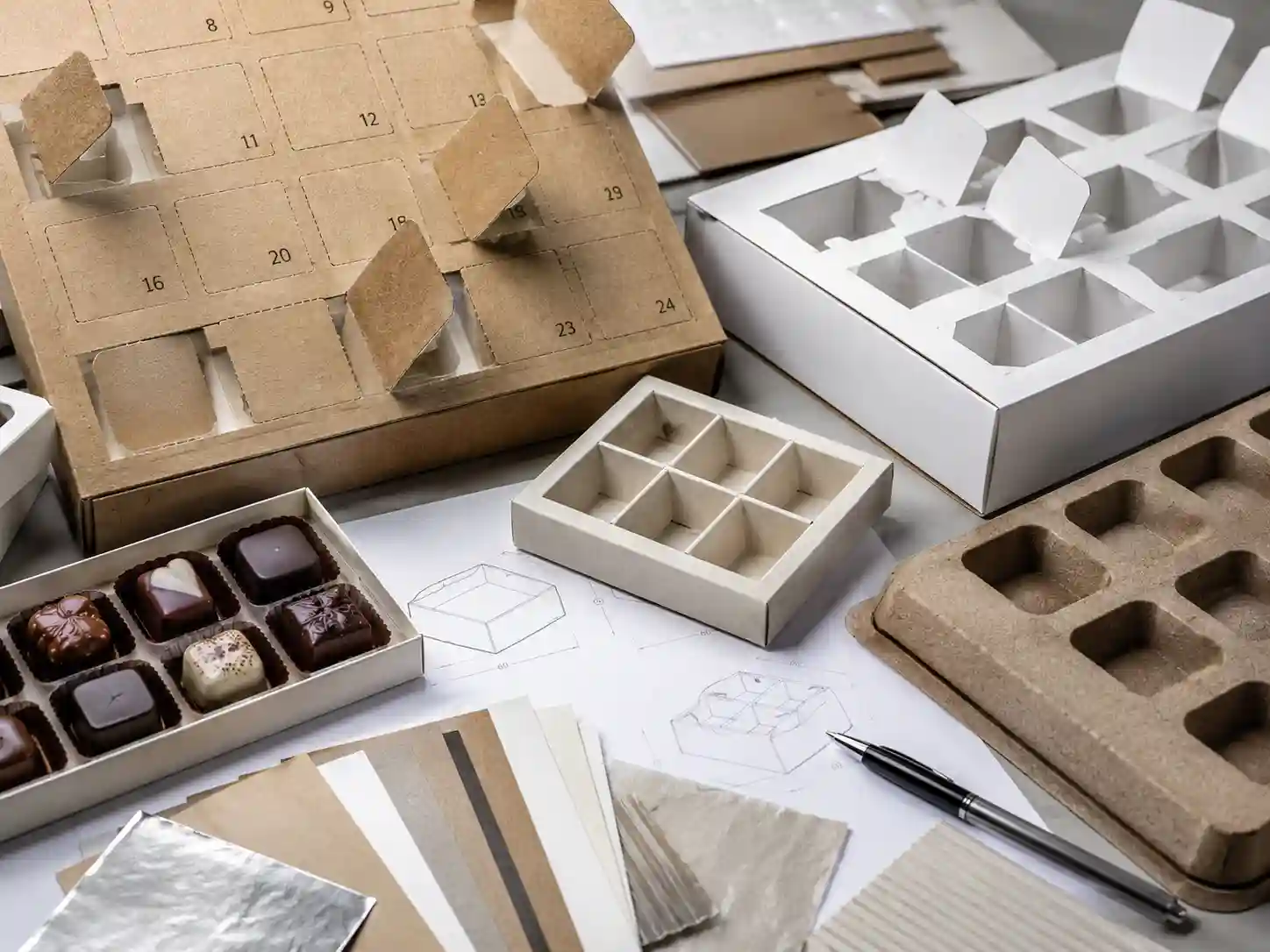
Customization Points Buyers Should Confirm
Door-opening advent calendar boxes are highly customized. A small change in product size, insert cavity, or door layout can affect the dieline, sample cost, lead time, and carton packing quantity.
Size and Door Layout
Buyers should confirm the number of doors, product sequence, box orientation, and whether the layout is 12-day, 24-day, 25-day, or a custom count. A 24-door layout with mixed product sizes requires more engineering than a layout where all cavities are identical.
Insert Material
Common insert options include paperboard inserts, corrugated inserts, molded pulp, EVA, foam, and plastic trays. Paper-based inserts are often preferred for recyclable packaging goals, while EVA or foam may be used when the product is fragile or premium.
For projects that need paper-based material claims, buyers can check the official Forest Stewardship Council website and then discuss suitable material options with the supplier. Certification requirements should be confirmed before sampling, not after bulk production starts.
Artwork and Numbering
Artwork for door-opening advent calendar boxes must align with each door cut line. Numbering, product icons, opening tabs, perforation marks, and inside graphics should be checked on the dieline before printing. Buyers should also decide whether the inside of each compartment needs printing or remains plain.
Giftpackpro can support artwork review, sample checking, and structure discussion as part of its custom advent calendar box services. Buyers can also browse custom advent calendar box products to compare structure directions before finalizing a brief.
Sample Development and Production Process
A practical B2B project usually starts with product information, then moves to structure planning, dieline design, artwork layout, sample production, sample review, pre-production confirmation, bulk printing, assembly, QC, and export packing.
Step 1: Product and Packing Brief
The buyer should provide product dimensions, product weights, quantities per set, desired door count, target market, retail channel, and any sustainability or compliance requirements. Clear information at this stage helps avoid repeated dieline changes.
Step 2: Structure and Insert Plan
The supplier checks whether the product can be placed safely inside the planned cavity. For glass bottles, candles, or beverage items, the insert should be tested for movement, pressure, and edge protection.
Step 3: Sample and Artwork Proof
Before mass production, buyers should review a blank sample or printed sample. The sample should be checked for opening feel, door tearing, compartment fit, color direction, barcode area, warning text, and carton packing method.
For buyers who are still comparing options, advent calendar box buying guides can help purchasing teams understand common structure and production decisions before sending a formal RFQ.
MOQ, Lead Time, and Bulk Production Factors
MOQ for door-opening advent calendar boxes depends on structure, material, printing method, finishing, insert type, and assembly complexity. A simple folding paperboard calendar may have a different MOQ than a rigid box with foil stamping, molded insert, and manual assembly.
Lead time is affected by sample approval speed, artwork readiness, material availability, finishing process, handwork, and export packing schedule. Buyers should not confirm a launch date before sample timing and bulk production capacity are reviewed.
For seasonal projects, purchasing teams should prepare earlier than usual. Advent calendar packaging often involves many components, and late artwork changes can delay cutting, printing, assembly, and shipment.
Quality Control and Export Packing Checks
QC should cover both appearance and function. A box can look good in photos but still fail if the doors tear too easily, the insert is loose, or the master carton cannot protect the finished goods during export shipping.
Key QC Points
Buyers should check color consistency, lamination quality, foil position, door numbering, glue strength, insert fit, edge finishing, opening performance, barcode readability, and carton drop protection. For multi-SKU sets, product placement accuracy is also important.
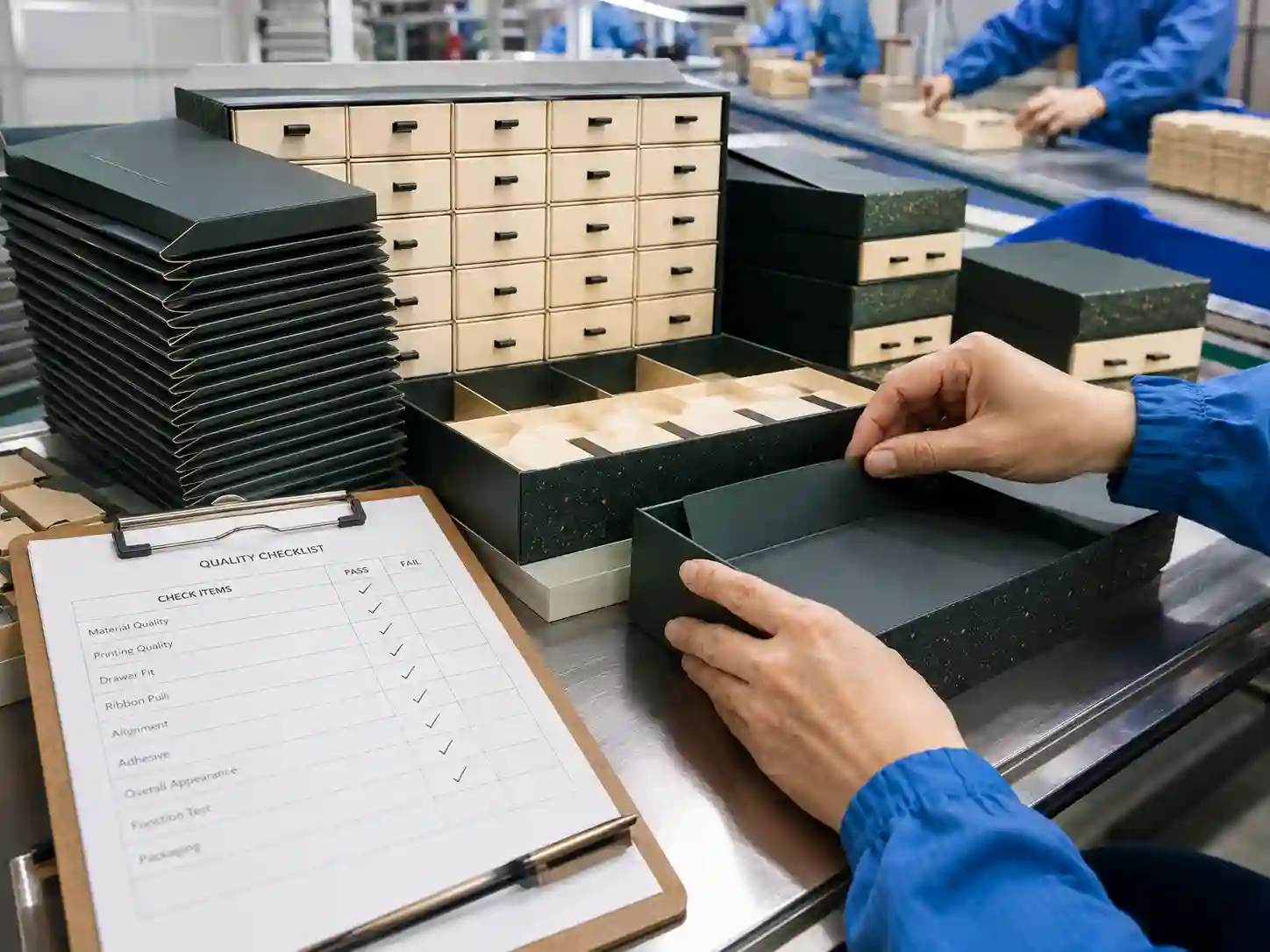
Export Packing
Export packing should be discussed before mass production. The supplier needs to know whether the calendars ship flat, pre-assembled, empty, or already filled with products. This affects carton size, pallet loading, labor cost, and damage risk.
Giftpackpro packaging factory can help buyers review carton packing, outer carton markings, pallet requirements, and packaging protection. Learn more about the Giftpackpro packaging factory if your project needs factory-side support for sampling, bulk production, and export packing.
Information to Prepare Before Requesting a Quote
A clear quote request saves time and reduces misunderstanding. Instead of asking for a general price, buyers should prepare the key technical details first.
Recommended RFQ Checklist
Prepare the box size, door count, product dimensions, product weight, quantity per set, target order quantity, preferred material, insert type, print colors, finishing requirements, sample requirement, packing method, delivery country, and expected launch date.
If the buyer has no dieline yet, photos of similar structures can be used as references. However, the final structure should still be redesigned around the real product dimensions and brand requirements.
For a faster quotation, buyers can request a custom quote with product dimensions, artwork files, order quantity, and packing requirements. If the project is still in the planning stage, the Giftpackpro team can suggest a suitable structure direction before sampling.
Buyer Tips for Better Project Results
First, confirm the product list before starting the dieline. Changing bottle sizes or gift items after the sample stage often means redesigning the insert and door layout.
Second, decide whether the box is for premium retail display, e-commerce delivery, corporate gifting, or wholesale distribution. Each channel has different needs for strength, appearance, and packing method.
Third, check artwork on the final dieline, not only on a flat design mockup. Door-opening advent calendar boxes have cut lines, fold lines, and opening areas that must match the artwork accurately.
Fourth, ask about sample options before confirming bulk production. A blank sample can verify structure, while a printed sample can check color, finishing, and retail presentation.
Finally, keep the quotation request practical. The best result usually comes from matching structure, insert, artwork, MOQ, and delivery plan to the real product and target sales channel. For more B2B planning support, visit Giftpackpro as a custom advent calendar boxes manufacturer or review more advent calendar box buying guides.