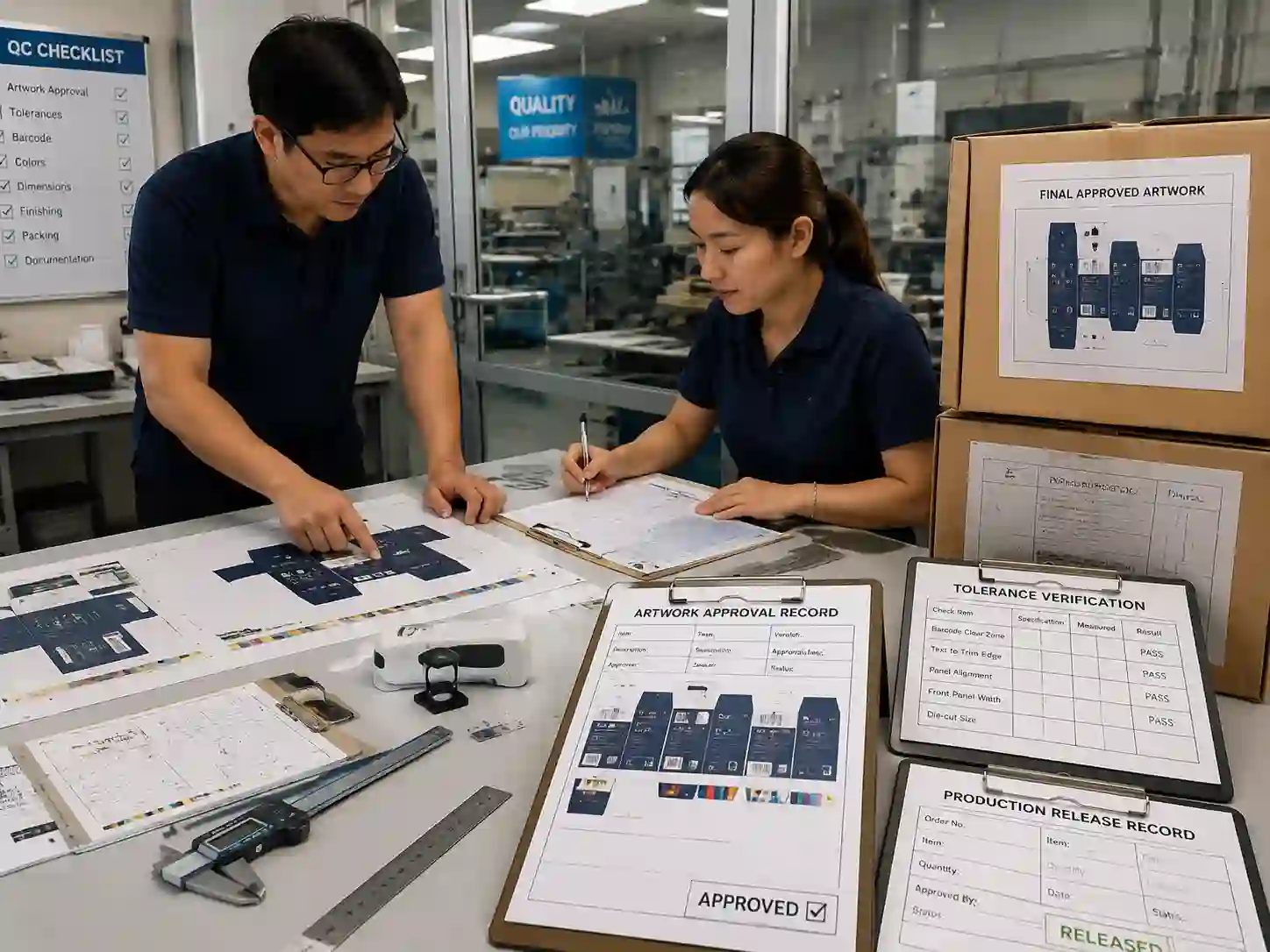
Quick answer: Preventing numbers from being cut off starts by building the artwork around the final door dieline, not the visible printed area alone. A numbered door artwork safe area should keep critical numbers away from perforation lines, cutting zones, folding points, and tolerance movement. Designers should review dielines, maintain separate artwork layers, validate with printed samples, and approve final positioning before production.
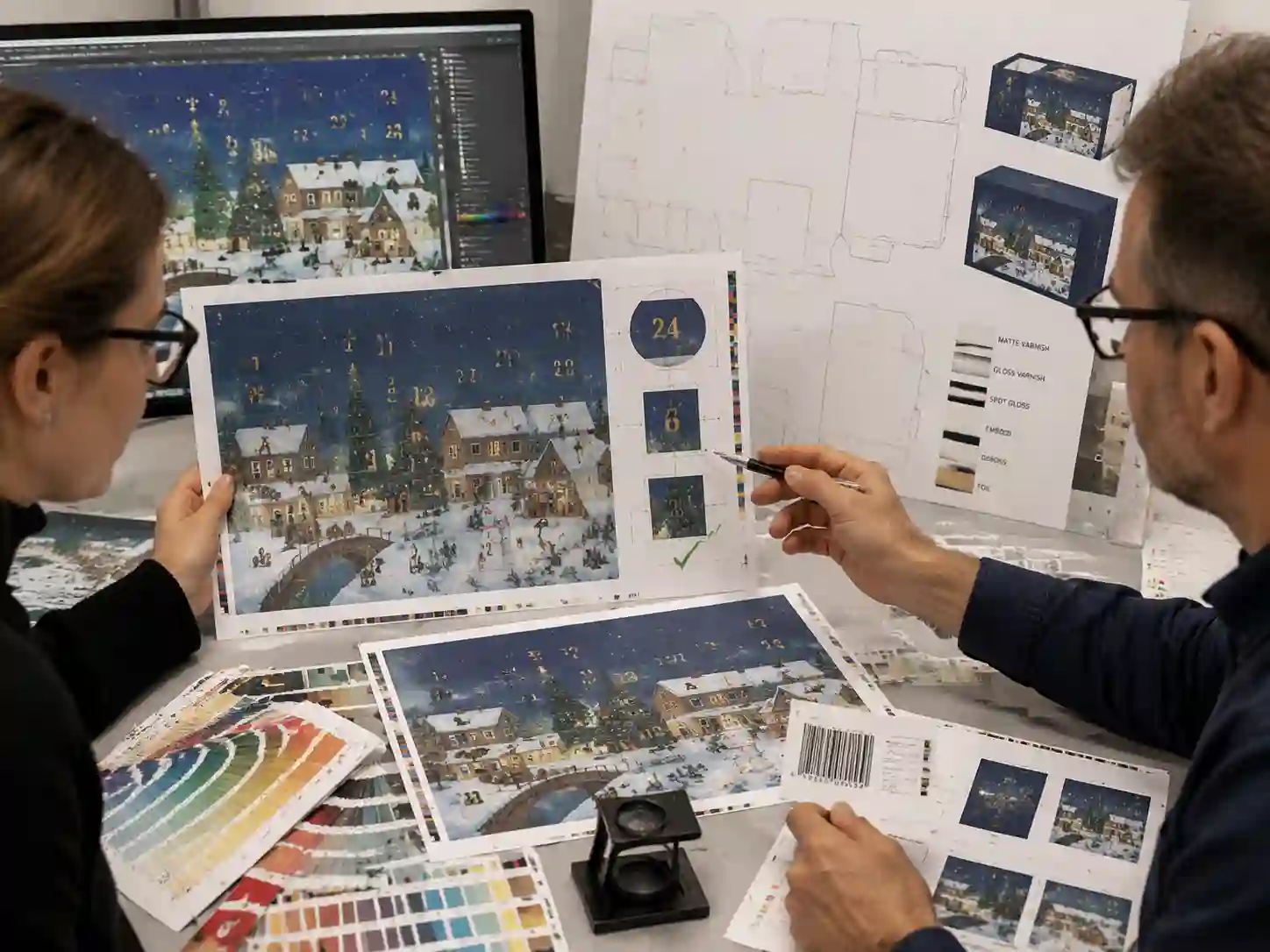
Why can calendar door numbers be cut off during production?
Numbers can be damaged when artwork is positioned too close to perforation lines, cutting edges, or areas affected by material movement. Even when a digital file looks correct, small differences between artwork placement, die-cutting, folding, and assembly can change the final visible position.
The main risks usually come from:
- Numbers placed too close to door edges or perforations.
- Artwork designed from the flat panel instead of the finished door shape.
- Missing tolerance allowances between printed graphics and structural features.
- Late artwork changes that move numbers without a complete preflight review.
How should a numbered door artwork safe area be created?
A numbered door artwork safe area should be defined from the actual door opening area, with sufficient distance from all structural risk zones. The safe area is a planning boundary that protects important information such as numbers, symbols, and short instructions.
Practical artwork preparation steps include:
- Import the approved dieline as a locked structural reference layer.
- Create separate layers for cutting lines, perforations, artwork, numbers, and finishing effects.
- Identify the visible door area after folding and assembly.
- Keep essential numbers inside the approved safe zone rather than placing them near edges.
- Review the file using both digital inspection and printed output.
What tolerance areas should designers check before printing?
The exact tolerance allowance depends on the structure, material, printing process, and finishing method. Buyers and designers should confirm the acceptable range using the approved structural drawing and production sample.
| Area to check | Risk if ignored | Recommended verification |
|---|---|---|
| Perforation line | Numbers may split or appear uneven when the door opens | Check artwork distance from perforation paths |
| Die-cut edge | Digits or symbols may be trimmed | Review safe area against final cutting layout |
| Fold or crease zone | Numbers may distort after assembly | Confirm position on folded sample |
| Finishing area | Coating or effects may affect readability | Review finishing layer placement |
How does preflight review confirm number placement?
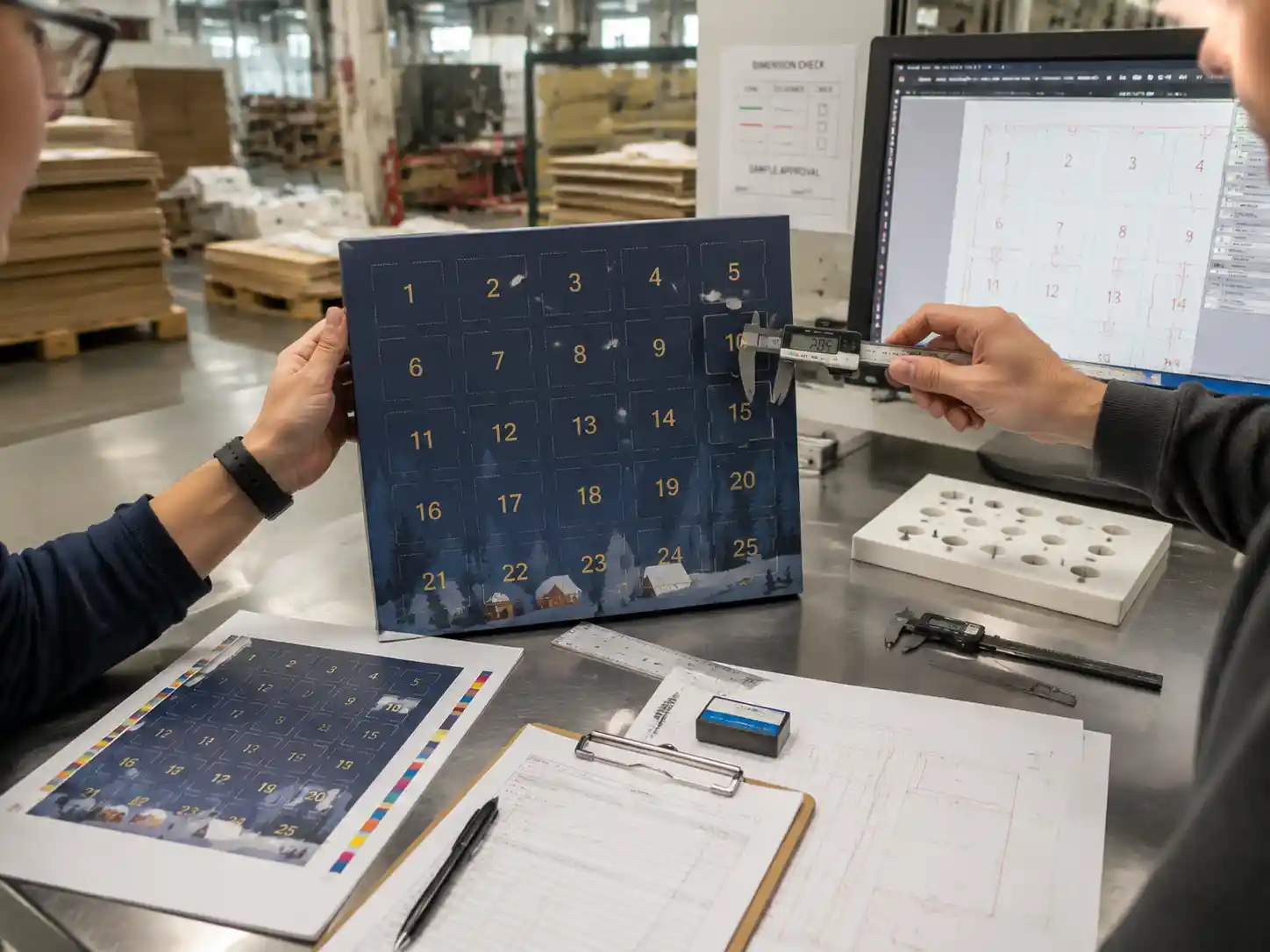
Preflight review confirms that the final artwork file matches the approved structure before production. This is where packaging teams check whether numbers, barcodes, multilingual text, and other critical graphics remain protected.
A practical preflight checklist includes:
- Confirm the latest dieline version is being used.
- Verify every numbered door matches the intended sequence.
- Check that numbers do not cross cut lines or perforations.
- Review artwork layers for hidden structural conflicts.
- Compare digital files with printed proofs or samples.
- Record approval comments and final file versions.
What evidence should buyers review before approving numbered door artwork?
Important artwork decisions should be supported by production evidence rather than only screen approval. Useful records include dieline drawings, annotated artwork files, printed proofs, sample photos, and approval notes.
For commercial packaging projects, the approval record should show:
- The approved door layout and number positions.
- The relationship between artwork and perforation locations.
- Any tolerance-sensitive areas identified during review.
- The final artwork version released for production.
What varies by advent calendar structure?
Safe area requirements vary depending on whether the calendar uses perforated doors, drawers, folding panels, or other opening methods. A small flat door may require different controls from a large door with complex folding or reinforced construction.
Material thickness, lamination, printing registration, and finishing processes can also influence final positioning. These factors should be reviewed during artwork preparation rather than corrected after production begins.
How can suppliers and buyers avoid repeated artwork corrections?
The most effective approach is early alignment between structural drawings, artwork files, and production samples. A packaging supplier should help confirm that the graphic layout works with the physical structure before final approval.
Giftpackpro supports commercial packaging projects through custom advent calendar box services, helping teams coordinate artwork preparation with structural requirements. Buyers can also review related advent calendar box buying guides for additional packaging planning information.
FAQs
Should numbers always be centered inside each door?
Not always. The correct position depends on the door shape, opening direction, artwork design, and structural constraints. The priority is maintaining clear visibility after production.
Can a digital artwork file prove that numbers will not be cut off?
A digital file can show intended placement, but printed samples or production validation provide stronger confirmation because they reveal actual cutting, folding, and material behavior.
Do larger doors require larger safe areas?
Not necessarily. Safe areas depend on structural movement and tolerance risks rather than door size alone.
For assistance with artwork planning and custom seasonal packaging development, contact request a custom quote with your structural and artwork requirements.