Drawer face alignment in a 24-drawer calendar depends on controlling the relationship between drawer fronts, cabinet structure, runners, openings, magnets, and assembly tolerances. The most reliable approach is to define alignment references before production, validate loaded samples, and inspect the finished structure at multiple stages. Small dimensional errors can accumulate across many drawers, creating uneven gaps, tilted fronts, or inconsistent closing performance.
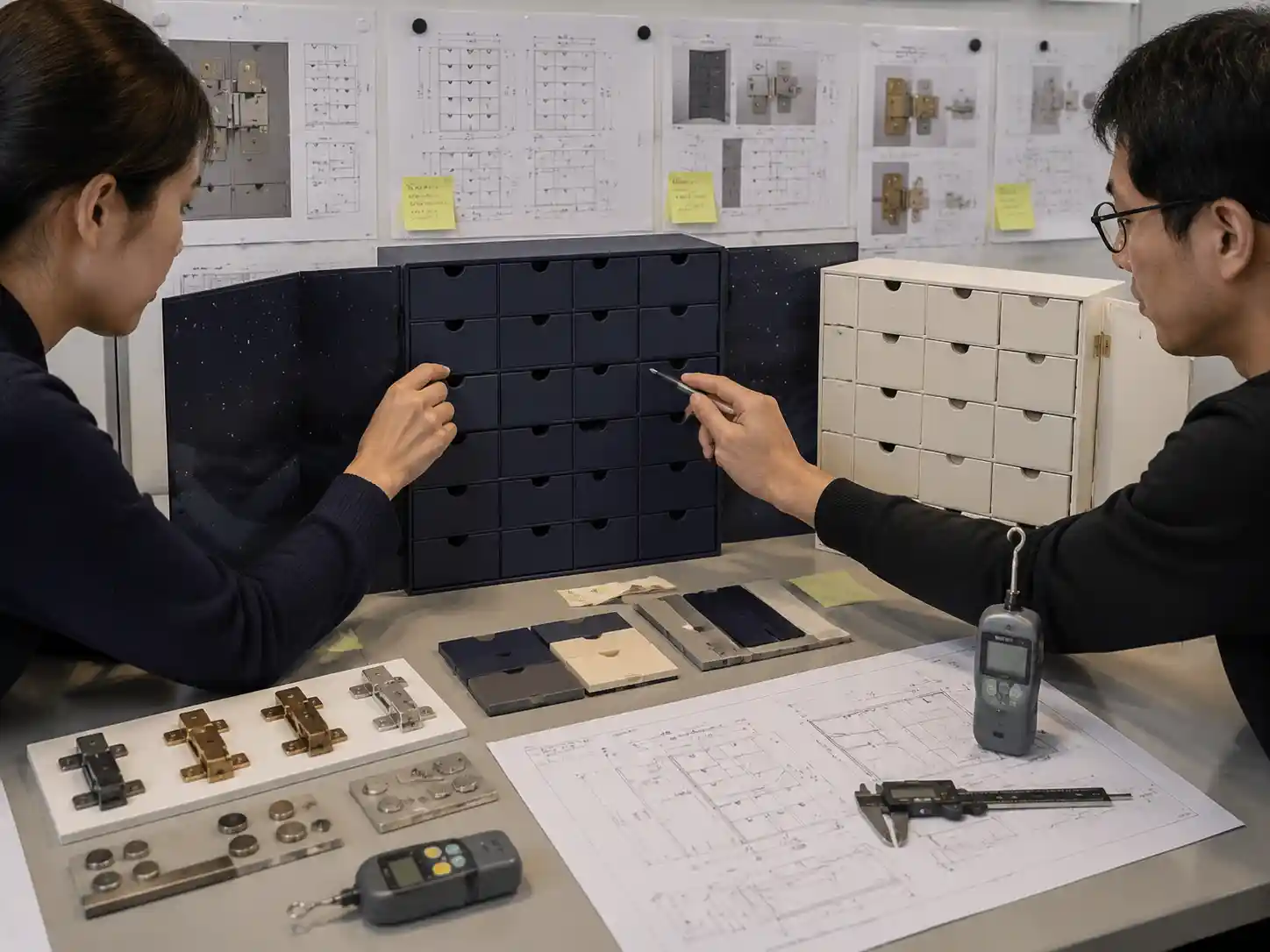
Why does drawer front alignment become difficult in a 24-drawer calendar?
Drawer front alignment becomes difficult because a multi-drawer calendar contains many repeated openings that must maintain the same visual spacing and movement performance. A small variation in one drawer position can become noticeable when repeated across the entire front panel.
Common causes include:
- Drawer cavity dimensions changing during board cutting, wrapping, or lamination.
- Uneven drawer front thickness affecting the visible gap between drawers.
- Incorrect positioning of runners, guides, magnets, or stop points.
- Panel warping caused by material tension or insufficient internal support.
- Assembly variation when multiple drawer components are manually installed.
For commercial packaging projects, alignment should be treated as a structural tolerance issue rather than only an appearance issue. The drawer system must remain stable after loading products and during repeated opening and closing.
How does structural design improve advent calendar drawer front alignment?
The best alignment results come from designing the drawer system around fixed reference points before production begins. The outer shell, internal grid, drawer cavity, and front panel should be developed as one connected structure.
What design areas should be controlled first?
| Control area | Alignment purpose | Verification method |
|---|---|---|
| Drawer cavity dimensions | Keeps every drawer opening consistent | Measure cavity width, height, and depth against approved drawings |
| Drawer front thickness | Maintains uniform visible spacing | Check wrapped panel thickness and finished samples |
| Internal support grid | Prevents movement of drawer positions | Inspect structure before final assembly |
| Magnet or closure position | Ensures drawers close at the intended point | Test opening resistance and closing position |
Structural drawings should define the reference edges, gap targets, and assembly sequence. This allows sampling teams and suppliers to check whether misalignment comes from design tolerance, material variation, or production handling.
What production checks prevent drawer faces from shifting?
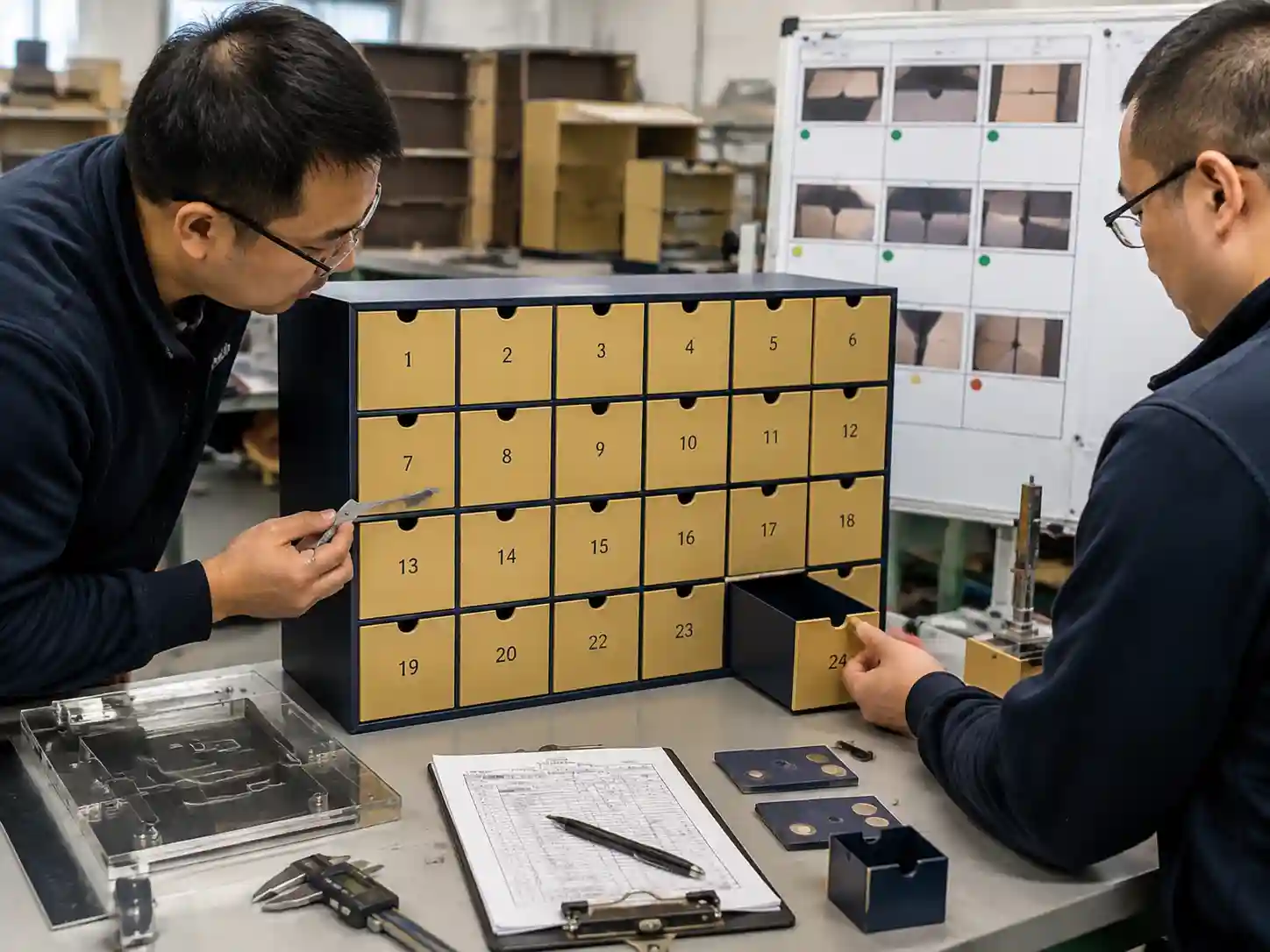
Production checks should focus on preventing tolerance accumulation before final assembly. The goal is not only to inspect the finished calendar but also to verify the components that create alignment.
Which sample checks should be completed?
- Measure several drawer openings from different positions, including corners and center areas.
- Install actual drawer fronts and check horizontal and vertical spacing.
- Test drawers with representative product weight to confirm that movement does not change.
- Check magnets, stops, or closing mechanisms for consistent positioning.
- Record measurement results in approval documents before bulk production.
Sample approval records should include structural drawings, measured dimensions, photos of alignment conditions, and notes on approved adjustments. These records provide a reference if production samples show differences later.
Which failure modes cause uneven drawer faces?
Identifying failure modes early helps prevent repeated alignment problems during manufacturing.
| Failure mode | Possible cause | Recommended check |
|---|---|---|
| Drawer faces form uneven rows | Cavity positions or internal grid are inconsistent | Compare assembled sample with dimension drawings |
| One drawer sits deeper or higher | Runner, guide, or stop position variation | Test drawer travel and stopping point |
| Front panels rub against neighbors | Insufficient clearance after wrapping | Measure finished component thickness |
| Drawers open differently across the calendar | Weight distribution or friction variation | Perform repeated movement testing |
How should buyers verify drawer alignment before approving production?
Buyers should approve alignment using physical evidence rather than appearance photos alone. A complete review normally combines drawings, samples, measurements, and inspection notes.
- Verifiable facts: Approved dimensions, sample measurements, material specifications, and inspection records should match the final approved structure.
- Project-dependent recommendations: Clearance values, support methods, and closure systems vary according to drawer size, materials, product weight, and finishing requirements.
- Buyer approvals: The final drawer layout, front spacing, movement feel, and visible alignment should be confirmed before production release.
For suppliers such as custom advent calendar box services, alignment control is typically managed through engineering review, sampling validation, and production inspection documentation.
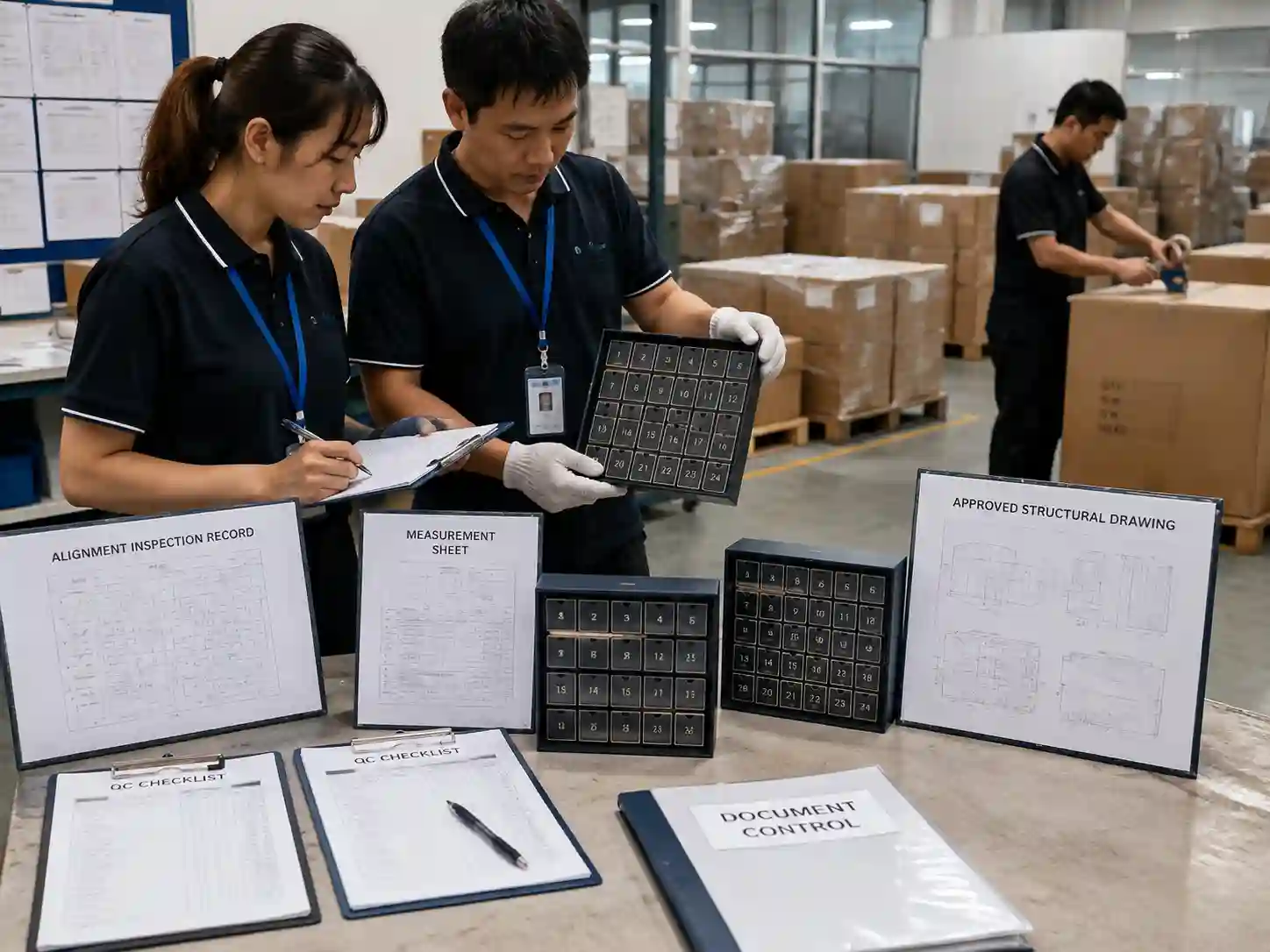
What documentation helps prove drawer alignment quality?
Useful supplier documentation includes approved structural drawings, dimension check sheets, prototype evaluation records, assembly instructions, and QC inspection reports. These documents allow different teams to confirm that the approved sample and production units follow the same structural requirements.
For complex seasonal packaging projects, buyers can also review related advent calendar box buying guides to understand how structural decisions connect with other packaging requirements.
FAQ: How much alignment tolerance is acceptable for a 24-drawer calendar?
There is no universal tolerance value because acceptable alignment depends on drawer size, board construction, finishing materials, and the required visual standard. The correct tolerance should be defined during engineering review and confirmed with physical samples.
FAQ: Should drawer alignment be checked with empty or filled drawers?
Both conditions are useful. Empty drawers help verify basic construction accuracy, while filled drawers confirm that product weight does not cause sagging, friction, or movement changes.
FAQ: Can lamination affect drawer front alignment?
Yes. Wrapping and lamination can change finished panel thickness and surface tension. Finished component measurements should be checked after all surface treatments are applied.
FAQ: When should alignment approval happen?
Alignment should be reviewed during prototype approval and confirmed again during production inspection. Early approval reduces the risk of repeated assembly corrections after manufacturing begins.
Giftpackpro develops custom advent calendar structures with engineering review, prototype validation, and quality documentation to help buyers achieve stable drawer performance. request a custom quote for a project-specific drawer calendar structure evaluation.