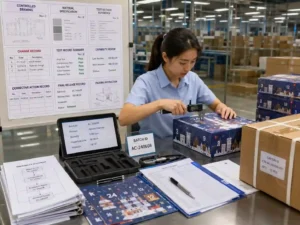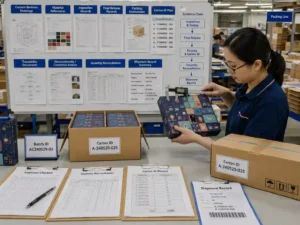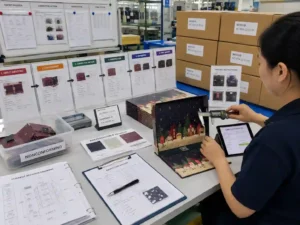
Quick answer: Reliable shipping volume reduction evidence should show a controlled before-and-after comparison using defined pack configurations, measured dimensions, carton quantities, packing methods, and traceable records. A percentage claim alone is weak. Buyers should be able to identify the baseline, revised configuration, measurement method, calculation, and project conditions behind the result. For custom advent calendar packaging, the strongest evidence connects drawings and physical samples with actual packing records rather than relying only on theoretical dimensions.
What evidence can support a reduced shipping volume claim?
The most useful evidence combines dimensional records, configuration details, calculations, and physical packing verification. Together, these records show not only that a revised package is smaller, but also that the comparison uses equivalent products and clearly defined packing conditions.
A supplier may have several ways to reduce packed volume, such as changing an assembled structure to a flat-packed configuration, revising component nesting, reducing unused space, or changing how finished units fit into an outer carton. The relevant evidence depends on which change produced the claimed reduction.
| Evidence | What it should identify | What the buyer can verify |
|---|---|---|
| Controlled drawings | Revision, dimensions and relevant packed configuration | Whether the baseline and revised designs are clearly defined |
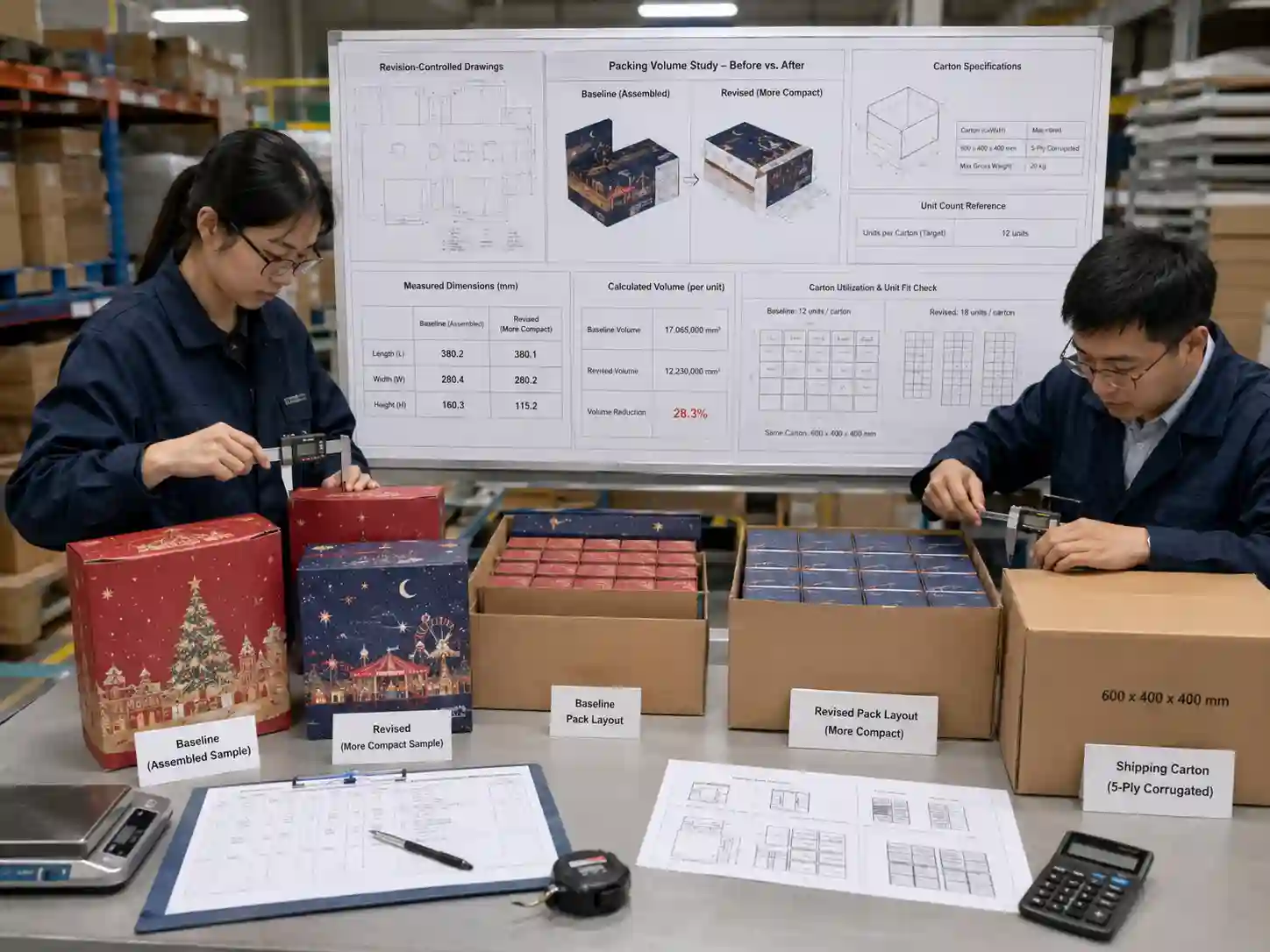
| Measured samples | Actual length, width, height and sample identity | Whether physical dimensions agree with the documented design |
| Carton specification | Carton dimensions, unit orientation and units per carton | Whether the claimed carton utilization is plausible |
| Packing records or photos | Actual configuration, quantity and identifiable production or sample reference | Whether the proposed packing arrangement was physically demonstrated |
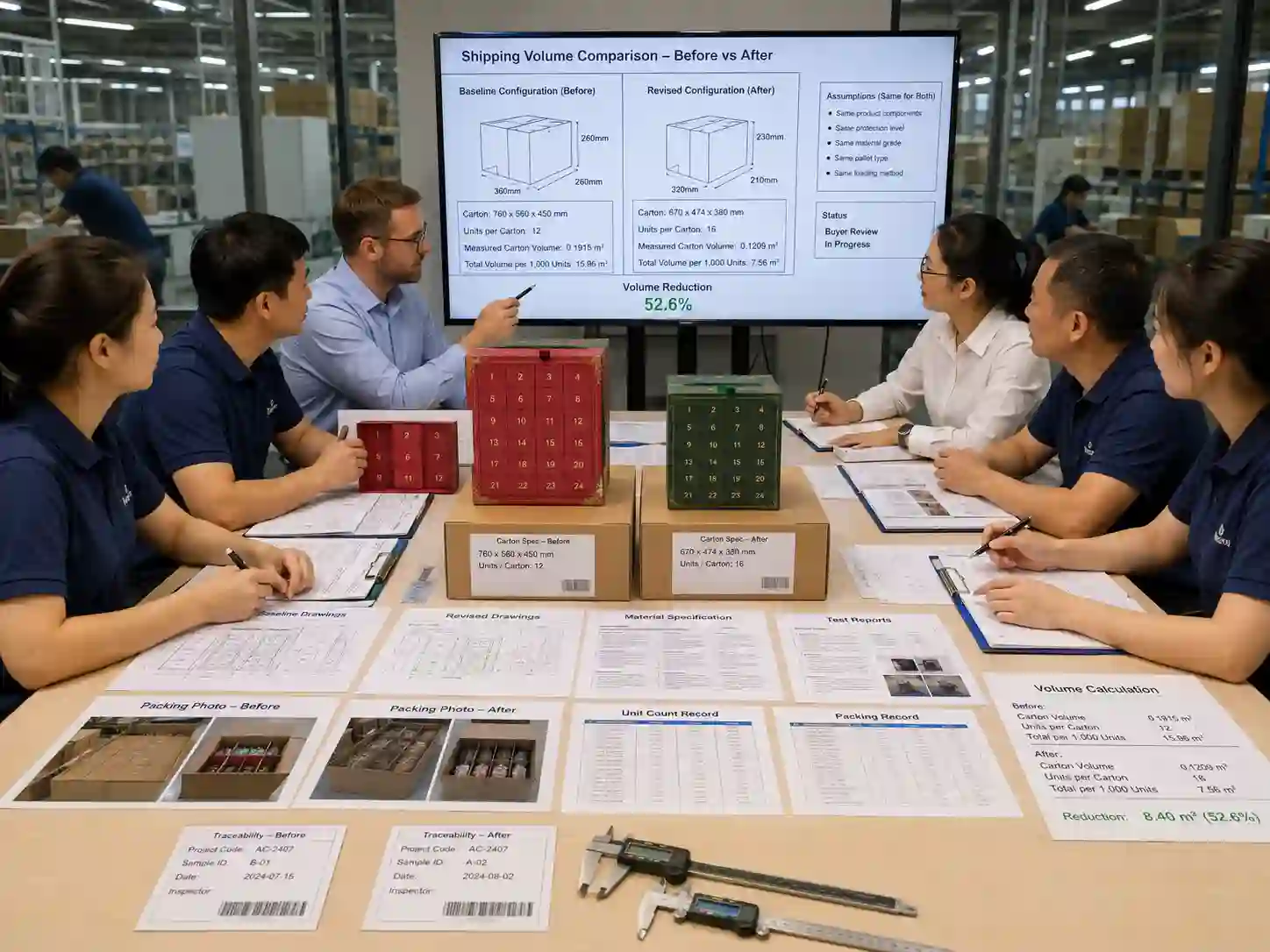
| Volume calculation | Baseline volume, revised volume and calculation method | Whether the reported reduction can be reproduced |
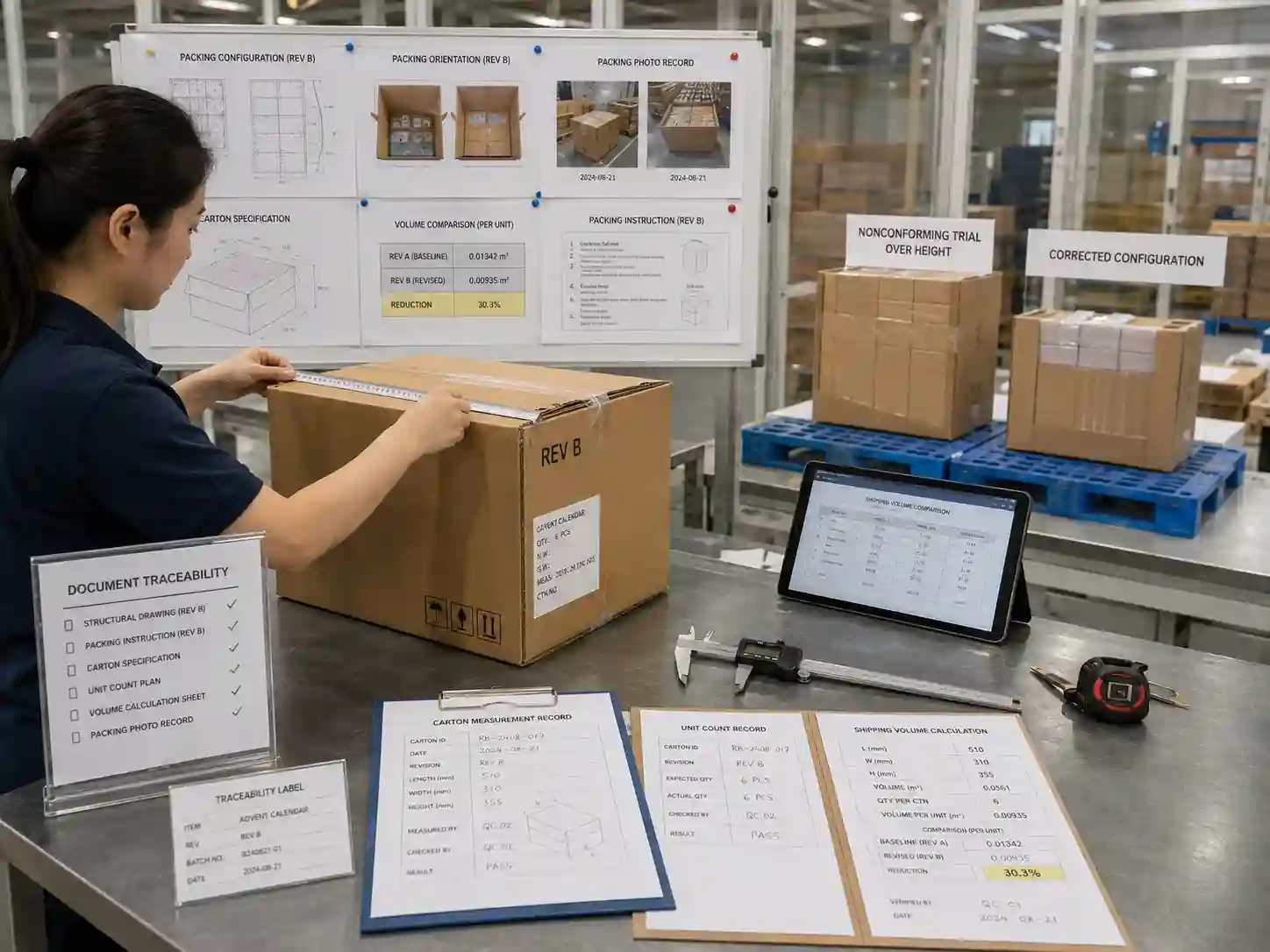
| Traceability records | Sample, revision, batch or project identity | Whether measurements belong to the configuration being claimed |
How should shipping volume reduction evidence define the baseline?
The baseline must describe exactly what is being compared. Without a controlled baseline, a statement such as “30% less shipping volume” has little verification value because the original configuration may be undefined or materially different.
For an advent calendar project, the baseline might be an assembled calendar packed individually into a specified outer carton. The revised condition might use a different structural configuration that is packed more compactly before destination assembly. Both conditions should identify the same relevant product scope and comparable packaging level.
A useful baseline record should normally identify:
- the structural drawing or approved sample revision;
- the packaging state being measured, such as assembled, folded, nested, or packed;
- the measured dimensions and measurement points;
- the number of saleable units represented;
- the outer-carton configuration where carton-level volume is claimed; and
- the date and identity of the supporting record.
This distinction matters because reducing the dimensions of one packaging component does not automatically prove the same percentage reduction at shipment level.
How should the supplier calculate the claimed reduction?
The calculation should be reproducible from the supporting records. Buyers should be able to take the documented baseline and revised dimensions or carton data and independently reach the reported result.
For a simple dimensional comparison, volume can be calculated from length × width × height using consistent units. The percentage reduction can then be derived by comparing the revised volume with the defined baseline volume.
However, theoretical package volume and actual shipping volume are not always equivalent. If a supplier claims a logistics-level improvement, the calculation should use the packing level relevant to that claim rather than only the dimensions of an individual paper component.
Should buyers accept calculations based only on CAD drawings?
CAD calculations can support an engineering proposal, but they do not by themselves prove the physical packing result. Stronger documentation combines controlled drawings with measured samples or actual packing trials.
This is especially important where folds, board thickness, wrapping layers, inserts, protective materials, or assembly tolerances influence the real packed dimensions.
What should a physical packing trial demonstrate?
A physical packing trial should demonstrate that the revised configuration actually fits the stated quantity into the identified carton without relying on an undocumented arrangement. It should also show that the comparison reflects a realistic packing condition.
Useful trial evidence can include dated photographs, carton identification, unit count, measured carton dimensions, packing orientation, relevant protective materials, and the drawing or sample revision used.
For complex seasonal packaging, photographs are most useful when they form part of an evidence chain. A photograph of compactly stacked components without project identity, quantity, dimensions, or configuration information is visually persuasive but difficult to verify.
How can buyers separate verifiable facts from project-dependent recommendations?
Verified measurements should be separated from forecasts and engineering recommendations. This prevents an achievable concept from being presented as though it were already demonstrated production performance.
| Claim type | Example | Appropriate evidence |
|---|---|---|
| Verifiable fact | A specific trial carton contained a documented quantity in a measured configuration | Inspection record, packing record, measurements and identified photos |
| Project-dependent recommendation | A structural revision may allow more compact shipment | Engineering drawing, sample proposal and trial plan |
| Forecast | The proposed configuration is expected to reduce shipment volume | Clearly identified calculation using stated assumptions |
| Buyer approval | The revised packing method is accepted for the project | Approved specification, sample approval or other controlled acceptance record |
A supplier can therefore discuss potential volume efficiency before production, but the wording should match the maturity of the evidence. Estimated, sample-verified, and production-verified results are not interchangeable.
What does strong versus weak documentation look like?
Strong documentation allows another person to reconstruct the comparison. Weak documentation usually presents an isolated percentage, photograph, or marketing statement without enough information to reproduce it.
Weak documentation
“Our new structure reduces shipping volume by 35%,” accompanied by photographs of two differently sized stacks.
This leaves important questions unanswered: Which revisions were compared? How many finished units does each stack represent? Were both configurations measured at the same packaging level? Were protective materials included? Were the dimensions measured or estimated?
Strong documentation
A controlled comparison identifies baseline and revised drawing numbers, sample identities, packing states, measured dimensions, units per carton, carton dimensions, calculation method, dated trial photographs, and the person or department responsible for verification.
The resulting percentage can then be traced back to identifiable source records. If the revised configuration later changes, the previous result remains associated with the correct revision rather than being automatically applied to the new design.
Which checks prevent misleading volume-reduction comparisons?
Buyers should check equivalence before accepting the claimed improvement. The two configurations should represent the same relevant product quantity and a comparable packaging scope.
- Confirm the baseline. Identify the original revision, packing state, unit quantity, and carton configuration.
- Confirm the revised condition. Check that the revised sample and drawing correspond to the configuration used in the calculation.
- Review actual measurements. Compare recorded dimensions with controlled drawings and physical samples where available.
- Check unit counts. Make sure increased units per carton are documented rather than assumed.
- Check packing materials. Determine whether bags, dividers, pads, protective sheets, or other required components are included consistently.
- Recalculate the result. Verify that the claimed percentage follows from the documented numbers.
- Review physical evidence. Confirm that photos or trial records can be linked to the identified samples and cartons.
- Check approval status. Distinguish a proposed logistics configuration from one formally accepted for the project.
Buyers evaluating a supplier’s wider documentation capability can also review the Giftpackpro packaging factory information and related advent calendar box buying guides.
What risks can a lower-volume configuration introduce?
Reduced packed volume is useful only when the revised configuration remains acceptable for the specific project. Compact packing can change compression, rubbing, component movement, assembly requirements, or handling conditions.
These effects should not be hidden inside a volume claim. If a proposed configuration requires destination assembly, different protective materials, or another process change, that condition belongs in the comparison.
Where a trial identifies damage, deformation, excessive movement, or another nonconformity, the evidence trail should retain the affected sample identity, finding, corrective action, revised configuration, and subsequent verification. This prevents a failed trial from being used later as evidence for an approved packing method.
What should vary by project?
The evidence format can be standardized, but acceptable packing configurations and approval criteria are project-dependent. Product dimensions, calendar construction, board and paper specifications, inserts, protective materials, assembly location, carton requirements, and handling conditions can all affect the practical result.
For that reason, suppliers should avoid presenting one historical reduction percentage as a universal capability. A documented case study can demonstrate experience with a particular structure and verification method, but a new project requires its own assumptions, drawings, samples, and approvals.
Buyers considering structural changes can use custom advent calendar box services to understand the relevant development scope before requesting project-specific evidence.
What should buyers request before relying on a volume-reduction claim?
Request the smallest evidence package that makes the claim independently understandable. For most claims, that means the baseline, revised configuration, dimensions, quantities, calculation, physical verification, and traceable approval status.
A practical request can specify controlled drawings, identified samples, measurement records, carton specifications, packing photographs, packing records, and the calculation sheet used to derive the reduction. If production evidence is being cited, the records should clearly distinguish actual production data from earlier sampling or engineering estimates.
FAQ: Can a supplier publish a shipping volume reduction percentage from one case study?
Yes, provided the percentage is clearly limited to the documented case and its defined conditions. It should not imply that every advent calendar project will achieve the same result.
FAQ: Are photographs enough to prove lower shipping volume?
No. Photographs can confirm configuration and support traceability, but dimensions, quantities, revisions, and calculations are needed to make a quantitative reduction claim reproducible.
FAQ: Does a smaller individual package prove lower shipment volume?
Not necessarily. Buyers should check the relevant shipping configuration because carton utilization, protective packing, unit orientation, and units per carton can change the actual result.
FAQ: When should the buyer approve the revised packing configuration?
Approval should follow the project’s defined verification process after the relevant configuration and supporting evidence have been reviewed. A supplier recommendation or preliminary calculation should remain identified as such until the buyer accepts it for that project.
For a custom advent calendar project, request a custom quote and provide the intended structure, product configuration, packing requirements, and comparison objective so the required shipping-volume evidence can be defined against the actual project.