A multi height pet tray design uses different cavity depths, support points, and retention features to hold products of different heights securely while keeping each item easy to remove. The process starts with accurate product measurements, then balances cavity geometry, clearance, orientation, and transport stability. A successful design is verified through prototype fitting, dimensional checks, and loaded performance evaluation before production approval.
How Does a Multi Height PET Tray Design Handle Products With Different Heights?
A PET tray handles mixed-height products by controlling each cavity independently instead of using one uniform depth for all items. Different products require different support levels, opening sizes, and retention methods.
For advent calendar boxes and seasonal gift packaging, a PET tray may contain bottles, jars, tubes, vials, or containers with different shapes and heights. The tray designer first creates a product map that records:
- Overall product height and diameter
- Cap, pump, lid, or protruding component dimensions
- Product weight and center of gravity
- Required display orientation
- Removal direction and finger access requirements
The final cavity design depends on the actual product set. A taller bottle may need deeper side support, while a shorter tube may require a raised platform or tighter locating points to prevent movement.
What Cavity Geometry Should Be Used for Different Product Heights?
The most important design decision is creating cavity geometry that supports each product without over-restricting removal. Each cavity should be engineered around the product’s contact points rather than only its external size.
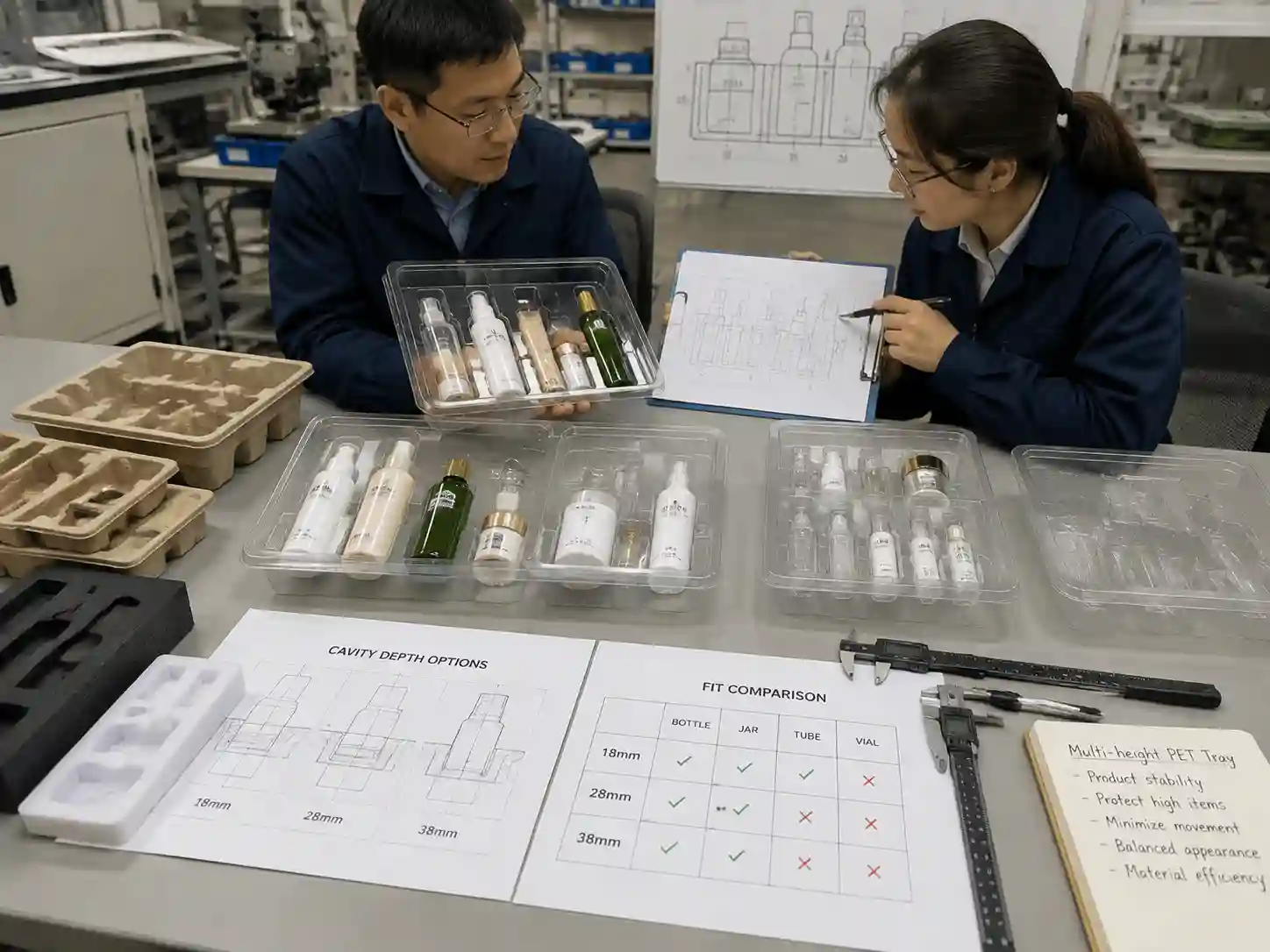
How Are Different Cavity Depths Designed?
Cavity depth is adjusted according to product height, stability requirements, and the visible presentation position. Taller products generally need deeper support walls, while shorter products may require elevated bases or reduced cavity depth.
Common design considerations include:
- Sidewall height for lateral support
- Bottom support area for weight distribution
- Clearance around irregular shapes
- Open areas for finger access
- Draft angles for easier product removal
Engineering drawings should show cavity dimensions, tolerance ranges, and product reference points so the tray can be reviewed before tooling or sampling.
Which Retention Methods Keep Different Height Products Secure?
Retention should prevent shifting during handling and transportation while avoiding excessive holding force. Different product heights often require different retention solutions within the same PET tray.
| Product Situation | Common PET Tray Approach | Design Check |
|---|---|---|
| Tall narrow bottles | Higher side support with controlled neck or body positioning | Check tipping resistance and removal force |
| Short wide jars | Wider cavity base with anti-rotation features | Confirm product does not spin or slide |
| Small tubes or vials | Smaller locating points and controlled openings | Verify opening size prevents drop-through |
| Mixed-height product sets | Individual cavity adjustment for each SKU | Validate every compartment with actual samples |
The correct retention method varies by product material, surface finish, weight, and packaging structure. Buyer approval should be based on physical samples rather than drawings alone.
How Do You Validate a PET Tray for Products With Different Heights?
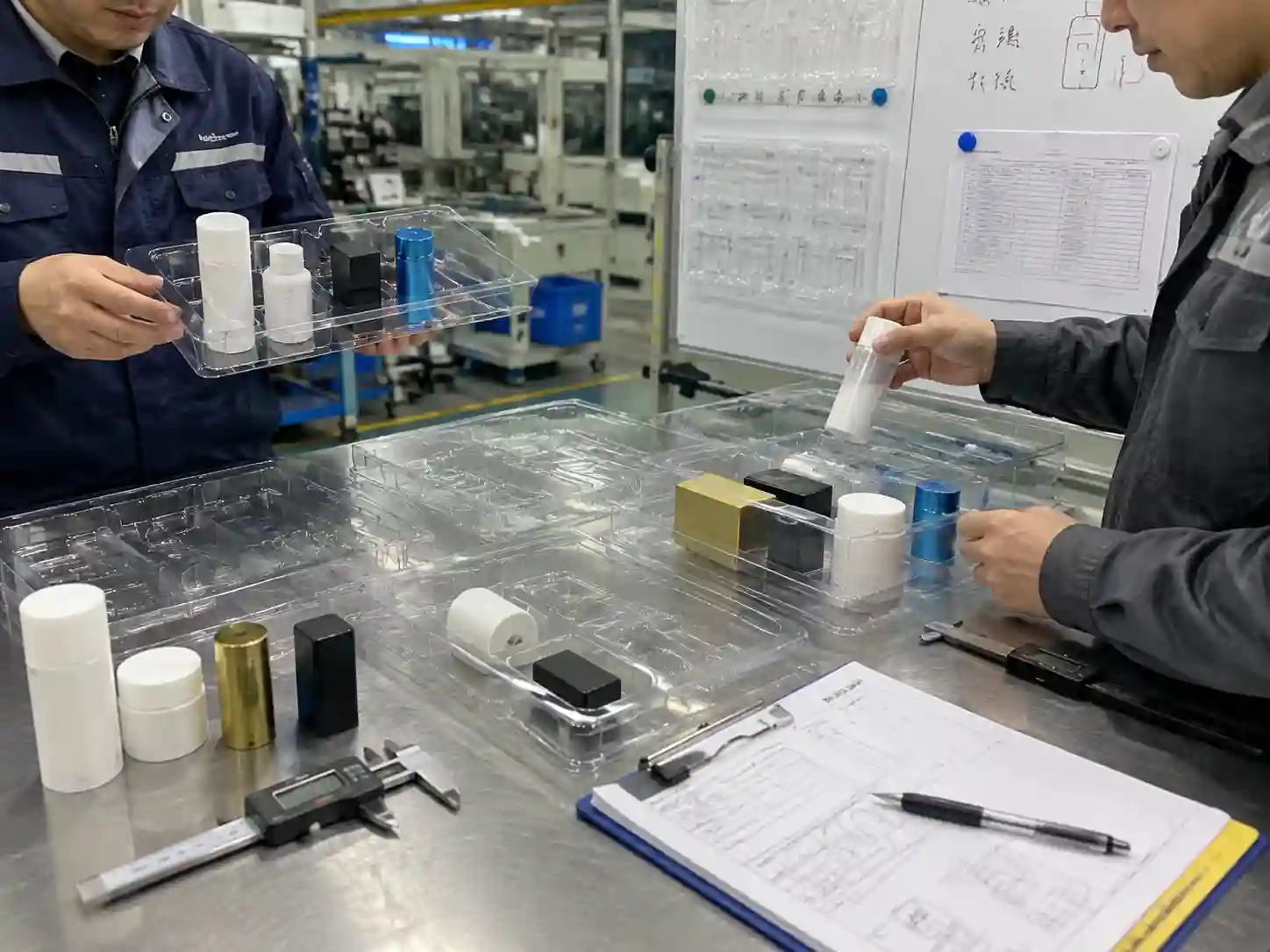
Validation confirms that the tray works with real products, not only with theoretical dimensions. A structured fit test helps identify problems before mass production.
What Are the Main PET Tray Fit-Test Steps?
- Confirm product measurements: Check height, width, diameter, weight, and protruding components against approved product data.
- Load actual samples: Place products into each cavity using the intended orientation.
- Check retention: Evaluate movement, rotation, lifting, and product stability.
- Test removal access: Confirm users can remove products without excessive force or damaging the tray.
- Review assembled packaging: Check tray fit inside the outer box and verify lid or panel clearance.
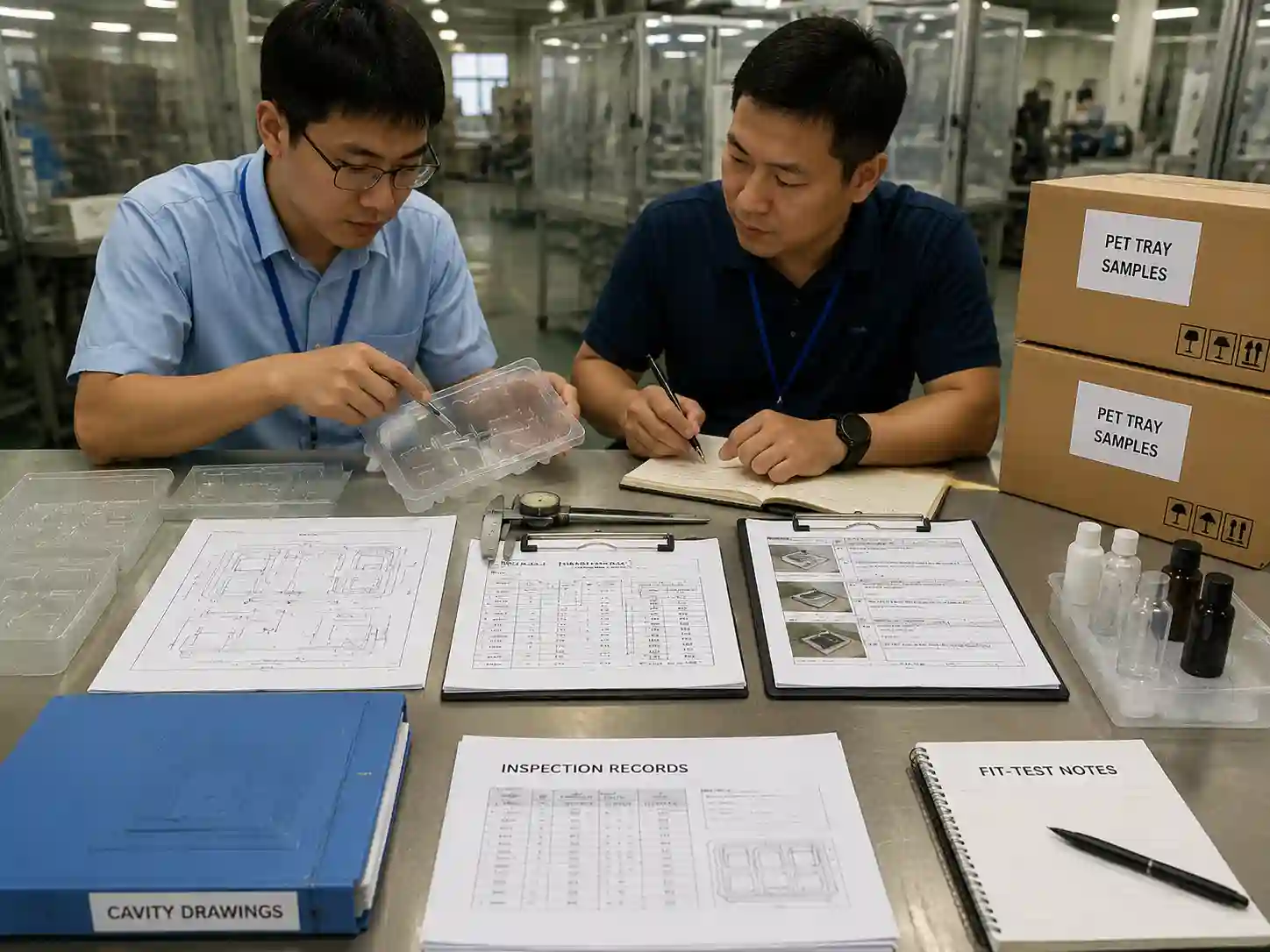
Evidence from these checks may include measurement records, sample photos, cavity drawings, inspection notes, and approval documents. These records help align designers, suppliers, and purchasing teams before production release.
How Do You Prevent Tall Products From Affecting the Box Structure?
Tall products can create problems when tray height, lid clearance, or internal support is not considered together. The PET tray design must be reviewed as part of the complete packaging structure.
- Check the highest product point against internal box height.
- Confirm lids, doors, or panels close without pressure.
- Review whether heavy products create uneven loading.
- Evaluate whether tray walls support the product during movement.
These checks are especially important when products with different heights share one packaging set because one oversized item can affect the entire structure.
What Should Buyers Approve Before Finalizing a PET Tray Design?
Before production approval, buyers should confirm the product layout, cavity drawings, physical samples, and inspection criteria. Clear approval records reduce interpretation differences between design and manufacturing teams.
Recommended approval materials include:
- Final product measurement sheet
- PET tray engineering drawing
- Prototype sample with actual products loaded
- Fit-test comments and correction records
- Approved product orientation reference
Project-dependent decisions, such as cavity tolerance, material thickness, and retention strength, should be confirmed based on the actual product combination and packaging requirements.
What Are Common Risks in Multi Height PET Tray Design?
The biggest risks usually come from incomplete product information, incorrect clearance assumptions, and insufficient physical validation.
- Loose fit: Products move, rotate, or become misaligned.
- Tight fit: Products are difficult to remove or packaging components are stressed.
- Height conflict: Tall products contact the lid or internal panels.
- Uneven support: Heavy products deform the tray or affect transport stability.
These risks can be reduced by combining accurate measurements, engineering drawings, prototype testing, and supplier inspection records.
Frequently Asked Questions About Multi Height PET Tray Design
Can one PET tray hold products with very different heights?
Yes, if each cavity is individually designed. The tray does not need identical depths, but each product position must have suitable support, clearance, and removal access.
Should PET tray cavities match product dimensions exactly?
No. PET tray cavities normally require controlled clearance. The correct amount depends on product shape, surface condition, movement risk, and handling requirements.
Why are physical samples important for PET tray approval?
Samples reveal practical issues that drawings may not show, including product rotation, removal difficulty, contact points, and interaction with the outer packaging structure.
Giftpackpro develops custom advent calendar packaging solutions with engineered inserts and product-fit considerations. For projects requiring PET tray development for mixed-height products, request a custom quote to discuss your packaging requirements.