Quick answer: A successful display fulfillment insert design must support two different operating conditions: how the product is presented and how it is packed, handled, and transported. The insert should combine correct cavity geometry, secure retention, easy product access, and sufficient support after loading. The best design is usually verified through drawings, prototypes, fit checks, and loaded sample evaluations before production approval.
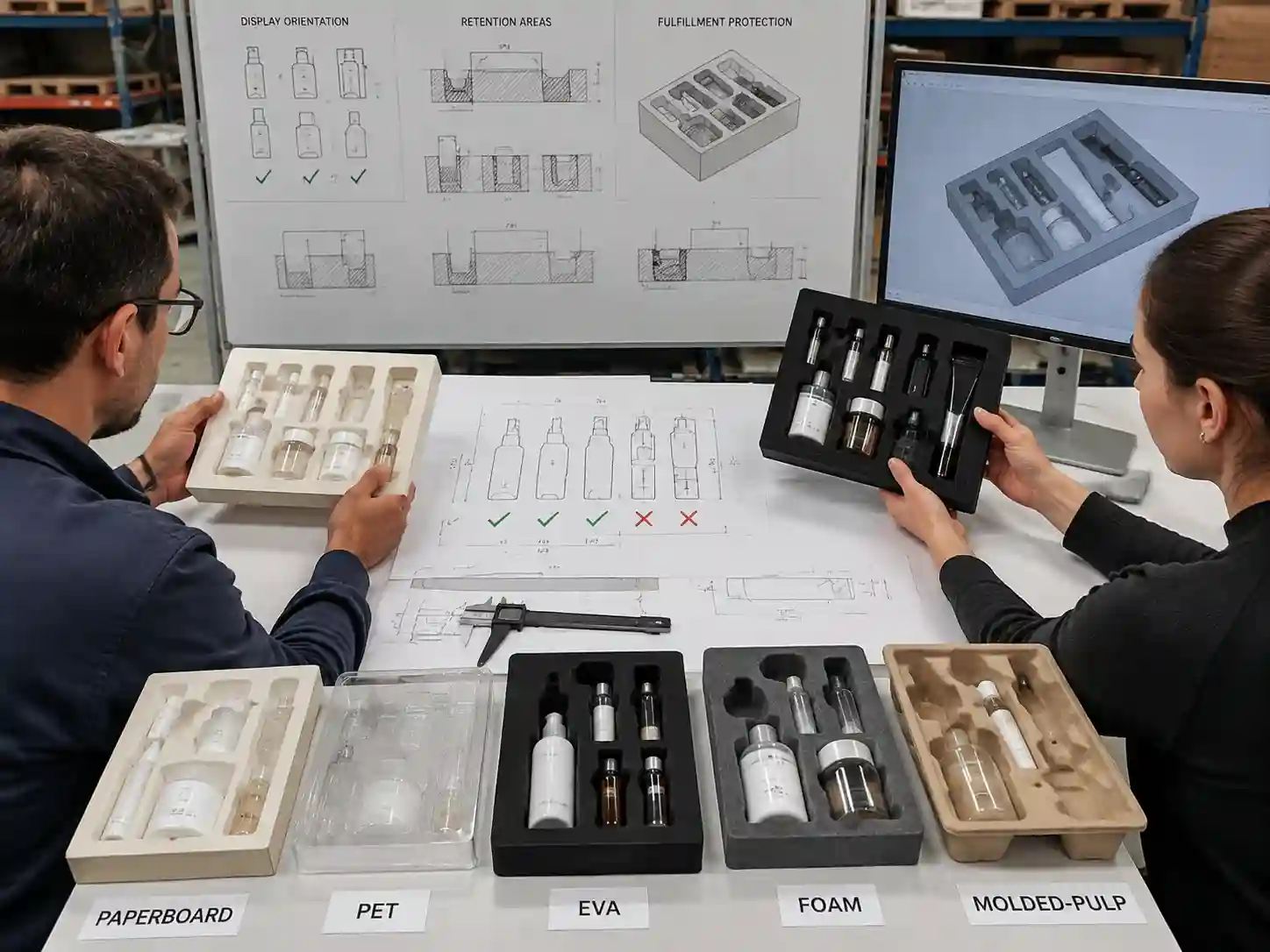
What Makes an Insert Suitable for Both Display and Fulfillment?
An insert must hold products securely while still allowing efficient packing and a clean final presentation. Display requirements usually focus on product visibility, alignment, and appearance, while fulfillment requirements focus on loading speed, protection, and movement control.
For advent calendar packaging, these requirements often conflict. A cavity that grips a product tightly may improve shipping stability but make manual packing slower. A loose cavity may improve loading speed but create product movement during transport. The insert design must balance both conditions.
How Does Cavity Geometry Affect Display Fulfillment Insert Design?
Cavity geometry is the foundation of insert performance because it determines product position, support area, and removal behavior. The cavity should follow the product shape while leaving controlled clearance for loading and handling.
- Shape matching: Round bottles, jars, tubes, and vials may require different support points to prevent rotation.
- Clearance control: Space must allow insertion without excessive looseness.
- Orientation control: Product labels, caps, or front-facing features may need consistent positioning.
- Removal access: Finger space or lifting areas should be considered where products are difficult to grip.
These decisions are normally verified through cavity drawings, dimensional measurements, and physical samples rather than visual estimates alone.
How Should an Insert Balance Retention and Easy Fulfillment?
The insert should retain products during handling while allowing operators to place and remove items without unnecessary force. The correct retention method depends on product weight, shape, surface material, and packing process.
| Retention method | Suitable situations | Main checks |
|---|---|---|
| Side wall support | Cylindrical bottles, jars, and containers | Rotation control and removal force |
| Folded paperboard tabs | Lightweight seasonal products | Tab strength and assembly consistency |
| PET cavity forming | Products needing clear visibility | Cavity accuracy and product protection |
| EVA or foam support | Premium products requiring cushioning | Compression, surface contact, and fit |
Project-dependent recommendations vary according to product weight, packaging material, packing method, and whether the finished calendar is displayed vertically or horizontally.
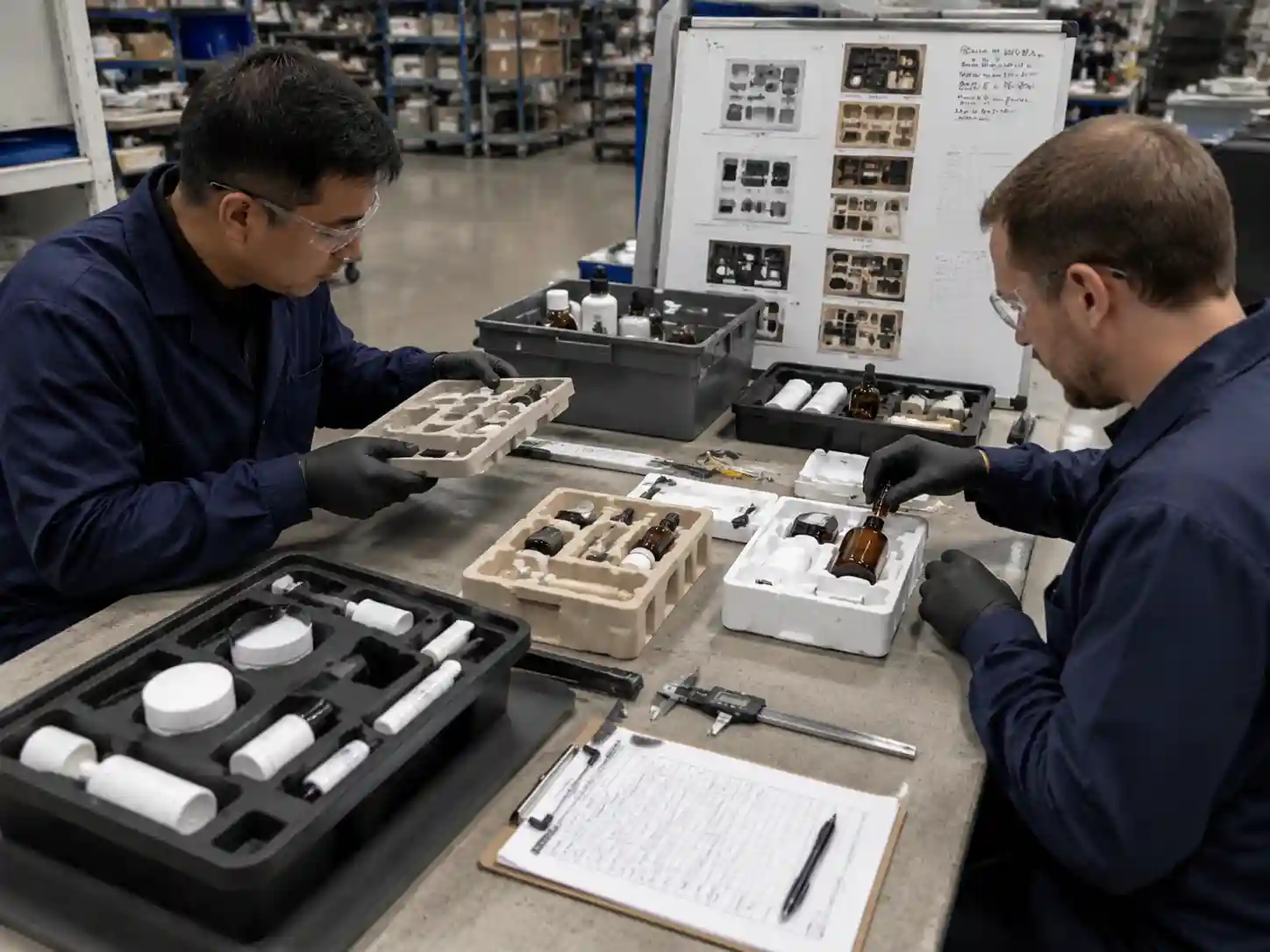
How Do You Test an Insert Before Production Approval?
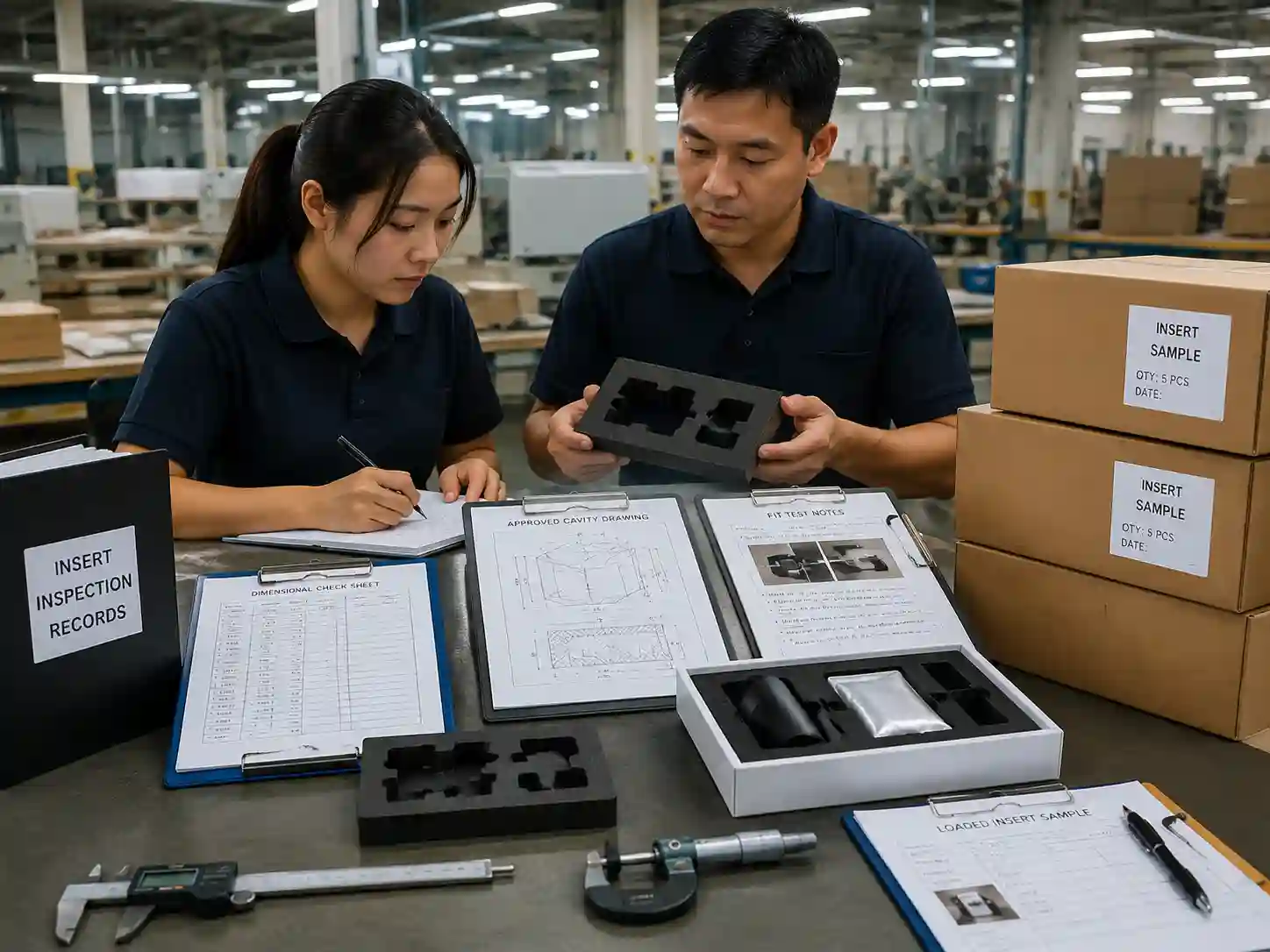
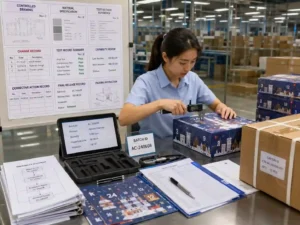
A physical fit test is the most practical way to confirm whether an insert works for both display and fulfillment. Samples should be checked with actual products or accurate product replicas whenever possible.
- Review the insert drawing: Confirm cavity dimensions, support areas, and product orientation requirements.
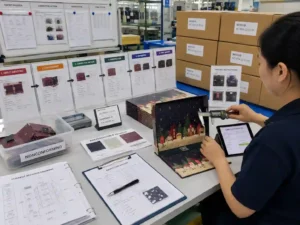
- Load sample products: Check whether products can be inserted consistently without damaging the insert.
- Evaluate removal: Confirm that products can be removed without excessive force or surface damage.
- Check display appearance: Verify spacing, alignment, and visible presentation.
- Perform movement checks: Evaluate whether products remain stable when the package is handled.
Approval records should identify the tested insert version, product sample used, measured dimensions, and any required design adjustments. This creates a clear reference between engineering, sampling, and production teams.
What Transit Risks Should Be Considered for Display Inserts?
An insert designed only for appearance may fail when exposed to real handling conditions. Fulfillment performance requires checking how the insert behaves after products are loaded and the package is moved.
- Products should not rotate into unwanted positions.
- Heavy products should not compress or deform weak insert areas.
- Insert walls and locking features should maintain their shape after loading.
- Products should not create pressure points that damage printed packaging.
A practical transit checklist includes:
- Loaded product weight distribution review
- Product movement observation after handling
- Insert deformation inspection
- Final packaging fit confirmation
How Do Buyers Approve the Final Insert Design?
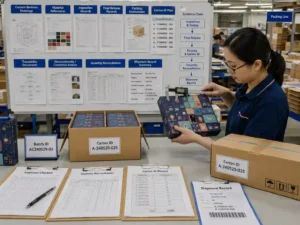
Final approval should be based on measurable evidence rather than appearance alone. Buyers and packaging teams commonly review approved drawings, prototype samples, fit-test results, inspection notes, and packing evaluations.
Verifiable information includes cavity measurements, sample fit results, material specifications, and documented design revisions. Recommendations about retention strength or material selection remain project-dependent and should be confirmed with actual product samples.
Which Insert Materials Are Commonly Used for Display and Fulfillment?
The material choice depends on the product requirements and presentation goals. Paperboard inserts are often selected for integrated paper packaging solutions, while PET, EVA, foam, and molded-pulp options may be considered when different support or visibility characteristics are needed.
The correct choice depends on product weight, shape complexity, required appearance, packing process, and environmental conditions during handling.
Frequently Asked Questions
Can one insert design work for both retail display and warehouse packing?
Yes, but it requires balancing product visibility with loading efficiency and protection. The final design should be validated with actual packing conditions.
Why does product orientation matter in an insert?
Orientation affects presentation quality, packing consistency, and product stability. It is especially important when labels, caps, or decorative features must face a specific direction.
What documents help verify insert performance?
Useful records include approved drawings, cavity measurements, prototype evaluation notes, fit-test records, and inspection documents.
When should buyers request a physical insert sample?
A sample is recommended when product dimensions, weight, shape, or packing requirements could affect retention and usability.
Giftpackpro develops custom advent calendar packaging solutions with insert engineering considerations for product presentation, packing efficiency, and protection. Explore our custom advent calendar box services or request a custom quote for your next packaging project.