Quick answer: Glue overflow on wrapped rigid boxes is controlled through adhesive application limits, process checks, operator standards, and in-process inspection. Factories typically verify glue placement, wrapping pressure, edge cleanliness, and surface appearance before moving boxes to the next stage. Effective control depends on matching adhesive type, board structure, wrapping material, and production method, with inspection records used to identify and correct recurring issues.
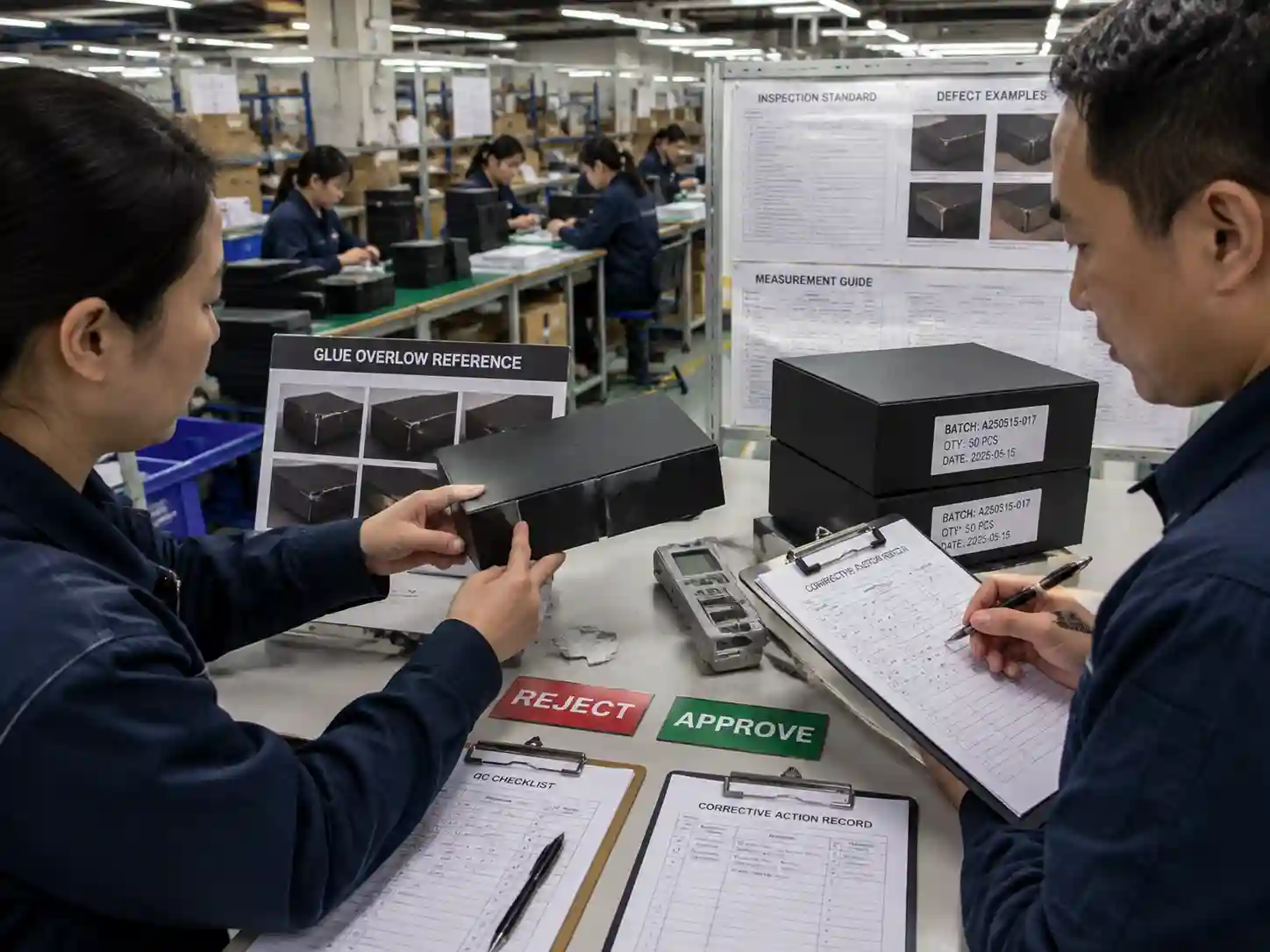
Why is glue overflow a quality risk on wrapped rigid boxes?
Glue overflow occurs when adhesive extends beyond the intended bonding area and becomes visible on the wrapped surface, edges, folds, or internal areas of a rigid box. The issue is controlled because visible glue marks can affect appearance, handling quality, and customer acceptance.
For wrapped rigid boxes such as premium gift packaging and advent calendar structures, glue control is especially important around:
- Paper wrapping edges and folded corners.
- Drawer fronts, lids, and hinge areas where alignment is visible.
- Areas with matte paper, textured paper, or dark-colored wrapping materials.
- Components requiring clean contact surfaces for assembly accuracy.
Not every adhesive mark has the same impact. A small internal adhesive trace may be acceptable depending on the structure, while visible glue contamination on an exterior panel is usually treated as a cosmetic defect.
How does rigid box glue overflow control work during production?
Rigid box glue overflow control starts by controlling where, how much, and when adhesive is applied. Factories normally manage the process through equipment settings, operator methods, and inspection checkpoints rather than relying only on final inspection.
1. Define the correct glue application area
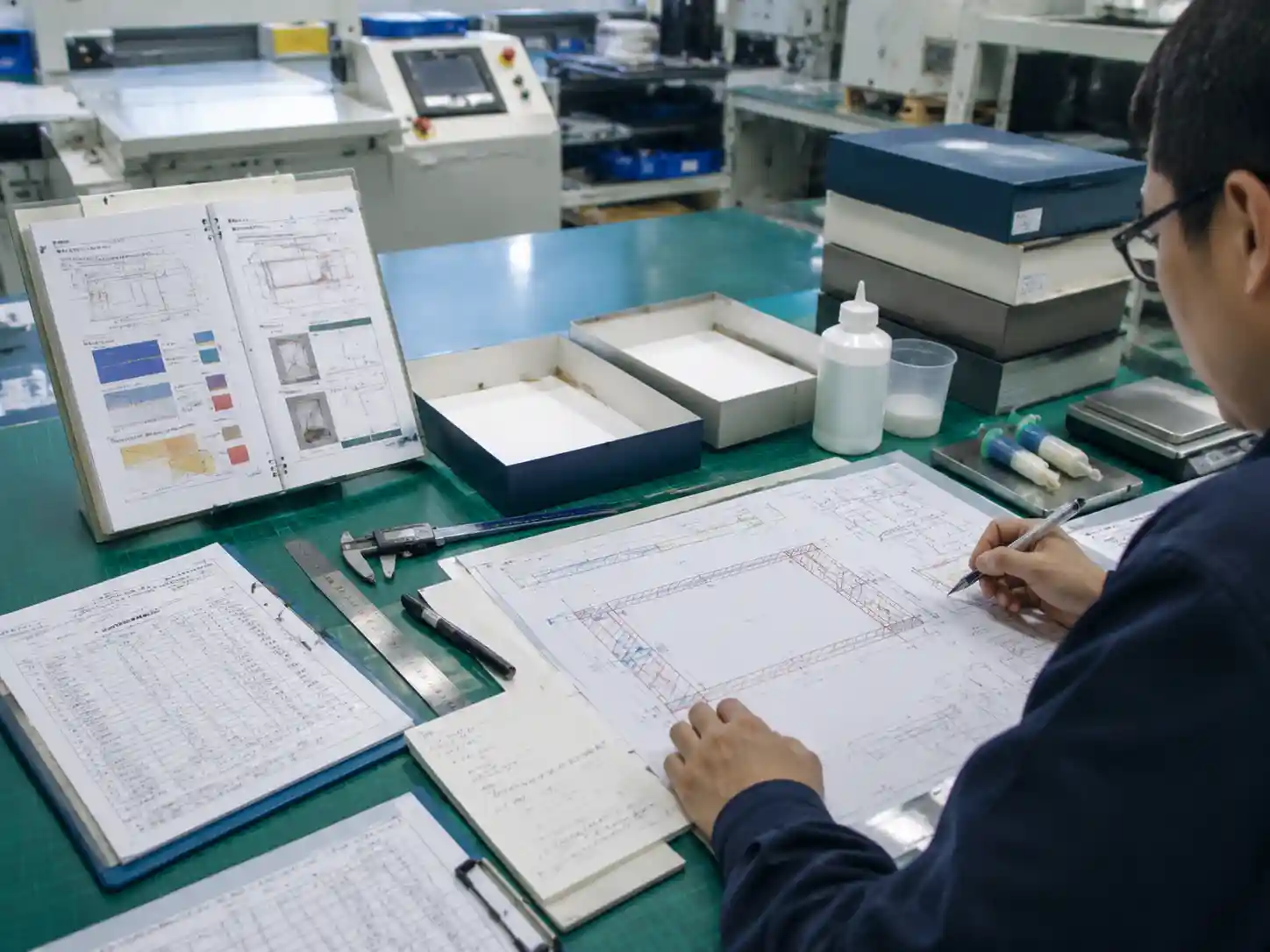
The first control step is identifying approved adhesive zones from structural drawings or production samples. Glue should support bonding strength without spreading into visible areas.
Important references may include:
- Wrapping paper fold locations.
- Greyboard edge positions.
- Required overlap areas.
- Areas where pressure is applied during forming.
Buyer approval is normally based on approved samples, structural references, or production drawings rather than a single universal glue allowance. The acceptable condition varies by box design and finishing requirements.
2. Control adhesive amount and viscosity
Excess adhesive volume is one of the main causes of overflow. Factories control this by setting application methods according to material absorption, wrapping paper thickness, and production speed.
Typical process checks include:
- Checking glue coverage consistency across production pieces.
- Verifying that adhesive does not pool at edges or corners.
- Adjusting application quantity when paper absorption changes.
- Confirming bonding strength after drying or setting time.
The suitable adhesive amount depends on material combinations. A porous wrapping paper may require different handling compared with coated paper or specialty paper.
Which inspections should be used to detect glue overflow?
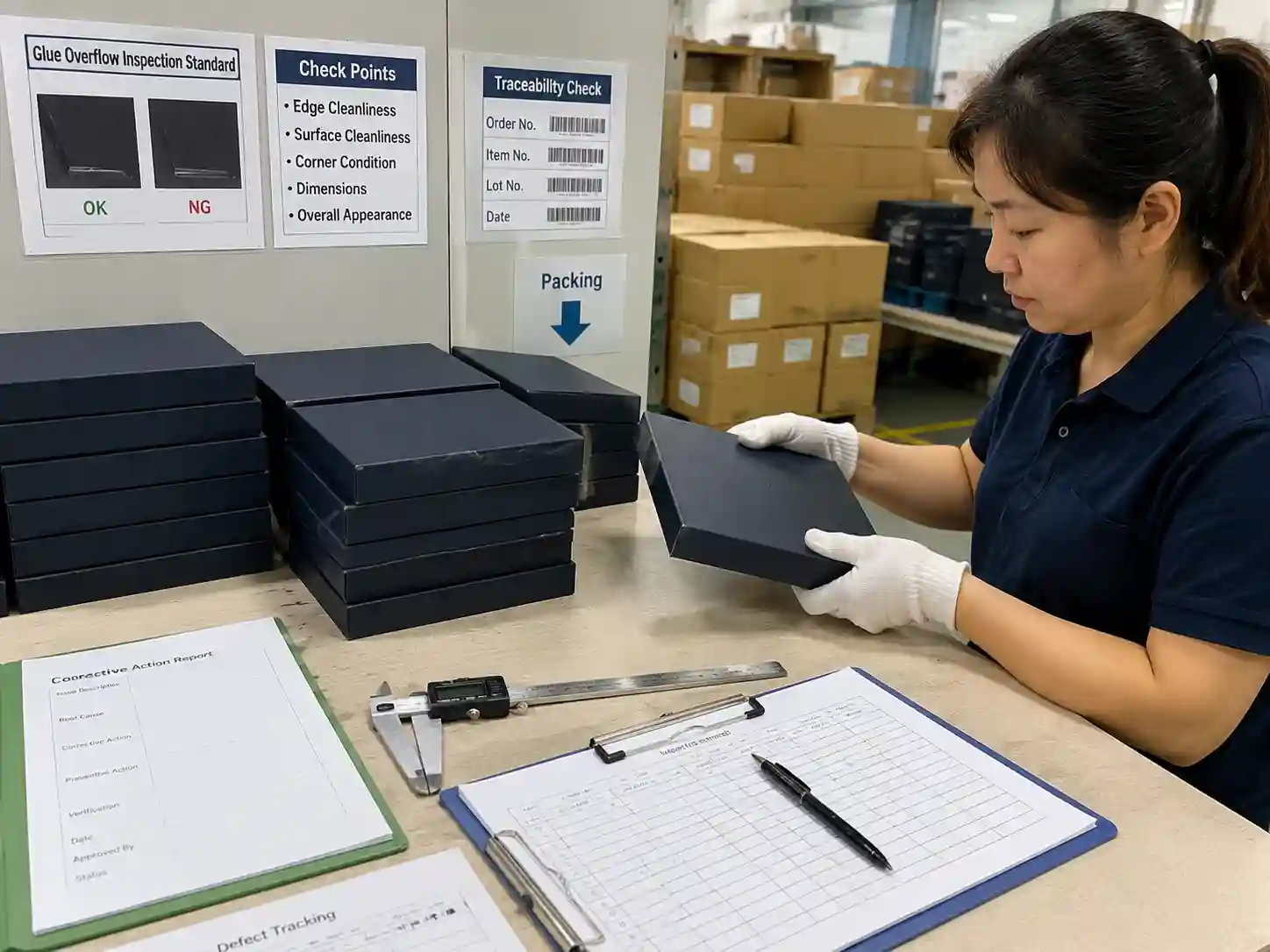
Glue overflow should be checked during production, not only after finished packing. Early inspection allows operators to correct adhesive application before a large quantity of boxes is affected.
| Inspection point | What is checked | Evidence or record |
|---|---|---|
| Glue application stage | Coverage area, excess adhesive, uneven application | Process checklist and operator record |
| Wrapping and forming stage | Clean edges, folded corners, surface contamination | In-process inspection report |
| Assembly stage | Visible glue marks, alignment impact, functional appearance | Defect classification record |
| Final inspection | Overall appearance and approved sample comparison | Quality approval record |
What defect criteria are used for glue overflow?
Factories usually classify glue-related defects by visibility, location, and impact on function. The exact acceptance criteria should be agreed through approved samples or project specifications.
| Defect type | Typical evaluation | Possible action |
|---|---|---|
| Visible glue stain on exterior panel | High appearance risk | Reject, repair if possible, or adjust process |
| Glue residue near fold lines | May affect appearance or flexibility | Review based on location and severity |
| Adhesive not fully bonded | Functional risk | Investigate application or curing conditions |
| Minor internal adhesive mark | Depends on structure visibility | Accept or reject according to approved standard |
How are glue overflow problems traced and corrected?
When overflow is detected, the correction process should identify the production stage where the issue started. Traceability helps prevent repeated defects.
A practical corrective action record may include:
- Production date or batch reference.
- Box component or production stage affected.
- Observed defect type and location.
- Operator or process station involved.
- Adjustment made and verification result.
For example, if glue appears repeatedly along a wrapped edge, the investigation may review adhesive quantity, wrapping pressure, material absorption, and operator handling sequence before deciding on a correction.
What should buyers review before approving glue control standards?
Buyers should confirm that glue appearance requirements are connected to an approved physical reference. This avoids disagreements caused by different expectations of acceptable cosmetic variation.
Useful approval evidence may include:
- Approved production samples.
- Structural drawings showing adhesive areas.
- Inspection checklists.
- Defect reference photos.
- Corrective action records for previous issues.
For custom packaging projects, glue control is only one part of overall production quality. Buyers can review related manufacturing capabilities through custom advent calendar box services and understand available packaging structures through custom advent calendar box products.
Frequently asked questions about rigid box glue overflow control
Can glue overflow be completely eliminated?
No production process has zero variation. The goal is controlled application, defined acceptance criteria, and consistent inspection. The acceptable level depends on the box structure, materials, and approved appearance standard.
Does wrapping paper type affect glue overflow risk?
Yes. Paper thickness, coating, texture, absorbency, and surface finish can influence adhesive behavior. Material changes should be reviewed because they may require process adjustments.
Should glue inspection be included in final QC only?
No. In-process checks are more effective because they identify the source of the problem before large quantities move forward. Final inspection confirms the finished result against approved standards.
How can Giftpackpro support glue quality control for custom rigid packaging?
Giftpackpro supports custom advent calendar and rigid packaging projects with production-focused communication, sample review, and quality checkpoints. Buyers can discuss project requirements through request a custom quote and align inspection expectations before production begins.