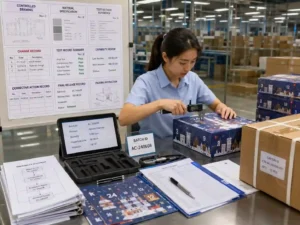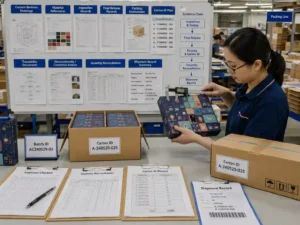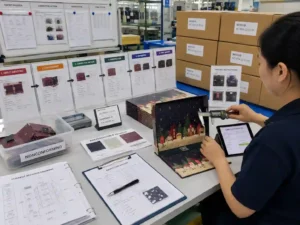
Advent calendar box lead time is not decided by printing alone. For B2B buyers, the schedule is shaped by structure, insert design, artwork approval, material sourcing, finishing, assembly, inspection, packing, and export planning.
This is why two projects with the same quantity can have very different production timelines. A simple paperboard door-opening calendar may move faster than a rigid drawer-style calendar with foil stamping, custom inserts, and individual product compartments.
For overseas brands, wholesalers, retail buyers, and purchasing teams, the safest approach is to plan the schedule before confirming price. Giftpackpro supports buyers who need custom structure review, sample confirmation, bulk production, and export packing for seasonal paper gift packaging projects.
Why Lead Time Matters for Advent Calendar Packaging Buyers
Advent calendar packaging is usually tied to a fixed sales season. A delay in sample approval or bulk production can affect product filling, retail launch, warehouse booking, and delivery to distributors.
Lead time also affects cost. Urgent schedules may require faster material purchasing, overtime labor, priority finishing, or split shipments. These can increase the final quotation.
If you are still comparing structures, start with advent calendar box buying guides and then confirm technical details through custom advent calendar box services. This helps avoid changing the structure after sampling.
1. Box Structure Is the First Schedule Factor
The structure is usually the first thing that affects advent calendar box lead time. A 24-door paperboard calendar, a rigid drawer calendar, a book-style box, and a multi-layer gift set all require different tooling, assembly, and inspection steps.
For example, a simple flat paperboard structure may need die-cutting, printing, lamination, folding, and gluing. A rigid drawer calendar may need greyboard mounting, drawer forming, sleeve assembly, handle or ribbon placement, and final alignment checks.
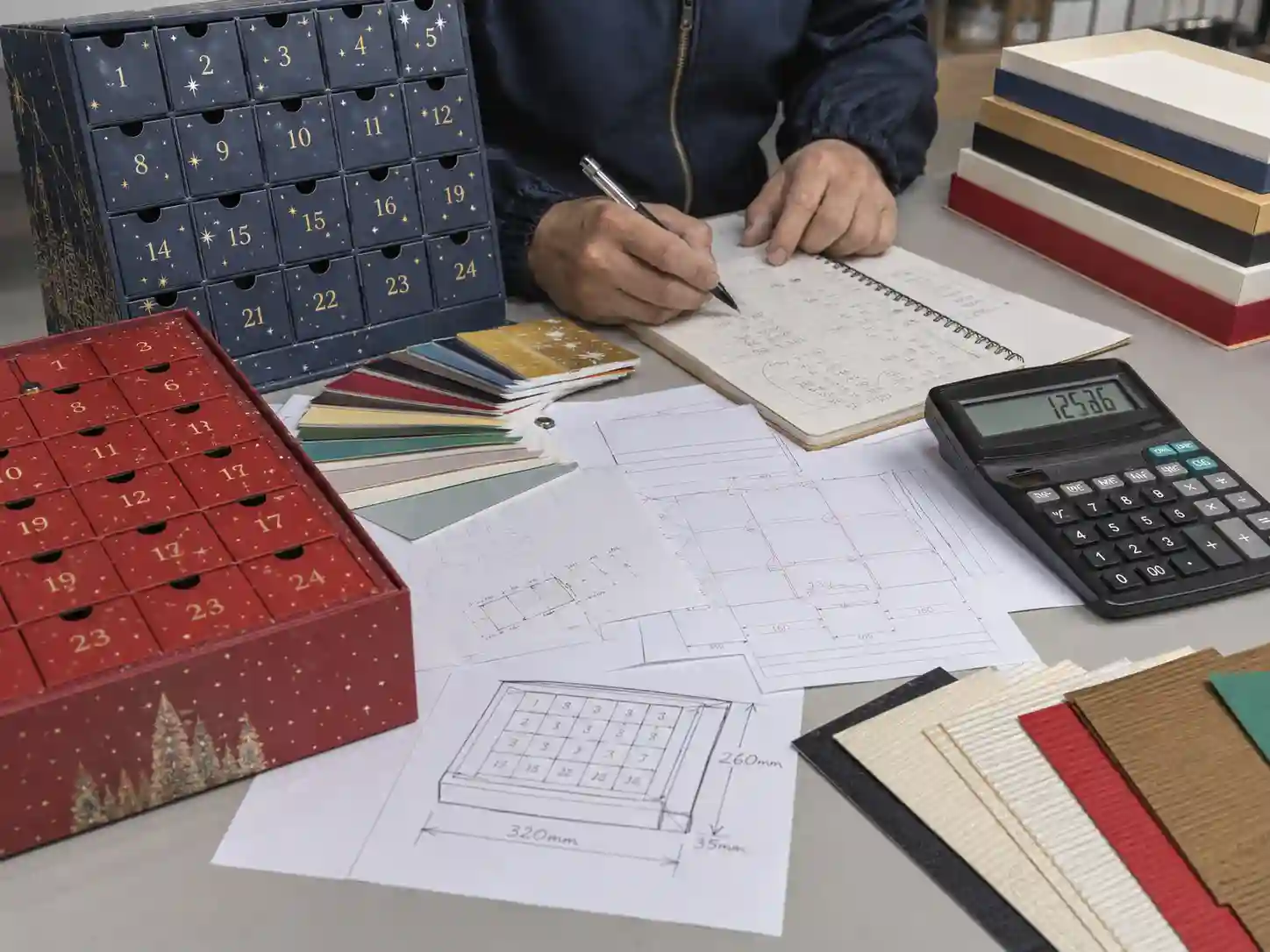
Common structure decisions that affect schedule
- Number of compartments: 12, 24, or 25 compartments require different insert planning and fit testing.
- Opening method: Doors, drawers, magnetic flaps, sleeves, or book-style structures affect tooling and labor.
- Material thickness: Rigid board, paperboard, kraft paper, and specialty paper may have different sourcing times.
- Insert type: Paperboard, EVA, foam, molded pulp, or blister-style inserts require different sampling steps.
- Assembly complexity: More drawers, ribbons, windows, or layered trays usually mean longer manual assembly time.
Buyers can review examples on the custom advent calendar box products page before sending a request. This makes it easier to choose a structure that matches the target budget and launch schedule.
2. Artwork Approval Can Delay Production More Than Expected
Artwork is one of the most common causes of schedule delay. Even when the box structure is confirmed, production cannot move smoothly if the dieline, color references, barcode placement, warning text, or finishing layers are incomplete.
For custom advent calendar boxes, buyers should prepare print-ready artwork as early as possible. The supplier also needs to check bleed, safe area, folding lines, drawer direction, compartment numbering, and color matching requirements.
Artwork details buyers should prepare
- Final logo and brand graphics in editable vector format.
- CMYK or Pantone color references.
- Clear dieline confirmation for each panel, drawer, door, or sleeve.
- Finishing layers for foil stamping, embossing, debossing, spot UV, or window cutouts.
- Barcode, legal text, recycling marks, product warning text, or importer information if needed.
If paper sourcing or certification is important, buyers can also check official guidance from the Forest Stewardship Council before confirming material claims. This is useful when FSC-certified paper is required for retail or brand compliance.
3. MOQ and Quantity Affect Material Planning
MOQ affects the way a factory plans material purchasing, printing, die-cutting, finishing, labor, and packing. A small sample order and a bulk production order do not use the same schedule.
For many custom advent calendar box projects, buyers ask about MOQ, unit price, and lead time at the same time. This is correct. Quantity affects cost, but it also affects whether material can be purchased efficiently and whether the production line can be arranged without delay.
A low MOQ may be possible for some structures, but complex rigid boxes, custom inserts, specialty paper, and premium finishing can require higher setup effort. To check a realistic MOQ, buyers can send structure, size, quantity, and artwork details through request a custom quote.
4. Finishing and Special Materials Add More Process Steps
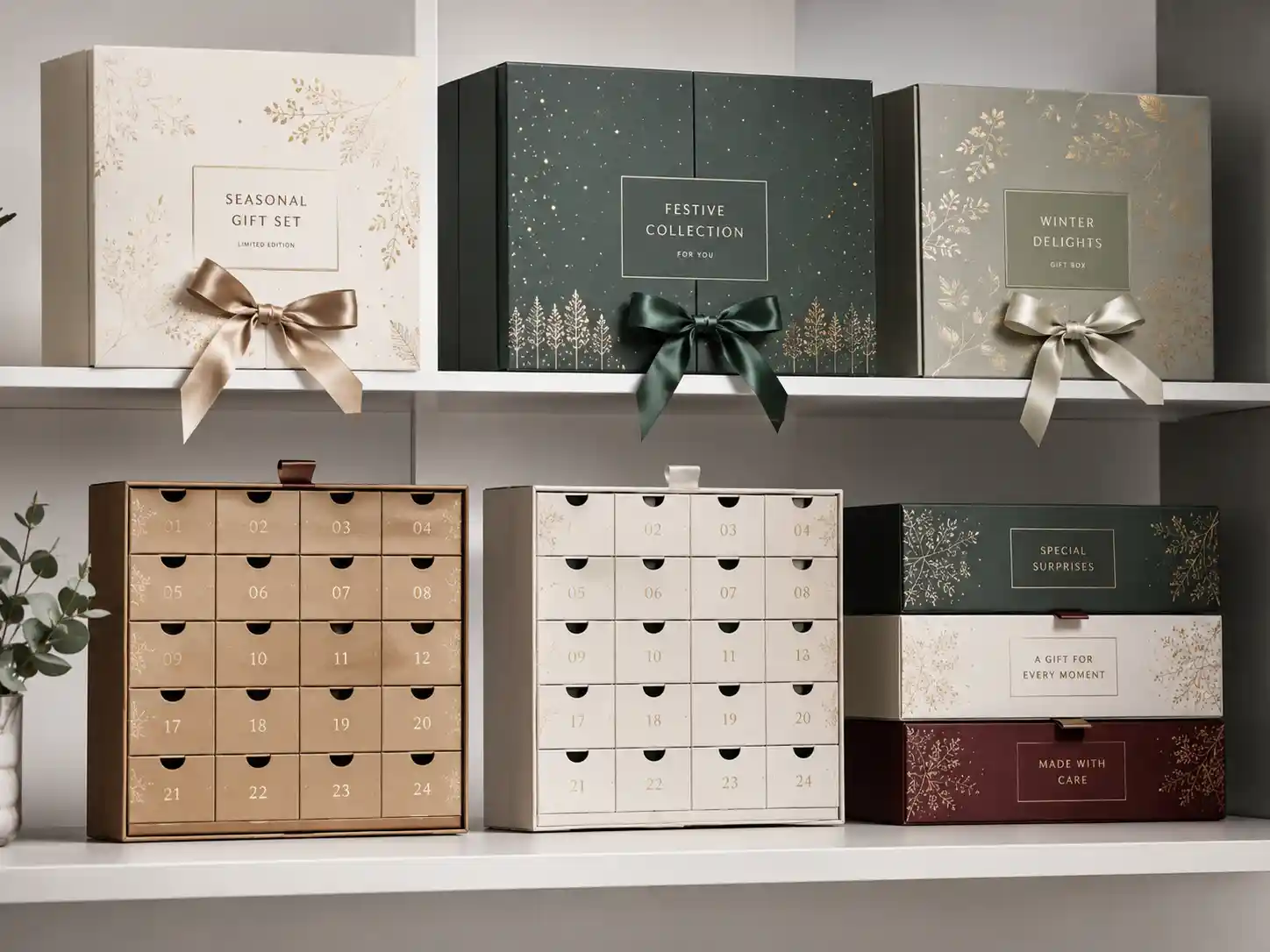
Premium finishing can improve shelf presentation, but each finishing process adds schedule risk if it is not planned early. Foil stamping, embossing, debossing, matte lamination, gloss lamination, soft-touch coating, spot UV, and special paper all need additional checks.
These steps may also require extra sample approval. For example, foil position and embossing depth should be checked on a physical sample, not only on a screen proof.
Finishing choices that may extend lead time
- Foil stamping: Needs a separate stamping die and position check.
- Embossing or debossing: Needs pressure testing and alignment confirmation.
- Spot UV: Needs a separate layer and registration check.
- Specialty paper: May require additional sourcing time.
- Window patching: Adds material and assembly steps.
For buyers comparing cost and lead time, it is better to ask which finishing options are essential and which can be simplified. Giftpackpro can help review whether a premium effect is suitable for the box structure, budget, and schedule.
Estimated Schedule Factors for Custom Advent Calendar Boxes
| Project Stage | What Affects Time | Buyer Preparation Advice |
|---|---|---|
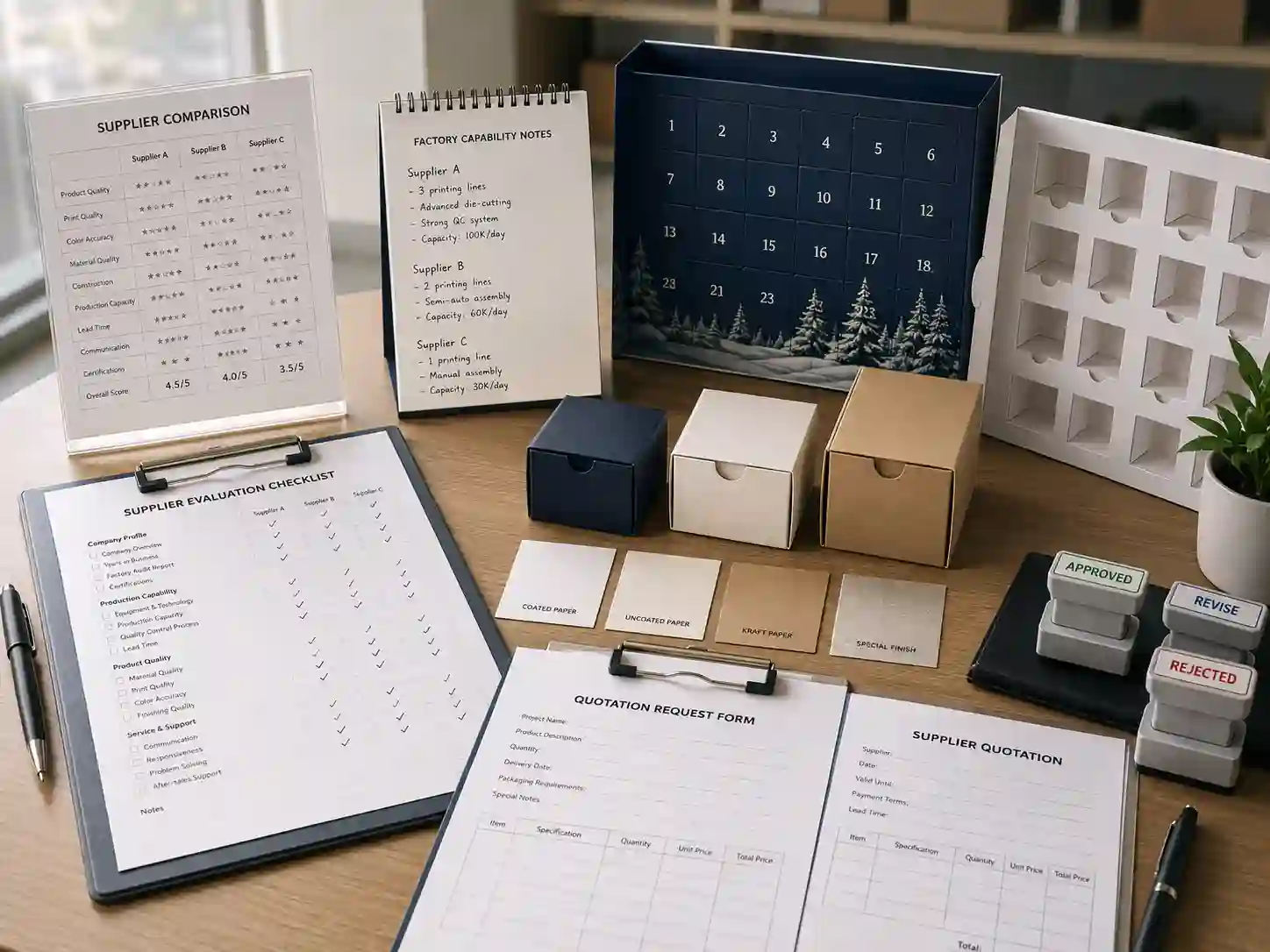
| Structure confirmation | Box type, compartment count, insert style, product size, opening method | Send product dimensions, target box size, product weight, and reference structure. |
| Quotation | Quantity, material, finishing, packing method, shipping terms | Prepare MOQ target, delivery country, export carton needs, and preferred Incoterms. |
| Sampling | Dieline, insert fit, color proof, finishing sample, assembly method | Approve structure and artwork quickly to avoid repeated sample revisions. |
| Bulk production | Printing, mounting, die-cutting, finishing, gluing, drawer assembly | Freeze artwork and structure before mass production starts. |
| Quality control | Color consistency, compartment fit, drawer movement, glue strength, packing inspection | Confirm inspection standards and acceptable tolerance before production. |
| Export packing | Carton size, pallet plan, moisture protection, shipping mark, warehouse booking | Confirm destination, carton label, pallet requirement, and shipment deadline early. |
5. Labor and Assembly Complexity Should Not Be Ignored
Advent calendar boxes are often more labor-intensive than standard folding cartons. Drawer alignment, compartment loading space, insert placement, ribbon attachment, and final packing all take time.
If the design has many small drawers, tight inserts, or mixed materials, the factory needs more time for assembly and QC. This is especially important for cosmetics, candles, jewelry, chocolate, tea, coffee, toys, and gift set packaging.
Buyers who need faster production can simplify the structure. For example, reducing drawer quantity, choosing paperboard inserts instead of complex foam inserts, or removing non-essential finishing can help control both cost and schedule.
6. Quality Control Adds Time but Reduces Shipment Risk
QC is part of the production schedule, not an optional extra. For advent calendar boxes, inspection should cover printing, color consistency, structure strength, drawer movement, insert fit, compartment alignment, glue quality, and export carton packing.
For food, cosmetics, or product-contact projects, buyers should also check whether their product requires specific material or packaging compliance. Official resources such as the FDA food contact substances guidance can help buyers understand when extra review may be needed.
QC points that affect lead time
- Color matching against approved printed sample.
- Door or drawer opening test.
- Insert fit testing with product dummies or real samples.
- Drop, compression, or carton packing checks if required.
- Final carton label and shipping mark confirmation.
A professional Giftpackpro packaging factory will usually ask for clear QC standards before bulk production. This avoids confusion when the order is finished and ready to ship.
7. Export Packing and Shipment Planning Can Affect the Final Delivery Date
Production lead time and delivery lead time are different. A box order may be finished at the factory, but it still needs carton packing, pallet preparation, customs documents, warehouse booking, and freight arrangement.
For overseas buyers, export packing should be discussed during quotation, not after production. Advent calendar boxes can be bulky, especially rigid drawer styles. Carton size, pallet height, and container loading efficiency can affect freight cost and delivery planning.
If the goods need to reach a fulfillment warehouse, retail distribution center, Amazon warehouse, or brand warehouse, confirm the packing and label requirements early. This prevents repacking and relabeling delays.
How Buyers Can Shorten Advent Calendar Box Lead Time
Prepare product and structure details before asking for price
A useful quote request should include product size, weight, quantity, target box style, compartment count, material preference, finishing request, packing method, and destination country.
Approve one direction before sampling
Changing from a door-opening calendar to a drawer calendar after sampling will restart part of the process. Confirm the structure direction before requesting the sample.
Send complete artwork files
Incomplete artwork creates repeated checking. Prepare editable artwork, color references, dieline notes, and finishing layers before sample production.
Ask for a realistic production schedule
Do not only ask for the fastest lead time. Ask what schedule is realistic for your quantity, structure, finishing, and QC requirements.
Confirm packing requirements early
Export carton strength, pallet plan, shipping marks, carton labels, and warehouse requirements should be confirmed before bulk packing starts.
Quote Preparation Checklist for Faster Response
When requesting a quotation from custom advent calendar boxes manufacturer Giftpackpro, prepare the following details:
- Box structure: drawer, door-opening, book-style, sleeve, magnetic, or custom rigid structure.
- Box size and product size for each compartment.
- Product category, such as cosmetics, chocolate, candles, jewelry, toys, tea, coffee, beverages, or gifts.
- Estimated order quantity and target MOQ.
- Material preference, including paperboard, greyboard, kraft paper, specialty paper, or FSC-certified paper.
- Printing method, color reference, and finishing request.
- Insert material and product fit requirement.
- Target delivery date and destination country.
- Export packing, pallet, carton label, or warehouse requirements.
If you are planning a seasonal project, use custom advent calendar box services to check structure and sampling needs, review advent calendar box buying guides for procurement planning, and request a custom quote once the key details are ready.
Final Thoughts
Advent calendar box lead time depends on more than the number of pieces. Structure, inserts, artwork, MOQ, materials, finishing, labor, QC, export packing, and shipment planning all affect the final schedule.
The best way to control time and cost is to prepare a complete quotation request, confirm the structure early, approve artwork clearly, and allow enough time for sampling and bulk production. For B2B buyers, this reduces last-minute changes and helps keep the seasonal launch plan on track.