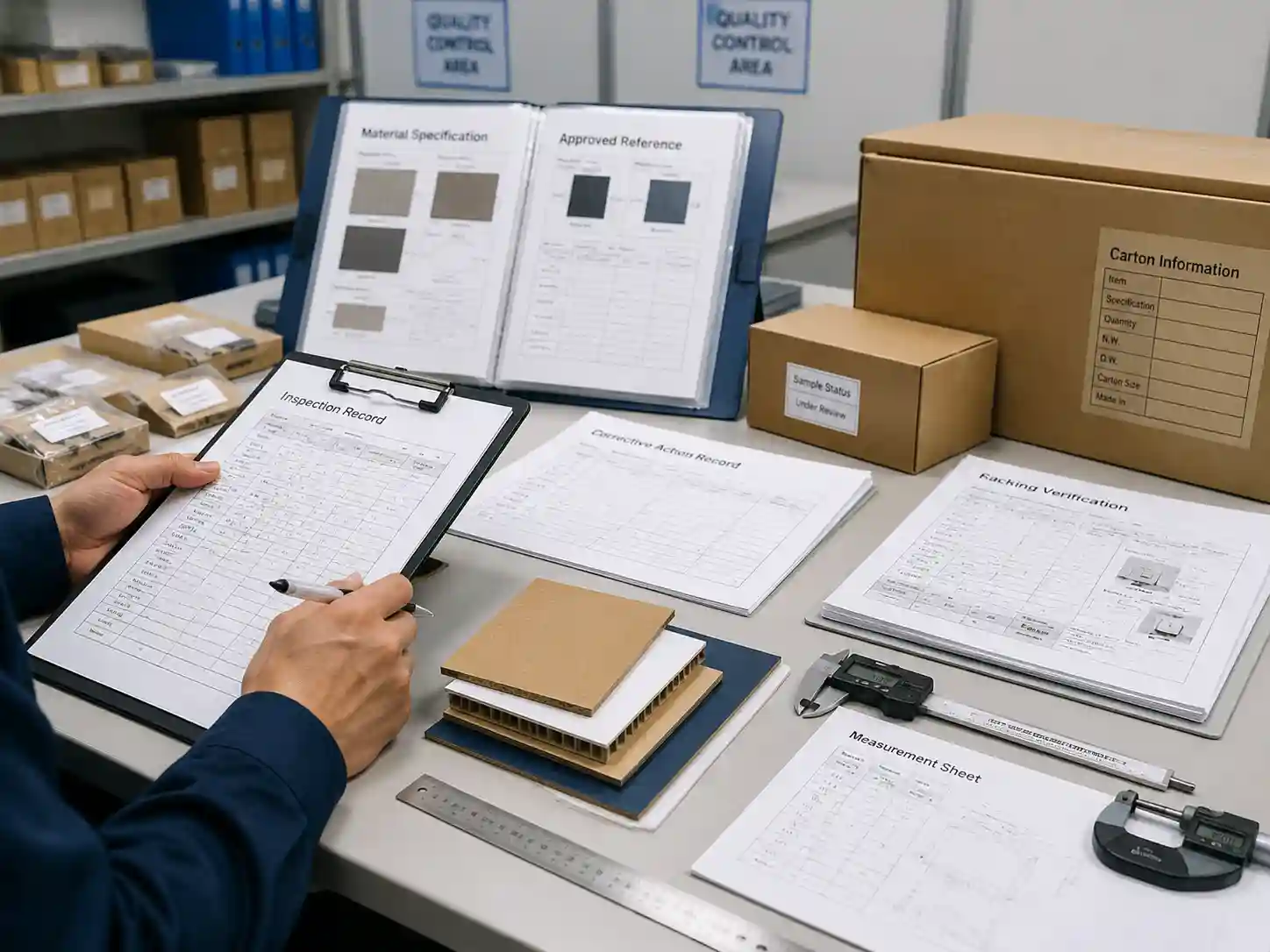
Quick answer: Verify material specifications before paying a deposit by confirming the agreed construction details, reviewing supplier evidence, checking physical samples or references, and recording approvals in writing. For custom advent calendar boxes, buyers should verify board structure, paper materials, finishing requirements, and packing-related specifications before production funds are released. The goal is to prevent substitutions, misunderstandings, and quality disputes after manufacturing begins.

Why should buyers verify material specifications before paying a deposit?
Material specification verification protects buyers from paying for a product definition that is unclear or different from what the factory later produces. A quotation may describe a general box type, but the final quality depends on measurable details such as board thickness, paper type, surface treatment, structural layers, and component requirements.
Before a deposit is paid, buyers should confirm that the supplier understands the approved specification and can provide evidence showing how those requirements will be controlled during production.
What material details should be confirmed before approval?
The specification should identify the materials that affect strength, appearance, and production consistency. The exact requirements vary by project, but common verification points include:
- Grey board or paperboard construction and thickness requirements.
- Outer wrapping paper type, texture, and finish expectations.
- Special finishes such as foil stamping, embossing, or coating requirements.
- Drawer, door, tray, or compartment structural materials.
- Adhesive, reinforcement, and assembly-related material requirements when they affect durability.
- Packaging protection materials required for the approved product configuration.
These details should be linked to drawings, approved samples, purchase orders, or specification sheets instead of relying only on verbal descriptions.
How does material specification verification reduce sourcing risk?
Verification reduces the risk that a supplier interprets a requirement differently after the order is placed. A low-cost quotation may appear attractive because some material assumptions are unclear, including thinner board, simplified structures, or different paper grades.
A buyer should compare the quotation against supporting evidence rather than evaluating price alone.
| Verification item | Evidence to request | Risk if not confirmed |
|---|---|---|
| Board and paper structure | Material specification sheet, sample reference, production drawing | Unexpected changes in rigidity, thickness, or appearance |
| Surface finish | Approved sample, finish reference, technical notes | Different visual result from the approved design |
| Component construction | Assembly drawings, prototype records, inspection points | Weak fitting or inconsistent production |
| Supplier production control | Material records, internal checks, approval records | Difficulty proving whether specifications were followed |
What documents should a supplier provide before deposit payment?
Before releasing a deposit, buyers should request documents that connect the commercial agreement with the physical product. The required documents vary by supplier and project complexity, but useful evidence includes:
- Confirmed product specifications or technical sheets.
- Approved drawings showing material-related requirements.
- Reference samples or approved prototypes.
- Purchase order details matching the approved specifications.
- Material confirmation records used for production preparation.
- Inspection plans showing how important characteristics will be checked.
The purpose is not to collect paperwork for its own sake. Each document should answer a practical question: “How will the buyer know the factory is producing the agreed material structure?”
How can buyers verify that samples match production specifications?
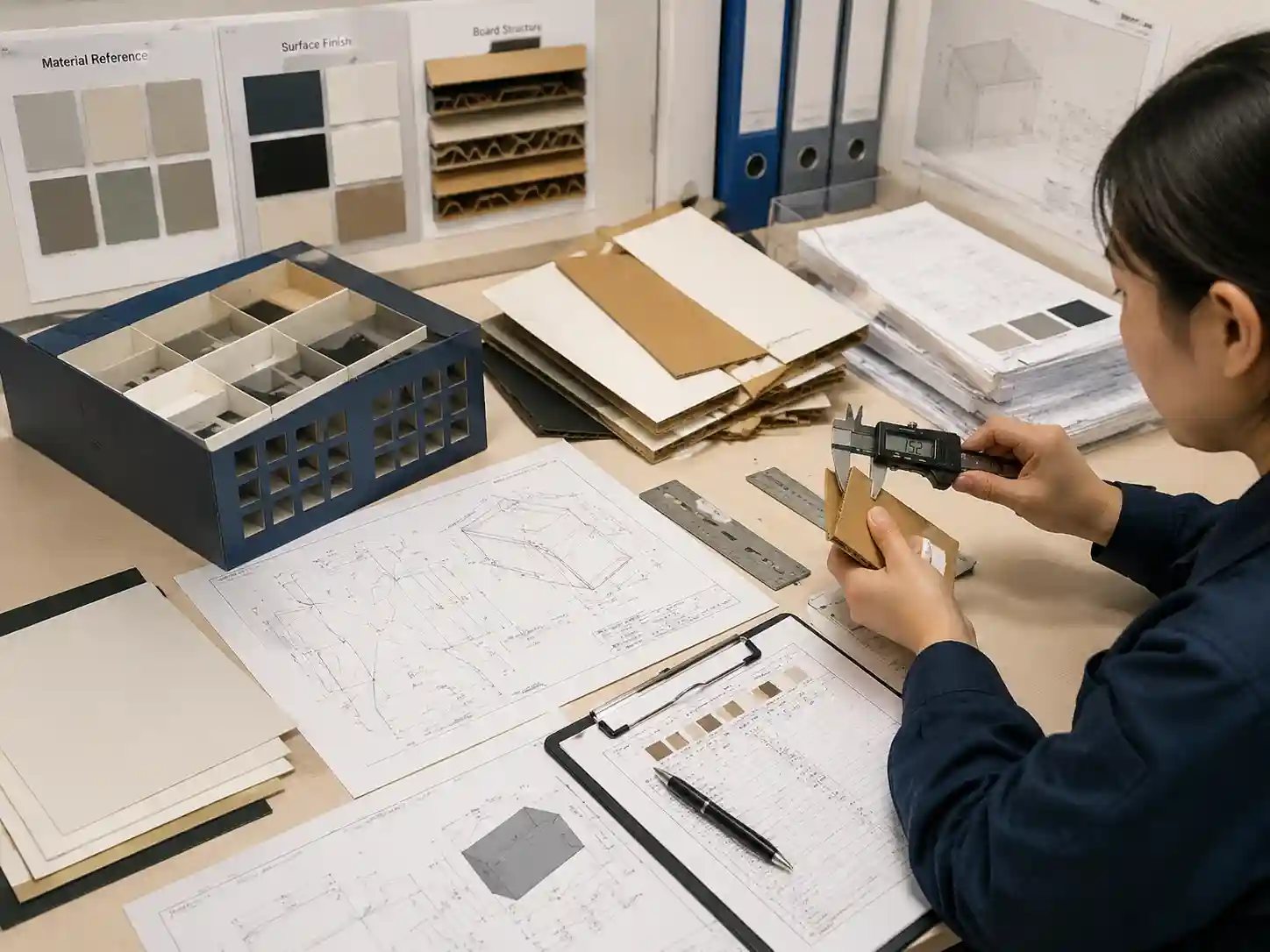
Physical samples provide an important reference, but they should be reviewed against measurable specifications rather than appearance alone. A sample approval process should identify which features are critical and which may vary slightly.
Useful checks include:
- Compare the sample construction with the agreed drawings and specifications.
- Measure important dimensions and material characteristics where applicable.
- Record approved references with photos, notes, or sample identification.
- Confirm that future production will follow the approved version.
For packaging with multiple layers or components, buyers should pay particular attention to areas where material substitutions are difficult to notice, such as internal boards, reinforcement layers, or hidden structural parts.
What supplier evidence should be reviewed before approving payment milestones?
Payment milestones should be connected to verified production steps whenever possible. The specific arrangement depends on the commercial agreement, but buyers can reduce risk by defining what evidence is required before moving forward.
| Stage | Buyer verification focus |
|---|---|
| Before deposit | Confirm specifications, drawings, samples, and supplier understanding. |
| Before mass production | Confirm approved references and production preparation. |
| During production | Verify inspection records and compliance with approved materials. |
| Before final payment | Review inspection results and shipment readiness evidence. |
These controls should be agreed before production starts. They help prevent disputes where a supplier claims that a different interpretation of the material requirement was acceptable.
How should buyers handle material specification changes after approval?
Any material change after approval should be treated as a controlled change rather than an informal adjustment. Even changes that appear minor can affect strength, appearance, fit, or customer acceptance.
A practical change-control process includes:
- Documenting the requested change and reason.
- Reviewing the impact on cost, quality, and production method.
- Obtaining buyer approval before implementation.
- Updating drawings, samples, or production references when necessary.
This approach is especially important for custom packaging because the approved material combination becomes the production reference for multiple manufacturing steps.
What should buyers check when a supplier cannot provide material evidence?
If a supplier cannot clearly explain material specifications or provide supporting records, the buyer should treat this as a sourcing risk. The issue may indicate weak internal controls, unclear subcontracting arrangements, or limited production visibility.
Recommended actions depend on the situation, but buyers can request additional clarification, sample confirmation, production evidence, or inspection rights before continuing.
Supplier material verification checklist
- Confirm the exact material requirements before deposit payment.
- Match quotations with drawings, samples, and purchase order details.
- Request supplier evidence supporting important specifications.
- Record approved samples and reference information.
- Define how material changes require approval.
- Connect payment stages with agreed verification points.
- Maintain inspection and corrective-action records when needed.
Frequently asked questions
Can a supplier change materials after receiving a deposit?
A supplier should not change important materials without buyer approval. The approved specification, purchase order, and change-control process should define how substitutions or modifications are handled.
Is a physical sample enough to verify materials?
A sample is valuable but may not show every production detail. Buyers should combine samples with drawings, specifications, measurements, and supplier records for stronger verification.
Do all packaging projects require the same material checks?
No. Verification depth depends on the product structure, customer requirements, packaging complexity, and quality risks associated with the project.
Giftpackpro supports commercial buyers with custom advent calendar boxes and seasonal paper packaging solutions. For projects requiring controlled material specifications, buyers can review available custom advent calendar box services or request a custom quote with their requirements.