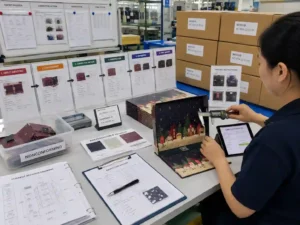
A low quote for a custom advent calendar box should be reviewed against the exact construction details, not only the final price. The most common hidden changes involve board thickness, paper selection, finishing layers, internal protection, and export packing methods. Buyers can identify these risks by comparing approved specifications, material records, drawings, samples, purchase orders, and inspection evidence before production starts.

Why can a low quote hide thinner board or simpler packing?
A lower quote can sometimes result from genuine production efficiency, but it can also come from reducing specifications that are not clearly written into the quotation. The risk appears when suppliers quote the same product name but use different assumptions for materials, structure, or packing.
Common hidden changes include:
- Using a thinner greyboard or paperboard core than the buyer expected.
- Reducing the thickness or quality of wrapping paper, decorative paper, or protective layers.
- Changing rigid box construction methods to simpler structures.
- Removing internal protection, dividers, sleeves, or support components.
- Using simpler export cartons or fewer protective packing materials.
The quotation itself is not enough evidence. Buyers should verify what physical and production specifications are included behind the price.
How do you compare a low quote against the approved packaging specification?
The first step is to create a specification comparison before approving any supplier. The quoted price should be checked against drawings, material descriptions, approved samples, and purchase order requirements.
| Item to verify | Evidence to request | Risk if unclear |
|---|---|---|
| Board thickness and structure | Material specification, construction drawing, sample measurement | Box strength, appearance, and durability may change |
| Wrapping and finishing layers | Paper specification, finishing notes, approved sample | Surface quality may differ from expectations |
| Internal packing method | Packing drawing, carton layout, packing instructions | Products may move or receive less protection |
| Export carton details | Carton specification and packing records | Shipping protection may be reduced |
Verifiable facts include the materials and dimensions stated in approved documents. Project-dependent recommendations include whether a specific board thickness, packing method, or protection level is suitable for the final application.
What supplier evidence proves the quoted materials will be used?
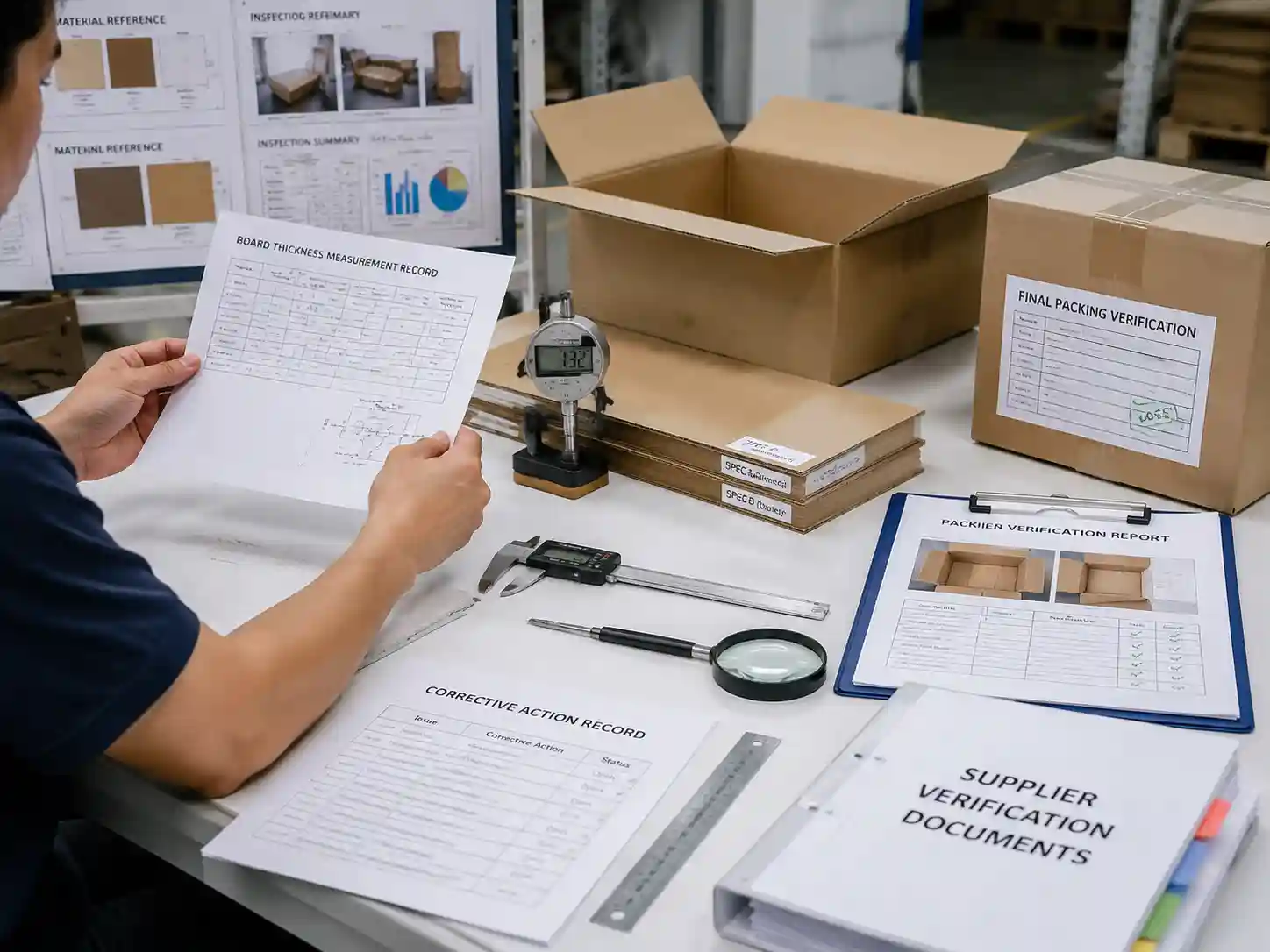
The strongest evidence comes from production documents that connect the quotation with actual manufacturing preparation. Buyers should request records that can be checked before mass production.
- Material specification sheets showing board type and thickness.
- Structural drawings showing layers and construction details.
- Approved samples retained for comparison.
- Purchase order details matching the approved specification.
- Production instructions showing material and packing requirements.
A supplier should be able to explain differences between the quoted version and the approved version. If a supplier cannot clearly identify the materials included in the quote, the buyer has limited control over later substitutions.

How can you check whether packing has been simplified?
Packing changes are often harder to notice than visible box changes because they happen during shipping preparation. Buyers should compare the packing method described in the quotation with the actual packing plan.
Important checks include:
- Number of units per export carton.
- Protection between finished boxes.
- Use of sleeves, bags, tissue, corner protection, or separators where required.
- Carton strength and stacking method.
- Whether assembled products or components require different protection.
For complex seasonal packaging, a simpler packing method may increase the risk of surface damage, deformation, movement inside cartons, or additional handling problems.
What measurements should buyers request before production?
Measurements provide objective evidence when comparing supplier claims. Important checks depend on the product structure, but common verification points include board thickness, panel dimensions, folding accuracy, and finished box measurements.
A practical verification approach includes:
- Compare the approved sample with the production specification.
- Confirm material measurements using suitable inspection tools.
- Record any approved changes in writing.
- Include critical specifications in the purchase order.
- Check production samples before full manufacturing continues.
Measurement records do not replace supplier management, but they reduce the chance that a lower quote becomes a lower-specification product.
How should buyers handle suppliers offering a much lower price?
A large price difference should trigger a specification review rather than an immediate rejection or approval. The buyer should ask which factors create the difference.
| Supplier explanation | Follow-up verification |
|---|---|
| Lower material cost | Confirm exact board, paper, and component specifications |
| Better production efficiency | Review production process and capacity evidence |
| Simpler packing method | Compare packing instructions and shipping protection |
| Different supplier assumptions | Match quotation details with purchase order requirements |
The buyer approval point is important. Any change to materials, structure, or packing should be reviewed and accepted before production. Suppliers may recommend alternatives, but the final specification should remain controlled by documented approval.
What is a practical low quote verification checklist?
Before accepting a low quotation, buyers can use this checklist to confirm whether the price difference comes from efficiency or hidden specification changes.
- Compare the quotation with the approved structural drawing.
- Confirm board materials and thickness requirements.
- Review sample details against the quoted construction.
- Check whether packing materials and carton methods are included.
- Confirm that purchase orders contain critical specifications.
- Keep inspection rights for important production checkpoints.
- Document any approved substitutions or changes.
For supplier evaluation, Giftpackpro helps commercial buyers review custom advent calendar box requirements through structured communication, production details, and approval records. Buyers can explore custom advent calendar box products, review custom advent calendar box services, or learn more about the Giftpackpro packaging factory approach.
Frequently Asked Questions
Does a lower quote always mean lower quality?
No. A lower quote may come from better production planning, different supplier capacity, or optimized processes. The key is confirming that the approved materials and packing requirements remain unchanged.
Should board thickness always be the same for every advent calendar box?
No. Board selection depends on the box structure, size, weight requirements, and intended handling conditions. Buyers should approve the suitable specification for each project.
What document should control the final production specification?
The purchase order and approved production documents should clearly define the required materials, construction details, and accepted changes.
Request a custom quote with clear material and packing requirements through request a custom quote to reduce the risk of unexpected specification changes.