
Quick answer: Separate primary packaging is usually required when the product itself needs protection from contamination, leakage, odor transfer, crushing, tangling, or handling damage before it enters a gift calendar compartment. Food, beverages, cosmetics, candles, jewelry, pet treats, and small accessories often require different levels of primary protection. The correct approach depends on the product’s original package, material sensitivity, weight, dimensions, and how the calendar insert controls movement.
When planning a custom advent calendar, the calendar box and internal compartments should not replace the product’s own protective packaging. The primary package remains responsible for product integrity, while the calendar structure mainly manages presentation, separation, positioning, and handling.

Why do some products require separate primary packaging before calendar packing?
Products require separate primary packaging when their own protection needs cannot be reliably achieved by the paper calendar structure alone. The calendar compartment is designed around the packaged product, not as a substitute for bottles, wrappers, pouches, cartons, or protective containers.
Primary packaging helps control risks such as:
- Odor or flavor transfer between different products.
- Direct contact between materials that may stain, scratch, or react.
- Crushing of soft or flexible items during handling.
- Leakage from liquids, oils, or moisture-sensitive products.
- Tangling of strings, chains, ribbons, or small components.
- Bulging caused by product expansion or poor compartment clearance.
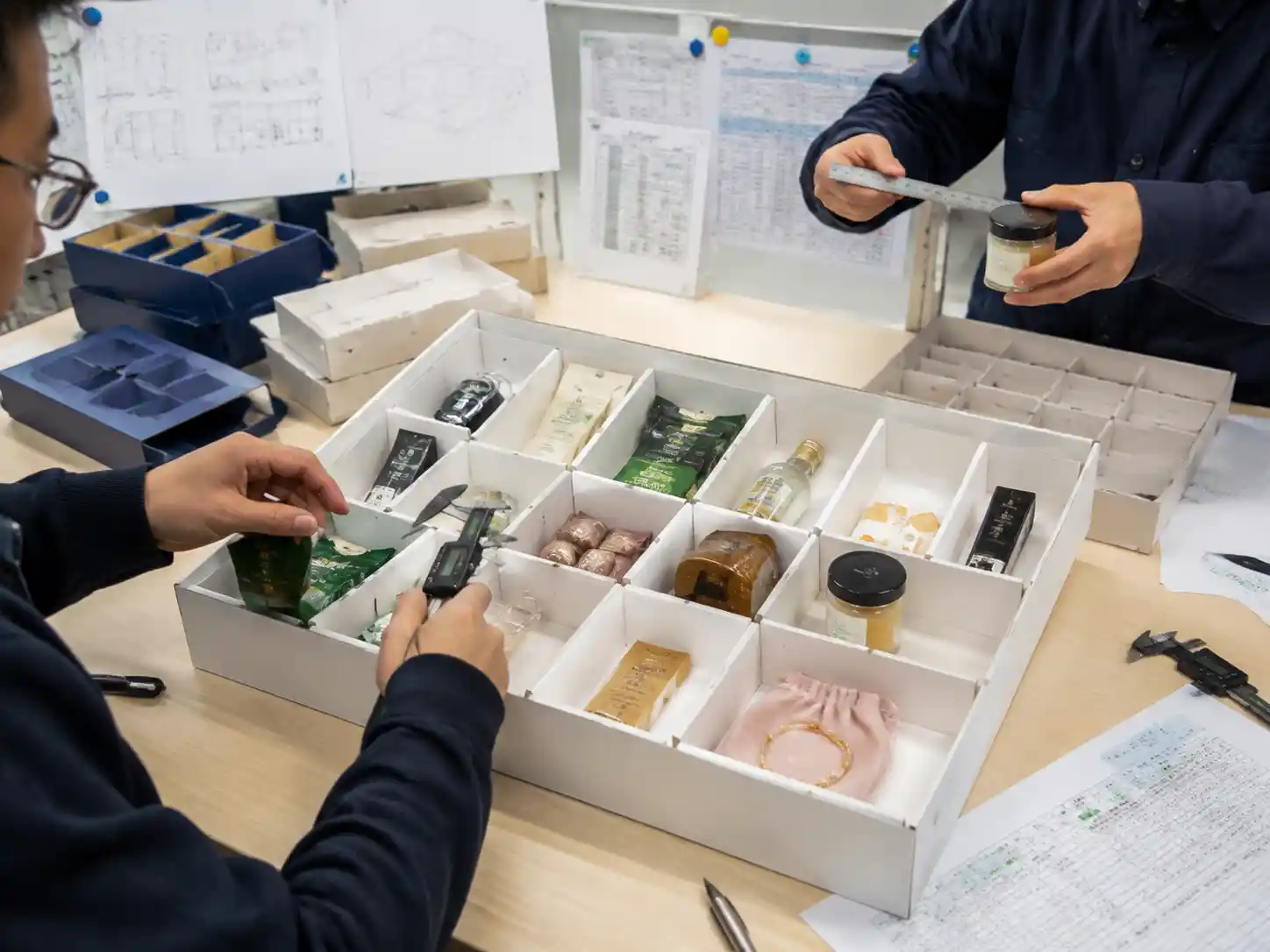
Verification normally starts with product drawings, packaging specifications, physical samples, and measurements of the final packed condition.
Which product categories usually need separate primary packaging in gift calendars?
The required packaging level varies by product category. The following examples show common risk areas that influence calendar packing decisions.
| Product category | Typical primary packaging requirement | Main calendar packing risk |
|---|---|---|
| Confectionery and chocolate | Individual wrappers, sealed pouches, or protective food-grade packs | Odor transfer, wrapper damage, flavor contamination, shape deformation |
| Tea and coffee products | Sachets, sealed bags, pods, or individual packs | Crushing, moisture exposure, odor absorption, seal damage |
| Mini beverage bottles | Bottles with secure closures and suitable outer protection | Leakage, weight stress, bottle movement, compartment failure |
| Candle jars and fragrance items | Jars, lids, or protective wraps before insertion | Glass contact, wax surface damage, scent transfer |
| Jewelry and accessories | Pouches, sleeves, trays, or small protective packs | Tangling, scratching, missing components |
| Pet treats | Sealed pouches or individual food packs | Odor migration, pouch bulging, compression damage |
How should packaging teams decide if a product needs additional protection?
The decision should be based on product risk evaluation rather than product category alone. Two items from the same category may require different solutions because of differences in material, size, weight, or existing packaging.
Does the product have odor, moisture, or contamination risks?
Products with strong aromas, food ingredients, cosmetics, or fragrance components often need sealed primary packaging to prevent interaction with nearby compartments. The review should confirm whether the existing product pack already provides sufficient barrier protection.
Can the product damage other items inside the calendar?
Heavy, sharp-edged, glass, or rigid products may require additional separation. For example, a glass bottle should not rely only on a paper cavity if movement could create impact against nearby items.
Will the product change shape during packing or transport?
Flexible pouches, wrapped snacks, and soft goods should be checked for compression and bulging. A product that fits during manual placement may create pressure after the calendar is closed.
What checks confirm primary packaging suitability before calendar packing?
Packaging teams usually confirm suitability through documented checks before production approval. The evidence depends on the project, but common review methods include:
- Product dimension measurements compared with compartment drawings.
- Weight checks to confirm insert and compartment support.
- Sample loading tests using actual primary packaging.
- Clearance checks around caps, lids, seals, and fragile surfaces.
- Odor separation review for food, beverage, and fragrance products.
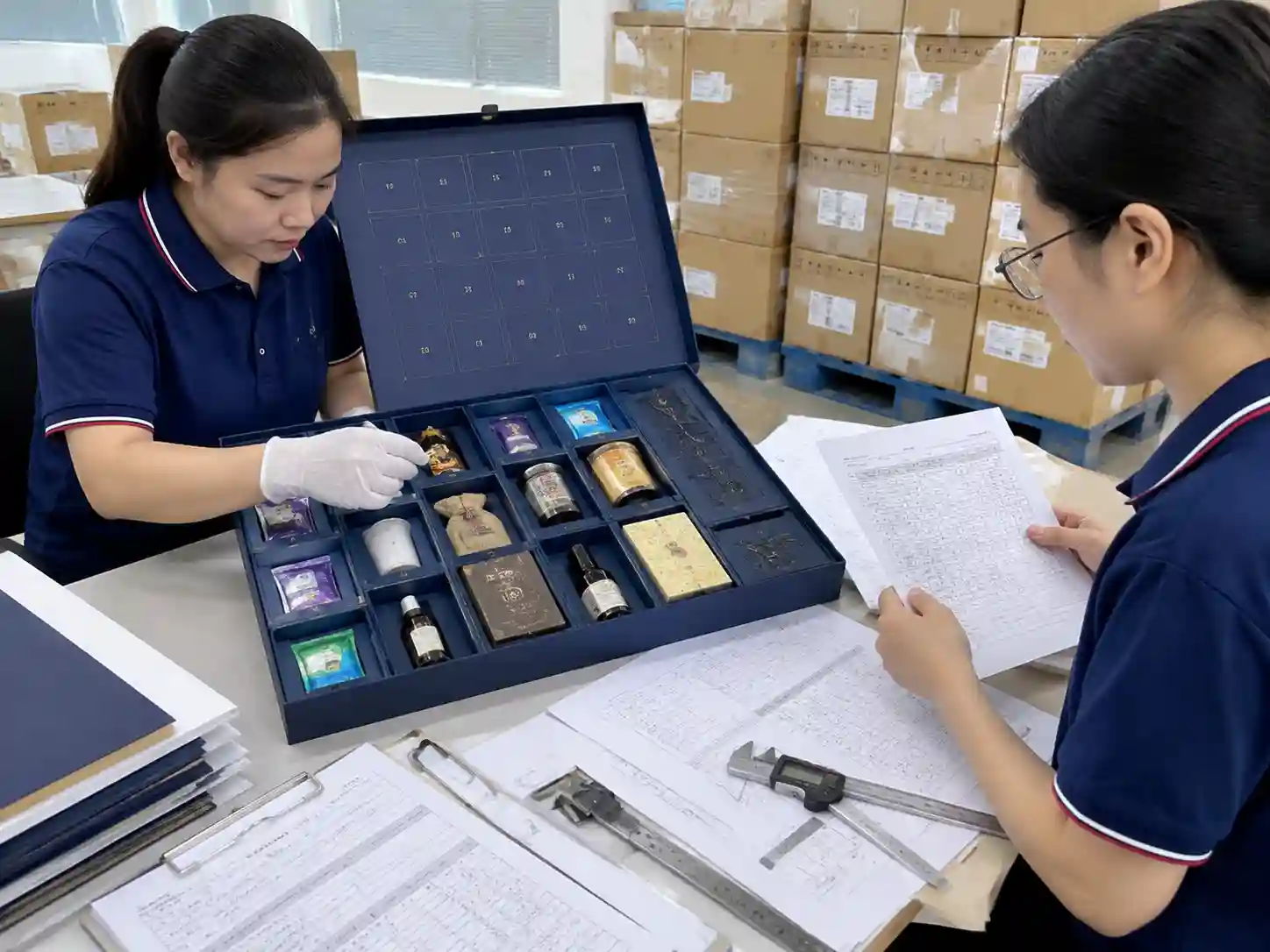
- Inspection records showing fit, positioning, and movement control.
A practical fit checklist includes:
- Is the primary package complete and sealed before insertion?
- Does the product remain in the intended orientation?
- Are labels, codes, or required product information still visible if needed?
- Can the product be removed without damaging the calendar structure?
- Does the compartment prevent unwanted movement without excessive pressure?
How do different product risks affect calendar compartment design?
The calendar insert should be developed around the protected product condition. The same paper structure cannot be applied equally to all categories.
- Liquid products: require secure positioning, leak-risk review, and separation from absorbent or odor-sensitive items.
- Food products: require attention to wrapper integrity, freshness protection, and contact prevention.
- Glass products: require clearance control and impact reduction.
- Small loose items: require retention methods that prevent movement or loss.
- Flexible products: require enough space to prevent squeezing and deformation.
Giftpackpro develops custom advent calendar packaging based on product dimensions, compartment requirements, and packaging objectives. Related solutions can be explored through custom advent calendar box products and custom advent calendar box services.
What information should buyers prepare before calendar packing review?
Buyers can improve packaging decisions by preparing accurate product information before engineering review. Useful inputs include product samples, dimensions, weight, existing primary packaging details, handling requirements, and any restrictions on contact between products.
Supplier reviews are typically supported by drawings, loaded samples, measurement records, inspection notes, and approval documents. These records help confirm that the calendar structure matches the actual packaged product rather than an estimated size.
FAQs about primary packaging requirements for gift calendars
Can a paper compartment replace primary packaging?
Usually no. Paper compartments organize and protect products inside the calendar, but they do not normally replace sealed wrappers, bottles, pouches, or containers required for product protection.
Do all food products need additional packaging before calendar packing?
Not always. The requirement depends on the product’s existing package, shelf-life requirements, odor sensitivity, and the protection needed during handling.
Why is product sampling important before final calendar packing?
Actual samples reveal issues that drawings may not show, including movement, compression, clearance problems, and interference between neighboring compartments.
For projects involving mixed products and different packaging risks, contact Giftpackpro through request a custom quote to discuss calendar structure requirements based on your product specifications.


