Quick answer: Packing stationery sets with pens, clips, and stickers requires compartment planning around product size, movement, surface protection, and separation. Stationery advent calendar compartments should keep long items from shifting, small accessories from mixing, and adhesive products from contacting other components. The practical process is to map each SKU, define cavity requirements, verify prototypes, and confirm loading quality through measurements and approval records.
Why do stationery advent calendars need dedicated compartment planning?
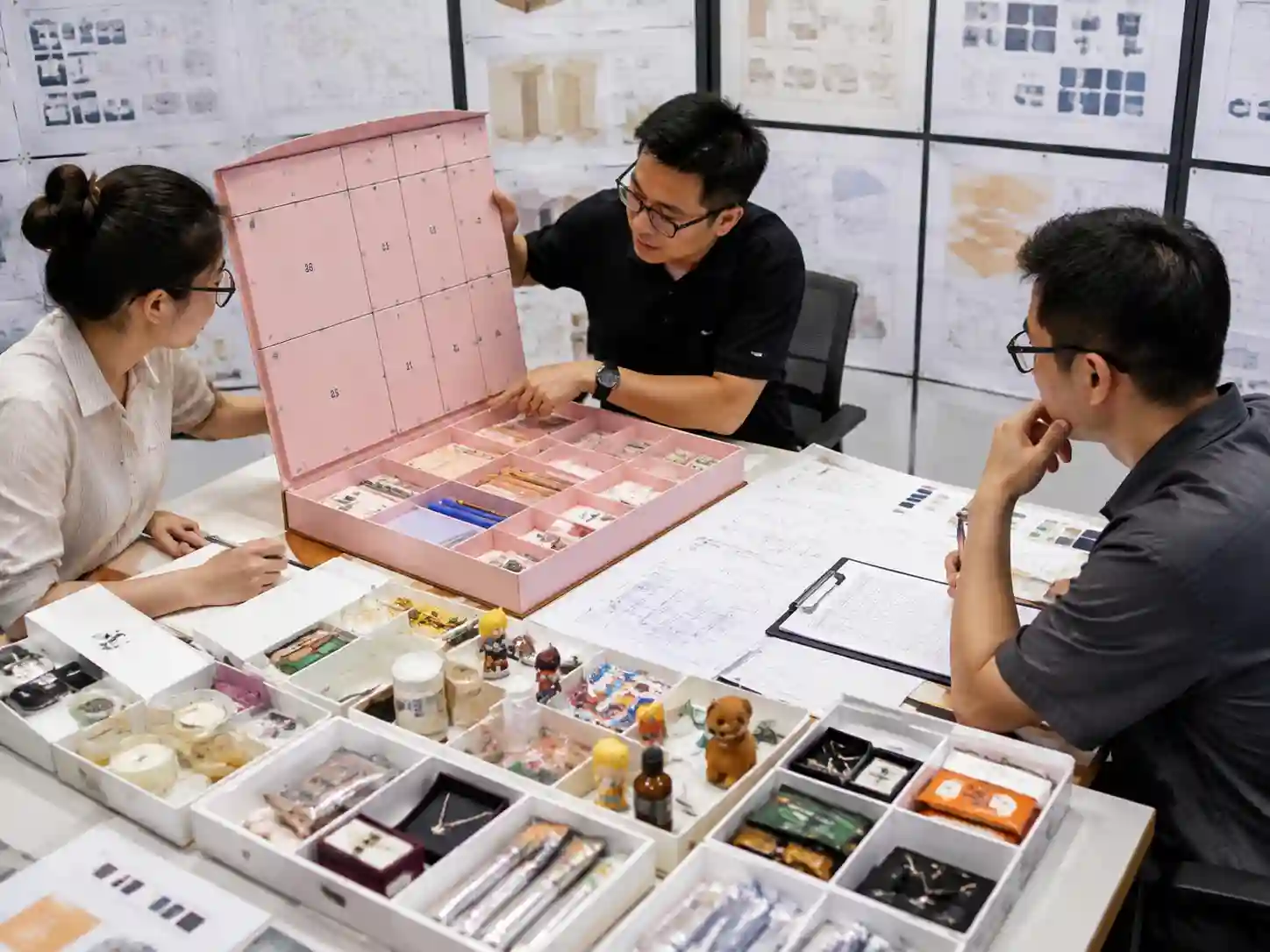
Stationery sets contain mixed product shapes that behave differently during storage and transport. Pens are long and rigid, clips are small and loose, and stickers may require clean surfaces and protection from bending or contamination.
The main purpose of compartment planning is to create controlled product boundaries. Instead of placing all items into a shared space, each opening should provide suitable retention, clearance, and separation based on the product characteristics.
| Stationery item | Main packaging risk | Compartment consideration |
|---|---|---|
| Pens and markers | Rolling, scratching, or pressure on adjacent items | Use cavity length, support points, and clearance suitable for the barrel shape |
| Paper stickers and sheets | Bending, edge damage, or adhesive surface contamination | Provide flat support and prevent contact with rough surfaces |
| Clips and small accessories | Mixing, falling into gaps, or difficult removal | Create smaller controlled spaces with easy access |
| Mixed stationery kits | Uneven weight distribution and movement | Balance cavity positions and product orientation |
How should you map stationery products before designing compartments?
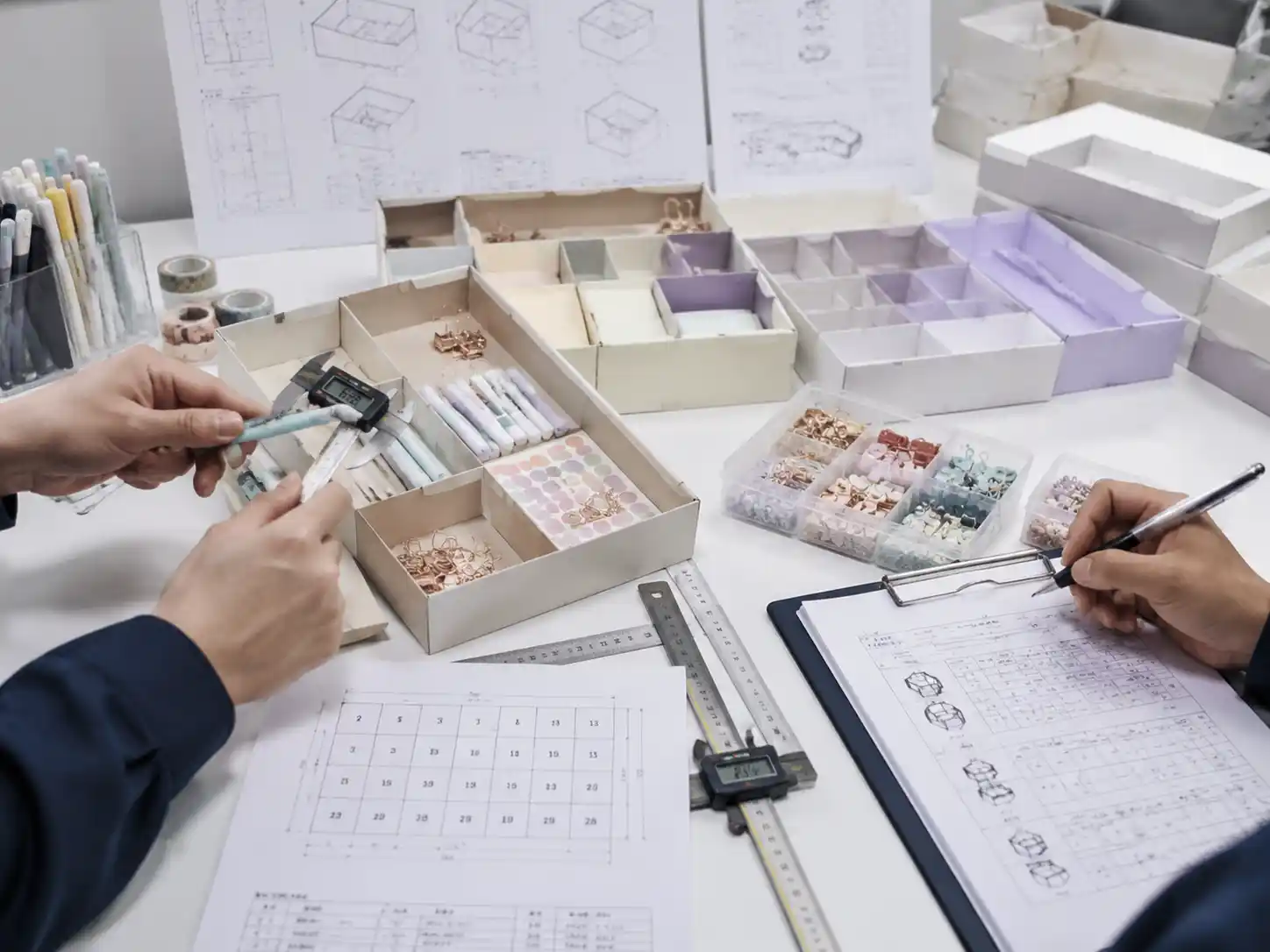
The first step is creating a product layout that records the physical requirements of every item. Packaging teams normally review dimensions, quantity, orientation, and handling requirements before finalizing the internal structure.
A practical product map should include:
- Overall length, width, and thickness of each stationery item.
- Whether products require flat placement, vertical placement, or angled positioning.
- Areas that must remain visible, such as decorative surfaces or product labels.
- Components that need separation because of different materials or surface finishes.
Drawings, product samples, and measurement records help verify that the planned compartments match the actual items rather than estimated dimensions.
How do you prevent pens, clips, and stickers from damaging each other?
Damage prevention depends on controlling contact between different stationery components. Rigid items such as pens can create pressure points, while small metal accessories may scratch printed surfaces if they move freely.
Common engineering considerations include:
- Adding enough clearance so pens do not press against compartment walls.
- Separating metal clips or sharp-edged accessories from decorative paper products.
- Preventing stickers or adhesive surfaces from contacting other items.
- Using internal supports to reduce movement during handling.
The correct approach varies by product combination. A set containing plastic pens and paper stickers may require different protection from a premium stationery collection containing metal clips, coated cards, or specialty materials.
How are stationery advent calendar compartments tested during sampling?
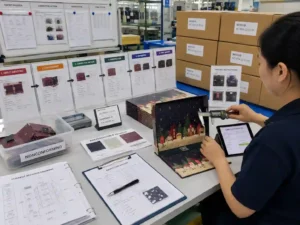
Prototype testing checks whether products fit correctly before production approval. The sample should be loaded with the actual stationery components or representative samples that match the final size and weight.
Typical checks include:
- Product insertion and removal without excessive force.
- Compartment strength after repeated handling.
- Clearance between neighboring items.
- Movement control when the calendar is tilted or transported.
- Protection of printed, coated, or adhesive surfaces.
Engineering teams may use rulers, calipers, cavity drawings, and sample loading records to compare the intended design with the physical result.
What quality checks confirm stationery sets are packed correctly?
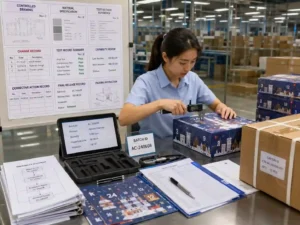
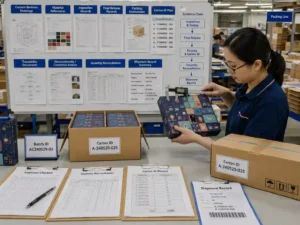
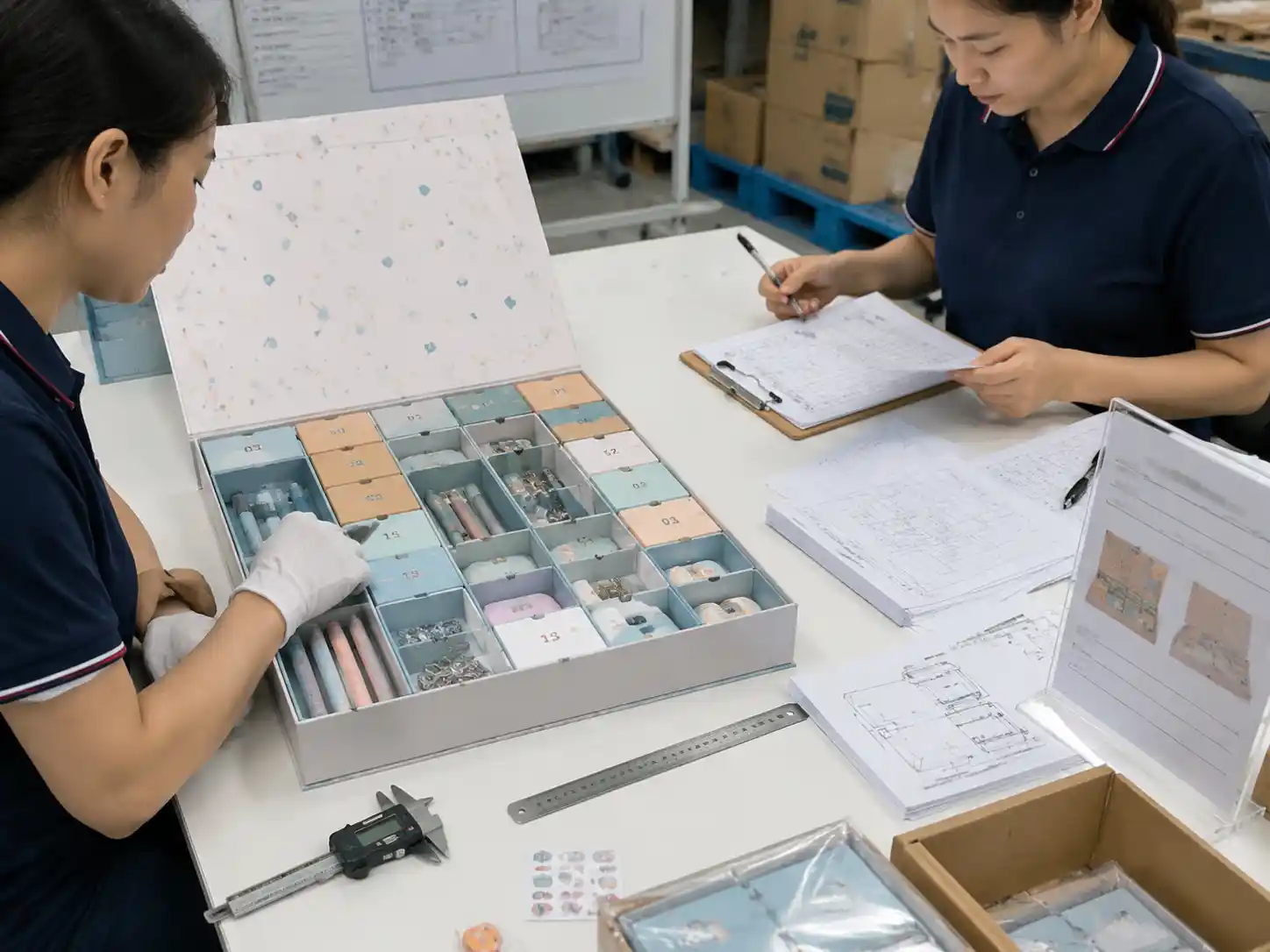
Quality checks verify that approved compartment layouts are followed during production. Inspection records should focus on visible product position, packaging condition, and consistency between approved samples and packed units.
| Check area | Verification method |
|---|---|
| Product placement | Compare loaded units against approved layout drawings or samples |
| Compartment fit | Check gaps, pressure points, and product movement |
| Small accessory control | Confirm clips and small parts remain in intended locations |
| Surface protection | Inspect stickers, printed materials, and finished components for damage |
Which stationery packaging decisions depend on the project?
Some packaging decisions cannot be standardized because they depend on the actual stationery collection. Product dimensions, material combinations, retail requirements, and loading methods all influence the final compartment structure.
Project-dependent factors include:
- The number of daily compartments required.
- Whether products need individual wrapping or direct placement.
- The level of protection required for premium finishes.
- How customers or retailers expect products to be presented after opening.
Buyer approval should confirm the final product layout, compartment arrangement, and loaded sample appearance before mass production. Records such as approved drawings, sample photos, and inspection documents provide traceability for these decisions.
How can buyers select a packaging partner for stationery advent calendars?
Buyers should evaluate whether a packaging supplier can manage mixed-product requirements, including structural planning, sample verification, and quality control documentation.
Giftpackpro provides custom seasonal packaging solutions with a focus on product fit, compartment planning, and practical packaging requirements. Learn more about custom advent calendar box products or explore custom advent calendar box services for project-specific packaging needs.
FAQs
Can one compartment design fit different stationery sets?
Not always. Different pen sizes, clip shapes, and sticker formats may require revised cavity dimensions or internal layouts.
Should clips and small stationery accessories be separated?
Usually yes when movement could cause mixing, scratching, or difficult product removal. The final approach depends on material and presentation requirements.
How can buyers verify compartment fit before production?
Loaded prototypes, dimension records, structural drawings, and approval samples are common ways to confirm the design matches the actual stationery set.
For stationery advent calendar projects requiring mixed-item compartment planning, request a custom quote to discuss product requirements and packaging options.