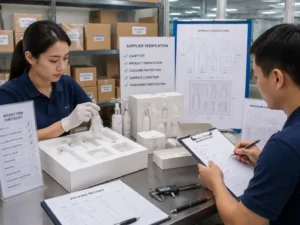
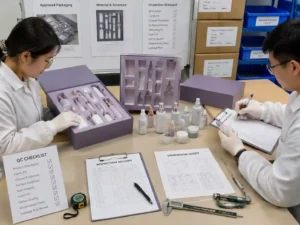
A secondary carton beauty insert is designed by matching the insert structure to the product’s shape, weight, closure risks, and presentation requirements. The process starts with product measurements, packaging drawings, and risk analysis, then moves through prototype fitting, loaded-SKU checks, and approval records. For beauty products such as pumps, droppers, jars, and glass bottles, the insert must protect the item while keeping labels visible and preventing movement, scuffing, or leakage-related damage.
What should a secondary carton beauty insert protect first?
The insert should first protect the product’s most vulnerable areas: closures, pumps, droppers, glass surfaces, and decorative finishes. The correct design depends on product construction, shipping conditions, and how the customer opens the package.
Beauty products often fail in different ways depending on their format. A pump bottle may need clearance above the actuator, while a glass serum bottle may require support around the body and protection around the dropper cap. A printed cosmetic tube may need controlled support to prevent bending or surface marks.
| Product risk | Insert design consideration | How it can be checked |
|---|---|---|
| Pump pressing or accidental dispensing | Create clearance around the pump head and support the bottle body | Load the actual product and confirm pump movement is prevented |
| Dropper or cap damage | Add support points around fragile closures without excessive pressure | Measure clearance and inspect loaded samples |
| Glass bottle impact | Control movement with fitted cavities and protective spacing | Compare cavity dimensions with product drawings |
| Surface scuffing | Select suitable contact materials and avoid sharp edges | Visual inspection after fitting and handling |
How do you design insert cavities for mixed beauty SKUs?
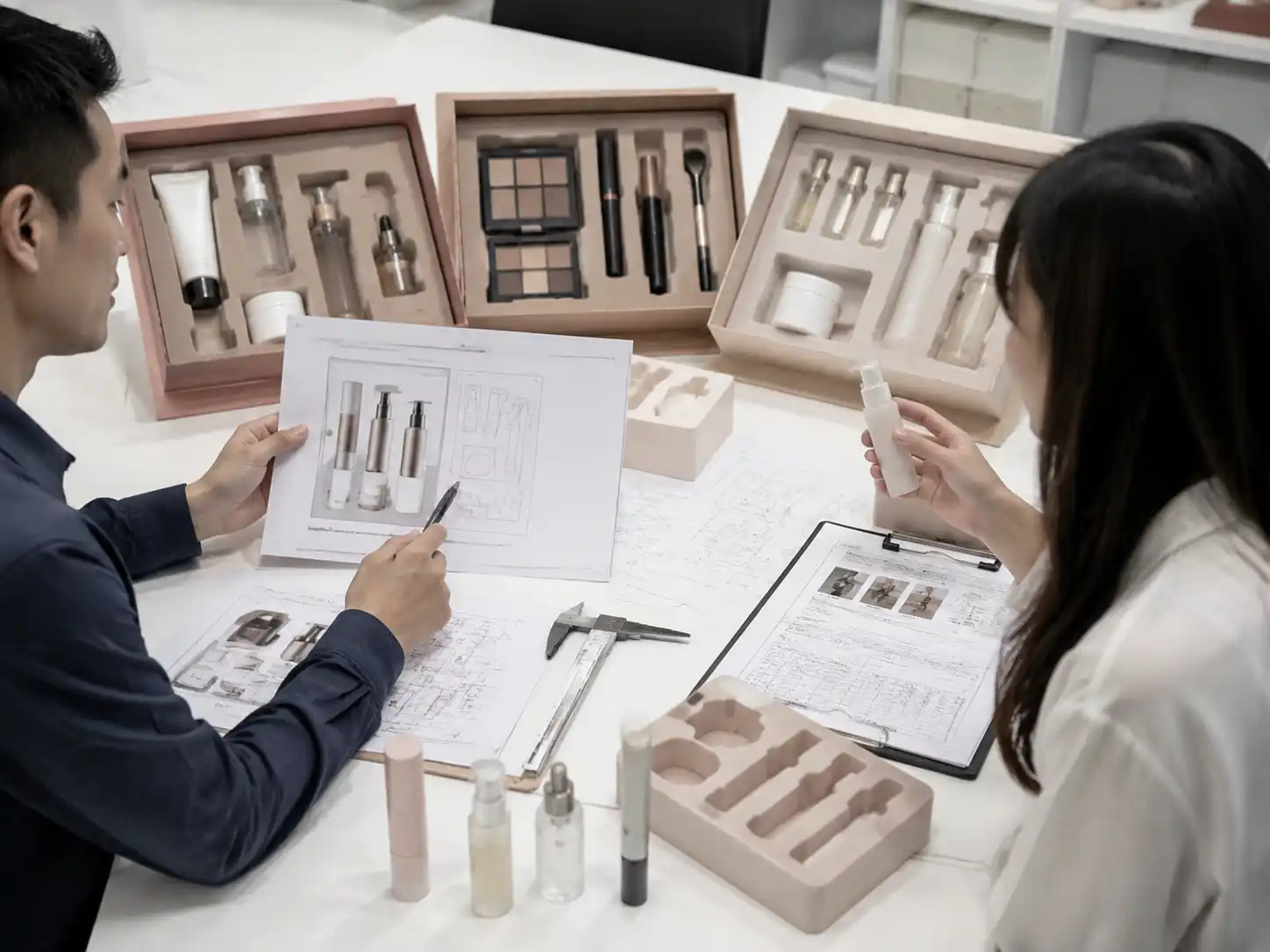
Mixed-SKU inserts should be designed from actual product dimensions rather than estimated package sizes. Each cavity should consider height, diameter, weight distribution, closure shape, and the visible product orientation after opening.
For beauty calendars or gift sets containing multiple product types, engineers typically review:
- Product body diameter and height variations.
- Pump, spray head, cap, or dropper clearance requirements.
- Label-facing direction for product presentation.
- Contact points that prevent movement without damaging finishes.
- Space differences between glass, plastic, and soft packaging formats.
The final layout may vary depending on whether the product is displayed upright, horizontal, or at an angle. The approved orientation should be recorded in drawings or sample approval documents.
What steps are used to develop and verify the insert?
A reliable insert development process combines engineering review, physical samples, and approval evidence. Digital drawings alone may not reveal issues such as loose fitting, excessive pressure, or poor opening presentation.
- Collect product specifications: Confirm dimensions, weight, closure type, and surface requirements.
- Create cavity concepts: Develop insert layouts based on product geometry and presentation goals.
- Produce prototypes: Test the physical fit with representative products or approved samples.
- Perform loaded-SKU checks: Verify every product position, including mixed sizes and shapes.
- Record approval points: Keep drawings, measurements, sample photos, and revision information.
Project-dependent factors include insert material selection, product tolerance variation, assembly method, and the final secondary carton structure. These decisions should be confirmed through sample evaluation rather than assumed from drawings.
How do you test insert fit before production?
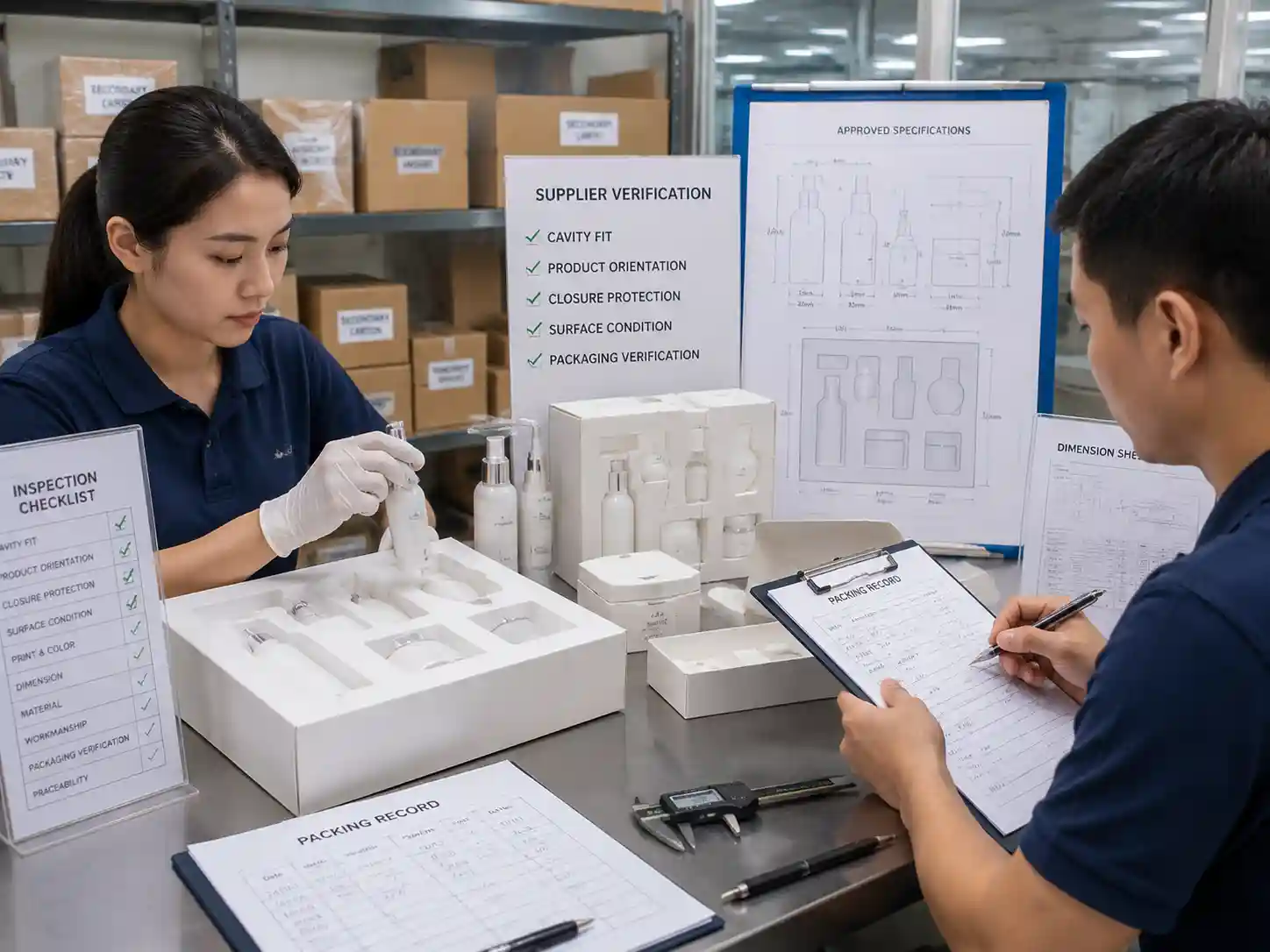
Fit testing should confirm that products stay secure while remaining easy to remove and visually correct. A loaded sample review is usually more informative than an empty insert inspection.
Loaded-SKU checklist for beauty insert approval
- Does each product sit in the correct orientation?
- Are pumps, droppers, and caps protected from pressure?
- Is there unwanted movement inside the cavity?
- Are labels visible in the intended direction?
- Are glass surfaces separated from damaging contact points?
- Can the secondary carton close without compressing the product?
What evidence should buyers review before approving the insert?
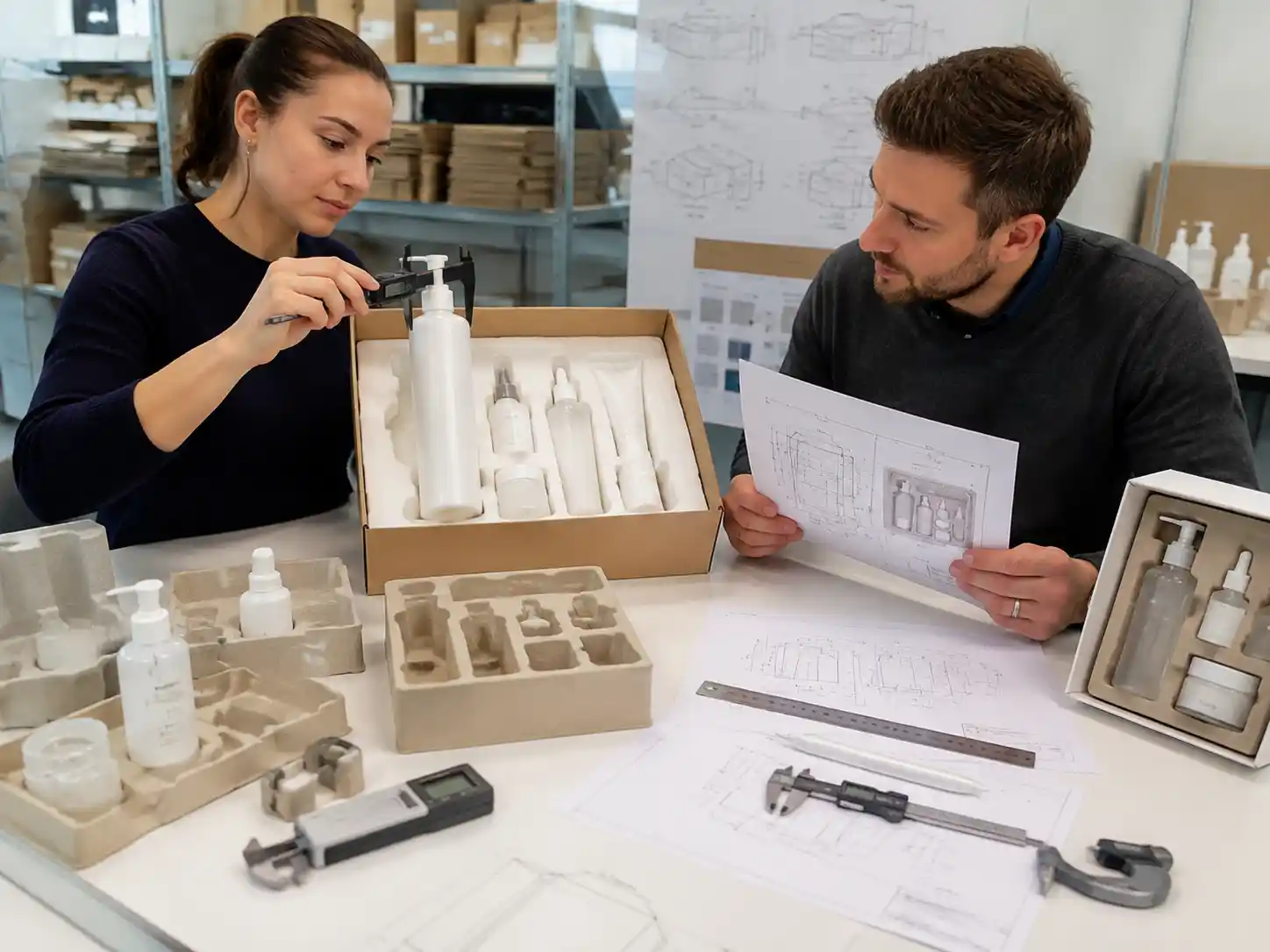
Buyers should review evidence that connects the insert design with the actual product requirements. Useful records include dimension drawings, cavity measurements, prototype photos, loaded sample reviews, and approval notes.
Supplier documents and inspection records help separate confirmed information from project assumptions. For example, product dimensions can be verified from measurement records, while the best insert structure remains project-dependent until physical fitting is completed.
Giftpackpro develops custom packaging solutions including custom advent calendar box products and supports project discussions through custom advent calendar box services. Insert decisions are normally finalized through product information, samples, and packaging requirements.
How can secondary carton inserts reduce beauty packaging failures?
A well-designed insert reduces risks by controlling product movement, protecting sensitive components, and maintaining the intended presentation. The key is balancing protection with usability rather than simply making the cavity tighter.
For beauty products, the most important checks are usually product fit, closure protection, surface protection, orientation, and consistency across mixed SKUs. These factors should be reviewed before final approval and production release.
FAQs
Can one insert design fit all beauty product types?
No. Pumps, droppers, jars, tubes, palettes, and perfume vials have different protection requirements. Insert designs should be developed around the actual product geometry.
Should the insert be designed before the secondary carton?
The insert and carton structure should be developed together because cavity depth, internal space, and product presentation affect the final package dimensions.
Why are physical samples important for beauty inserts?
Physical samples reveal issues such as movement, pressure points, label visibility, and closure interference that may not appear in drawings.
Need a packaging solution for a beauty product set? request a custom quote to discuss insert requirements, product fit, and packaging development needs.
[/ARTICLE_BODY_HTML]