Quick answer: Fragrance gift sets need planned airflow and odor separation to prevent scent transfer between products, packaging materials, and compartments. The process usually starts with reviewing fragrance formats, leakage risks, material contact points, compartment layouts, and ventilation paths. Packaging teams then verify solutions through prototypes, loaded-SKU checks, material reviews, and approval records. The correct approach varies depending on perfume concentration, container type, closure design, and the final presentation format.

Why Is Perfume Packaging Odor Separation Important for Fragrance Gift Sets?
Perfume packaging odor separation is important because multiple scented products placed together can affect the intended product experience if fragrance migration is not considered. A gift set containing vials, sprays, creams, or scented accessories may require controlled spacing, suitable materials, and airflow planning.
Packaging teams normally review:
- Whether bottles, pumps, droppers, and caps create possible leakage or vapor exposure points.
- Whether paperboard, inserts, foams, films, or adhesives may retain or release odors.
- Whether different fragrance products should be isolated inside separate cavities.
- Whether ventilation openings reduce trapped odor without weakening product protection.
These decisions should be supported by drawings, sample reviews, and product-fit records rather than appearance checks alone.
How Do You Design Ventilation Paths in Fragrance Gift Packaging?
Ventilation design begins by controlling where air can move and where fragrance exposure can occur. The goal is usually not maximum airflow, but balanced airflow that protects the packaging structure while reducing unwanted odor concentration.
Review product formats and odor sources first
Engineers should identify the highest-risk components before designing cavities. Spray pumps, loose caps, droppers, and partially filled sample containers may require different protection approaches compared with sealed primary packaging.
A typical review considers:
- Glass bottle shape and available clearance around the container.
- Pump or dropper protection requirements.
- Cap sealing performance and possible vapor release areas.
- Contact between fragrance containers and paper or insert materials.
Use controlled spacing instead of uncontrolled gaps
Ventilation should not create excessive empty space because loose movement can increase scuffing, impact risk, and label damage. Packaging engineers normally balance airflow channels with secure product positioning.
| Risk area | Packaging consideration | Verification method |
|---|---|---|
| Fragrance transfer between SKUs | Separate cavities, barriers, or material selection | Loaded product review and approval records |
| Trapped odor inside closed packaging | Controlled ventilation openings or airflow paths | Prototype evaluation and inspection notes |
| Leakage or vapor exposure | Closure protection and product orientation | Fit checks with actual containers |
| Surface contamination | Protective spacing and suitable contact materials | Visual inspection and sample comparison |

What Packaging Checks Help Confirm Odor Separation Performance?
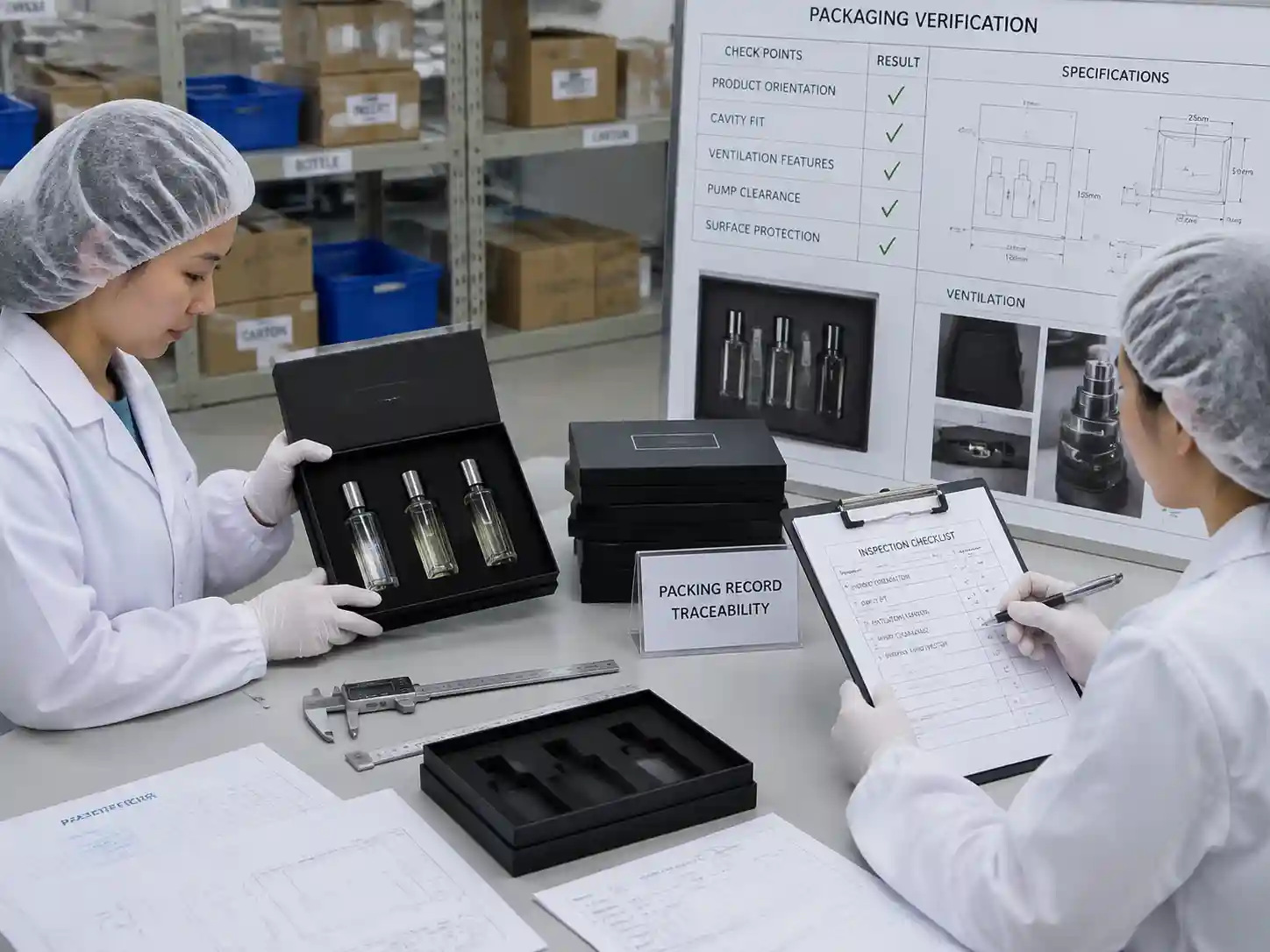
Odor separation performance is usually confirmed through structured sample evaluation rather than a single measurement. The packaging team should document how the loaded gift set behaves with the intended products.
Use loaded-SKU fit checks
A loaded-SKU review confirms that the final arrangement works with actual fragrance containers and related beauty products.
- Confirm each vial, bottle, or accessory sits in the approved cavity position.
- Check that caps, pumps, and droppers have enough clearance.
- Verify that products do not contact unsuitable packaging surfaces.
- Review whether different scented items require additional separation.
- Record product orientation and compartment allocation.
Compare samples against approved specifications
Important evidence may include structural drawings, cavity layouts, material specifications, prototype photos, measurement sheets, and approval records. These documents help buyers confirm that production follows the agreed packaging design.
Project requirements may vary depending on fragrance strength, bottle construction, shipping conditions, and the number of different SKUs included in the set.
How Do Materials Affect Odor Separation in Fragrance Packaging?
Material selection can influence odor retention, airflow behavior, and product protection. Packaging teams should review materials that directly contact fragrance containers or remain enclosed with them for long periods.
- Paperboard and wrapping materials may absorb or retain odors depending on construction.
- Insert materials should provide support without creating unwanted contact points.
- Adhesives and coatings may require review when used near fragrance products.
- Protective layers should maintain product presentation without blocking necessary ventilation.
Material decisions are project-dependent and should be confirmed through samples, supplier documentation, and buyer approval before bulk production.
How Should Buyers Approve Ventilation and Odor Separation Design?
Buyer approval should focus on documented evidence showing that the packaging works with the intended fragrance products. Approval is stronger when it includes physical samples and clear records.
- Review packaging drawings showing cavity structure and ventilation approach.
- Check prototype samples with representative fragrance containers.
- Confirm pump, cap, glass, and label protection requirements.
- Review inspection notes and sample comparison records.
- Approve the final configuration before production release.
Giftpackpro supports custom fragrance and beauty packaging development through custom advent calendar box services and product-focused packaging solutions. Teams can also review related advent calendar box buying guides when evaluating packaging decisions.
FAQs About Fragrance Gift Set Ventilation and Odor Separation
Does every fragrance gift set require ventilation?
No. The need depends on the product combination, packaging materials, closure design, and project requirements. Some sealed products may require minimal ventilation planning, while mixed fragrance sets may need more separation control.
Can ventilation replace leak protection?
No. Ventilation and leak protection address different risks. Closures, orientation, and product fit must still be checked to reduce leakage and contamination risks.
Should odor separation be checked during sampling?
Yes. Sample evaluation is the appropriate stage to review product arrangement, material interaction, airflow design, and buyer approval requirements before production decisions are finalized.
For fragrance gift set packaging development, request a custom quote to discuss structural requirements, product fit, and packaging verification needs.