
Quick answer: Managing leakage risk in skincare advent calendars requires matching each product type with suitable protection, controlling bottle and closure fit, and verifying performance through structured checks. Pumps, droppers, jars, tubes, and glass containers create different risks, so packaging decisions should be based on product dimensions, closure design, orientation, and inspection evidence rather than appearance alone.
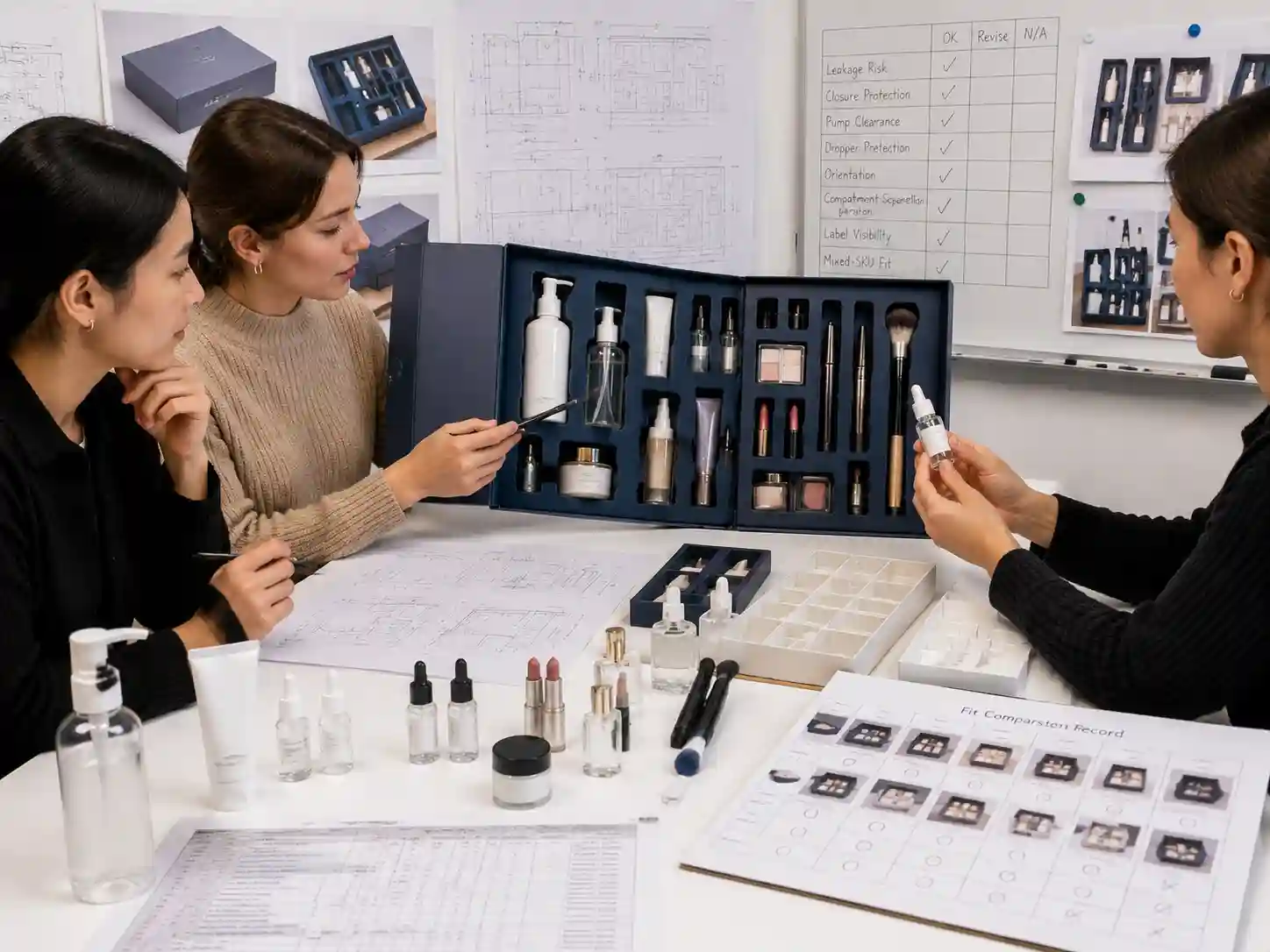
Why is leakage risk a key concern in skincare advent calendar packaging?
Skincare leakage risk packaging must address the interaction between the product container, closure system, and calendar structure. A small amount of leakage can affect neighboring compartments, labels, inserts, and the overall presentation of a multi-product set.
The main risks usually come from product-specific factors:
- Pump heads that are pressed during handling or transport.
- Droppers or caps that are not fully protected from impact.
- Glass bottles that shift and loosen closures through repeated movement.
- Jars and tubes that create different sealing and orientation requirements.
- Mixed-SKU calendars where different container sizes share one structure.
These risks should be evaluated through product drawings, physical samples, measurements, and approved packaging records.
How do you identify skincare products with higher leakage risk?
The first step is to classify products by container type, closure mechanism, and sensitivity to movement. Packaging teams should not treat all skincare items as equal because the failure mode depends on the product construction.
| Product type | Common leakage concern | Packaging check |
|---|---|---|
| Pump bottles | Accidental pump activation or insufficient clearance | Confirm pump height, protection space, and movement restriction |
| Dropper bottles | Loose cap, dropper damage, or liquid seepage | Check cap engagement and vertical support |
| Glass serum bottles | Closure stress and container movement | Verify cavity fit, cushioning, and orientation |
| Tubes and jars | Cap pressure or surface contamination | Review contact points and compartment separation |
Project-dependent factors include the liquid viscosity, closure design, fill level, bottle weight, and the final shipping environment. These details should be confirmed with product samples before structural decisions are approved.
How should packaging engineers reduce leakage risk during design?
Packaging engineers reduce leakage risk by controlling movement, protecting closures, and preventing product contact with neighboring compartments.
How do inserts protect skincare containers?
Custom inserts should support the strongest areas of the container while avoiding pressure on pumps, caps, or delicate dispensing components. The fit should prevent excessive movement without creating compression that could damage the product.
- Measure bottle diameter, height, cap size, and pump clearance.
- Check cavity depth to maintain correct product orientation.
- Prevent glass-to-glass contact in mixed-product layouts.
- Maintain separation between leaking products and unaffected compartments.
How do orientation and compartment layout affect leakage?
Product orientation can influence whether a weakened closure creates visible leakage. Some products require upright positioning, while others may tolerate different layouts depending on the container and seal design.
Engineers should review:
- Vertical support around caps and pumps.
- Clearance above spray or dispensing components.
- Distance between liquid products and paper surfaces.
- Visibility of labels after final loading.
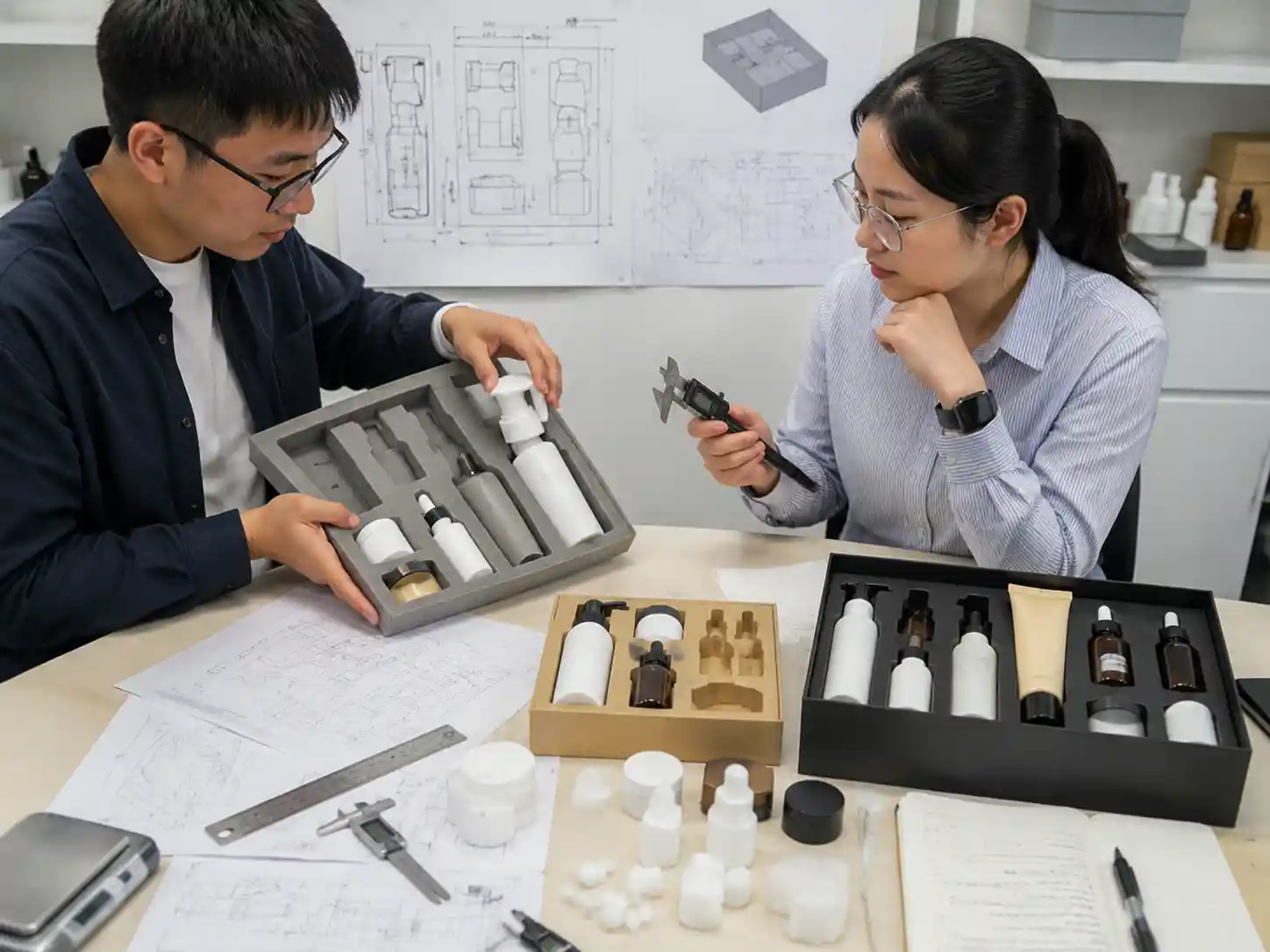
What fit tests verify leakage control before production?
Fit testing provides physical evidence that the packaging structure matches the skincare products. A practical evaluation normally uses approved samples loaded into the intended compartments.
- Measure each product sample and compare dimensions with packaging drawings.
- Load pumps, droppers, bottles, and jars into their assigned cavities.
- Check movement, closure protection, and contact points.
- Review whether labels remain visible and surfaces remain protected.
- Record adjustments needed before approval.
Verification evidence may include measurement sheets, prototype photos, loaded sample records, and approval comments. The exact test method varies by product sensitivity, container design, and project requirements.
What should buyers check before approving skincare advent calendar packaging?
Buyers should confirm that leakage risks have been reviewed with actual product samples rather than only CAD drawings or empty packaging components.
- Product dimensions match the approved compartment design.
- Pumps and droppers have sufficient protection clearance.
- Glass containers have controlled support and separation.
- Mixed-SKU layouts maintain correct orientation.
- Inspection records match the approved packaging configuration.
For packaging development teams, these records create traceability between the product requirements, structural decisions, and final production checks.
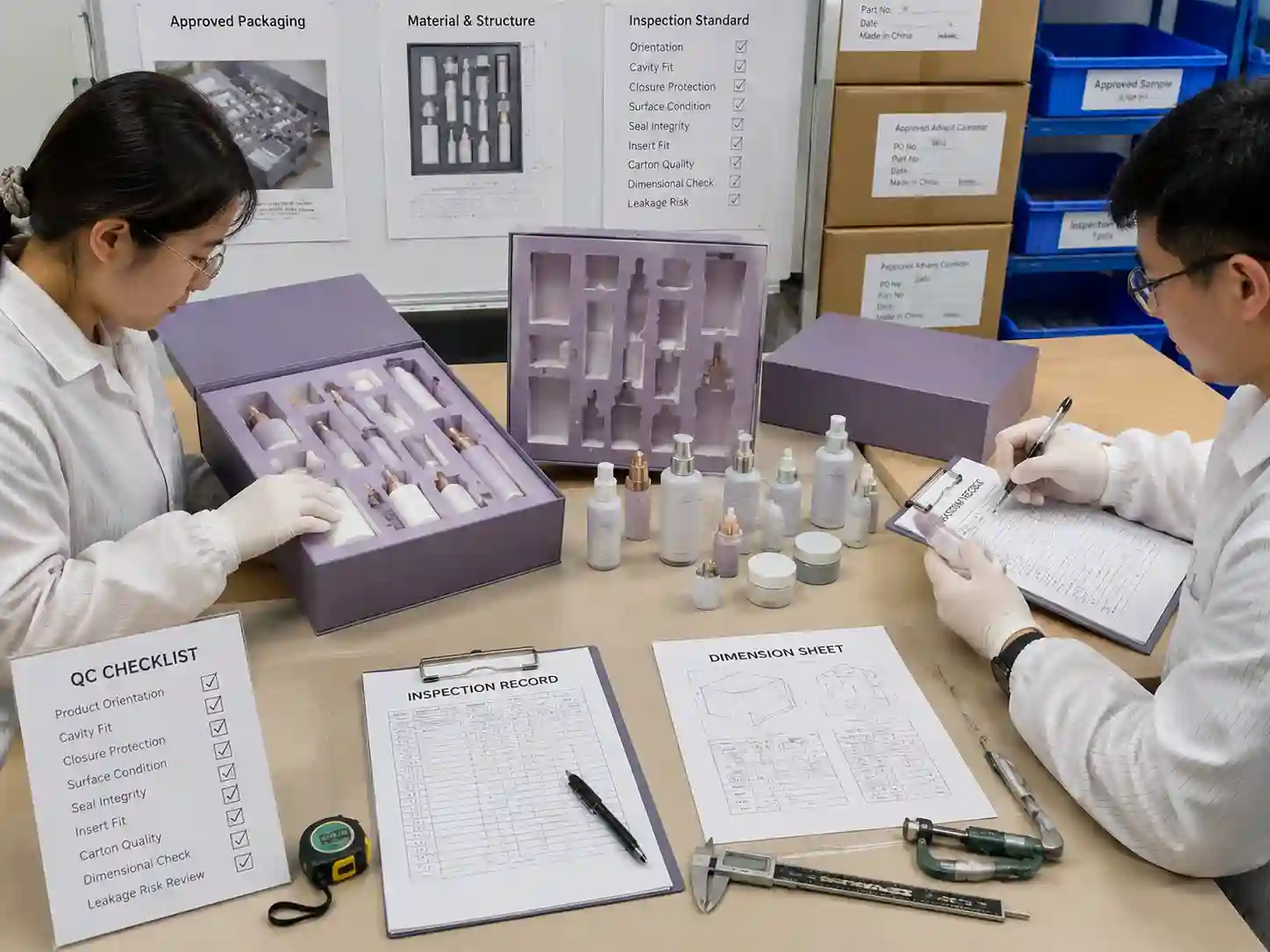
How does quality control verify leakage risk during production?
Quality control focuses on confirming that production packaging matches the approved structure. Inspectors typically review product placement, cavity fit, closure protection, and packaging condition.
Useful QC evidence can include:
- Loaded product inspection checklists.
- Dimension verification records.
- Packing orientation checks.
- Photos of approved configurations.
- Records of corrective actions when issues are found.
The inspection scope depends on the product mix and project requirements. High-risk components such as glass bottles, pumps, and droppers usually require more detailed verification than simple non-liquid items.
Frequently asked questions about skincare leakage risk packaging
Can one insert design work for all skincare products?
Usually not. Different container shapes, closure systems, and weights often require different cavity dimensions or support methods.
Should leakage prevention focus only on the product container?
No. The container, insert, compartment layout, orientation, and surrounding materials all influence the final protection level.
What documents help verify leakage-risk decisions?
Common records include drawings, sample approval notes, measurement sheets, fit-test results, and production inspection records.
Giftpackpro develops custom seasonal paper packaging solutions for beauty and skincare applications. Learn more about custom advent calendar box services or explore custom advent calendar box products. For project-specific packaging discussions, request a custom quote.


