A concealed product reveal design allows an advent calendar to make each daily opening easy to identify while preventing customers from seeing unopened compartments. The approach combines door placement, compartment depth, viewing angles, internal barriers, and retail presentation requirements. Buyers should validate the design through structural drawings, physical samples, measurements, and approval records before production to confirm visibility, protection, and fulfillment suitability.

How Do You Design Visible Daily Openings Without Exposing Future Products?
The key is separating the customer-facing opening experience from the protected product storage area. A successful design makes the current opening intuitive while using doors, covers, folds, or compartment geometry to block visibility into unopened sections.
Packaging teams normally review several factors:
- Opening sequence and whether each door or drawer is easy to locate.
- Compartment depth and internal walls that prevent viewing adjacent products.
- Exterior layout visibility from retail shelves, product pages, or unboxing videos.
- Structural strength after repeated opening and handling.
What Packaging Features Help Hide Future Compartments?
Different packaging structures use different concealment methods depending on the product size, opening style, and customer interaction requirements.
| Design feature | Purpose | Verification method |
|---|---|---|
| Raised compartment walls | Reduce side visibility between unopened sections. | Measure internal height, spacing, and viewing angles on samples. |
| Folded panels or covers | Create a visual barrier while keeping daily openings accessible. | Check opening movement and panel alignment during inspections. |
| Deep drawers or pockets | Keep products below the viewing line until opened. | Confirm product placement and visibility using loaded samples. |
| Numbered opening layout | Guide users to the intended daily interaction point. | Review artwork position and physical opening sequence. |
How Should Retail Buyers Evaluate the Reveal Experience?
Retail buyers should review the finished calendar as a complete customer interaction rather than only checking the printed exterior. The opening path, shelf appearance, and product protection should work together.
A practical review should include:
- Whether unopened areas remain visually concealed when the package is displayed.
- Whether the correct daily opening remains obvious from normal viewing distance.
- Whether the package maintains stable dimensions for shelf placement and case packing.
- Whether listing images accurately represent the opening structure without revealing unintended details.
How Do Engineers Validate Concealed Product Reveal Design?
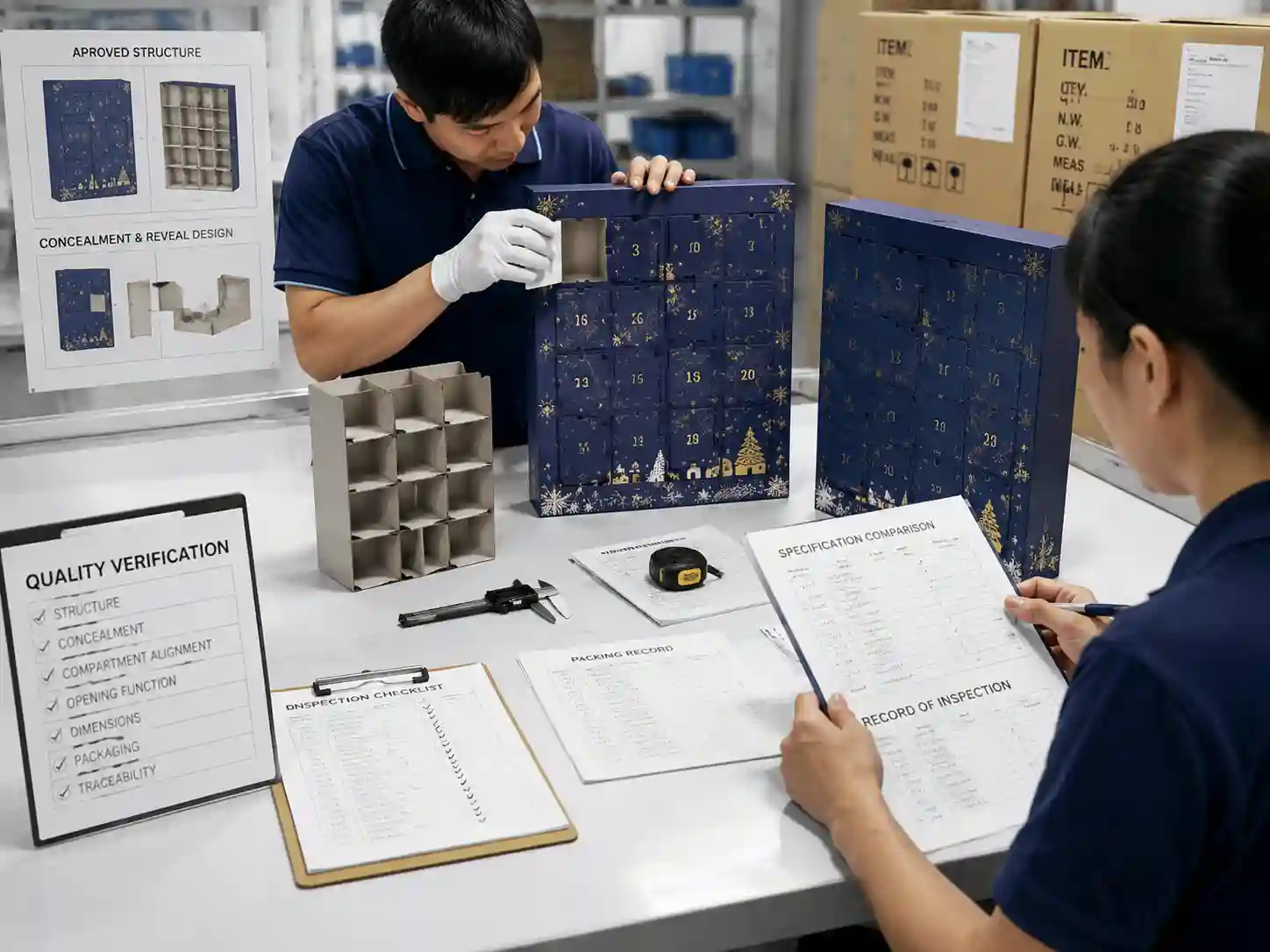
Engineers typically validate the concept through drawings, prototypes, and loaded samples before approving production. The purpose is to confirm that concealment features do not create problems with assembly, product fit, or opening performance.
Common validation records include:
- Structural drawings showing compartment positions and barrier locations.
- Prototype measurements for door size, depth, and clearance.
- Sample photographs showing opened and unopened states.
- Approval documents comparing samples against agreed specifications.

What Risks Should Buyers Check Before Mass Production?
The main risks occur when visual concealment is considered separately from production and logistics requirements. A design that looks effective in a drawing may need adjustment after physical testing.
| Risk | Possible impact | Recommended check |
|---|---|---|
| Insufficient barriers | Future products may become visible before opening. | Review loaded samples from customer viewing angles. |
| Tight compartment tolerances | Doors may stick or products may not fit correctly. | Measure samples during assembly and functional checks. |
| Weak opening structure | Repeated handling may damage doors or panels. | Inspect opening function on production samples. |
| Incorrect visual assumptions | Retail images may not match actual customer experience. | Approve final sample photos and physical samples together. |
How Does Concealment Affect Fulfillment and Retail Packaging?
Concealment features should be considered alongside case packing, labeling, and shipment preparation. Added structures may change internal volume, carton utilization, or product orientation.
For example, a deeper compartment system may improve product hiding but require review of master carton dimensions. Retail teams and fulfillment managers should confirm that the approved structure matches warehouse handling requirements and product information used for listings.
What Approval Records Should Suppliers Provide?
Important approvals should be supported by evidence rather than verbal confirmation. Buyers can request documentation showing how the design was reviewed and accepted.
- Approved structural drawings.
- Sample review photos showing open and closed states.
- Measurement records for critical dimensions.
- Inspection checklists covering opening function and product placement.
- Final approval records identifying the accepted configuration.
How Can Buyers Implement a Concealed Reveal Design Review?
A simple review process helps prevent late changes:
- Define what customers should see during the daily opening experience.
- Review compartment drawings and concealment features before sampling.
- Test loaded samples from retail shelf and unboxing viewing angles.
- Record approved dimensions, opening performance, and visual requirements.
- Use the approved configuration as the reference for production inspection.
Frequently Asked Questions
Can a calendar hide future products while still looking attractive on a shelf?
Yes. The design usually balances exterior graphics, opening visibility, compartment depth, and viewing angles. The final result depends on product size, structure, and retail presentation requirements.
Does concealed product reveal design change the carton size?
It can. Internal walls, deeper pockets, or additional panels may affect packing dimensions. The impact should be checked during structural review and sample measurement.
Should buyers approve photos or physical samples?
Both are useful, but physical samples provide better evidence for checking opening function, product placement, and concealment performance.
Giftpackpro provides custom seasonal packaging solutions designed around structural requirements, retail presentation, and fulfillment considerations. Explore custom advent calendar box products or request a custom quote for a project review.