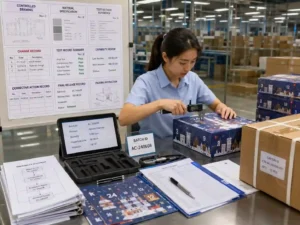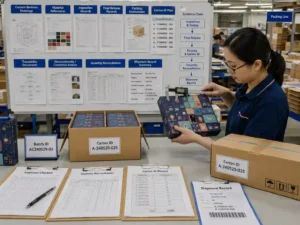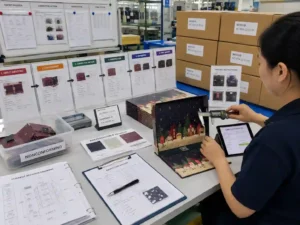
Quick answer: Influencer unboxing compartment design should make each opening moment visually clear, stable, and easy to record while still meeting packaging and fulfillment requirements. The compartment layout should be planned around product visibility, opening sequence, camera angles, product protection, and packing efficiency. Commercial teams typically validate the design through drawings, prototypes, measurement checks, and approval records before production.
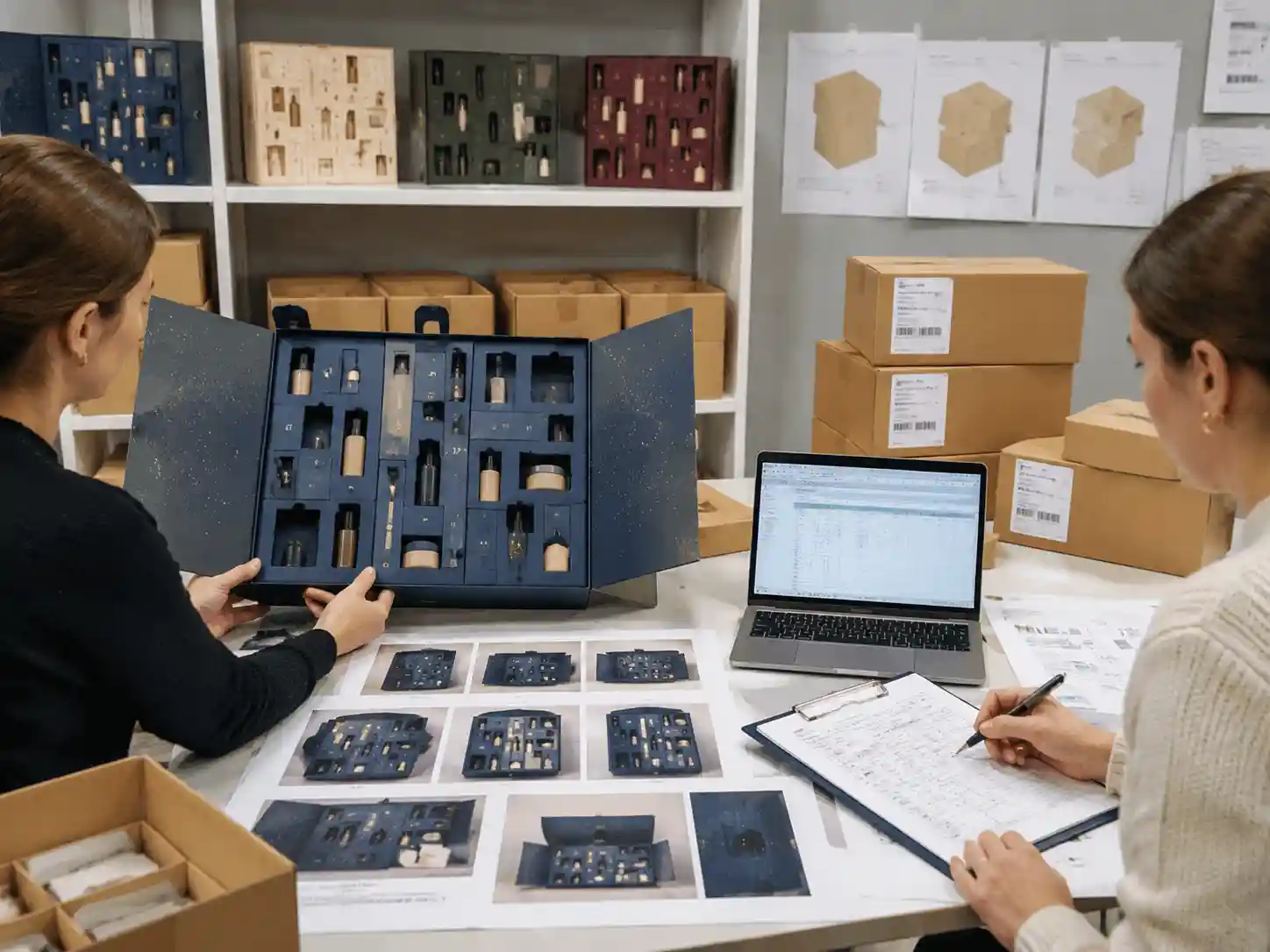
How Does Influencer Unboxing Compartment Design Affect Calendar Layout?
Influencer unboxing compartment design affects how products are revealed on camera, how easily viewers understand the opening sequence, and whether each compartment maintains a consistent presentation. The main design goal is to balance visual impact with practical packaging performance.
Compartments should be reviewed for:
- Opening order and storytelling sequence.
- Visibility of each product when doors, drawers, or panels are opened.
- Product stability during handling and filming.
- Clear separation between different items or SKUs.
- Efficient packing and carton utilization after assembly.
A compartment that looks attractive in a static product photo may not perform well during an unboxing video if products are hidden, difficult to remove, or positioned inconsistently. Packaging teams should review the opened structure from the same angle that a camera or customer is likely to see.
What Should Be Considered When Planning Compartments for Video Reveals?
The first step is to define how each compartment should appear during the opening process. The layout should be designed before final structural decisions are approved.
| Design Area | Key Check | Verification Method |
|---|---|---|
| Compartment position | Products appear in the intended order and location | Structural drawings and prototype review |
| Opening visibility | Products remain visible after doors or drawers open | Photo and video review from planned angles |
| Product clearance | Items can be removed without damage or obstruction | Measurement checks and sample handling |
| Fulfillment fit | Internal layout supports consistent packing | Packing records and production checks |
Project requirements vary depending on product size, compartment quantity, opening mechanism, and the expected unboxing experience. A rigid calendar with small items may require different spacing decisions than a larger format calendar containing mixed product sizes.
How Do Packaging Engineers Validate Compartments Before Production?
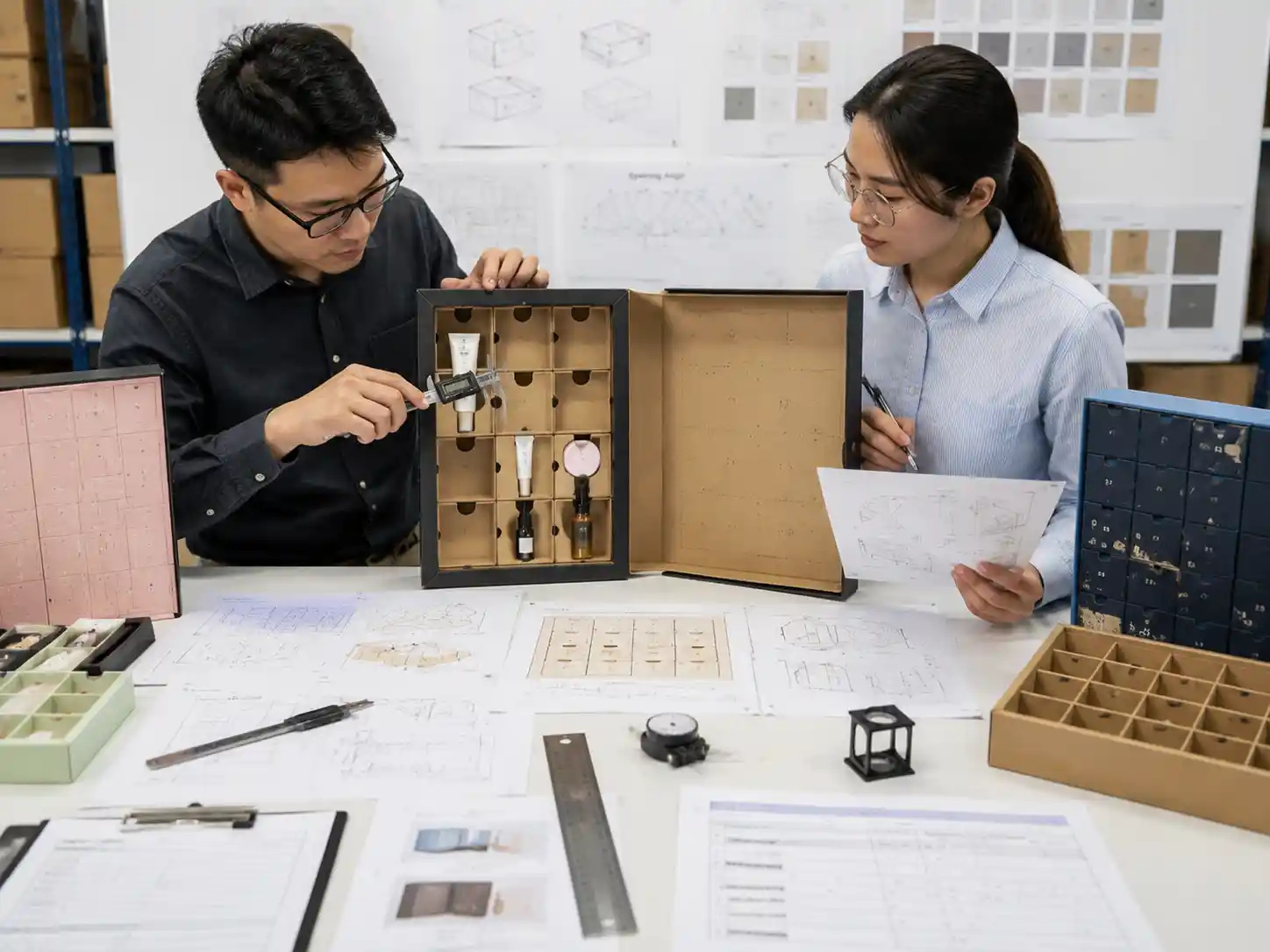
Packaging engineers validate compartment designs by comparing drawings, physical samples, and product-loading results. The purpose is to confirm that the structure works both visually and operationally.
What measurements should be checked?
Important measurements usually include compartment dimensions, internal clearance, product position, opening angle, and overall calendar thickness. These checks help identify problems before bulk production.
- Compartment length, width, and depth.
- Distance between product and surrounding panels.
- Drawer movement or door opening clearance.
- Alignment between multiple compartments.
- Finished package dimensions for storage and shipping review.
Why are prototype reviews important for video-focused packaging?
Prototype reviews allow teams to evaluate the actual visual sequence instead of relying only on drawings. A sample can reveal issues such as products disappearing behind panels, uneven openings, or poor camera visibility.
Useful evidence includes:
- Approved structural drawings.
- Prototype photographs and review notes.
- Compartment measurement sheets.
- Product loading records.
- Approval comments from relevant teams.
How Can Compartment Design Support Retail and Fulfillment Requirements?
Compartment layouts must support the unboxing presentation without creating unnecessary problems in storage, packing, or distribution. A visually effective design still needs reliable production handling.
| Scenario | Compartment Planning Consideration |
|---|---|
| Retail shelf presentation | Maintain a clean exterior size and clear product arrangement when opened. |
| Influencer filming | Ensure products are visible and openings create a logical reveal sequence. |
| Warehouse packing | Confirm products fit consistently without excessive movement. |
| Parcel shipping | Review finished dimensions and protection requirements after loading. |
For commercial packaging projects, teams often connect compartment planning with broader custom calendar development. Giftpackpro provides custom advent calendar box services for buyers reviewing structural and packaging requirements.
What Quality Checks Confirm the Final Compartment Layout?
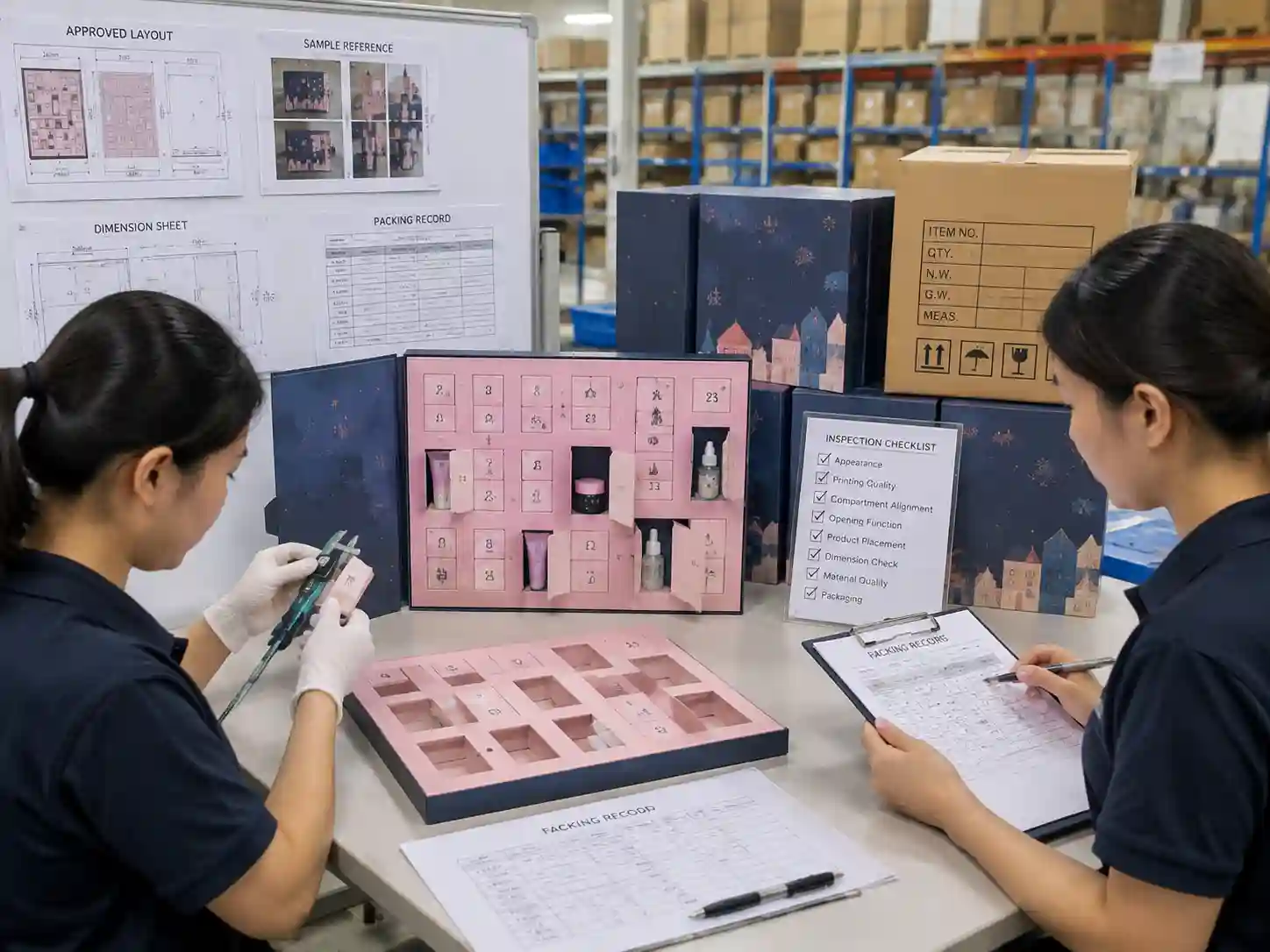
Quality checks confirm that finished production matches the approved compartment structure. Inspections should compare physical products against approved samples, drawings, and packing requirements.
- Verify compartment count and arrangement.
- Check product placement consistency.
- Inspect opening function and alignment.
- Confirm dimensions match approved specifications.
- Record any deviation and corrective action.
Inspection records, measurement sheets, and approved reference samples provide traceability when reviewing production results. These documents help buyers confirm that the final packaging maintains the intended unboxing presentation.
What Common Problems Occur When Designing Compartments for Unboxing?
The most common issues happen when visual presentation is considered separately from packaging engineering. A successful design needs both camera performance and physical reliability.
- Products are hidden because compartments are too deep.
- Open doors or drawers block the camera view.
- Products shift during handling before filming.
- Compartment sizes do not match actual products.
- The opening sequence feels inconsistent between samples and production units.
These risks can be reduced by reviewing loaded samples, recording approval decisions, and checking the final configuration before production release.
Frequently Asked Questions
Should compartment layout be designed before product photography?
Yes. The compartment structure should usually be validated before final photography because opening position, product visibility, and presentation angles depend on the physical design.
Can the same compartment design work for different products?
Not always. Different product dimensions, weights, and removal methods can require changes to compartment depth, clearance, and internal support.
What documents help approve an unboxing-focused compartment design?
Common approval materials include structural drawings, prototype photos, measurement records, loading samples, and production inspection documents.
How Should Buyers Approve a Video-Focused Calendar Compartment Design?
Buyers should approve the design by reviewing both the visual opening experience and the packaging performance. The final decision should be based on physical samples, measurements, and documented requirements rather than appearance alone.
For additional guidance on custom calendar structures and sourcing considerations, visit our advent calendar box buying guides or request a custom quote for your project requirements.