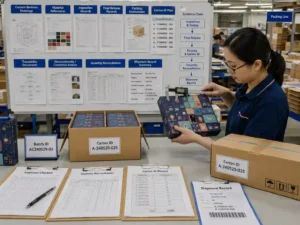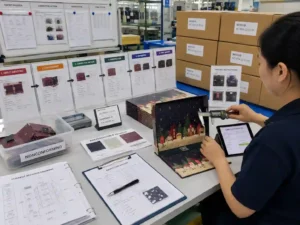
Quick answer: Quality checks after destination assembly should verify that the assembled advent calendar packaging matches the approved structure, packing method, and shipping requirements. A practical plan defines what is inspected, who records results, which measurements are required, and how problems are traced back to cartons, components, or assembly steps. Checks commonly include assembled appearance, component fit, carton protection, pallet stability, shipping marks, and evidence records.
Why should destination assembly quality checks be planned before shipment?
Destination assembly quality checks should be planned before shipment because the final product condition depends on both factory packing and the assembly process at the destination. A supplier and buyer need an agreed inspection method before components, cartons, and instructions move into the supply chain.
The inspection plan should connect the approved assembly method with measurable acceptance points. This can include reference samples, assembly drawings, component layouts, carton specifications, and packing records.
For custom advent calendar boxes, the main goal is not only checking appearance. The process should confirm that drawers, doors, inserts, decorative elements, and protective packaging work together after handling, transport, and final assembly.
What should a destination assembly quality inspection cover?
A destination assembly quality inspection should cover finished assembly condition, packaging protection, and shipment traceability. The exact inspection points vary depending on the calendar structure, assembly complexity, and distribution requirements.
Should the assembled product be checked against approved samples?
Yes. The assembled unit should be compared with approved structural references, assembly drawings, or retained samples where available. This helps identify differences between the intended design and the final assembled result.
- Component sequence and placement match the approved assembly method.
- Drawers, doors, and compartments operate correctly after assembly.
- Panels remain aligned without excessive gaps or visible deformation.
- Decorative surfaces remain protected after handling.
Should carton and pallet conditions be included?
Yes. Destination assembly quality planning should include export packing checks because damaged or poorly organized cartons can affect final assembly quality.
| Check area | Evidence to review | Possible risk |
|---|---|---|
| Master carton condition | Carton inspection records, photos, measurements | Compression damage, moisture exposure, or weakened protection |
| Pallet arrangement | Pallet pattern drawings and loading records | Carton shifting, unstable stacking, handling damage |
| Internal protection | Packing specification and inspection notes | Scratches, movement, or missing protective materials |
| Shipping marks | Approved marking records | Identification errors during receiving and assembly |
How should inspection records be created for destination assembly?
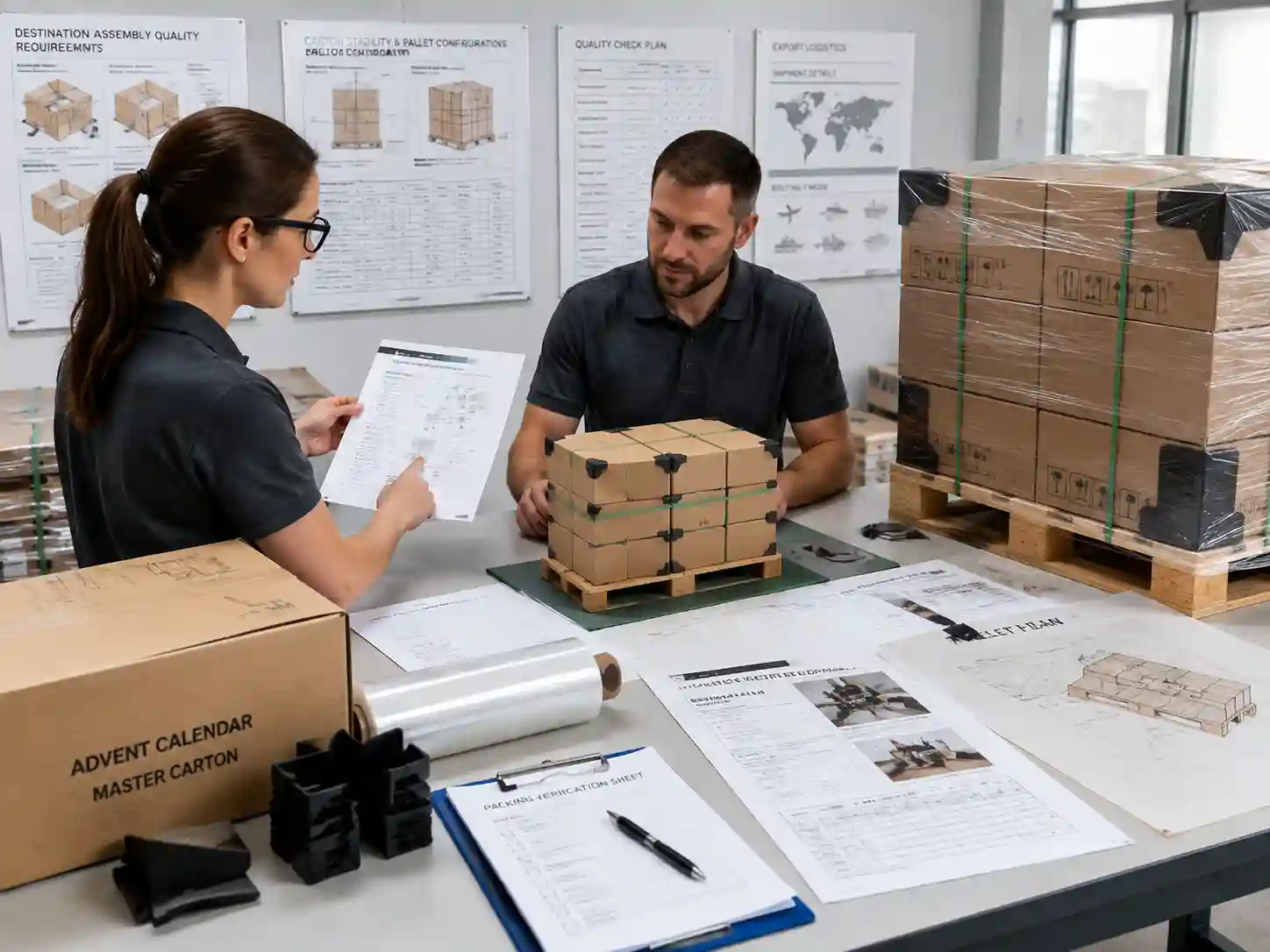
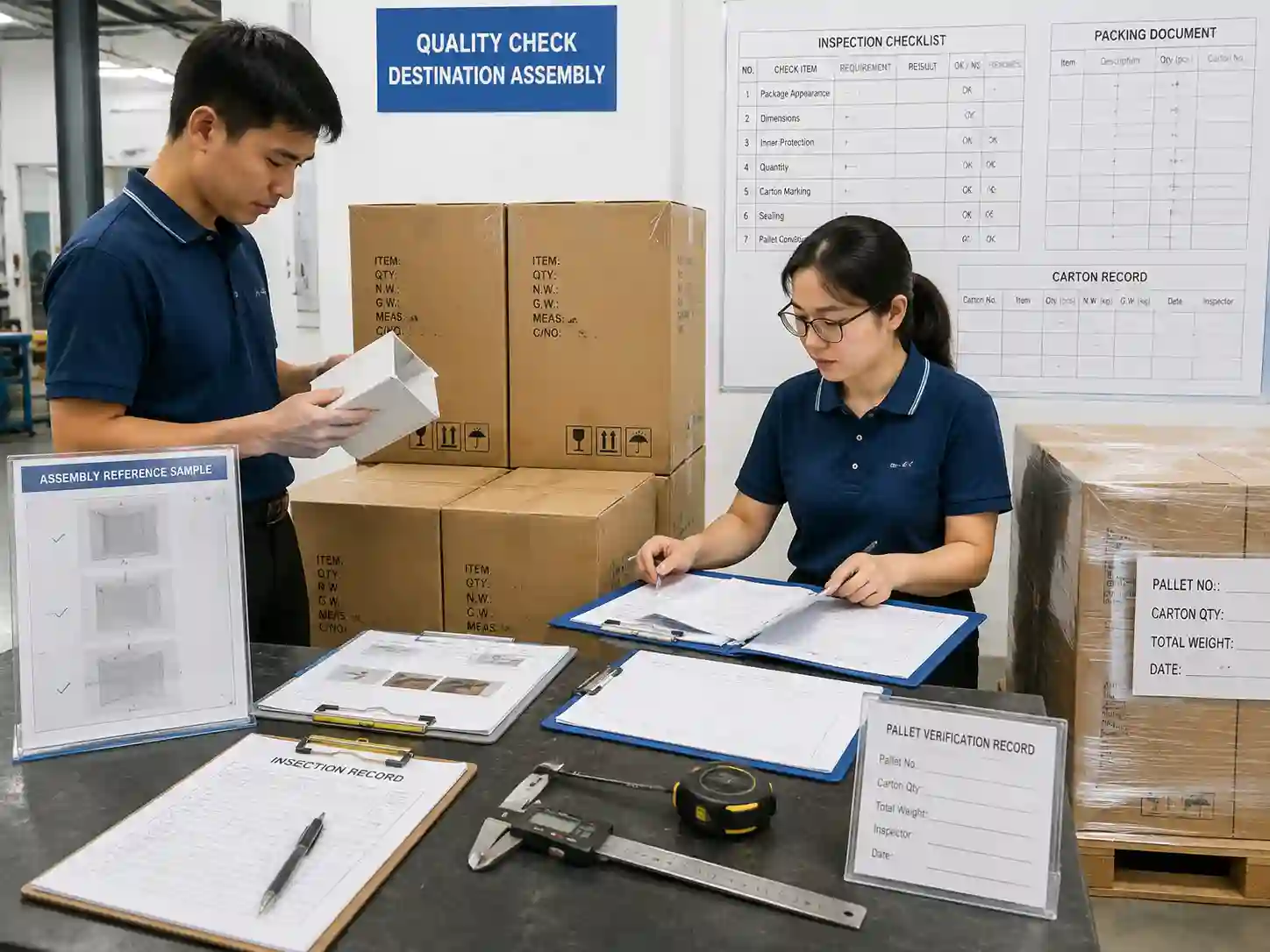
Inspection records should clearly connect the checked product to the relevant shipment, assembly method, and approval documents. Good records allow purchasing teams, logistics teams, and suppliers to understand what was inspected and when.
Useful evidence may include:
- Assembly inspection checklists.
- Photos showing critical assembly points.
- Carton and pallet identification records.
- Measured dimensions, weight records, or fit checks.
- Nonconformance reports and corrective action notes when required.
Verifiable evidence is more useful than a general statement that products were checked. For example, a measurement record can show whether assembled dimensions remain within the approved packaging requirements.
How do carton and pallet checks reduce destination assembly risks?
Carton and pallet checks reduce destination assembly risks by preventing transport conditions from creating problems before final assembly. Packaging quality is affected by vibration, impact, compression, humidity, and movement during shipment.
A practical review may include:
- Confirming master carton dimensions and internal clearance.
- Checking whether components are secured and separated.
- Reviewing pallet orientation and stacking stability.
- Verifying that shipping marks remain visible after wrapping.
- Comparing actual shipment conditions with approved packing records.
| Transit-risk example | Quality check response |
|---|---|
| Lower pallet cartons show compression marks | Review stacking pattern, carton strength requirements, and load distribution records |
| Components move inside cartons | Check void reduction method and internal protection arrangement |
| Surface damage appears after unpacking | Review individual protection method, handling process, and assembly inspection results |

Who should approve destination assembly quality requirements?
Approval responsibility depends on the project structure, but the requirements should be agreed by the parties responsible for product quality, packaging, and distribution.
Common approval roles include:
- Packaging engineers who confirm structural and protection requirements.
- Purchasing teams who confirm supplier compliance and documentation expectations.
- Logistics teams who review carton, pallet, and transport considerations.
- Destination assembly teams who confirm practical assembly steps.
Buyer approval is especially important when assembly conditions vary by destination. Project-dependent requirements may include different inspection frequency, additional photos, or specific assembly checkpoints.
What documents help verify destination assembly quality?
The most useful documents are those that connect design intent, production packing, and final inspection results. Depending on the project, buyers may review:
- Assembly instruction references.
- Approved sample records.
- Inspection checklists.
- Packing specifications.
- Carton layout drawings.
- Pallet loading plans.
- Corrective action records.
These documents help separate verified facts from project-specific recommendations. For example, carton dimensions and inspection measurements are recorded facts, while the preferred pallet pattern may depend on destination handling requirements.
How can suppliers and buyers improve destination assembly inspection communication?
Suppliers and buyers can improve communication by defining inspection points before shipment and using consistent records throughout the process. Clear terminology reduces confusion between factory packing requirements and destination assembly expectations.
Giftpackpro supports commercial buyers with custom advent calendar packaging solutions through structured product development, packaging review, and production communication. Related information is available through custom advent calendar box services, custom advent calendar box products, and advent calendar box buying guides.
FAQs About Destination Assembly Quality Checks
Is destination assembly inspection the same as final product inspection?
No. Final product inspection usually focuses on finished goods before shipment, while destination assembly inspection focuses on confirming that the assembly process, components, and shipping condition produce the expected final result.
Do all projects require the same destination assembly checks?
No. Inspection requirements vary by product structure, assembly complexity, transport method, and buyer approval requirements.
What is the most important evidence for an assembly quality review?
The most important evidence is usually a combination of approved references, inspection records, measurements, and traceable photos or documents showing the actual checked condition.
For support with custom packaging development and export-ready assembly planning, request a custom quote to discuss your packaging requirements.