Quick answer: Drawer friction and door tear strength should be approved through controlled sample testing rather than visual judgment alone. A reliable approval process compares sample structures, records opening force or repeated-use performance, checks perforated door strength, documents revisions, and confirms the approved sample as the reference for production. The exact acceptance method depends on the calendar structure, product weight, opening frequency, and buyer requirements.
Why should drawer friction and door tear strength be tested before approval?
Drawer movement and opening-door performance directly affect how a customer experiences an advent calendar box. A drawer that is too tight may damage the structure during use, while a drawer that is too loose may create poor presentation quality or product movement. Similarly, perforated doors must open cleanly without tearing the surrounding panel.
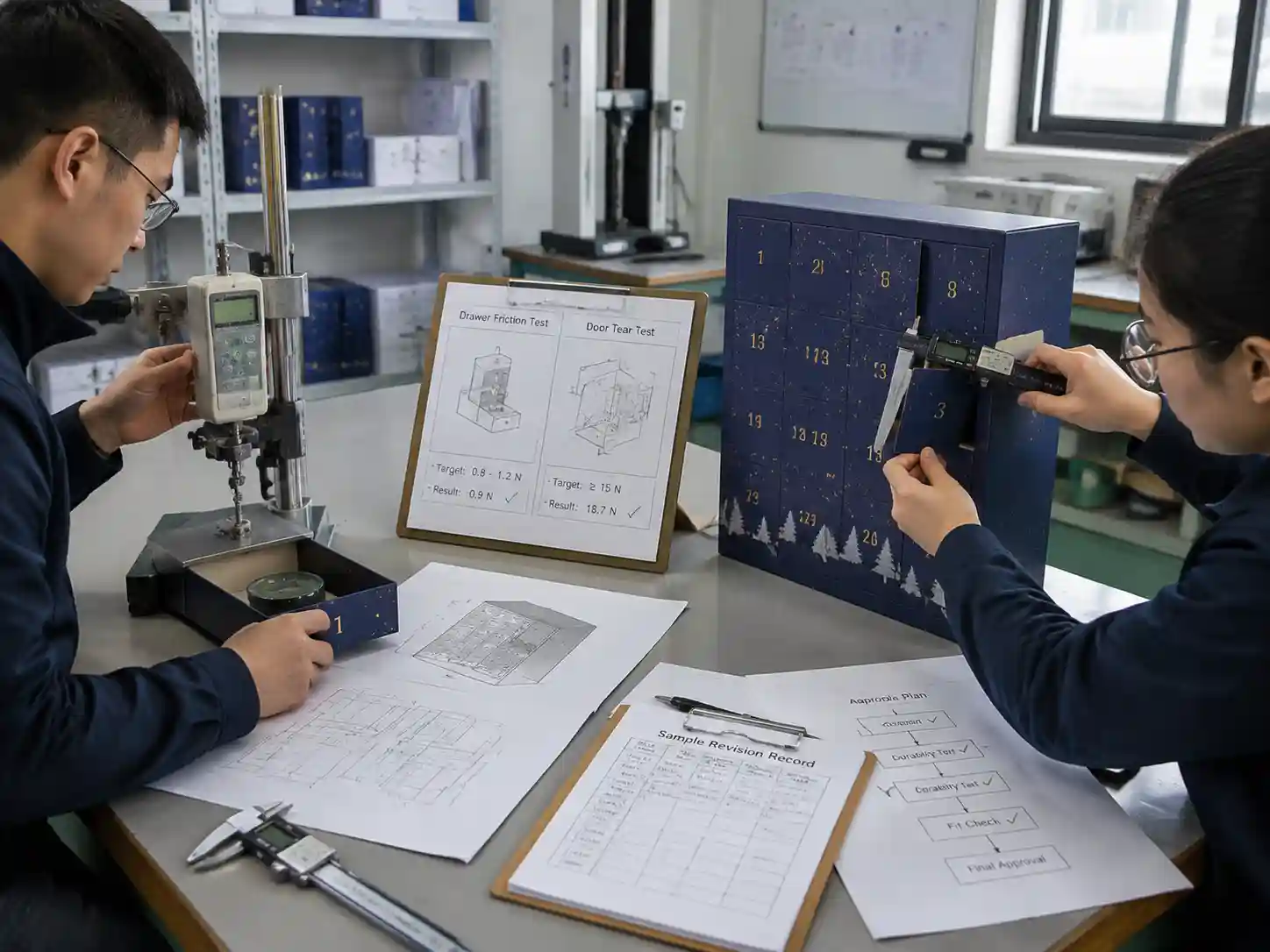
A drawer friction door tear test provides objective evidence before production approval. Instead of approving only by appearance, packaging teams can review physical performance, sample records, and structural changes together.
What should be measured during a drawer friction test?
A drawer friction test should evaluate whether the drawer opens smoothly, stays positioned correctly, and maintains performance after repeated handling. The measurement approach varies by project because drawer size, material thickness, coating, insert weight, and product loading all affect resistance.
Which checks are normally included?
- Opening and closing movement of empty and loaded drawers.
- Drawer alignment with the outer sleeve or housing.
- Contact points where friction occurs, such as side walls, runners, or folded paperboard areas.
- Changes after repeated opening cycles during sample evaluation.
- Whether the drawer front, pull feature, or handle area remains stable.
Packaging engineers may use measurements, repeated-use observations, and comparison against approved samples. The goal is not one universal force value, but consistent performance that matches the intended user experience.
How should door tear strength be evaluated objectively?
Door tear strength should be reviewed by testing the opening feature and surrounding structure, especially for perforated doors, small access panels, or tear-open sections. The approval should confirm that the door opens as designed without causing unwanted damage.
| Test area | What to check | Approval evidence |
|---|---|---|
| Perforation line | Clean opening and controlled tear direction | Sample photos, inspection notes, revision records |
| Door connection points | Strength before opening and during use | Structural sample comparison |
| Printed surface and finish | Cracking, lifting, or damage around the opening | Visual inspection record |
| Loaded calendar condition | Performance when compartments contain products | Loaded sample approval |
The most important point is testing the structure in the condition it will actually be used. A lightweight empty sample may not show the same stresses as a fully loaded advent calendar.
What sample stages help approve drawer and door performance?
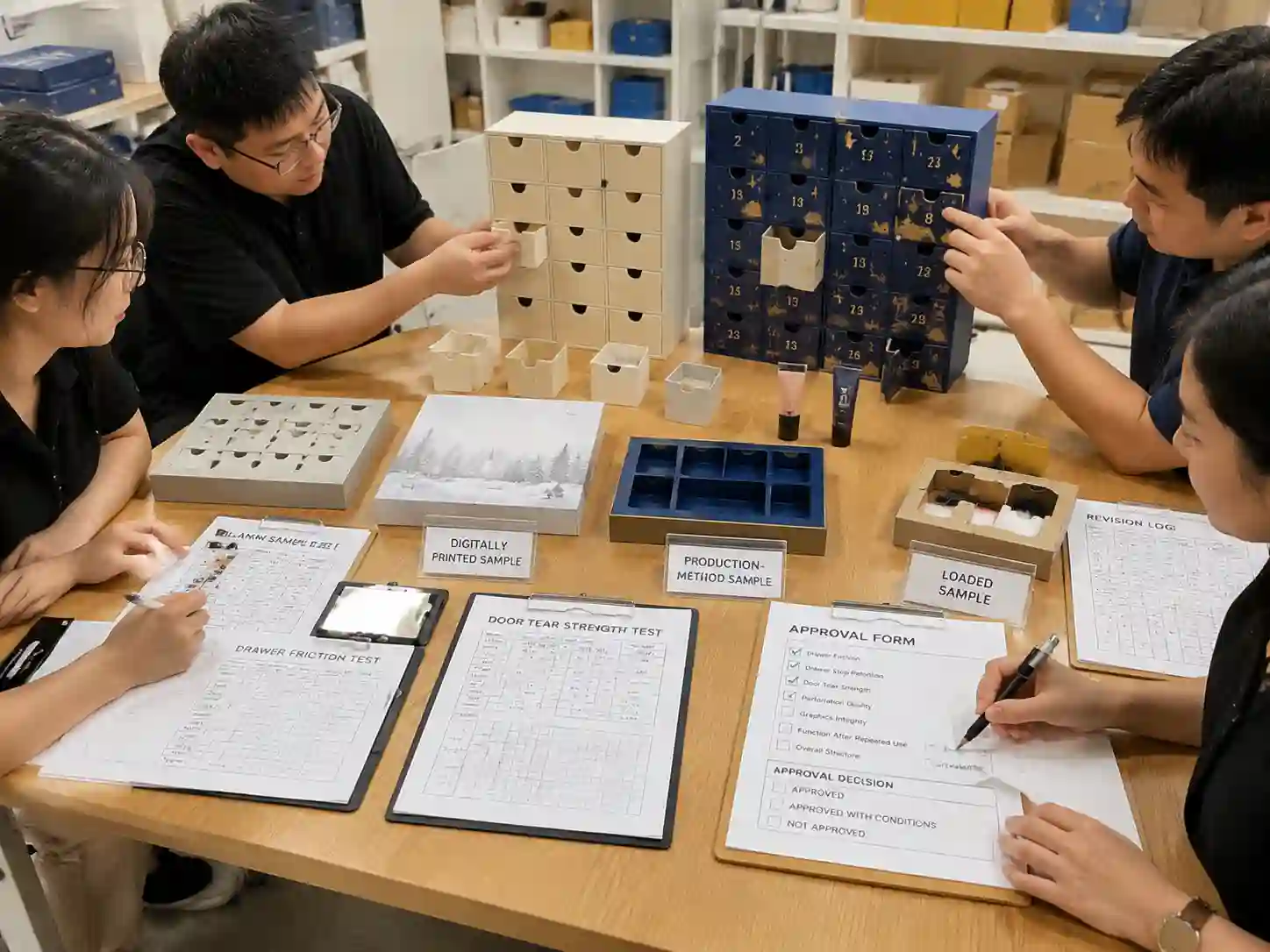
Different sample stages answer different questions. A clear sample plan prevents teams from approving appearance before structural risks are understood.
| Sample stage | Main purpose | Key review items |
|---|---|---|
| Structural sample | Confirm basic construction | Drawer fit, folding accuracy, door structure |
| Printed or production-method sample | Check real material and finishing effects | Surface durability, alignment, opening experience |
| Loaded prototype | Verify performance with product weight | Drawer friction, door opening, retention performance |
| Approved golden sample | Set production reference | Final structure, appearance, and approved changes |
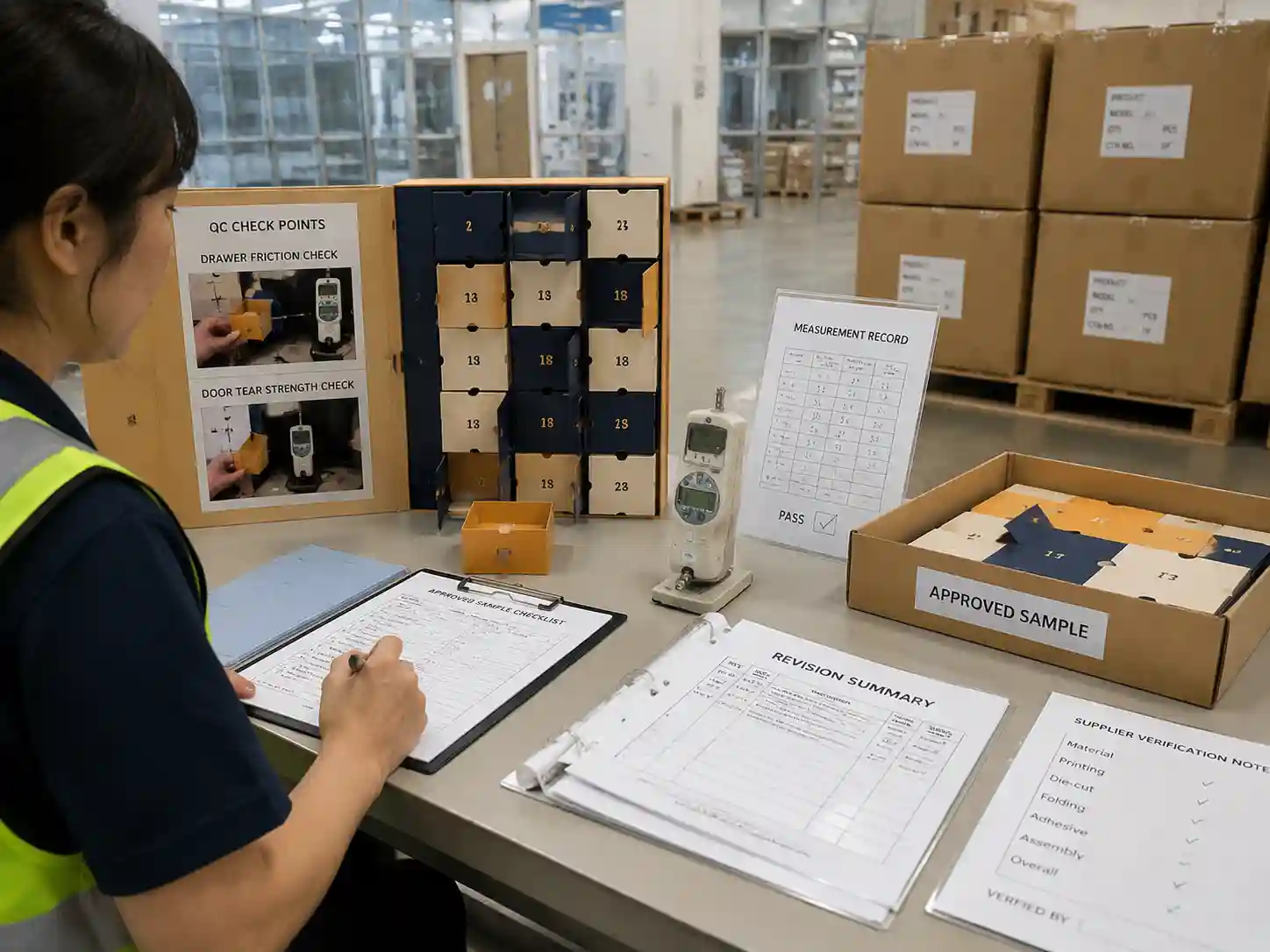
The final approved sample should include the agreed revisions and become the reference point for production checks. Any later modification should be recorded rather than relying on verbal confirmation.
How should revision records be used during approval?
Revision records prevent previously corrected issues from returning during production. Each change should connect the original problem, the adjustment made, and the approval decision.
Example revision record:
- Issue: Drawer movement required excessive pulling force.
- Investigation: Side clearance and material compression reviewed.
- Revision: Structure adjusted and new sample produced.
- Verification: Loaded opening test completed and buyer approved updated sample.
This documentation creates traceability between engineering decisions and the final production reference.
What evidence should buyers review before final sign-off?
Buyers should approve based on physical samples, test observations, and documented changes. The exact approval package depends on the complexity of the advent calendar and the level of control required.
- Approved sample photos or physical sample reference.
- Measurement notes or inspection records.
- Revision history showing completed corrections.
- Confirmation that loaded conditions were considered.
- Final sign-off from responsible project stakeholders.
Giftpackpro supports commercial buyers with custom advent calendar box development, including structural evaluation and sample approval processes through its custom advent calendar box services and custom advent calendar box products.
What commonly causes inaccurate approval decisions?
Most approval problems happen when teams rely on visual inspection without testing actual use conditions. Common risks include approving an empty sample, ignoring repeated opening, failing to record revisions, or changing materials without confirming performance.
Another risk is approving a sample that does not represent production conditions. Differences in board, coating, folding, or assembly methods may affect friction and tear behavior, so the approved reference should match the intended manufacturing process as closely as practical.
Frequently asked questions
Is there one standard force requirement for drawer friction?
No. Drawer resistance depends on the structure, materials, product weight, and intended user experience. Projects should define suitable evaluation criteria based on the specific calendar design.
Should door tear testing be done on empty or loaded calendars?
Loaded testing is usually more representative because internal products can change the stress on the structure. The required condition depends on the design and approval purpose.
What is the role of a golden sample?
A golden sample provides an approved physical reference after revisions are completed. It helps production and quality teams compare output against the agreed standard.
How can buyers prepare for objective approval?
The best approach is to define the required checks before sampling begins, record each revision clearly, and approve performance using evidence rather than appearance alone. For new projects, buyers can review additional advent calendar box buying guides or request a custom quote to discuss project requirements.