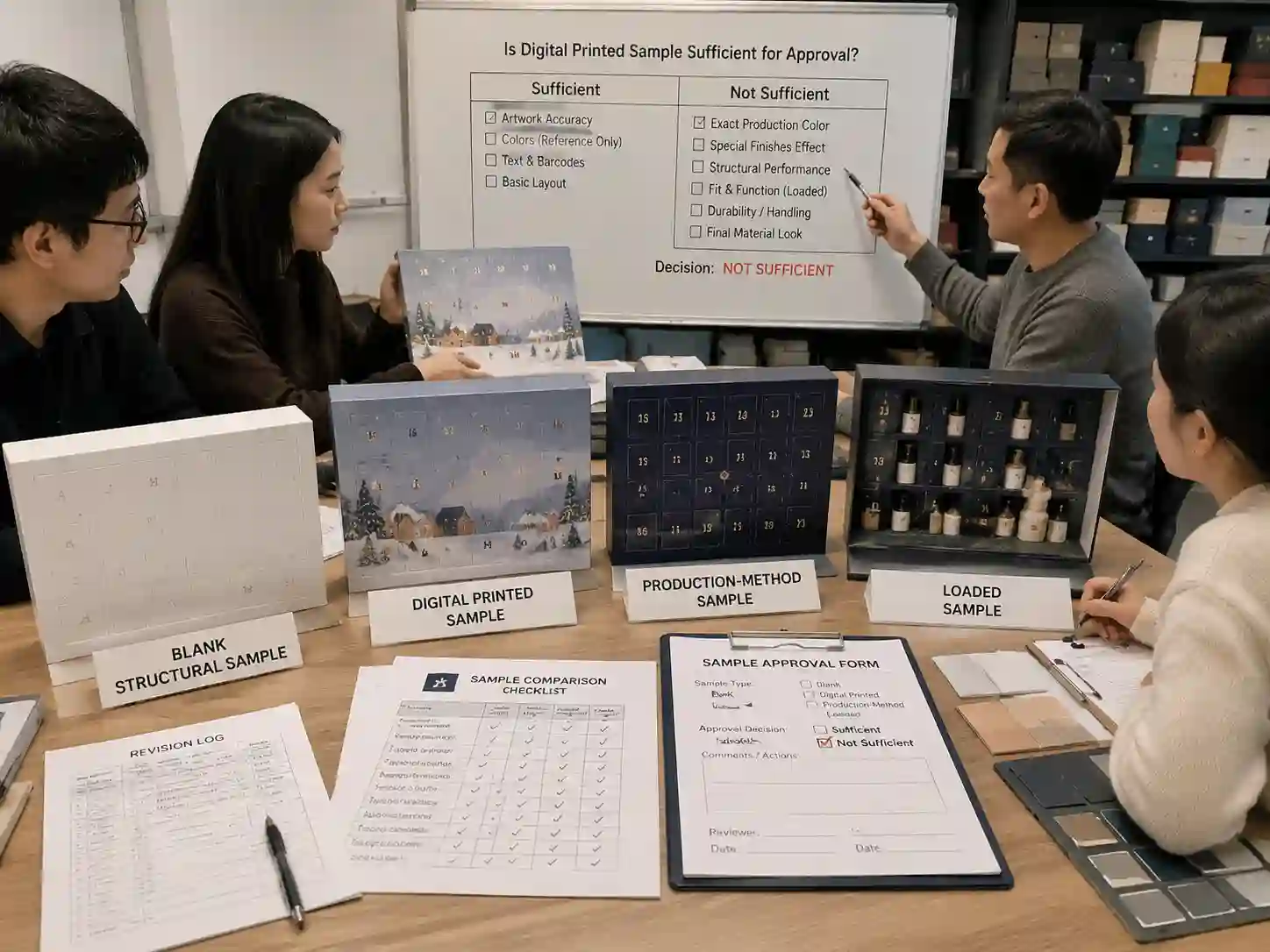
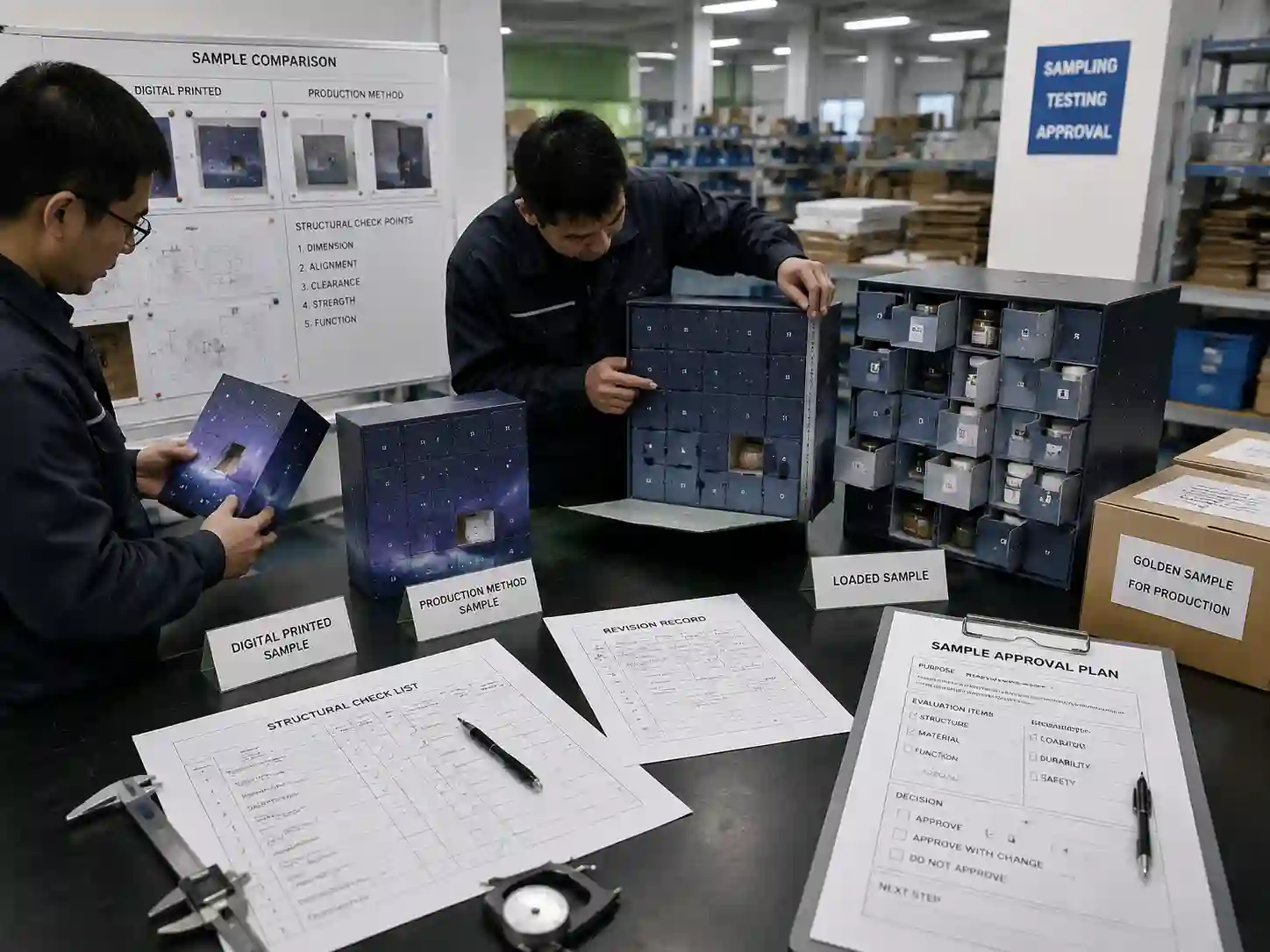
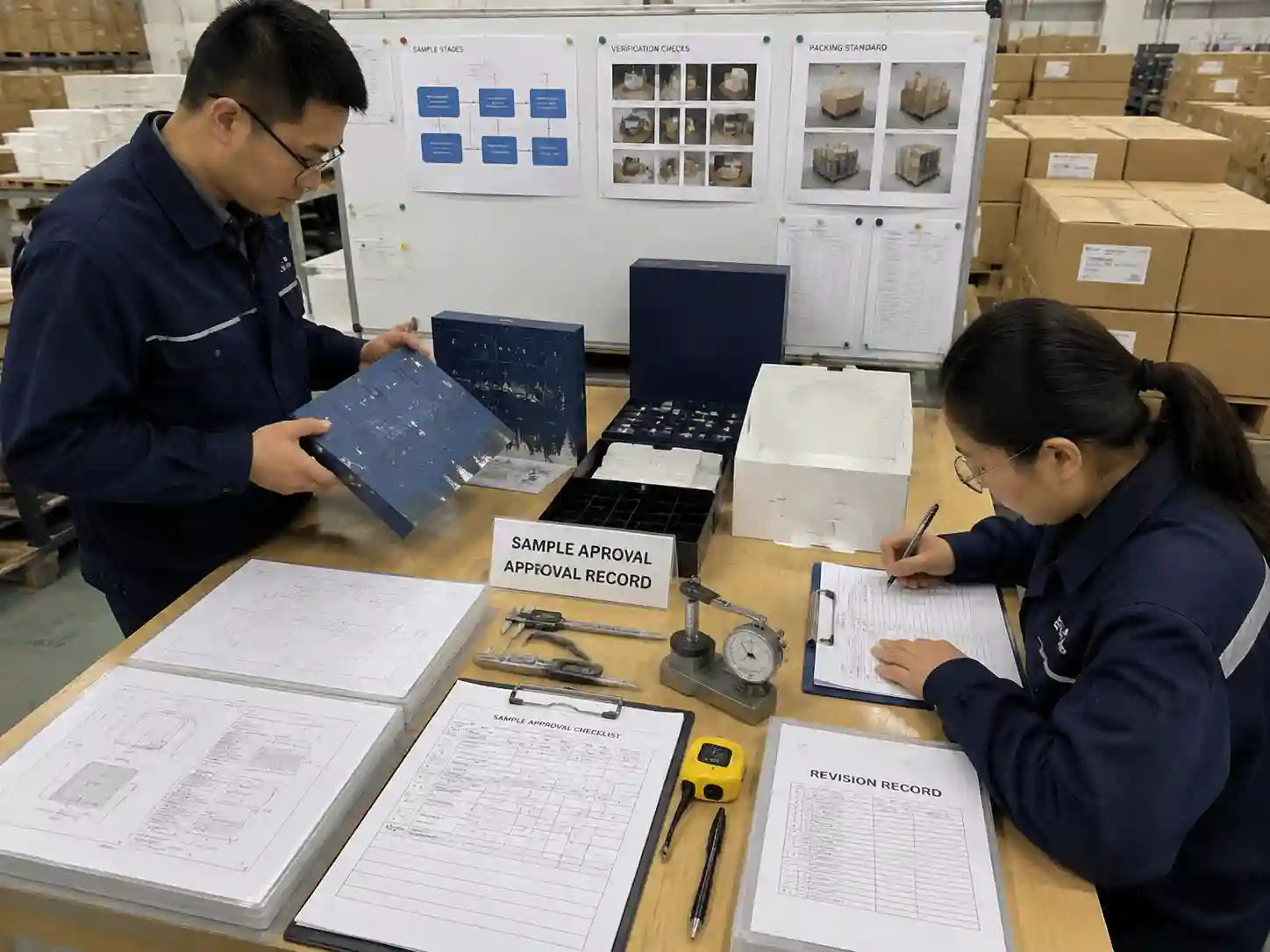
Quick answer: A digital printed sample is not sufficient for approval when the project decision depends on factors that digital printing cannot fully prove, such as production-method color results, structural performance, loaded product fit, finishing behavior, or final assembly quality. Digital samples are useful for artwork review and early alignment, but buyers often need additional evidence before design freeze, including production-method samples, loaded checks, revision records, and formal approval sign-off.
When are digital printed samples useful, and what can they prove?
A digital printed sample is useful for confirming artwork placement, general appearance, graphics direction, and basic packaging concepts. It allows teams to review the relationship between printed artwork and the physical structure before committing to later sample stages.
However, a digital printed sample does not always represent final production conditions. Digital printing may use a different printing process, paper behavior, ink system, or finishing method compared with the planned manufacturing process.
For custom advent calendar boxes, a digital sample can usually help verify:
- Artwork positioning on panels, drawers, or doors.
- General color direction and graphic balance.
- Structural appearance after printing and assembly.
- Communication between product, design, purchasing, and quality teams.
It should not automatically be treated as final production approval evidence when critical performance decisions remain unverified.
What are the main digital sample approval limits?
The main digital sample approval limits occur when a sample cannot demonstrate the actual manufacturing risks that affect the final product. Approval requirements depend on the project, but several common limitations should be reviewed.
| Sample requirement | What a digital sample can show | What may require further verification |
|---|---|---|
| Artwork review | Graphic placement and overall visual direction | Final production color, registration, and print consistency |
| Structural approval | Printed appearance on the structure | Board strength, folding behavior, alignment, and assembly performance |
| Product fit | Approximate visual arrangement | Loaded testing with the actual or representative product |
| Premium finishes | General finish intention | Actual foil, embossing, coating, lamination, or surface durability |
When should a production-method sample be approved instead?
A production-method sample should be considered when the approval decision depends on the final manufacturing process. This is especially important when color accuracy, material response, finishing effects, or assembly details are critical.
Examples include:
- Large printed panels where color consistency matters.
- Premium finishes where texture, reflection, or adhesion must be checked.
- Complex advent calendar structures where folding and alignment affect appearance.
- Projects requiring confirmation before tooling, bulk production, or final design freeze.
The recommended sample stage varies by project risk. Some projects may only need digital artwork confirmation, while others require production-method samples and additional functional checks.
Why is loaded testing different from digital sample review?
Loaded testing answers a different question: whether the finished structure works with the intended product weight, dimensions, and handling conditions. A digital printed sample cannot prove this because it does not represent real loading behavior.
For advent calendar packaging, loaded checks may review:
- Drawer or door operation after filling.
- Insert retention and product positioning.
- Panel stability under product weight.
- Ease of opening without damaging printed surfaces.
Evidence from loaded testing should be recorded through sample notes, measurements, photographs, or approval documents so later production decisions can be traced.
How should teams record sample revisions before approval?
Revision records prevent teams from approving the wrong sample version. Every important sample decision should connect the physical sample, artwork version, comments, and approval status.
| Revision record item | Example information to capture |
|---|---|
| Sample reference | Digital sample, production-method sample, or loaded sample identification |
| Revision date | Date of artwork, structure, or finish update |
| Change summary | Updated graphics, material adjustment, structural correction, or finish change |
| Approval status | Approved, approved with comments, or requires revision |
A controlled revision record supports clear communication between packaging engineers, purchasing teams, quality teams, and suppliers.
What should be checked before design freeze?
Before design freeze, approval should confirm that the selected sample provides enough evidence for the remaining production risks. The exact approval path depends on the packaging design and project requirements.
Digital sample approval checklist
- Artwork version matches the approved file.
- Structural dimensions have been reviewed.
- Required sample stages have been completed.
- Critical finishes have been physically evaluated if needed.
- Loaded performance has been checked where product weight affects the structure.
- Comments and revisions are recorded.
- Final approval responsibility is clearly assigned.
Buyers should separate confirmed observations from project recommendations. For example, a printed sample may confirm artwork placement, while the need for a production-method sample depends on the risk level of the specific packaging project.
Does a golden sample replace a digital printed sample?
No. A golden sample and a digital printed sample serve different purposes. A digital sample helps review early appearance and communication, while a golden sample is typically used as an approved physical reference after key decisions have been completed.
When a golden sample is required, it should be linked to approval records so production teams can compare later output against the agreed reference.
FAQs about digital sample approval limits
Can a digital printed sample be approved for every packaging project?
No. Approval requirements depend on the packaging complexity, printing method, finishes, structural risks, and buyer requirements. Simple artwork checks may be completed digitally, while higher-risk projects may require physical verification.
Does a digital sample prove final color accuracy?
Not always. Final color appearance can vary depending on printing process, substrate, coatings, and production conditions. Physical production-method samples are often used when color matching is a critical approval point.
Who should approve the final sample stage?
The responsible approver depends on the project structure. Product developers, packaging teams, purchasing teams, and quality teams may each have different approval responsibilities.
Giftpackpro supports commercial buyers with custom advent calendar box development, sample review, and production communication. Learn more about custom advent calendar box services, explore custom advent calendar box products, or request a custom quote for your next packaging project.