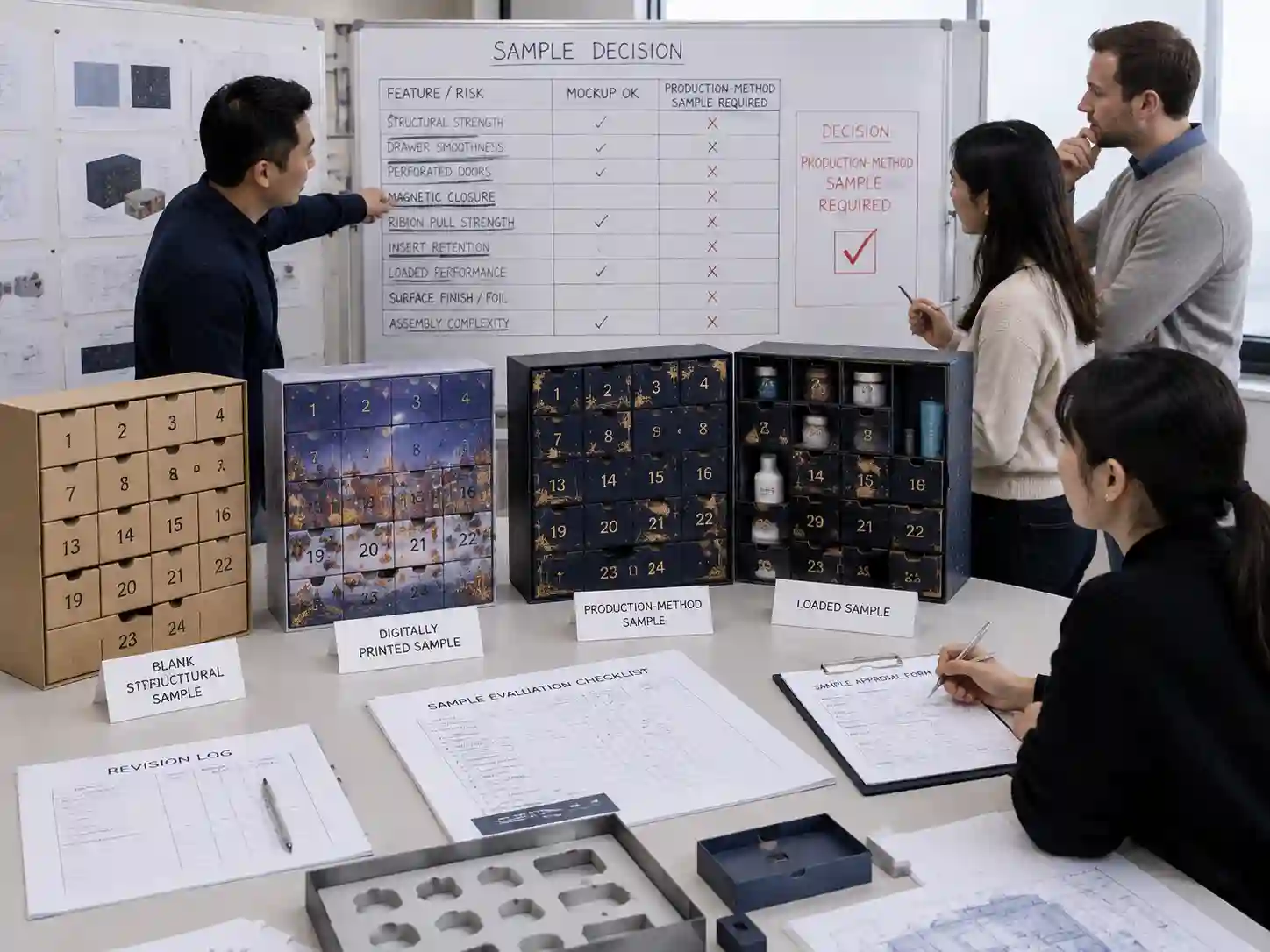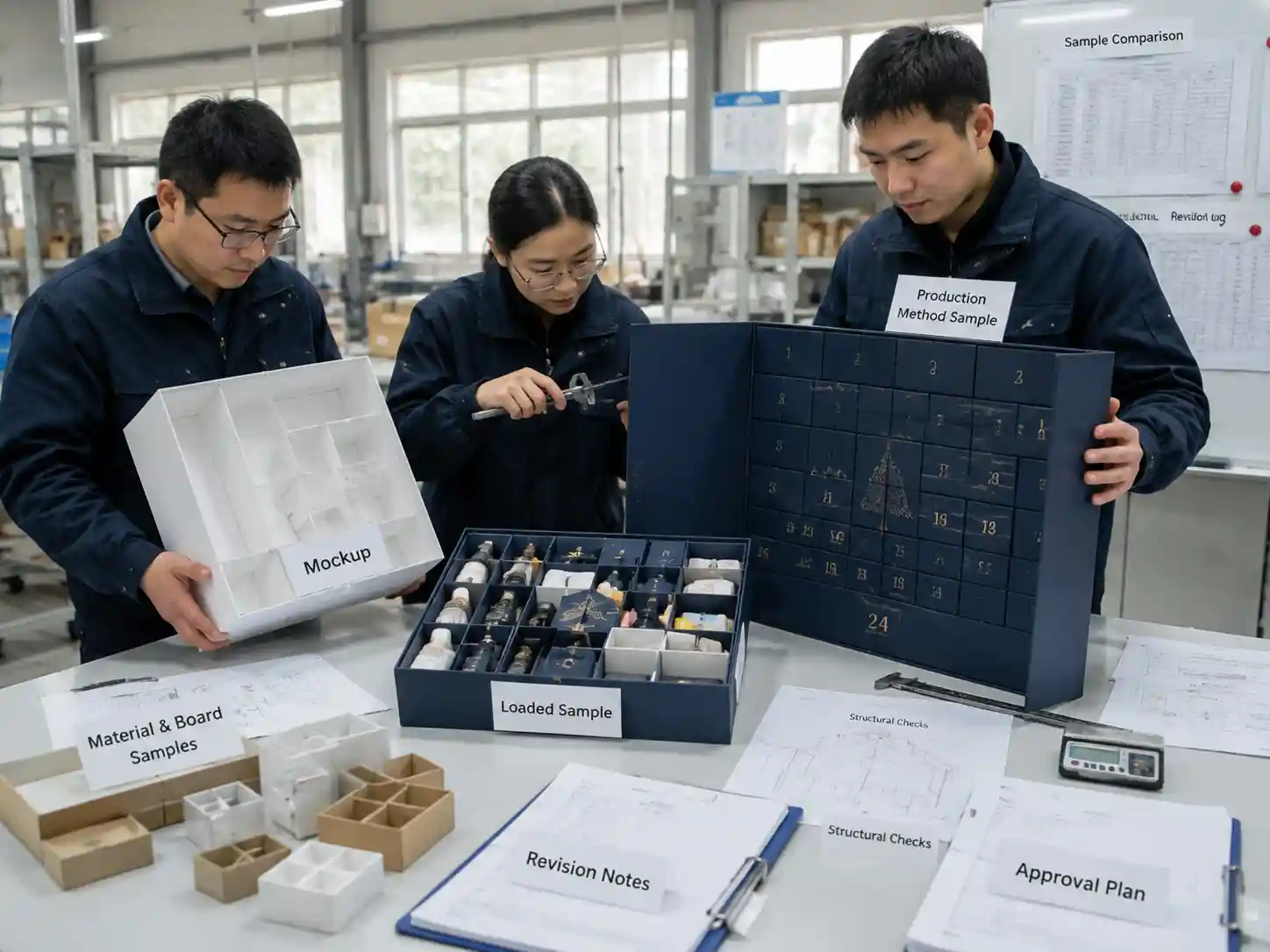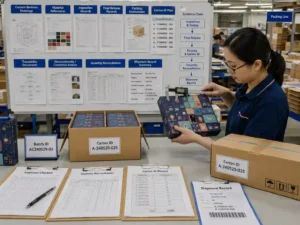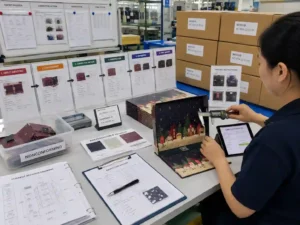
Quick answer: A mockup is useful for reviewing overall appearance, but some packaging features cannot be approved without a production method packaging sample. Structural complexity, moving parts, tight tolerances, premium finishes, heavy product loads, and repeated-use functions often require a sample made with the intended production process. The correct sample stage depends on what the buyer needs to verify: appearance, function, durability, assembly, or final production risk.
Why is a mockup sometimes not enough for packaging approval?
A mockup is mainly a visual reference. It can confirm general size, artwork placement, and design direction, but it may not represent the actual material behavior, manufacturing process, or final performance of the finished packaging.
A production method packaging sample is different because it uses production-relevant materials, construction methods, and finishing processes. It provides evidence that the approved design can be manufactured as intended before bulk production begins.
The need for a production-method sample depends on the feature being evaluated. Simple appearance checks may only require a mockup, while functional or high-risk features usually require a more representative sample.
Which packaging features require a production method packaging sample?
Features that affect structure, assembly, handling, or final appearance under real manufacturing conditions generally require a production-method sample.
| Feature requiring verification | Why a mockup may be insufficient | What the production-method sample should prove |
|---|---|---|
| Complex drawer, door, or folding structures | Paper stiffness, folding accuracy, and alignment may change during production | Opening function, fit, movement, and structural stability |
| Loaded compartments or product retention features | Empty mockups do not show real weight distribution | Product fit, removal experience, and insert performance |
| Premium finishes on functional areas | Mockups may not show finishing effects on folds, edges, or handling points | Finish registration, durability, and appearance after assembly |
| Magnetic closures, ribbons, hinges, or pull features | Hardware placement and attachment strength depend on production construction | Reliable operation and correct component positioning |
| Large panels or complex assembled shapes | Flat artwork samples cannot show warping or assembly behavior | Final shape, alignment, and stability |
Do moving parts require a production-method sample before approval?
Yes. Moving parts usually require production-method sampling because function depends on precise construction details, not only visual design.
For advent calendar packaging, features such as drawers, doors, hinges, sleeves, magnetic closures, and pull ribbons should be checked using a sample that reflects the intended manufacturing approach.
Important checks include:
- Opening and closing movement
- Clearance between moving components
- Alignment after repeated handling
- Strength of attachment points
- Ease of assembly and user access
The approval record should identify the sample version reviewed, the tested functions, and any required corrections before design freeze.
When do loaded tests require a production-method sample?
A loaded sample is recommended when the packaging must hold products with meaningful weight, uneven distribution, or sensitive surfaces.
A digital print mockup or empty structural sample cannot confirm how the finished package performs when filled. A production-method sample allows teams to verify:
- Product fit inside compartments
- Insert retention and support
- Drawer or door operation with product weight
- Balance and handling stability
- Potential damage caused by movement or pressure
The exact loading method depends on the product type, packaging structure, and buyer requirements. The sample should represent the final intended use as closely as practical.
How should teams decide between a mockup and a production sample?
The decision should be based on the purpose of approval. A mockup may be enough for early design discussion, while production-related decisions require stronger evidence.
| Approval purpose | Suitable sample stage |
|---|---|
| Artwork direction and basic appearance | Mockup or digital sample |
| Structural concept review | Blank structural sample |
| Function, loading, and assembly verification | Production-method sample |
| Final buyer sign-off | Approved golden sample or agreed reference sample |
Project teams should record what each sample proves. This prevents approval decisions from being based on a sample that was never intended to represent final production conditions.
What evidence should be recorded during production-method sample approval?
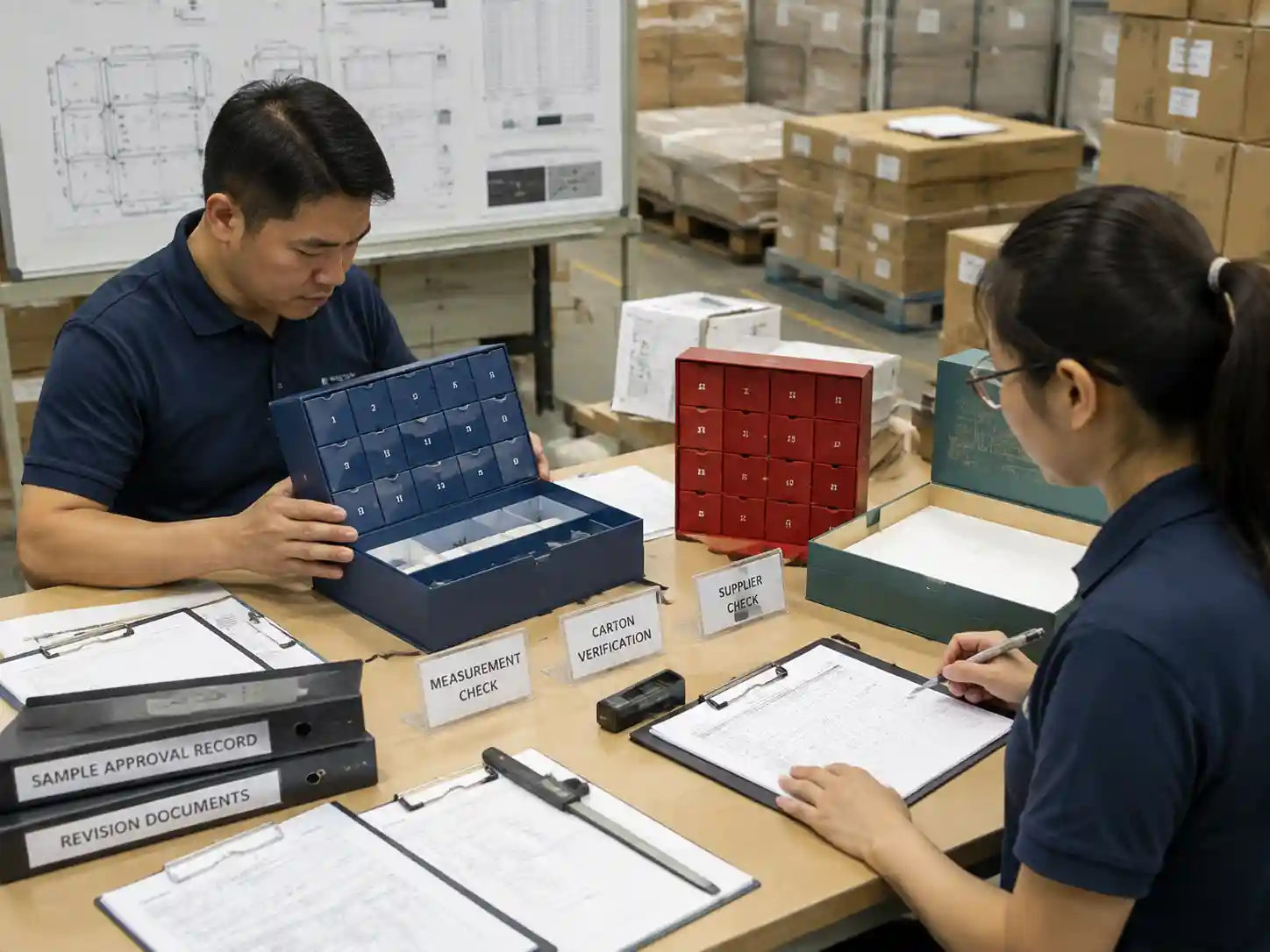
Production-method sample approval should include clear records showing what was reviewed and what decisions were made.
Production-method sample approval checklist
- Sample identification and revision number
- Structural drawing or approved specification reference
- Material and finish details used for sampling
- Measurements of critical dimensions
- Loaded testing results where applicable
- Assembly and function observations
- Open issues and required corrections
- Final approval sign-off
These records create traceability between the approved sample and the production version. They also help suppliers and buyers manage changes after approval.
How do revision records protect against sample approval mistakes?
Revision records prevent teams from approving one sample while production follows another version. Every significant change should be linked to a clear revision history.
Example revision record
| Revision item | Record example |
|---|---|
| Sample version | Production-method sample revision B |
| Change reviewed | Drawer clearance adjustment |
| Verification method | Measured fit and repeated opening check |
| Approval status | Approved after buyer review |
The exact approval process varies by project complexity, product requirements, and buyer expectations. Higher-risk packaging designs usually require more representative samples before design freeze.
Frequently asked questions
Can a digitally printed sample replace a production-method sample?
Not always. A digital sample can confirm artwork and general appearance, but it may not prove final structure, finishing behavior, or functional performance.
Are premium finishes always required to use a production sample?
No. The requirement depends on whether the finish affects critical appearance areas, folding points, handling surfaces, or production consistency.
Who should approve a production-method sample?
Approval responsibility depends on the project structure, but product developers, packaging engineers, purchasing teams, quality teams, and project managers may all contribute to review and sign-off.
Conclusion: when should buyers request a production-method sample?
Buyers should request a production-method sample when the packaging feature involves functional performance, structural risk, loaded use, complex assembly, or finishing details that cannot be verified through a mockup alone.
A well-controlled sample process uses the right evidence at the right stage: mockups for visual direction, structural samples for engineering review, and production-method samples for final manufacturing confidence. Giftpackpro supports commercial packaging projects with sample review and approval processes designed around practical production requirements.
Need help determining the right sample stage for your packaging project? Request a custom quote to discuss your packaging requirements and approval needs.