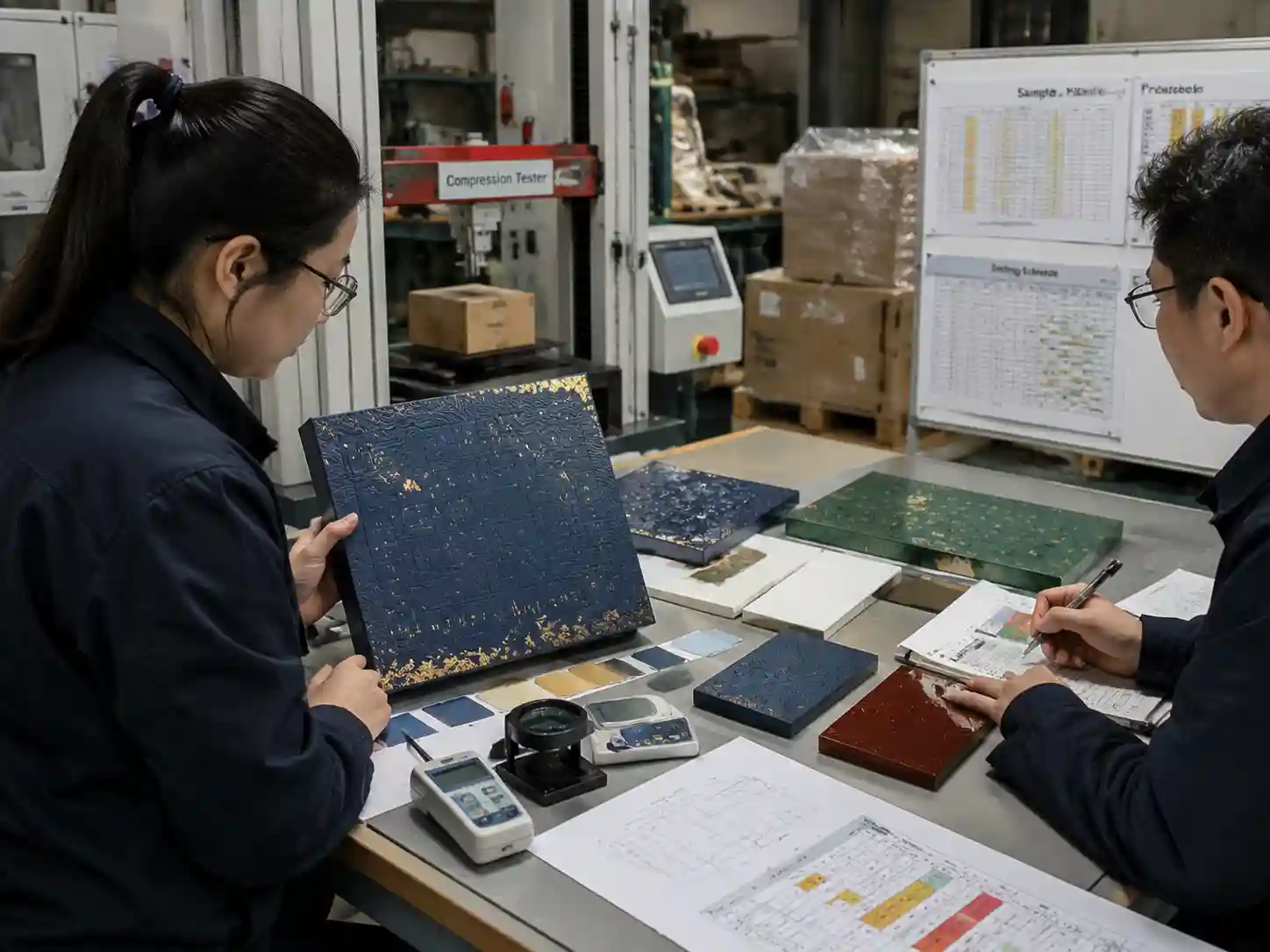
Quick answer: Raised finishes can improve premium appearance, but they also create additional surface protection considerations during export packing. Embossing, raised spot UV, textured coatings, and layered foil effects may be more exposed to pressure points, abrasion, and stacking contact. The correct approach is to match the finish design with packing protection, handling checks, and supplier inspection records before production release.
How do raised finishes affect export packing protection?
Raised finishes affect export packing protection because the elevated surface areas can receive more direct contact pressure during handling, stacking, and transportation. The impact depends on the finish height, board structure, outer packing method, and how products are positioned during shipment.
Unlike flat printed surfaces, raised embossing, textured coatings, and raised spot UV create physical variations on the packaging surface. These areas may become contact points when cartons are compressed or when finished boxes rub against each other.
Which raised finishes create higher packing risks?
Higher-risk finishes are usually those with noticeable surface height, delicate edges, or limited resistance to repeated contact. The risk is not determined by the finish name alone but by the combination of material, design location, and handling conditions.
| Finish type | Potential export packing risk | Recommended review |
|---|---|---|
| Deep embossing | Raised edges may receive concentrated pressure during stacking | Check emboss depth, board support, and contact areas |
| Raised spot UV | Glossy raised areas may show scratches or scuff marks | Review surface durability and protective packing layers |
| Foil with raised emboss | Fine foil details may show cracking or edge wear if stressed | Inspect registration and foil transfer quality |
| Textured specialty coatings | Surface texture may collect abrasion during movement | Evaluate rubbing resistance and handling exposure |
How should raised finishes be checked before export packing?
Raised finishes should be reviewed through physical samples, finish inspection, and packing simulation checks before bulk production. Visual approval alone may not identify pressure or abrasion risks.
Useful verification steps include:
- Reviewing finished samples under normal and angled lighting to identify damaged edges or uneven finish height.
- Checking finish registration between foil, embossing, spot UV, and printed graphics.
- Inspecting whether raised areas contact other surfaces when boxes are stacked or packed.
- Recording approval decisions with sample references, inspection notes, and supplier communication records.
What evidence helps confirm finish durability?
Evidence should connect the finish specification with the actual packaging condition. Useful records include approved samples, technical drawings showing finish locations, surface inspection sheets, and packing review notes.
For commercial packaging projects, suppliers and buyers should confirm whether the raised effect is intended for appearance only or whether it must also withstand repeated handling through distribution channels.
What packing considerations reduce raised finish damage?
Export packing protection should prevent unnecessary contact between raised surfaces and other packaging components. The exact solution depends on the calendar structure, finish placement, and shipment conditions.
- Keep highly raised decorative areas away from direct carton pressure points where possible.
- Consider protective separation when finished surfaces may rub against each other.
- Review outer carton compression risks if raised details are located on large exposed panels.
- Confirm that lamination and coating choices support the intended handling environment.
Should embossing and raised effects be limited on export packaging?
Raised effects do not need to be avoided, but they should be selected with production and logistics conditions in mind. A well-planned finish can maintain a premium appearance while reducing unnecessary handling risks.
Finish-selection example: A premium advent calendar with foil, embossing, and spot UV may place raised elements only on key visual areas while keeping high-contact edges simpler. This approach can reduce abrasion exposure while preserving the intended design effect.
How does finish adhesion relate to raised surface protection?
Finish adhesion is important because raised effects depend on stable bonding between coating, foil, ink, and the packaging substrate. Weak adhesion can increase the chance of peeling, lifting, or surface damage during handling.
Raised finish adhesion checklist
- Confirm that the finish layer is firmly bonded to the printed surface.
- Check foil transfer quality around embossed areas.
- Review whether lamination affects coating compatibility.
- Inspect edges and corners where stress is more likely.
- Document any surface defects found during sample approval.
What varies by project when using raised finishes?
The final protection requirements depend on the packaging structure, finish position, board selection, transportation route, and expected handling level. A finish that performs well on a small rigid box may require different protection when applied to a larger advent calendar format with wider panels.
Project-specific decisions should be supported by drawings, samples, measurements, and supplier inspection records rather than appearance evaluation alone.
Frequently asked questions about raised finishes and export packing
Does embossing always increase export packing risk?
No. Embossing increases surface height, but the actual risk depends on depth, location, packaging structure, and protection during shipment.
Can lamination protect raised finishes?
Lamination may improve surface resistance in some applications, but compatibility with other finishes and the final surface requirement should be reviewed during development.
Are raised spot UV effects suitable for export packaging?
Yes, when the finish location and protection method are properly considered. Buyers should review samples and handling conditions before approval.
Giftpackpro supports commercial buyers developing premium seasonal packaging with integrated finishing considerations. For projects requiring custom structures and finish planning, request a custom quote to discuss your packaging requirements.