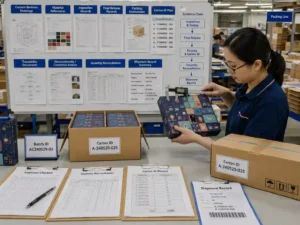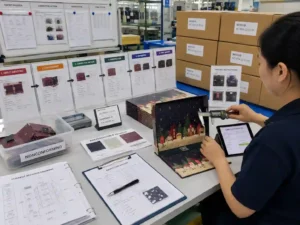
Quick answer: Holographic finishes can affect barcode readability, artwork contrast, and registration accuracy because reflective surfaces change how light interacts with printed elements. The safest approach is to plan barcode zones, quiet areas, and key graphics before applying holographic effects. Packaging teams should verify placement through artwork reviews, physical samples, barcode scans, and production QC checks before final approval.
Why does holographic finish barcode placement require special planning?
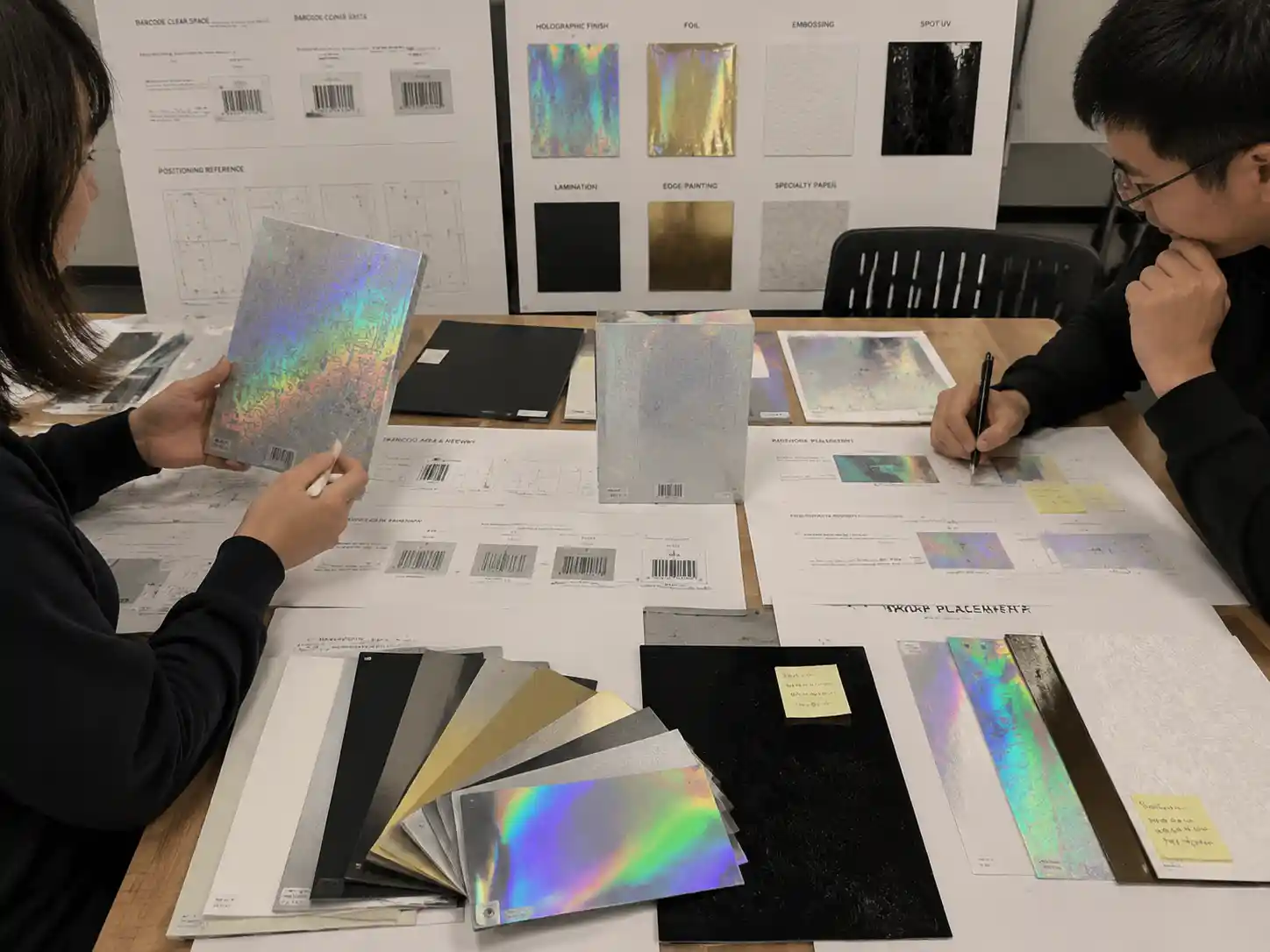
Holographic finish barcode placement requires early planning because reflective patterns can reduce contrast between the barcode and its background. A barcode that appears clear in digital artwork may perform differently when printed over a changing reflective surface.
Holographic films, foil effects, and specialty coatings create visual movement through light reflection. While this can improve premium appearance, it may interfere with areas that require consistent optical reading, such as barcodes, regulatory marks, and small technical text.
Packaging designers should separate decorative holographic areas from functional information zones whenever possible. The final decision depends on barcode type, scanner requirements, artwork layout, and the selected finishing process.
How should barcode areas be positioned on holographic packaging?
Barcode areas should usually be placed on a stable, low-reflection background rather than directly over complex holographic patterns. A controlled barcode zone helps maintain contrast and reduces scanning risks during handling and retail operations.
What placement checks should be completed?
- Confirm the barcode location in the structural drawing before artwork release.
- Review whether holographic foil, film, or coating crosses the barcode area.
- Check quiet zones around the barcode to ensure surrounding graphics do not reduce readability.
- Validate the final printed sample instead of relying only on screen artwork.
- Record approval decisions in artwork and production documents.
For custom advent calendar boxes, barcode placement also needs to consider folding panels, drawer fronts, doors, sleeves, and areas that may become curved or compressed after assembly.
Can holographic effects be used near logos and product artwork?
Yes, holographic effects can be used near logos and artwork, but the design should control contrast, registration, and visual hierarchy. Important graphics should not depend on unpredictable reflections for readability.
Design teams often separate high-impact decorative areas from information-critical areas. For example, a holographic background may support a premium appearance while a logo area uses controlled contrast through spot UV, embossing, matte coating, or a cleaner printed panel.
| Area | Potential Risk | Recommended Check |
|---|---|---|
| Barcode zone | Reflection may reduce scanner performance | Scan physical samples under intended lighting conditions |
| Small text | Fine details may lose contrast against holographic patterns | Review printed proofs and magnified samples |
| Logo placement | Registration variation may affect alignment | Approve position tolerances before production |
| Fold lines | Finish movement may change visual alignment | Check assembled samples, not only flat sheets |
How do holographic finishes affect artwork registration?
Holographic finishes can increase registration sensitivity because the decorative pattern and printed graphics must align correctly across the packaging surface. Small position differences may become more visible when reflective effects are combined with precise artwork.
Project teams should review:
- Die-line position and fold locations.
- Alignment between holographic patterns and printed graphics.
- Registration tolerance for foil, embossing, spot UV, and other finishing layers.
- Appearance after folding, gluing, and final assembly.
Registration performance varies by structure, material, finishing method, and production setup. Buyers should confirm acceptable visual tolerance during sample approval rather than assuming every surface will align perfectly.
What finish risks should buyers review before production?
The main risks are usually related to contrast, adhesion, scuffing, and alignment. A finish review should consider both appearance and functional performance.
| Finish Risk | Why It Matters | Evidence to Review |
|---|---|---|
| Barcode interference | Reflective surfaces may affect readability | Barcode scan records from approved samples |
| Finish adhesion | Layer separation can damage printed areas | Sample inspection and supplier finish records |
| Surface scuffing | Handling may reduce premium appearance | Handling reviews and surface checks |
| Registration variation | Misalignment can affect artwork quality | Approved samples and measurement references |
How can teams verify holographic packaging before production release?
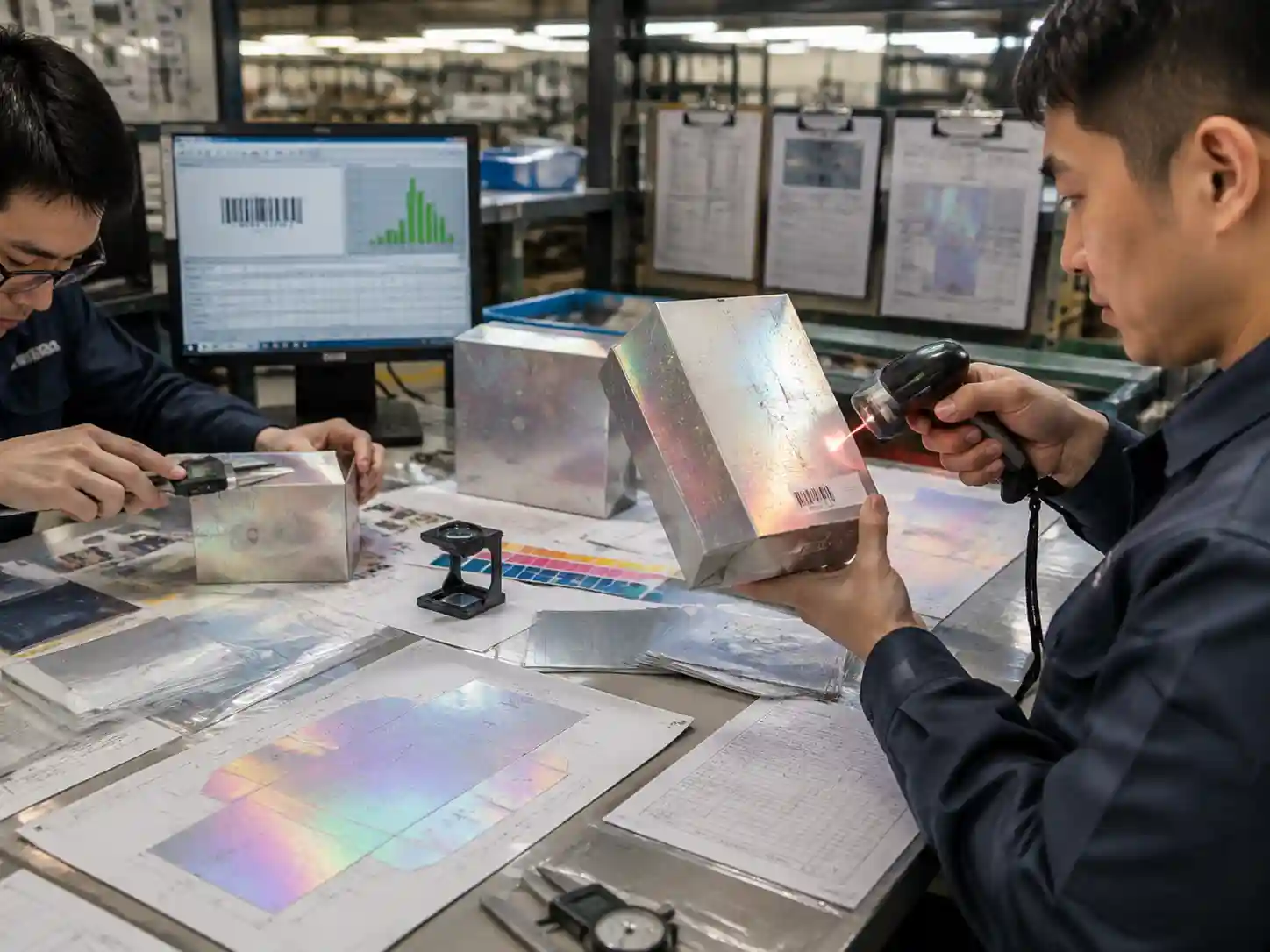
Verification should combine artwork review, physical samples, measurements, and QC documentation. A digital file alone cannot confirm how holographic surfaces will behave after printing and assembly.
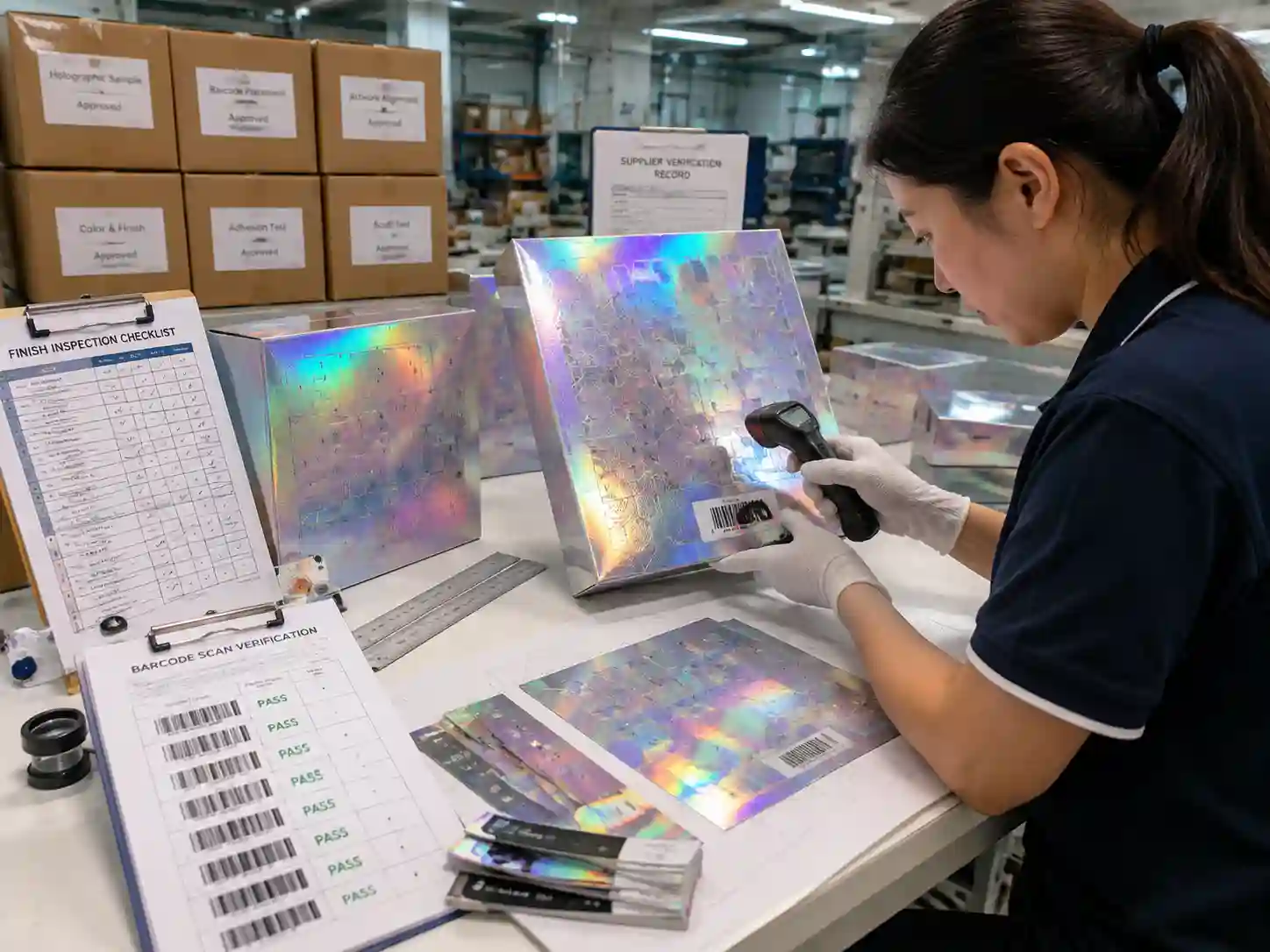
A practical approval checklist includes:
- Artwork drawing showing barcode, logo, and holographic finish locations.
- Physical sample review under different viewing angles.
- Barcode scanning confirmation on finished samples.
- Inspection of foil, coating, embossing, and lamination layers.
- Final approval records showing accepted placement and finish appearance.
Giftpackpro supports custom packaging development through custom advent calendar boxes and custom advent calendar box services, helping teams evaluate finishing details before production decisions are finalized.
What varies between different holographic finish projects?
Project requirements vary depending on the holographic material, packaging structure, artwork density, barcode location, and expected handling conditions. Some designs may allow larger decorative areas, while others require stricter separation between effects and functional graphics.
Buyer approvals should be based on the actual production sample, approved artwork files, and documented inspection criteria. This reduces the risk of discovering barcode or artwork issues after mass production begins.
FAQs about holographic finish barcode placement
Can a barcode be printed directly on holographic foil?
It may be possible in some applications, but readability depends on the specific foil surface, printing method, barcode requirements, and sample verification results. Physical testing is recommended before approval.
Should holographic effects be removed from barcode areas?
Not always. Some designs use controlled contrast zones or reserved areas around barcodes. The correct approach depends on the finish structure and scanning requirements.
When should barcode placement be finalized?
Barcode placement should be confirmed during artwork and structural review before final finishing approval. Late changes may affect layout, decorative balance, and production preparation.
For packaging teams reviewing premium finishes, advent calendar box buying guides can help connect finishing choices with wider packaging decisions. To review a specific holographic packaging requirement, request a custom quote.