Glitter and pearlescent effects can create premium visual impact, but approval should focus on finish stability rather than appearance alone. A proper glitter pearlescent finish approval process reviews particle adhesion, surface handling, transfer risk, artwork registration, and production samples before release. Buyers should confirm the finish method, inspect physical samples under realistic handling conditions, and keep approval records that show why the effect is acceptable for the final packaging application.
How do you approve glitter pearlescent finishes without excessive shedding?
The key is to approve the finish through physical inspection and handling checks, not only by reviewing photographs or a visual sample. Glitter particles or pearlescent coatings should remain bonded to the surface during normal assembly, packing, transportation, and customer handling.
A typical approval process includes:
- Reviewing the exact finish sample with the intended paper, coating, and lamination combination.
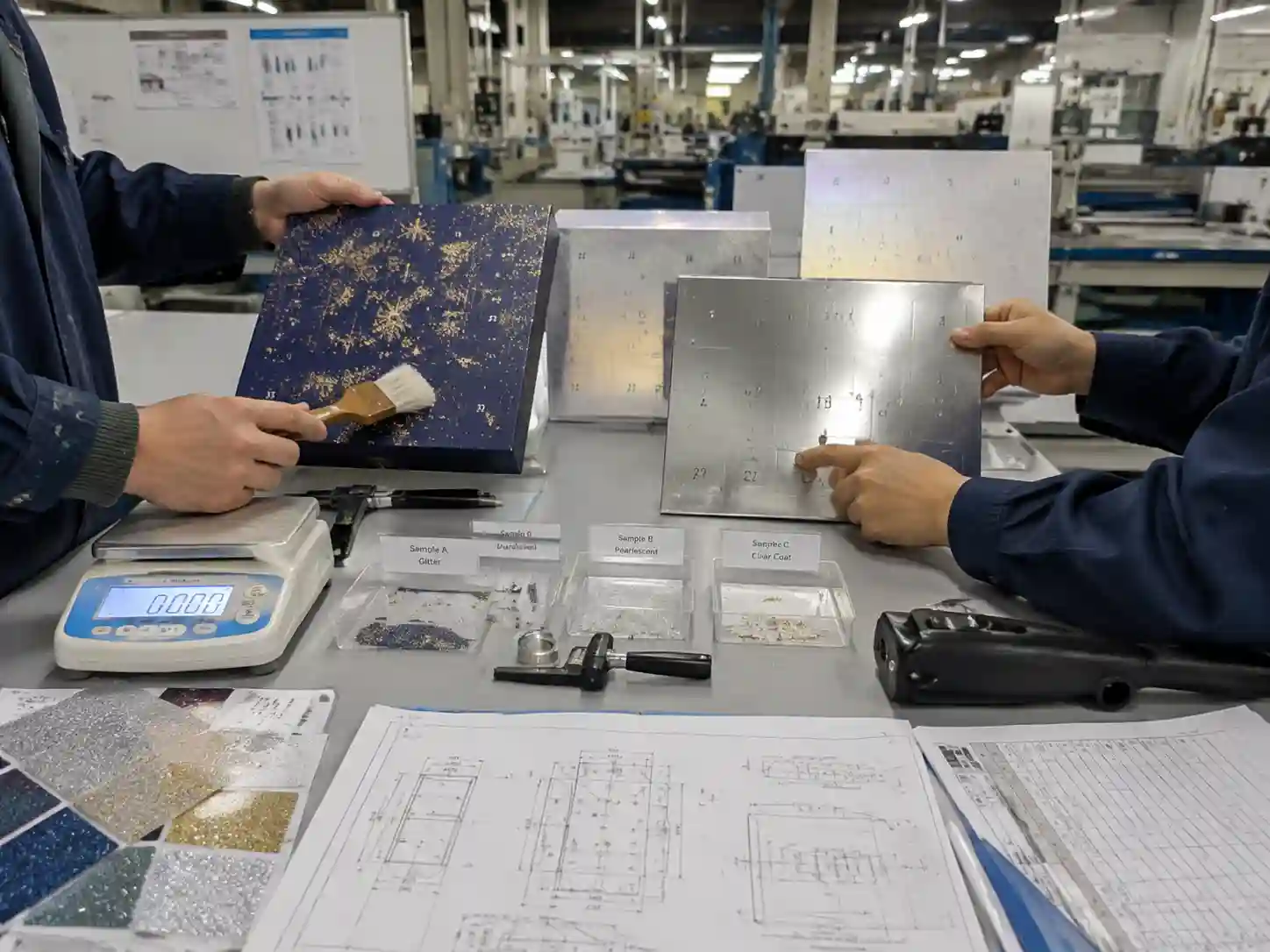
- Checking whether loose particles transfer to hands, adjacent surfaces, or internal components.
- Inspecting rubbed areas, folded edges, corners, and high-contact zones.
- Confirming that the glitter or pearlescent layer does not interfere with barcode areas, fine artwork, or other finishing effects.
What should buyers check before approving glitter or pearlescent effects?
Buyers should verify the finish construction, surface durability, and production consistency before approval. The same glitter effect may behave differently depending on coating method, paper surface, adhesive system, and handling requirements.
| Finish risk | Approval check | Possible concern |
|---|---|---|
| Particle shedding | Rub and handling inspection on finished samples | Loose particles may transfer during assembly or use |
| Poor adhesion | Review finish bonding after folding and surface contact | Effect may weaken at edges or stressed areas |
| Artwork interference | Check registration between glitter areas and printed graphics | Fine details may lose clarity |
| Surface damage | Inspect after repeated handling simulation | Gloss, texture, or particles may change appearance |
How can you test glitter and pearlescent finish adhesion?
Adhesion approval should focus on whether the decorative layer remains stable after realistic packaging handling. The exact inspection method depends on the finish structure, supplier process, and packaging application.
An approval checklist may include:
- Visual inspection of the finished surface under consistent lighting.
- Light rubbing of finished areas to check for loose particles or transfer.
- Folding and edge inspection where coated surfaces experience stress.
- Review of lamination or protective coating compatibility if additional protection is used.
- Comparison between approved sample condition and production output condition.
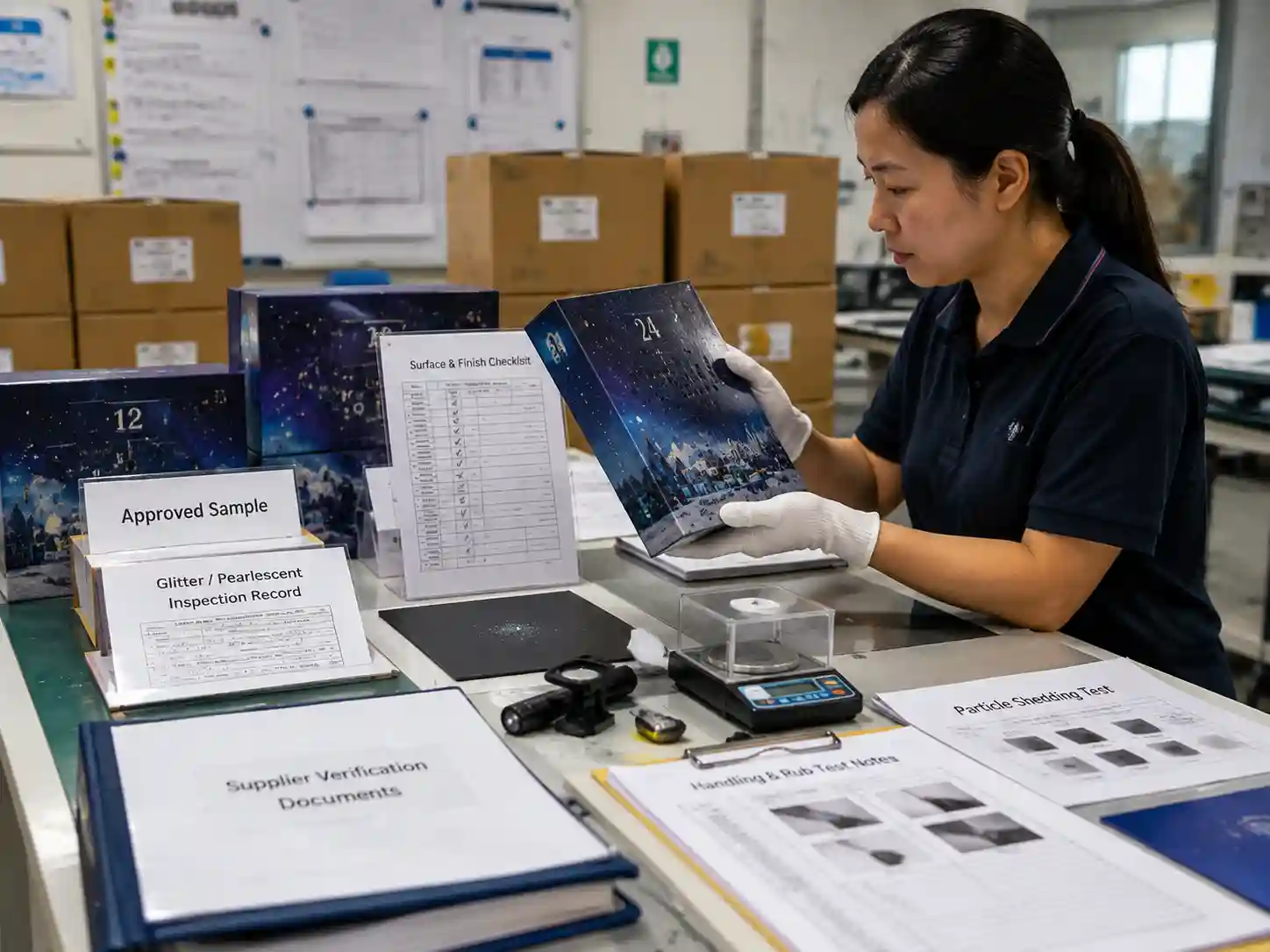
For premium advent calendar packaging, the finish approval record should identify the approved sample version, inspected areas, and any agreed acceptance criteria. This helps prevent confusion when production quantities are reviewed later.
Does lamination help prevent glitter shedding?
Lamination may improve surface protection in some packaging constructions, but it is not automatically suitable for every glitter or pearlescent effect. The final result depends on the interaction between the decorative layer, adhesive system, paperboard surface, and required appearance.
When considering lamination, buyers should review:
- Whether the protective layer changes the visual depth or sparkle of the effect.
- Whether foil, embossing, or spot UV areas remain correctly registered.
- Whether folding performance is maintained after additional layers are added.
For example, a premium calendar box with glitter highlights and embossed artwork may require a balance between visual texture and handling durability. A protective layer that improves resistance but reduces the intended tactile effect may not be the correct solution.
How should glitter and pearlescent finishes be approved during sampling?
Sampling approval should compare the decorative effect with the intended production conditions, including material choice, printing sequence, and finishing combination.
Recommended approval evidence includes:
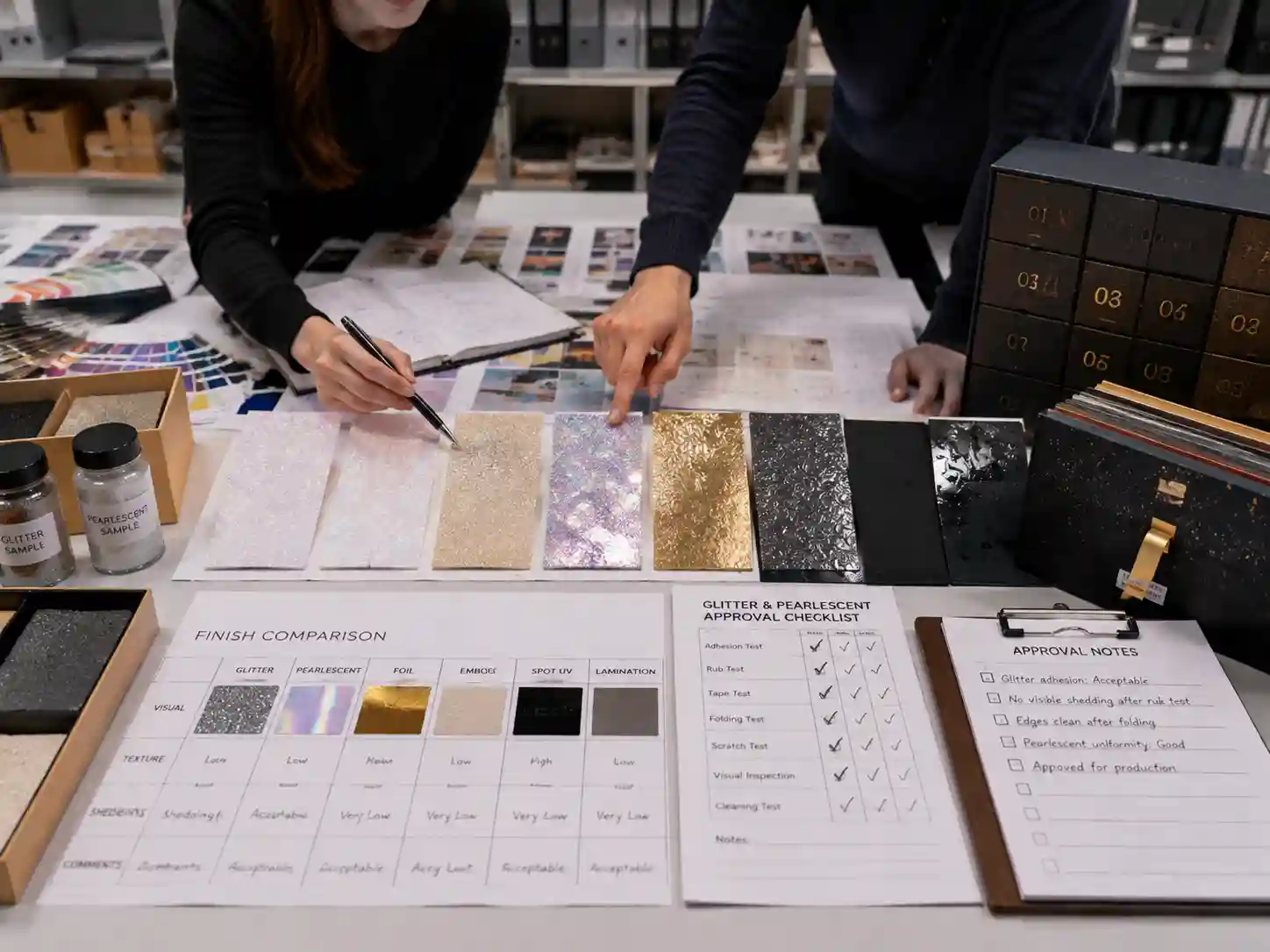
- Physical finished samples showing the exact glitter or pearlescent application.
- Finish comparison sheets identifying approved and rejected options.
- Inspection notes covering shedding, adhesion, appearance, and registration.
- Supplier records showing the approved finish specification.
Packaging buyers often use a combination of drawings, samples, and inspection records because visual appearance alone cannot confirm long-term finish performance.
Which finish combinations create higher shedding risks?
Higher-risk combinations usually involve multiple surface treatments, stressed folding areas, or heavy handling requirements. Risk levels vary by material structure, production method, and final use environment.
- Large glitter coverage areas may require more attention than small decorative highlights.
- Fold lines and sharp edges may experience more mechanical stress.
- Highly textured finishes combined with other coatings may require additional sample review.
- Dark surfaces can make particle transfer more visible during inspection.
How do buyers separate verified facts from project-dependent decisions?
Verified facts should come from physical inspection records, approved samples, and supplier documentation. Project-dependent decisions should be based on the required appearance, handling conditions, and packaging structure.
Verified through inspection
- Whether particles transfer during the agreed handling check.
- Whether the approved sample matches the production reference.
- Whether artwork and finish registration meet the approved layout.
Dependent on project requirements
- Whether a protective coating is required.
- How much glitter coverage is suitable.
- Which finish combination provides the best balance of appearance and durability.
FAQ: Can photos replace physical glitter finish approval?
No. Photos can show appearance, but they cannot confirm particle adhesion, surface transfer, or handling durability. Physical samples are needed for final approval.
FAQ: Should glitter effects be inspected after folding?
Yes. Folding can create stress on coated surfaces and edges, so inspection after structural handling provides more reliable approval evidence.
FAQ: Can glitter finishes be combined with foil or embossing?
Yes, but the combination should be reviewed through sampling because registration, layer compatibility, and surface performance depend on the specific production process.
Giftpackpro supports commercial buyers with custom advent calendar packaging development, including finish selection, sample review, and production communication. For projects requiring glitter or pearlescent effects, request a finish review before final production approval.
Explore custom advent calendar box services or request a custom quote for your packaging project.