Quick answer: Spot UV fold line cracking is usually prevented by controlling where the UV coating is placed, reducing stress across score and fold areas, confirming coating compatibility with the paper structure, and validating the finished panel through folding samples. The main risk is not the gloss coating itself, but the combination of coating thickness, board flexibility, scoring pressure, folding direction, and repeated handling. A production-ready design should be reviewed through artwork checks, physical samples, and QC approval before bulk manufacturing.
Why does spot UV crack when packaging panels are folded?
Spot UV can crack on folded panels when the cured coating layer cannot flex with the paperboard movement during creasing and folding. The issue is most common when a high-gloss UV area crosses a score line, sharp fold radius, or heavily stressed corner.
On premium advent calendar boxes and specialty paper gift packaging, fold durability depends on several connected factors:
- UV coating thickness and coverage area
- Paperboard type, surface treatment, and stiffness
- Score depth, crease position, and folding direction
- Lamination compatibility beneath or around the UV area
- Handling pressure during assembly, packing, and retail display
These variables mean there is no single universal rule for every project. The correct solution is usually confirmed through structural drawings, finish samples, and folding evaluations.
How can designers prevent spot UV fold line cracking during artwork preparation?
The most effective prevention method is to keep spot UV away from high-stress fold zones whenever the design allows. Artwork should be reviewed together with the packaging dieline rather than treating finishing as a separate step.
Before production release, teams should check:
- Whether spot UV crosses score lines or corner folds
- Whether small UV details are located too close to cutting or creasing areas
- Whether the gloss effect creates a large rigid surface that restricts bending
- Whether foil, embossing, and UV layers overlap in stressed areas
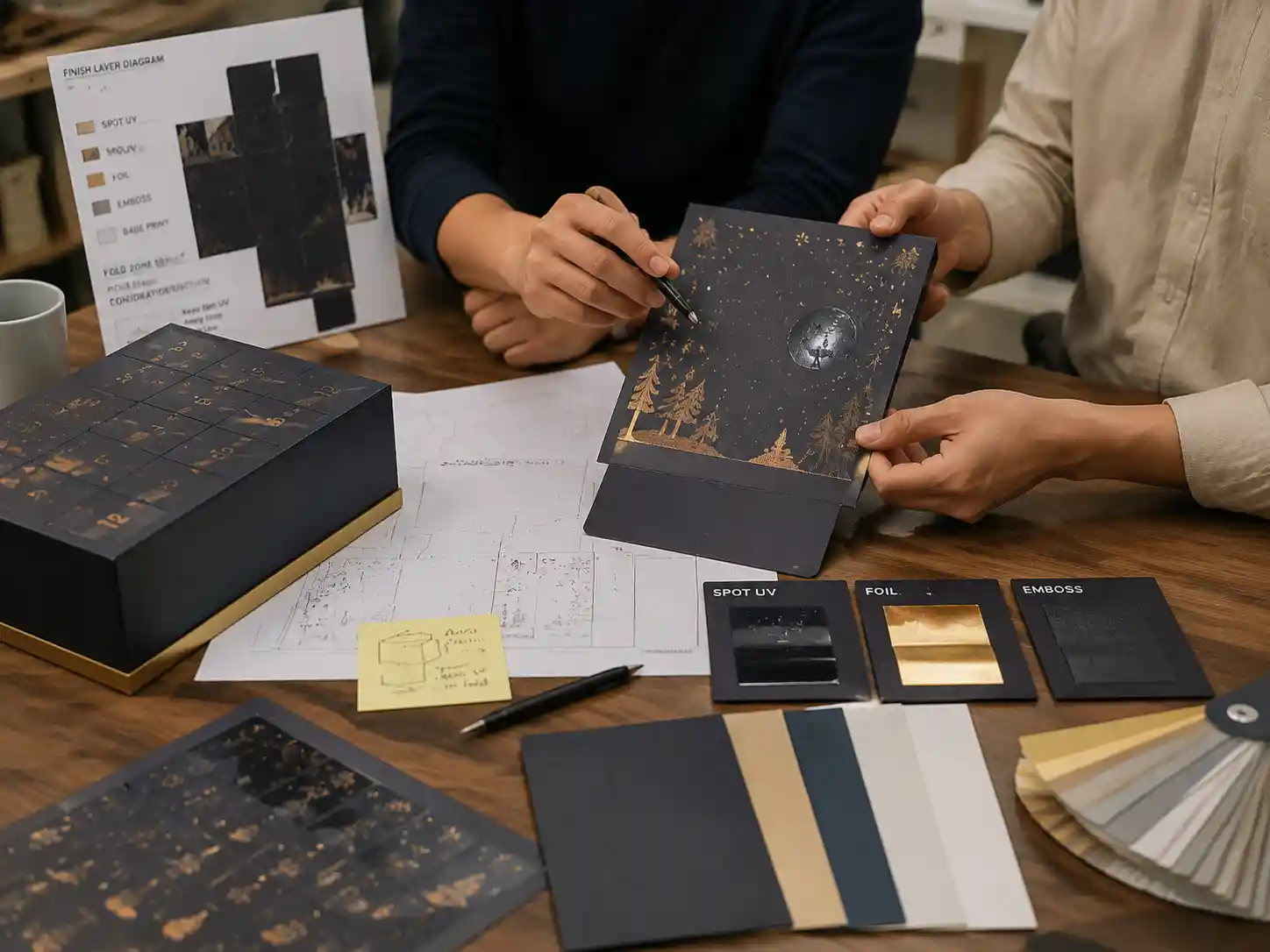
For complex advent calendar structures, finish layers should be shown on the dieline so designers, engineers, and suppliers can identify possible cracking points before sampling.
What material and finishing choices reduce spot UV cracking risk?
The choice of paperboard, surface coating, and finishing combination strongly affects fold performance. A flexible coating system generally performs better where panels need repeated movement.
| Risk area | Possible cause | Practical check |
|---|---|---|
| UV crossing fold lines | Cured coating is stressed during bending | Review UV position against the dieline and fold direction |
| Large solid UV areas | Thicker coating coverage increases rigidity | Compare sample panels with different coating layouts |
| UV over unsuitable surfaces | Poor adhesion or surface interaction | Confirm compatibility through supplier finish samples |
| Multiple finishes combined | Foil, embossing, lamination, and UV create layered stress | Inspect registration and folding performance after finishing |
Project-dependent recommendations may include changing the UV shape, reducing coverage near folds, adjusting the fold design, or selecting a different surface combination. These decisions should be based on the actual box structure rather than finish preference alone.
How should suppliers test spot UV durability before mass production?
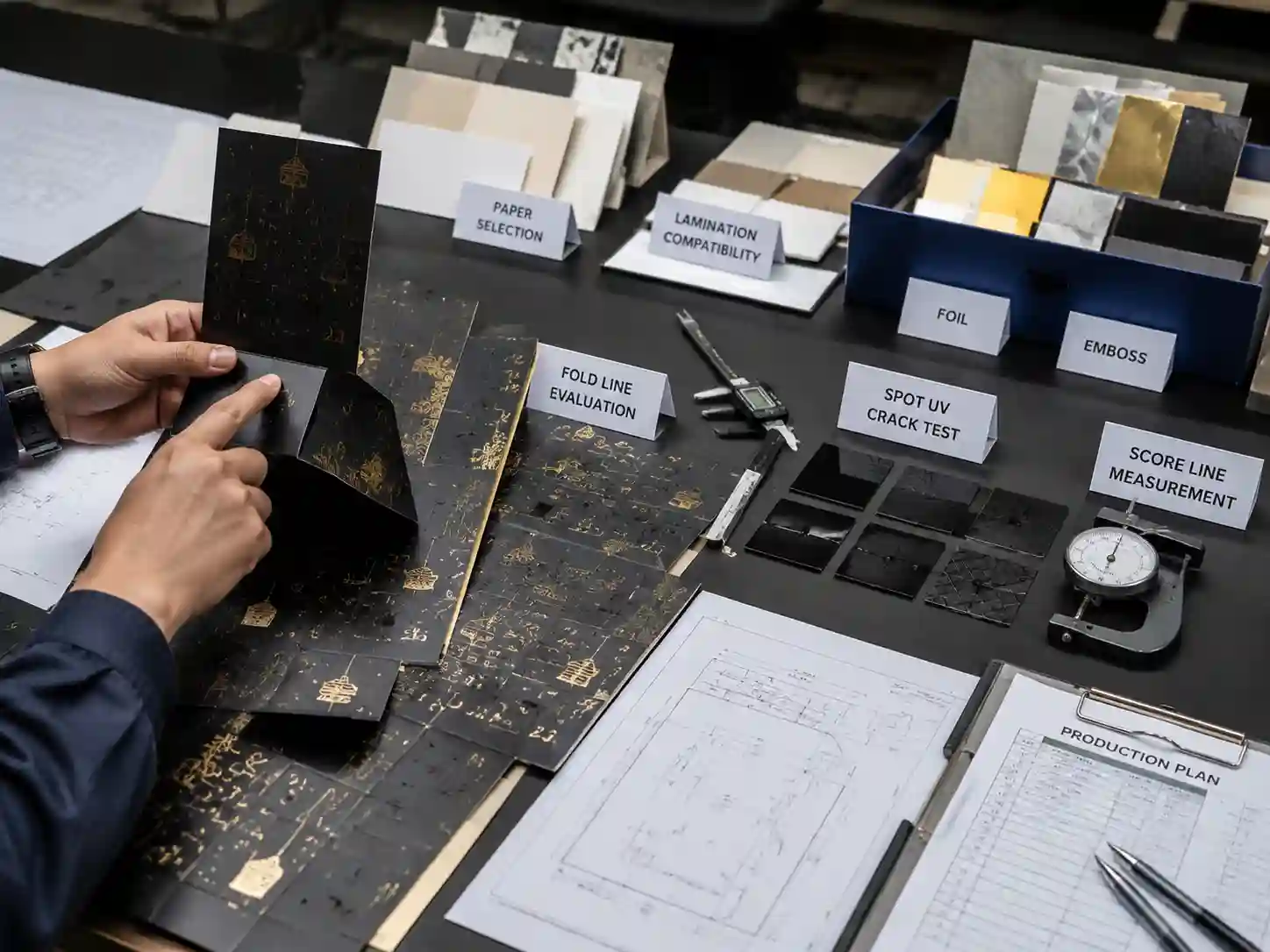
A physical sample is the most reliable way to evaluate spot UV performance because digital artwork cannot show actual cracking behavior. Sampling should reproduce the final material stack, including printing, lamination, UV coating, and folding operations.
Which checks should be included in a spot UV folding review?
A practical finish inspection checklist includes:
- Visual inspection of UV areas after folding
- Close examination of score lines and corners
- Checking whether gloss areas separate, fracture, or show whitening
- Reviewing adhesion between coating layers
- Comparing finished samples against approved artwork files
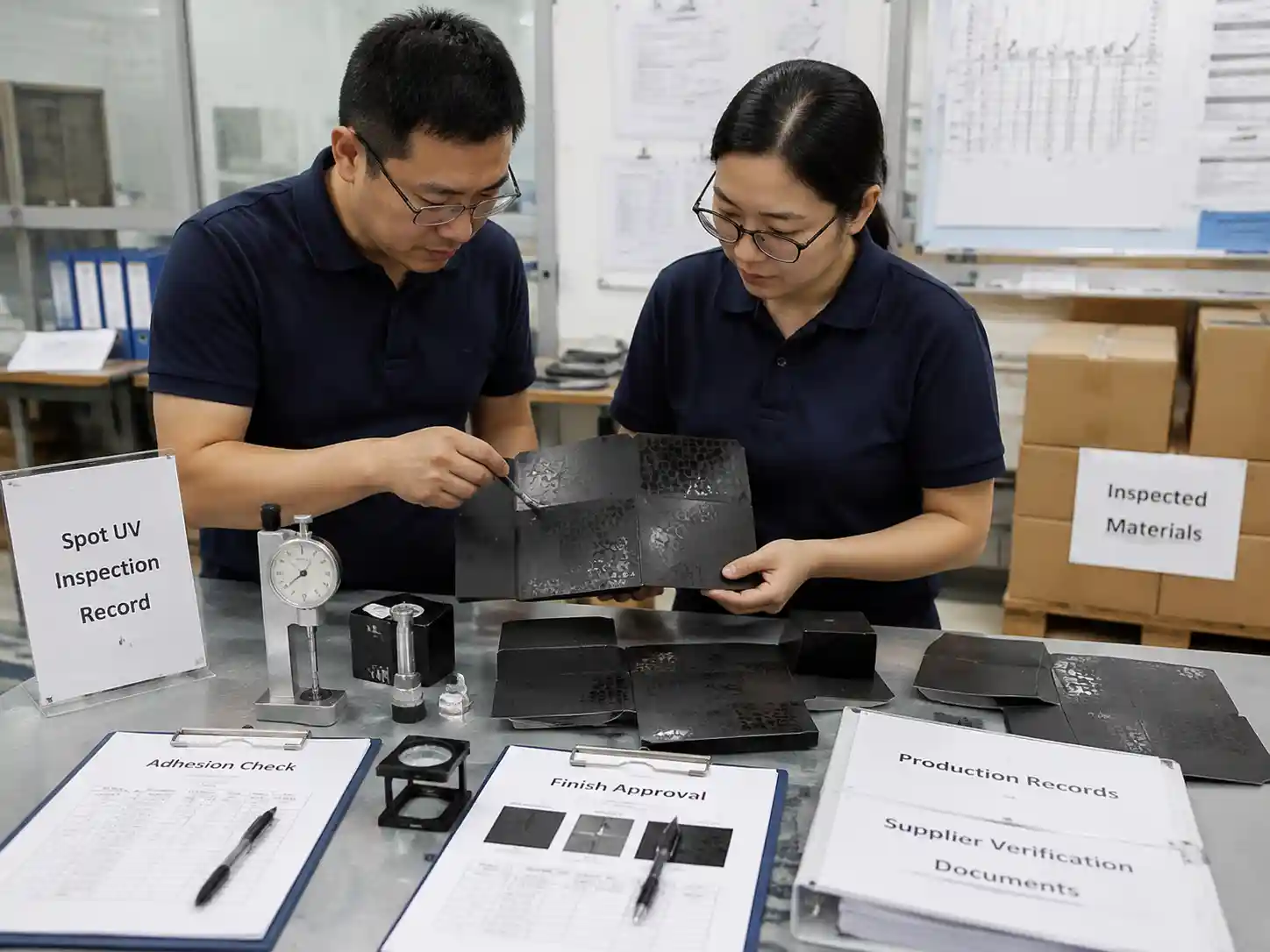
Useful evidence includes finish samples, dieline markups, folding photos, inspection records, and approval documents. These records help purchasing and quality teams confirm that the approved finish combination matches production expectations.
How do lamination, foil, and embossing affect spot UV cracking?
Spot UV performance can change when it is combined with other premium effects. Lamination may alter surface behavior, foil can create registration limitations, and embossing can add pressure near coated areas.
For example, a design using foil numbers, embossed patterns, and spot UV highlights on an advent calendar door may require tighter artwork coordination than a simple printed panel. The supplier should verify that:
- Foil and UV registration remain stable around folds
- Embossed areas do not force coating stress into crease zones
- Lamination and UV layers maintain acceptable adhesion
- Final handling does not create visible finish damage
Giftpackpro supports custom packaging development through custom advent calendar box products and custom advent calendar box services, where structural and finishing requirements can be reviewed together.
What should buyers approve before releasing spot UV packaging production?
Buyers should approve more than the appearance of the finish. The approval package should show how the finish performs on the actual folded structure.
Important approval items include:
- Final artwork with finish layers identified
- Dieline showing fold and score locations
- Physical sample review notes
- QC inspection criteria for cracking and adhesion
- Confirmed finish combination and material specification
Verifiable approval records reduce disputes because all parties understand where the finish is applied and how the finished panel should perform.
Frequently asked questions about spot UV fold durability
Can spot UV always be applied across a fold line?
No. Some structures may allow it with proper testing, but fold stress, board selection, and coating conditions determine whether the result is acceptable.
Does thicker spot UV always create more cracking?
Not always. Cracking risk depends on the complete finish system, including coating properties, substrate flexibility, and fold pressure.
Should spot UV be checked before or after lamination?
The sequence depends on the production method. The important point is that the final combined finish structure should be evaluated, not only individual layers.
How can teams reduce finishing risks before ordering custom packaging?
The best approach is early coordination between artwork, engineering, production, and quality teams. Reviewing finish placement on drawings, checking physical samples, and documenting approvals helps prevent visible cracking after folding.
For projects requiring controlled premium finishing, you can also review advent calendar box buying guides or request a custom quote with your packaging requirements.