
Quick answer: The packaging materials most sensitive to ocean-freight humidity are moisture-absorbent paper-based materials such as unprotected paperboard, greyboard, kraft paper, and recycled fiber boards. These materials can experience dimensional changes, surface scuffing, reduced stiffness, and appearance variation when exposed to high humidity during long transit periods. Buyers should evaluate board construction, moisture resistance, surface protection, and supplier material evidence before approving packaging materials for overseas shipment.
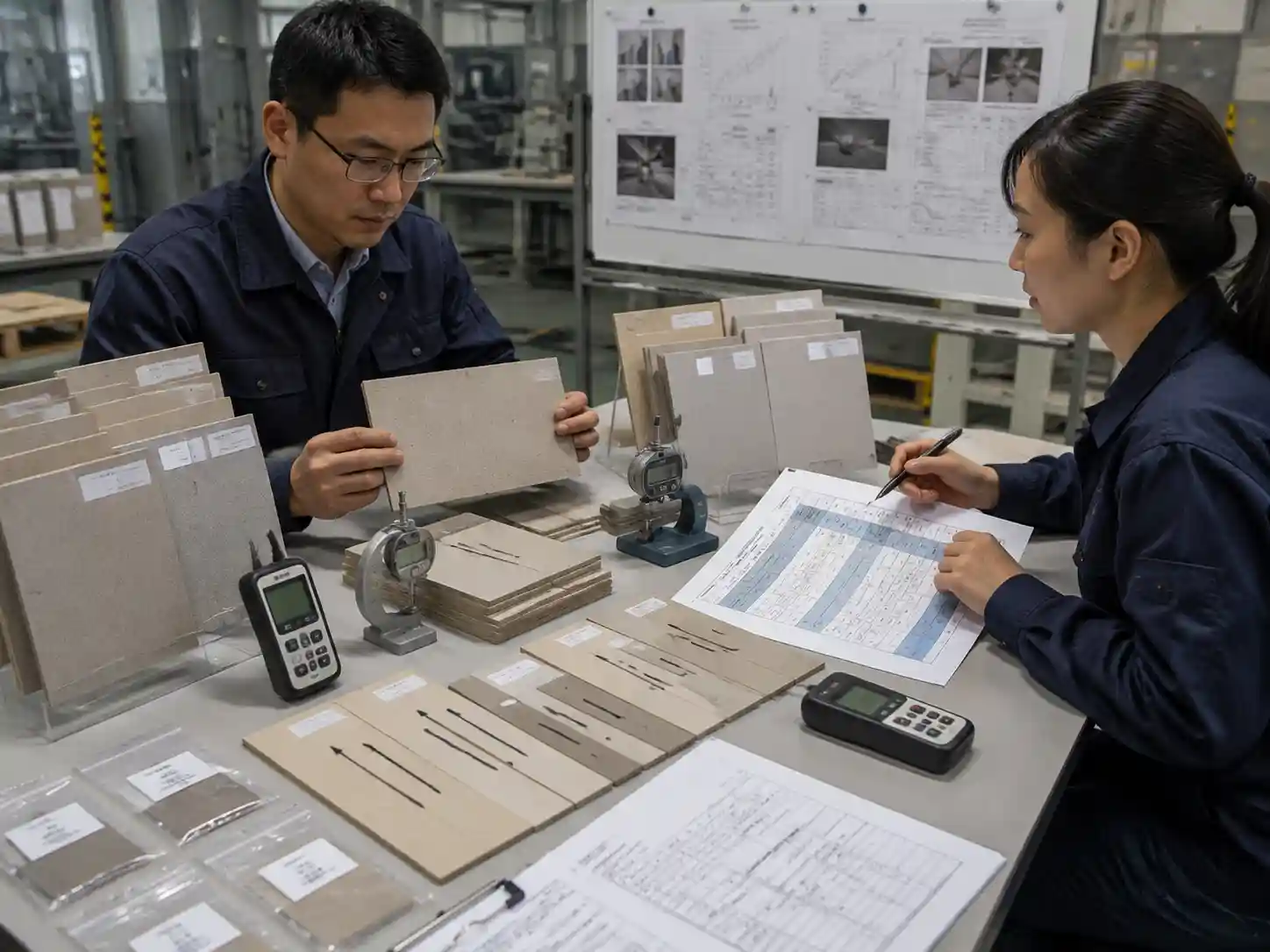
Which ocean freight humidity packaging materials require the most attention?
Paper-based structural materials usually require the closest review because fiber materials naturally exchange moisture with their environment. The level of risk depends on fiber composition, board thickness, coatings, storage conditions, and transport exposure.
For custom advent calendar boxes and seasonal paper gift packaging, the main humidity-sensitive materials typically include greyboard, paperboard wraps, kraft papers, and recycled fiber-based boards.
| Material | Humidity sensitivity | Common risks | Buyer review points |
|---|---|---|---|
| Greyboard | Medium to high | Warping, edge swelling, reduced stiffness, dimensional change | Board thickness, fiber consistency, moisture exposure history |
| Uncoated paperboard | High | Surface waviness, print variation, scuffing | Surface treatment, paper grain direction, handling conditions |
| Kraft paper | Medium | Color variation, texture change, moisture-related curl | Natural variation range, finish requirements, appearance approval |
| Recycled fiber board | Medium to high | Fiber expansion, stiffness variation, surface inconsistency | Material composition evidence and production consistency |
| Coated paperboard | Lower surface sensitivity | Coating damage or edge exposure issues | Coating coverage, folding performance, finished sample review |
Why does humidity affect paperboard and greyboard performance?
Humidity affects paper-based materials because paper fibers absorb and release moisture. This movement can influence thickness, flatness, stiffness, and surface appearance.
Greyboard is often used as a structural base because it provides rigidity, but changes in moisture balance can affect panel flatness and dimensional stability. Wrapped paper layers may also show differences in tension if the outer paper and inner board respond differently to humidity.
For packaging engineers, the important question is not whether humidity exists during ocean freight, but whether the selected material construction can maintain acceptable performance after exposure.
How should buyers compare humidity sensitivity between materials?
Buyers should compare materials using physical samples, measurements, and supplier documentation rather than appearance alone. A material that looks acceptable in a dry sample room may behave differently after environmental exposure.
What evidence should be reviewed before material approval?
- Board thickness and construction details
- Paper grain direction and folding behavior
- Surface finish and coating information
- Approved material samples showing acceptable appearance range
- Supplier records describing material specifications and substitutions
- Inspection notes from sample evaluation or production checks
For projects requiring documented material selection, buyers can use a structured approval process similar to the one used for other custom packaging developments through custom advent calendar box services.
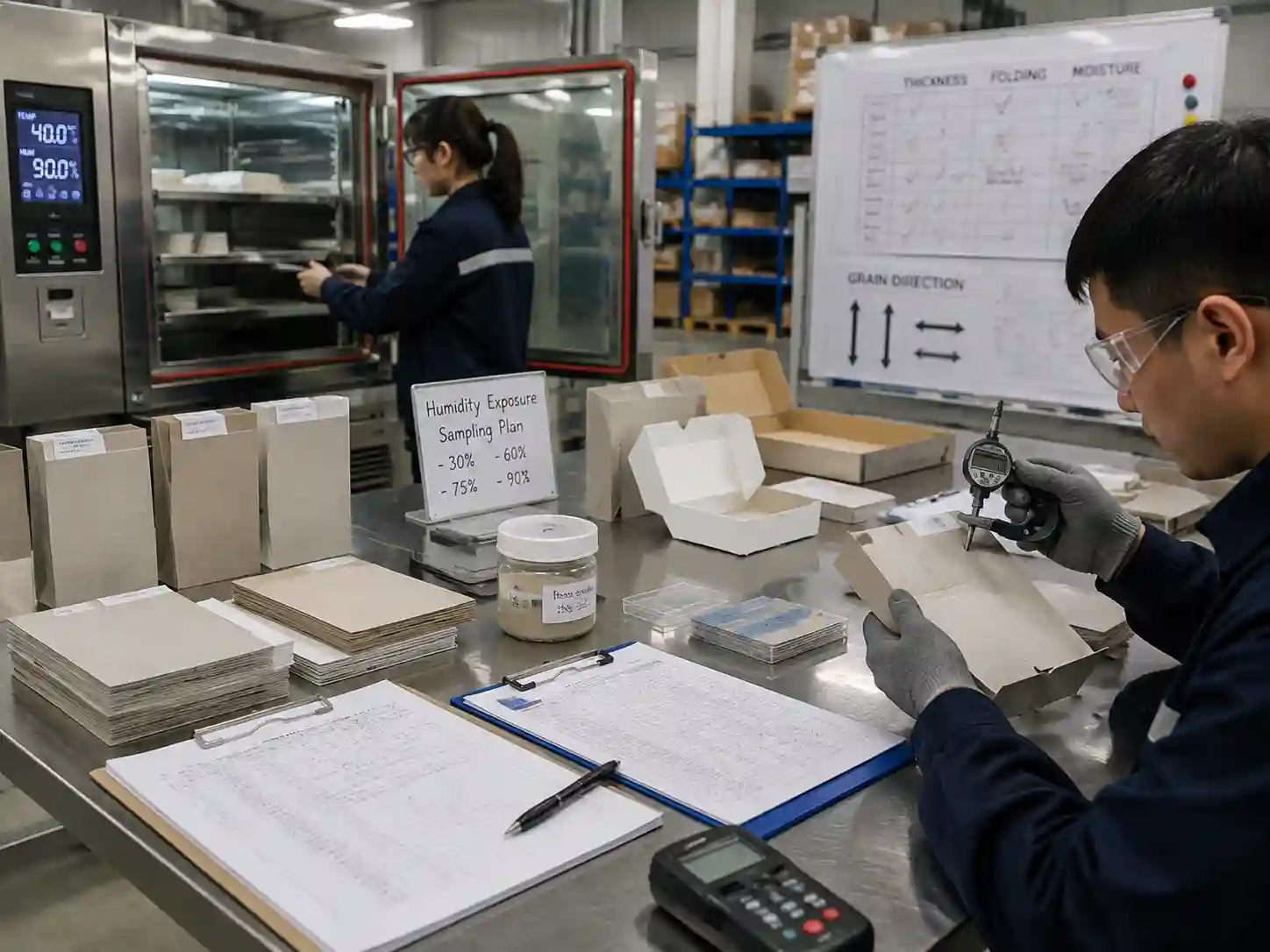
Which packaging risks increase during humid ocean transport?
The main risks are usually related to dimensional stability, surface appearance, and structural performance rather than immediate material failure.
- Warping: Uneven moisture absorption can cause boards or panels to bend.
- Edge swelling: Exposed paper fibers may expand when moisture levels increase.
- Scuffing: Softer or moisture-affected surfaces may mark more easily during handling.
- Print appearance changes: Paper surface variation can influence how colors and fine details appear.
- Material-change risk: Substituting a board or paper type without evaluation may introduce different humidity behavior.
How can buyers reduce humidity-related material risks?
The most effective approach is to control material selection and approval decisions before production. Humidity performance should be considered together with structure, finish, and intended logistics conditions.
- Define the required appearance and structural performance before selecting materials.
- Compare paperboard and greyboard samples from the intended material source.
- Review grain direction, thickness, and folding behavior during sampling.
- Record approved material references and acceptable variation ranges.
- Confirm any material substitutions require review before production approval.
These steps help commercial packaging buyers make decisions based on measurable material behavior rather than only visual inspection.
What varies by project when selecting humidity-resistant materials?
Material recommendations depend on the final packaging structure, surface treatment, product weight, shipping route, and expected handling environment.
A rigid paper gift box used for display may require different priorities from a calendar with multiple drawers, doors, or internal compartments. A thicker board is not automatically the best solution if it creates folding, finishing, or assembly challenges.
The correct choice is usually a balance between stiffness, appearance, processing requirements, recyclability expectations, and transport conditions.
Material decision example: choosing between kraft paper and coated paperboard
A buyer comparing kraft paper and coated paperboard may prioritize different factors depending on the project goal.
| Decision factor | Kraft paper | Coated paperboard |
|---|---|---|
| Natural appearance | Strong natural texture and variation | More controlled surface appearance |
| Humidity response | Requires evaluation of fiber behavior | Surface protection may improve appearance stability |
| Approval focus | Color range and texture acceptance | Print consistency and surface quality |
Frequently asked questions about humidity-sensitive packaging materials
Are recycled paper materials more sensitive to ocean humidity?
Recycled fiber materials can show different moisture behavior because fiber composition and processing history may vary. Buyers should review actual material samples and specifications before approval.
Does coating completely prevent humidity problems?
No. Coatings can improve surface protection, but the underlying board structure can still respond to moisture changes. Complete material performance depends on the full construction.
Should buyers request new samples after a material change?
Yes, when a material change affects board stiffness, thickness, surface finish, or folding behavior, a new structural or appearance review may be necessary before approval.
Giftpackpro helps commercial buyers evaluate paper-based packaging materials, structural requirements, and production suitability for custom seasonal packaging projects. Explore custom advent calendar box products or request a custom quote for project-specific material discussions.


